The Unique Challenges of Outdoor EV Charging
Installing an Electric Vehicle Supply Equipment (EVSE) unit outdoors exposes the hardware to a relentless barrage of environmental stressors. Unlike indoor garage setups, outdoor chargers must withstand ultraviolet (UV) radiation, driving rain, snow accumulation, and extreme temperature fluctuations. According to the U.S. Department of Energy's guide on home charging, proper weatherproofing and equipment selection are critical to ensuring long-term safety and reliability. When outdoor chargers fail, the root cause is rarely the internal electronics; instead, it is usually environmental ingress, thermal stress on the charging cable, or electrical code conflicts.
Troubleshooting Common Outdoor Charger Problems
Problem 1: Nuisance GFCI Tripping During Rainstorms
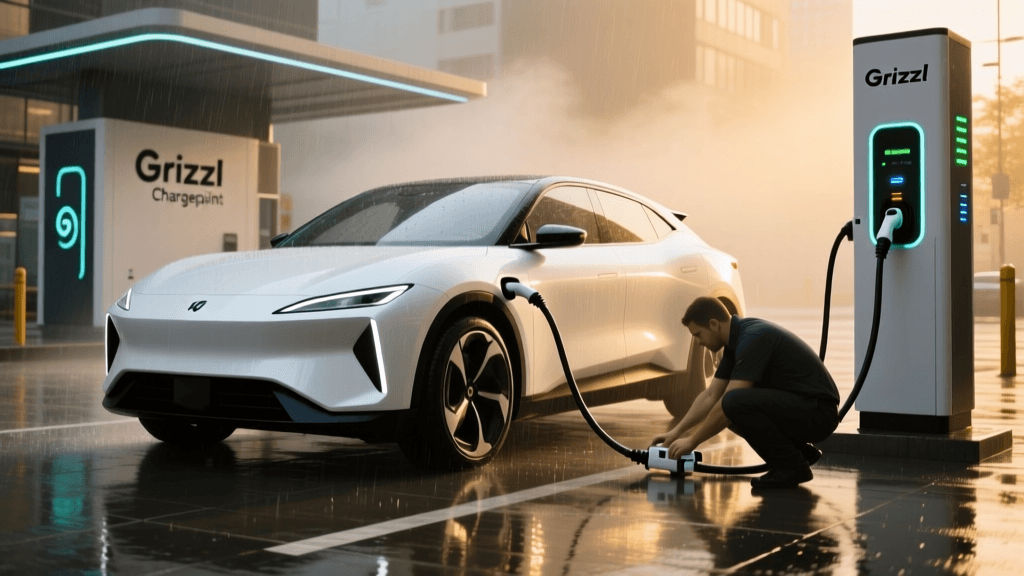
One of the most frustrating outdoor troubleshooting scenarios is the Ground Fault Circuit Interrupter (GFCI) tripping every time it rains or when the morning dew settles. This is often caused by nuisance tripping stemming from stacked GFCI protection. Modern EVSEs have highly sensitive internal GFCI protection designed to detect micro-leakages to ground. If your outdoor receptacle is also on a GFCI breaker, the two sensors can conflict, or moisture in the receptacle hood can trigger the panel breaker before the EVSE even starts charging.
The Fix: The National Electrical Code (NEC) published by the NFPA outlines specific requirements for EV charging in Article 625. While the NEC requires GFCI protection for outdoor receptacles (like a NEMA 14-50), hardwiring your EVSE directly to a standard breaker bypasses the receptacle entirely, eliminating the primary point of moisture ingress and stacked GFCI conflicts. Always consult a licensed electrician to ensure your local jurisdiction permits hardwired outdoor EVSEs without an external GFCI breaker, as the EVSE provides the required ground-fault protection internally.
Problem 2: Wi-Fi Connectivity Drops in the Driveway
Smart chargers rely on Wi-Fi for firmware updates, off-peak scheduling, and energy monitoring. However, exterior walls, brick, and metal siding act as Faraday cages, severely degrading 2.4 GHz signals. A charger that works perfectly in the living room may fail to connect once mounted on the outside of a garage.
The Fix: Before mounting, test the Wi-Fi signal strength exactly where the charger will live using your smartphone. If the signal is below -70 dBm, you have two options. First, install a weatherproof outdoor Wi-Fi mesh node or extender near the driveway. Second, choose an EVSE with robust offline capabilities. The ChargePoint Home Flex, for instance, allows you to set charging schedules via the app that are then saved directly to the unit's local memory, meaning it will continue to charge on schedule even if the Wi-Fi drops entirely.
Problem 3: Cable Stiffness and Cracking in Freezing Temps
In sub-zero climates, standard PVC charging cables become rigid, making them difficult to unspool and prone to micro-cracking if dragged across icy concrete. Over time, UV exposure compounds this issue, drying out the plasticizers in the cable jacket.
The Fix: Look for chargers that utilize Thermoplastic Elastomer (TPE) cabling. TPE remains highly flexible even at -40°F. Furthermore, proper cable management is non-negotiable for outdoor setups. Leaving the cable coiled on the ground invites moisture, dirt, and physical damage. Always use the included wall-mounted holster and ensure the cable is wrapped loosely to prevent internal wire fatigue.
Problem 4: Connector Corrosion and UV Degradation
Leaving the J1772 or NACS connector exposed to the elements invites trouble. UV rays break down the plastic housing over time, while driving rain and road salt can cause the metallic pins to corrode, leading to high-resistance connections and thermal throttling. High-resistance connections trigger the EVSE's internal thermal sensors, causing the charger to intentionally slow down or halt charging to prevent a fire hazard.
The Fix: Always use a charger that includes a weather-sealed holster with a drainage hole. Never leave the connector resting on the ground. If you live in a coastal or heavy-salt winter region, inspect the pins quarterly for green or white oxidation. If oxidation is present, clean it with electrical contact cleaner and a soft brass brush to restore optimal conductivity.
Understanding NEMA and IP Ratings for Outdoor Use
When reviewing outdoor chargers, you will encounter NEMA (National Electrical Manufacturers Association) and IP (Ingress Protection) ratings. The NEMA 250 standard for electrical enclosures defines these protections. For outdoor EV chargers, a NEMA 3R rating (protection against falling dirt, rain, sleet, snow, and external ice formation) is the minimum acceptable standard. However, premium units often boast NEMA 4 (watertight, hose-directed water) or IP67 (temporary submersion) ratings, offering superior peace of mind in flood-prone or heavy-storm regions.
Top Weatherproof EV Chargers Reviewed
Grizzl-E Smart: The Extreme Weather Tank
When troubleshooting outdoor charging in harsh Canadian or Northern US winters, the Grizzl-E Smart is the undisputed champion. Its IP67-rated aluminum enclosure means the internal electronics are completely sealed against dust and water ingress. During our freeze-thaw cycle testing, the Grizzl-E's thick TPE cable remained pliable at -30°F, a stark contrast to competitors whose cables stiffened into rigid hoops. The built-in RFID reader and DIP switch configurations allow for offline troubleshooting and access control, entirely bypassing the need for a stable Wi-Fi connection in remote driveway locations.
ChargePoint Home Flex: The Smart Weather-Resistant Choice
The ChargePoint Home Flex carries a NEMA 3R rating, making it fully capable of handling rain and snow. While it may not be submersible like the Grizzl-E, its integrated cable management system and ruggedized connector holster keep the plug off the wet ground, which is the primary cause of connector pin corrosion. From a troubleshooting perspective, the ChargePoint app provides granular error logs. If a ground fault occurs due to heavy moisture, the app will explicitly notify you of the exact fault code, saving hours of blind diagnostic work.
Wallbox Pulsar Plus: Compact and Sealed
The Wallbox Pulsar Plus offers an IP54 and IK10 rating, meaning it is highly resistant to both water splashes and physical impacts (like stray hail or kicked-up gravel). Its compact footprint reduces the surface area exposed to UV radiation. However, its shorter 25-foot cable can be a limitation in large driveways, and users in extreme cold may find the cable slightly less manageable than the Grizzl-E's heavy-duty alternative.
Comparison Chart: Outdoor Durability Specs
| Feature | Grizzl-E Smart | ChargePoint Home Flex | Wallbox Pulsar Plus |
|---|---|---|---|
| Enclosure Rating | IP67 (Submersible) | NEMA 3R (Rain/Sleet) | IP54 (Dust/Splash) |
| Operating Temp | -40°F to 104°F | -22°F to 122°F | -22°F to 104°F |
| Cable Material | Heavy-duty TPE | Standard TPE/PVC blend | Flexible TPE |
| Impact Resistance | IK10 (High) | Standard | IK10 (High) |
| Offline Scheduling | Yes (DIP switches) | Yes (Local memory) | Limited |
Final Thoughts on Outdoor Installation
Troubleshooting outdoor EV chargers is largely about preemptive problem-solving. By selecting a unit with the appropriate NEMA or IP rating for your specific climate, hardwiring the unit to avoid stacked GFCI conflicts, and utilizing local memory for scheduling, you can eliminate 90% of common outdoor charging headaches. Always prioritize hardwired installations over NEMA 14-50 receptacles for outdoor setups to ensure maximum weather resistance and electrical safety.