The Rise of Budget Portable EV Charging
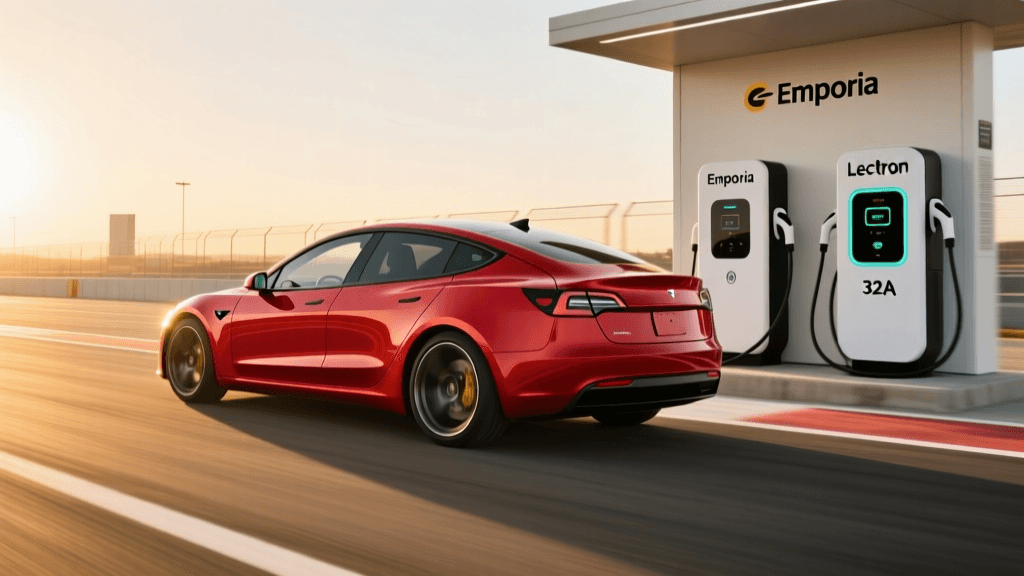
Electric vehicle ownership brings a unique set of logistical challenges, chief among them being how and where to charge. While hardwired wall connectors are the gold standard for homeowners, they are not always feasible. Renters, apartment dwellers, and frequent road trippers require a more flexible solution: the portable Level 2 EV charger. Fortunately, the market has evolved, and you no longer need to spend upwards of $500 to get a reliable, high-speed portable charging unit. Today, we are putting two of the most popular budget-friendly contenders in a head-to-head showdown: the Emporia Portable Level 2 EV Charger and the Lectron 32A Portable EV Charger. Both of these units consistently retail for under $300, making them highly attractive for budget-conscious EV owners. But which one deserves a spot in your trunk?
The Contenders: Emporia vs. Lectron 32A
Before we dive into the granular details, let us introduce our fighters. On one side, we have the Emporia Portable Level 2 EV Charger. Emporia has made a massive name for itself in the smart home and energy monitoring space, and its portable charger reflects a commitment to robust build quality and safety. It offers a 24-foot cable, a 32-amp maximum output, and a ruggedized control box designed to withstand being run over or dropped.
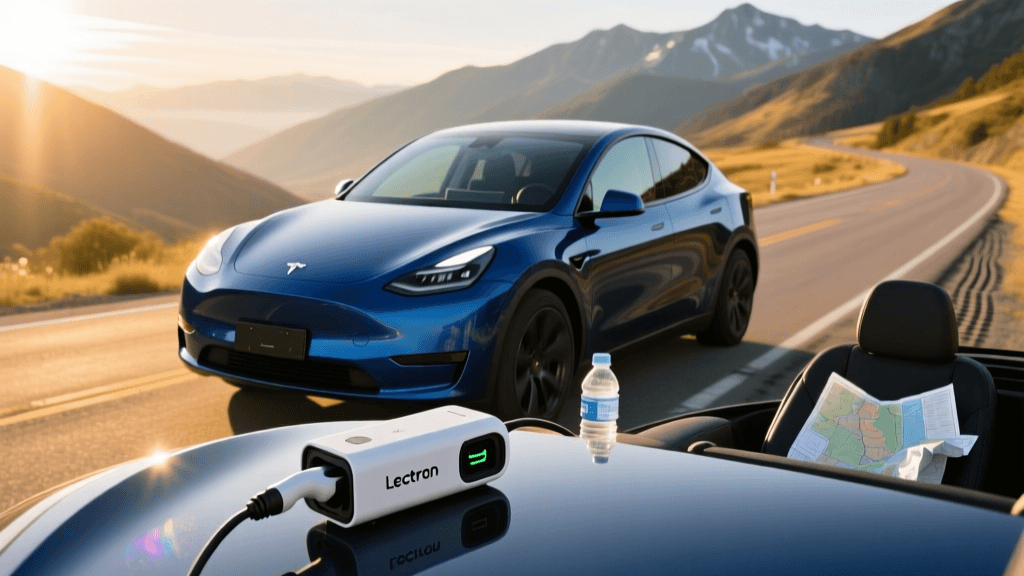
On the other side is the Lectron 32A Portable EV Charger. Lectron has dominated the budget EV accessory market by offering aggressive pricing without completely sacrificing performance. The Lectron features a 21-foot cable, a 32-amp output, and a highly informative LCD screen right on the control box. Both chargers utilize the standard SAE J1772 connector. As noted by the Alternative Fuels Data Center, the SAE J1772 standard ensures universal compatibility for Level 1 and Level 2 AC charging across nearly all non-Tesla EVs in North America (and Teslas, provided you have a J1772-to-NACS adapter).
Head-to-Head Comparison Chart
To give you a quick snapshot of how these two budget champions stack up on paper, we have compiled their core specifications into the table below.
| Feature | Emporia Portable Level 2 | Lectron 32A Portable |
|---|---|---|
| Max Amperage | 32 Amps | 32 Amps |
| Max Power (240V) | 7.6 kW | 7.6 kW |
| Cable Length | 24 Feet | 21 Feet |
| Included Plugs | NEMA 14-50, NEMA 5-15 | NEMA 14-50, NEMA 5-15 |
| Control Box Display | LED Indicator Lights | LCD Screen (Volts/Amps/Temp) |
| Weather Resistance | NEMA 4 Enclosure | NEMA 4 Enclosure |
| Approximate Price | $249 | $199 |
Round 1: Charging Speed and Power Delivery
When it comes to raw charging speed, this round is a definitive tie. Both the Emporia and the Lectron max out at 32 amps on a 240-volt circuit, delivering up to 7.6 kilowatts of power. According to the U.S. Department of Energy, Level 2 charging at this capacity is the most practical and efficient solution for daily EV replenishment, adding roughly 25 to 30 miles of range per hour of charging, depending on your vehicle's efficiency.
Because both units adhere to the 80% continuous load rule dictated by the National Electrical Code (NEC), they require a dedicated 40-amp breaker when hardwired, or a 50-amp circuit when plugged into a NEMA 14-50 receptacle. Neither charger offers software-based amperage derating (the ability to dial down the amps via an app for weaker circuits), meaning you are locked into 32 amps. If you are plugging into a robust 14-50 outlet at a campground or a friend's house, both units will deliver identical, class-leading speeds for this price bracket.
Round 2: Build Quality, Cable, and Weather Resistance
Portable chargers live a hard life. They are tossed into trunks, dragged across concrete garage floors, and left out in the rain. Build quality is where the Emporia begins to pull ahead. The Emporia features a 24-foot cable that is noticeably thicker and more heavily insulated than the Lectron's 21-foot cable. More importantly, the Emporia cable uses a specialized thermoplastic elastomer that remains remarkably flexible even in freezing winter temperatures. The Lectron cable, while durable, tends to stiffen up in cold weather, making it harder to coil and manage.
Both units feature NEMA 4 rated control boxes, meaning they are protected against splashing water, rain, and dirt. However, the Emporia's strain relief where the cable meets the control box feels significantly more reinforced. The J1772 connector head on both units is solid, but the Emporia's release latch mechanism feels smoother and less prone to jamming when exposed to road grime. For pure ruggedness and cold-weather usability, Emporia takes this round.
Round 3: Plug Options and Versatility
Versatility is the entire point of buying a portable EV charger. You need to be able to plug into a standard 120V household outlet in a pinch, and a 240V dryer or RV outlet when you need speed. Both the Emporia and Lectron come out of the box with a NEMA 14-50 plug (for 240V/50A circuits) and a NEMA 5-15 adapter (for standard 120V/15A household outlets).
Swapping the plugs on the Lectron requires a small screwdriver and takes about two minutes. The connection is secure, but the process is slightly cumbersome. Emporia, on the other hand, utilizes a quick-release interchangeable plug system that is tool-free and takes about ten seconds to swap. The locking mechanism on the Emporia is incredibly satisfying and gives you total peace of mind that the plug will not detach during a charging session. Furthermore, Emporia sells additional adapter pigtails (like the NEMA 14-30 or 10-30) separately, which integrate seamlessly into their quick-release system. Emporia wins the versatility round for its superior tool-free adapter design.
Round 4: Smart Features and User Experience
To keep costs under $300, both manufacturers had to make compromises on "smart" features. Neither the Emporia Portable nor the Lectron Portable features Wi-Fi connectivity or a companion smartphone app for remote monitoring and scheduling. If you want app-based scheduling to take advantage of off-peak utility rates, you will need to rely on your vehicle's built-in infotainment system to set charge times.
However, the user experience on the device itself is vastly different. The Emporia relies on a series of basic LED indicator lights to tell you if the unit is powered, charging, or experiencing a fault. It is simple, but it lacks detail. The Lectron, conversely, features a built-in LCD screen on the control box. This screen displays real-time voltage, amperage, charging time, and crucially, the internal temperature of the control box. If your wall outlet is loose and overheating, the Lectron's screen and internal thermal sensors will warn you and throttle the charge before a fire hazard occurs. For on-device feedback and peace of mind, the Lectron's LCD screen is a massive advantage and easily wins this round.
Crucial Safety Considerations for Portable Chargers
When using any portable EV charger, safety must be your top priority. The U.S. Department of Transportation emphasizes the importance of using certified EV supply equipment (EVSE) and adhering to local electrical codes. Never use an extension cord with a Level 2 portable charger. Extension cords, even heavy-duty ones, can overheat and cause electrical fires when subjected to the continuous 32-amp draw of an EV charger over several hours.
Additionally, be aware of GFCI (Ground Fault Circuit Interrupter) breakers. Some older homes or outdoor outlets are equipped with GFCI breakers that can be overly sensitive to the minor electrical noise generated by EV chargers, causing the breaker to trip mid-charge. Both Emporia and Lectron have built-in internal ground fault protection, which usually satisfies code requirements, but if you are installing a new NEMA 14-50 outlet in your garage specifically for EV charging, consult a licensed electrician about the latest NEC requirements regarding GFCI protection for receptacles.
The Verdict: Which Portable Charger Wins?
Declaring a single winner in this head-to-head showdown depends entirely on what you value most as an EV owner.
- Choose the Emporia Portable Level 2 ($249) if you prioritize long-term durability, cold-weather cable flexibility, and a superior, tool-free interchangeable plug system. It feels like a premium $400 charger that has been stripped of Wi-Fi to hit a budget price point. It is the ultimate road-trip companion for those who frequently swap between different RV park and campground outlets.
- Choose the Lectron 32A Portable ($199) if you are on a strict budget and value real-time data. The inclusion of the LCD screen is a fantastic feature that allows you to monitor your charging session's health and temperature without needing an app. It is an incredible value proposition for renters who just need to plug into a single NEMA 14-50 outlet at home and leave it there.
Ultimately, both the Emporia and the Lectron prove that you do not need to break the bank to get a safe, fast, and reliable 32-amp portable EV charger. By choosing either of these sub-$300 contenders, you are securing the freedom to charge your vehicle wherever the road takes you.