Surviving the Wild: Lectron Portable EV Charger Road Trip Troubleshooting
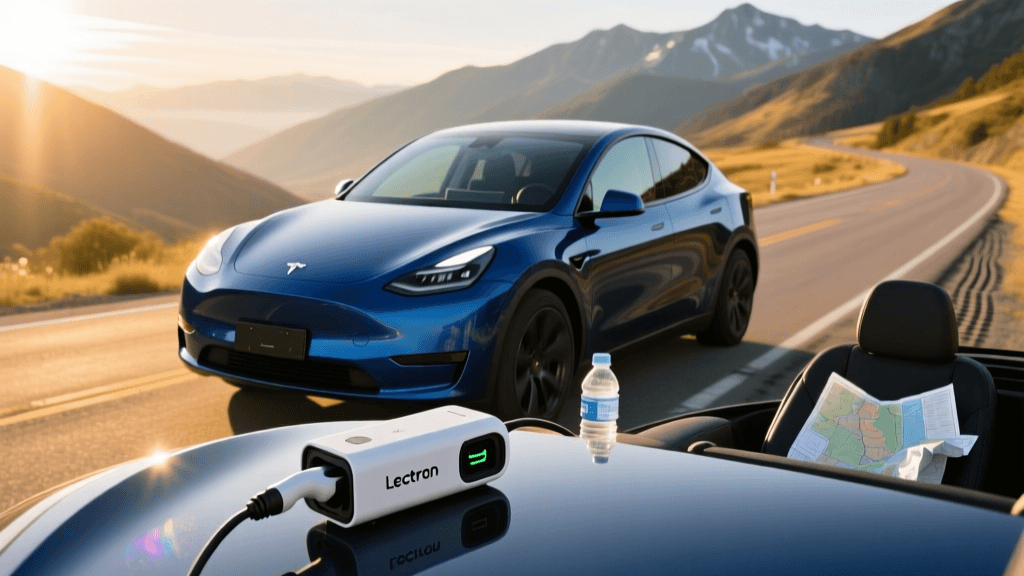
Embarking on a cross-country road trip in an electric vehicle is an adventure, but when you venture off the beaten path of DC fast-charging corridors, portable charging becomes your lifeline. The Lectron portable EV charger lineup—particularly the 32A and 40A models with NEMA 14-50 plugs and digital displays—has become a favorite among EV road-trippers. However, relying on unknown electrical infrastructure at RV parks, aging motels, and remote campgrounds introduces a host of variables that can interrupt your journey.
Unlike hardwired home charging stations, portable chargers must interface with receptacles that may be weathered, improperly wired, or heavily degraded. When your Lectron charger throws an error code or refuses to initiate a charge, you need a systematic troubleshooting approach. This guide dives deep into the most common road-trip charging failures with Lectron portable units and provides actionable, safe solutions to get you back on the road.
Issue 1: The Dreaded Ground Fault Error
The Scenario: You arrive at a rural RV park or an older Airbnb, plug your Lectron into a NEMA 14-50 or NEMA 6-20 receptacle, and the charger immediately flashes a red ground fault LED. The digital screen may remain blank or show an error, and the internal safety relay prevents power from flowing to your vehicle.
The Diagnosis: Portable EV chargers are equipped with stringent Ground Fault Circuit Interrupter (GFCI) and equipment grounding monitors. If the receptacle lacks a continuous, low-resistance path to the earth ground, the Lectron will refuse to charge. In older facilities, grounds are often missing, corroded, or 'bootlegged' (incorrectly wired to the neutral).
The Solution:
- Test the Receptacle: Always carry a heavy-duty receptacle tester (like a Gardner Bender GFI-3501). Plug it in to verify if the ground is truly open or if the hot/neutral wires are reversed.
- Avoid Cheater Plugs: Never use a ground lift adapter (cheater plug) to bypass the Lectron's safety protocols. According to the U.S. Department of Energy, proper grounding is a non-negotiable safety requirement for EV charging equipment to prevent stray voltage and severe shock hazards.
- Find an Alternative Circuit: If the 14-50 pedestal is ungrounded, check if the facility has a NEMA 5-15 (standard 120V) outdoor outlet on a newer building. While charging at 120V will only yield 3-5 miles of range per hour, it can provide enough buffer to reach a functional DC fast charger the next morning.
Issue 2: Thermal Throttling and Overheating Plugs
The Scenario: You are charging at a campground at 32 amps. After 45 minutes, you notice the Lectron's digital display shows the plug temperature climbing, or the charger abruptly drops the amperage from 32A down to 16A without any input from you.
The Diagnosis: RV park and campground outlets endure extreme abuse, weather exposure, and frequent plugging/unplugging of high-draw RV air conditioners. This causes the internal brass contacts to loosen and oxidize. Loose contacts create high electrical resistance, which generates intense heat. The Lectron features built-in thermal sensors inside the plug head; when it detects temperatures exceeding safe thresholds (typically around 185°F / 85°C at the pins), it automatically throttles the amperage to prevent the plastic housing from melting or catching fire.
The Solution:
- Verify with an IR Thermometer: Keep a compact infrared thermometer in your glovebox. Scan the plug head and the receptacle face. If the receptacle itself is radiating heat above 140°F (60°C), the outlet is physically degraded and unsafe for continuous 32A draw.
- Manually Derate Amperage: Do not wait for the charger to thermal throttle. Go into your vehicle's infotainment system or the Lectron app (if using a smart model) and manually lower the maximum charge current to 24A or 16A. This reduces the thermal load on the degraded receptacle, allowing you to charge safely overnight, albeit at a slower rate.
- Clean the Contacts: Sometimes, oxidation on the Lectron's own plug prongs causes heat. Use a fine-grit sandpaper or a brass wire brush to gently polish the prongs, then wipe them with isopropyl alcohol to ensure optimal conductivity.
Issue 3: The 'Handshake' Failure and Connection Drops
The Scenario: The Lectron screen lights up, confirms 240V is present, but the vehicle refuses to accept the charge. You hear the vehicle's contactor clicking repeatedly, or the charger initiates the charge but drops it every 10 minutes.
The Diagnosis: EV charging requires a digital 'handshake' via the Control Pilot (CP) and Proximity Pilot (PP) pins on the J1772 connector. If the vehicle's charge port sensor cannot confirm the connector is fully seated, or if moisture disrupts the low-voltage signal wire, the handshake fails. The National Highway Traffic Safety Administration (NHTSA) emphasizes that maintaining the integrity of EV charging connections is vital to prevent arcing and system faults.
The Solution:
- Inspect for Moisture and Debris: Road trips mean unpredictable weather. If it is raining or snowing, ensure the J1772 connector is facing downward when not in use to prevent water pooling inside the pins. Use a dry microfiber cloth to wipe the vehicle's charge port and the Lectron connector.
- Check the Release Latch: The mechanical latch on the J1772 connector can accumulate road grit. If the latch doesn't fully engage the vehicle's locking pin, the proximity circuit remains open. Spray a small amount of electrical contact cleaner into the latch mechanism and work it back and forth to dislodge debris.
- Support the Cable Weight: The Lectron 32A cable is thick and heavy. On some vehicles with lower-mounted charge ports, the weight of the cable pulls the connector downward, creating a poor connection with the top control pins. Use a bungee cord or a specialized cable support to relieve the tension on the vehicle's port.
Extension Cords: The Road Trip Taboo
A frequent troubleshooting mistake made by desperate EV road-trippers is using a standard household extension cord to reach a distant outlet. Never use a standard extension cord with a portable EV charger. Standard cords use thin gauge wire (16 AWG or 14 AWG) that will melt under the continuous 12-amp or 32-amp load of an EV charger, posing a severe fire hazard.
If you absolutely must extend your reach, you must purchase a heavy-duty, EV-rated extension cord. For a 120V NEMA 5-15 setup, you need a 12 AWG or 10 AWG cord rated for 15 amps. For a 240V NEMA 14-50 setup, you need a specialized 6 AWG or 8 AWG EV extension cord with matching 14-50 connectors. These cords are expensive and heavy, but they are the only safe way to bridge a gap when parking far from an RV pedestal.
Road Trip Troubleshooting Data & Comparison
How does the Lectron portable charger stack up against the OEM alternative when things go wrong on the road? The digital display is the Lectron's secret weapon for diagnostics.
| Feature / Scenario | Lectron 32A Portable | OEM Mobile Connector (e.g., Tesla) |
|---|---|---|
| Voltage & Amperage Readout | Real-time digital LCD screen | Requires checking vehicle app/screen |
| Plug Temperature Monitoring | Visible on-screen temp data & auto-throttle | Internal throttle, no temp data shown to user |
| Error Code Diagnostics | Specific LED codes & screen readouts | Generic LED flash patterns (requires manual lookup) |
| Ground Fault Indication | Dedicated Ground LED & screen alert | Generic red fault light |
Your Lectron Road Trip Emergency Kit
To minimize downtime and troubleshoot effectively, keep the following items in your EV's frunk or trunk alongside your Lectron charger:
- Receptacle Tester: To verify wiring and ground presence before plugging in your expensive EVSE.
- Infrared Thermometer: To monitor plug and outlet temperatures during high-amperage charging sessions.
- Electrical Contact Cleaner & Microfiber Cloths: For cleaning J1772 pins and vehicle charge ports.
- Heavy-Duty NEMA Adapters: Lectron sells various adapter heads (like NEMA 6-20 or 10-30). Carry the 10-30 and 6-20 adapters, as older RV parks and welding shops often have these outlets when 14-50s are unavailable.
- Headlamp or Flashlight: Essential for inspecting dark, unlit campground receptacles at night.
Final Thoughts
Troubleshooting a portable EV charger on a road trip is less about fixing the charger itself and more about diagnosing the environment it is plugged into. The Lectron portable charger's robust safety features and informative digital display make it an exceptional tool for the traveling EV owner, provided you understand how to interpret its warnings. By carrying the right diagnostic tools, respecting thermal limits, and prioritizing electrical safety, you can confidently navigate the wild grid and keep your road trip on schedule.