The Solar EV Charging Illusion: What Brands Don't Tell You
Pairing a home solar array with an electric vehicle is the ultimate dream for eco-conscious drivers and frugal commuters alike. The idea of fueling your car with free electrons from the sun is undeniably appealing. However, the marketing hype surrounding 'solar-ready' EV chargers has created a minefield of misconceptions. As a senior reviewer for AutoEdgeView, I have tested dozens of smart chargers, and I can tell you that plugging into a solar-integrated charger is not always the plug-and-play utopia that manufacturers advertise.
According to the EPA's guide on electric vehicle myths, consumers often overestimate the simplicity of home energy integration while underestimating the technical requirements. Today, we are busting the three biggest myths about solar-integrated EV chargers and reviewing how the industry leaders—myenergi Zappi, Wallbox, and Emporia—actually handle solar diversion in the real world.
Myth #1: You Need a Massive Solar Array to Charge an EV
The Myth: Unless you have a sprawling 15kW+ solar system and a Tesla Powerwall, solar EV charging is pointless because your panels won't generate enough raw wattage to trigger a charging session.
The Reality: You do not need a massive array; you just need a charger with an adjustable 'Eco' or 'Solar Divert' mode. Most modern EVs require a minimum of 1.4kW (roughly 6 Amps at 240V) to wake up the vehicle's onboard charger and initiate a session. If your home is currently consuming 1kW and your 5kW solar array is producing 3kW, you have 2kW of excess solar being exported to the grid for pennies.
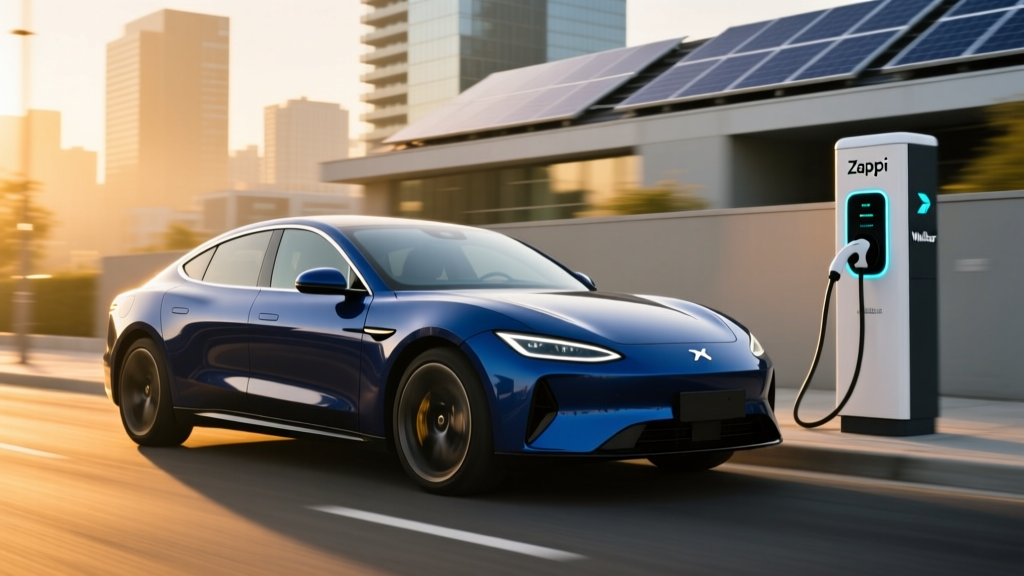
The myenergi Zappi V2.1 is the gold standard here. Its 'Eco' mode continuously monitors your home's export. The moment it detects 1.4kW of excess solar, it diverts it to the EV. If a cloud passes over and solar production drops, the Zappi pauses the charge rather than pulling from the grid. Even a modest 5kW array can yield 10 to 15 miles of free daily range during peak sun hours simply by capturing the micro-excess that would otherwise be lost.
Myth #2: Any 'Smart' Wi-Fi Charger Can Automatically Use Excess Solar
The Myth: If you buy a premium Wi-Fi-enabled charger and link it to your solar inverter's app, it will automatically charge your car using only solar power.
The Reality: This is the most common and costly mistake DIYers make. A Wi-Fi connection to an inverter's cloud API is riddled with latency and often lacks the granular, real-time data required to safely divert power. To achieve true solar diversion, you must install Current Transformer (CT) clamps on your main electrical panel's grid feed.
Without CT clamps, the charger is entirely blind to your home's real-time consumption. It doesn't know if your HVAC just kicked on or if your oven is preheating. The Alternative Fuels Data Center emphasizes that Level 2 charging infrastructure requires precise load management to prevent breaker trips. The Wallbox Pulsar Plus is an incredible charger, but out of the box, it is just a standard timer-based charger. To unlock its solar-diverting 'Eco-Smart' features, you must purchase and install the separate Wallbox Power Meter (often adding $200-$250 to your bill) and wire its CT clamps into your main panel. If you skip this hardware step, your 'solar' charger is just a very expensive dumb charger.
Myth #3: Cloudy Days Mean Your Solar EV Charging Stops Completely
The Myth: Solar EV charging is an all-or-nothing game. If the sun isn't shining brightly, the charger stops, and you must manually switch to grid power to ensure your car is ready for the morning commute.
The Reality: Premium solar chargers utilize 'Grid-Blending' technology. Let's look at the Zappi's Eco+ Mode. In Eco+, the charger dynamically blends excess solar with grid power to maintain a continuous minimum charge rate of 1.4kW. If your solar panels are only producing 0.8kW of excess due to cloud cover, the Zappi will pull the remaining 0.6kW from the grid to keep the car's EVSE awake and charging. As the sun breaks through the clouds, the charger seamlessly scales back the grid draw and ramps up the solar diversion. This ensures your vehicle is always charged by your departure time, maximizing solar usage without the anxiety of a stalled charging session.
Top Solar-Integrated EV Chargers Compared
Not all solar integrations are created equal. Below is a breakdown of how the top three contenders handle solar diversion, hardware requirements, and overall value.
| Feature | myenergi Zappi V2.1 | Wallbox Pulsar Plus | Emporia Level 2 Charger |
|---|---|---|---|
| Solar Integration Method | Built-in Eco / Eco+ Modes | Requires Eco-Smart & Power Meter | Requires Emporia Vue Panel |
| CT Clamps Included? | Yes (Wired or Wireless Harvi) | No (Sold Separately) | Yes (Included with Vue) |
| Minimum Solar Divert | 1.4kW (Adjustable down to 6A) | 1.4kW (via App) | Dynamic (via App) |
| Connectivity | Wi-Fi + Ethernet | Wi-Fi + Bluetooth | Wi-Fi Only |
| Estimated Hardware Cost | $1,050 | $650 + $250 Meter | $699 (w/ Vue Monitor) |
| Best For | Purists wanting maximum solar | Those wanting sleek design + solar | Budget-conscious whole-home tracking |
The Verdict on Hardware
The myenergi Zappi remains the undisputed king of solar integration. Its inclusion of CT clamps (and the optional 'Harvi' wireless hub, which saves you from running wires from the main panel to the charger) makes installation significantly easier for electricians. The Emporia Level 2 is a fantastic budget alternative, but it requires you to install the Emporia Vue energy monitor inside your main panel to track individual circuits, which can be overwhelming for a standard EV-only installation.
Common Installation Mistakes to Avoid
Even if you choose the right hardware, improper installation can render your solar features useless or, worse, create a fire hazard. Avoid these two critical mistakes:
1. Ignoring the NEC 120% Busbar Rule
As outlined by the Department of Energy's home charging guidelines, electrical safety is paramount when adding high-draw appliances. When you combine a solar backfeed breaker and a 50-Amp EV charger breaker (which draws 40 Amps continuously) on the same electrical panel, you frequently violate the National Electrical Code (NEC) 120% busbar rule. If your panel's busbar is rated for 200 Amps, the sum of your main breaker and solar breaker cannot exceed 240 Amps. Adding a 50A EV circuit often pushes you over the limit. The Fix: You may need a panel upgrade, a sub-panel, or a smart load-management device (like the Wallbox Power Sharing) that physically prevents the EV charger and solar inverter from overloading the main busbar simultaneously.
2. Relying on Inverter Cloud APIs Instead of Local CTs
Some tech-savvy users try to use IFTTT applets or cloud APIs (like Enphase or SolarEdge) to trigger their EV chargers when solar production peaks. Do not do this. Cloud APIs have latency delays ranging from 5 to 15 minutes. In that time, a cloud could pass over, your solar production could drop to zero, and your charger would still be pulling 7kW from the grid, completely defeating the purpose of solar charging. Always use hardwired, local CT clamps that react in milliseconds to your home's actual electrical flow.
Final Thoughts: Is Solar Diversion Worth It?
If you already have solar panels and a time-of-use (TOU) utility plan that makes daytime electricity expensive or heavily taxed, a solar-integrated charger like the Zappi is an absolute game-changer. It allows you to capture 'curtailed' or exported solar energy that your utility company might only credit you at wholesale rates (e.g., $0.04/kWh) and put it directly into your car's battery (valued at $0.15/kWh or more at the pump).
However, if you do not have solar panels yet, or if your utility offers 1:1 net metering where excess solar is credited at full retail value, the financial ROI of spending an extra $400 on a solar-diverting charger drops significantly. In that case, a standard smart charger on a scheduled midnight timer might be all you need. Understand your local utility rates, measure your home's actual solar export, and choose the hardware that matches your reality—not the marketing hype.