The Promise of V2G: Moving Beyond the Hype
Bidirectional charging, specifically Vehicle-to-Grid (V2G) technology, has long been considered the holy grail of electric vehicle infrastructure. Unlike unidirectional charging that only pulls power from the grid, V2G allows an EV battery to discharge power back into the grid during peak demand periods. For years, this concept existed primarily in academic models and controlled laboratory settings. Today, however, utility companies, automakers, and fleet operators are rolling out real-world pilot programs that provide concrete data on the financial viability of V2G. In this cost and value breakdown, we analyze the latest V2G pilot program results, examining hardware expenses, installation realities, and the actual return on investment (ROI) for both commercial fleets and residential early adopters.
Recent V2G Pilot Programs: Who is Testing What?
The transition from theoretical models to active deployments has been spearheaded by partnerships between utilities, hardware manufacturers, and automakers. According to the National Renewable Energy Laboratory (NREL), vehicle-grid integration (VGI) encompasses a wide array of technologies, but V2G represents the most complex and potentially lucrative subset. Recent pilot programs have focused heavily on commercial fleets, where the economics of demand charge mitigation are most favorable.
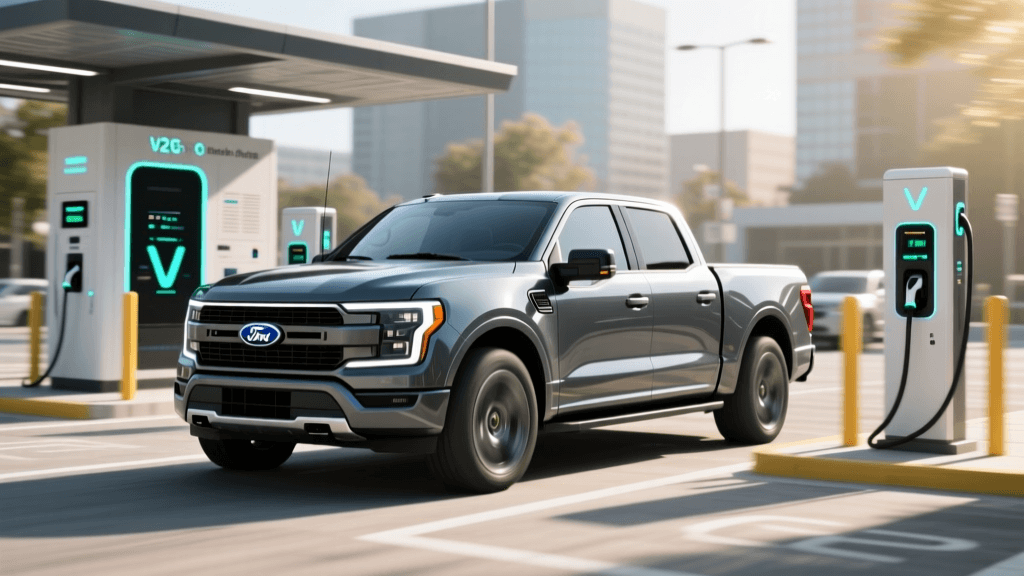
One of the most closely watched pilots involves Duke Energy, Fermata Energy, and the Ford F-150 Lightning. Fermata Energy deployed its FE-15 bidirectional DC fast chargers to aggregate the battery capacity of Ford's electric trucks. The goal was to test how a fleet of light-duty commercial trucks could participate in utility dispatch programs, providing grid stabilization and peak shaving services. Similarly, Nissan has been a pioneer in this space, utilizing the CHAdeMO-equipped LEAF in various Virtual Power Plant (VPP) trials globally, including partnerships with NextEra Energy and UK-based Octopus Energy, proving that older EV architectures can still yield significant grid value.
Cost Breakdown: Hardware, Installation, and Software
Understanding the ROI of V2G requires a clear-eyed look at the upfront capital expenditure (CapEx). Bidirectional charging is not simply a matter of swapping out a wall connector; it requires specialized inverters, advanced software, and often significant electrical infrastructure upgrades.
Commercial Fleet V2G Costs
For commercial applications, hardware like the Fermata Energy FE-15 (a 15kW bidirectional DC charger) or the UtuV2G systems are the standard. These units are built for heavy-duty cycling and grid-compliant communication protocols.
- Hardware Costs: Commercial bidirectional DC chargers typically range from $15,000 to $25,000 per unit. This is significantly higher than standard unidirectional DC fast chargers due to the complex power electronics required to invert DC battery power back to AC grid power.
- Installation and Infrastructure: Commercial sites often require new switchgear, trenching, and utility service upgrades. Installation costs can easily match or exceed the hardware cost, ranging from $10,000 to over $30,000 per site depending on the existing electrical capacity.
- Software and Aggregation Fees: To actually sell power back to the grid, fleets must use an aggregator platform that interfaces with the local Independent System Operator (ISO). These platforms usually charge a SaaS fee or take a percentage (often 15% to 25%) of the grid revenue generated.
Residential V2G Costs
Residential V2G is still in its infancy, heavily dependent on the upcoming rollout of chargers like the Wallbox Quasar 2 and the integration of the ISO 15118-20 communication standard. The U.S. Department of Energy (DOE) highlights that standardized communication protocols are essential for scaling residential V2G securely.
- Hardware Costs: Residential bidirectional AC chargers are projected to cost between $6,000 and $8,000. (Note: Ford's Charge Station Pro enables Vehicle-to-Home (V2H) for around $1,300, but true V2G requires additional utility-compliant metering and software).
- Installation: Upgrading a residential panel to 200A or 400A to support bidirectional flow and home backup can cost $2,000 to $5,000.
The Value Proposition: Revenue and Savings
The value of V2G is derived from two main avenues: avoiding utility demand charges (for fleets) and participating in grid ancillary service markets or VPPs (for both fleets and residential users).
Fleet Demand Charge Mitigation
Commercial electricity bills are often dominated by 'demand charges'—fees based on the highest 15-minute peak power draw during a billing cycle, which can cost $15 to $25 per kW. A fleet of five Ford F-150 Lightnings connected to bidirectional chargers can discharge up to 48 kW of power (via external inverters or V2H/V2G setups) precisely when the facility's demand spikes. By shaving this peak, a fleet facility can save thousands of dollars monthly, drastically accelerating the payback period of the charging hardware.
Virtual Power Plants (VPP) and Grid Services
Aggregators bundle hundreds of EV batteries to act as a single, dispatchable power plant. During extreme heat waves or grid emergencies, utilities will pay VPPs to discharge power. Early pilot data suggests that residential VPP participants can earn between $400 and $1,200 annually, while commercial fleets participating in frequency regulation and capacity markets can generate $5,000 to $15,000+ per vehicle per year, depending on the regional grid operator (e.g., CAISO, PJM, or ERCOT).
Data Table: V2G Pilot Cost vs. Value Analysis
The following table summarizes the estimated financial breakdown based on recent commercial and residential V2G pilot data and projected retail pricing.
| Component / Metric | Residential V2G (e.g., Wallbox Quasar 2) | Commercial Fleet V2G (e.g., Fermata FE-15) |
|---|---|---|
| Hardware Cost | $6,000 - $8,000 | $15,000 - $25,000 |
| Installation & Upgrades | $2,000 - $5,000 | $10,000 - $30,000+ |
| Annual Grid Revenue/Savings | $400 - $1,200 | $5,000 - $15,000+ |
| Estimated Payback Period | 5 - 8 Years | 2 - 4 Years |
| Primary Value Driver | VPP Payouts & Time-of-Use Arbitrage | Demand Charge Mitigation & Capacity Markets |
The Hidden Cost: Battery Degradation and Warranties
Any cost and value breakdown of V2G must address the elephant in the room: battery degradation. Discharging an EV battery to support the grid adds charge cycles to the battery. While modern lithium-ion and LFP batteries are highly resilient, fleet operators and consumers are rightfully concerned about voiding their manufacturer warranties.
Nissan has been uniquely aggressive here, offering specific warranties that cover V2G usage for the LEAF in certain markets, recognizing that the financial upside for the grid outweighs the minimal extra degradation. Ford allows V2H and V2G capabilities on the F-150 Lightning, but fleet managers must carefully monitor state-of-charge (SoC) limits. Aggregator software typically restricts V2G discharging to a maximum depth of discharge (e.g., never dropping below 30% SoC) to preserve battery health for the vehicle's primary transportation duties. Federal initiatives tracked by the Joint Office of Energy and Transportation continue to fund research into minimizing the long-term impacts of bidirectional cycling on EV battery lifespans.
Actionable Advice: Is V2G Right for Your Fleet or Home?
If you are evaluating bidirectional charging for your organization or home, follow these actionable steps to determine viability:
- Audit Your Utility Tariff: V2G is only financially viable if your utility enforces high demand charges (for commercial) or extreme Time-of-Use (ToU) peak rates (for residential). If you are on a flat commercial rate, the ROI for V2G drops significantly.
- Verify Vehicle Compatibility: Ensure your EVs support the necessary protocols. The CHAdeMO standard (Nissan LEAF) currently has the most mature V2G ecosystem. For CCS vehicles (like the Ford F-150 Lightning or Hyundai Ioniq 5), ensure the hardware supports the ISO 15118-20 standard, which is required for secure, automated bidirectional communication.
- Engage an Aggregator Early: Do not buy V2G hardware without a signed agreement or letter of intent from a VPP aggregator or your local utility. The hardware is useless for grid revenue without the software bridge to the energy market.
- Right-Size the Fleet for VPP: For commercial fleets, vehicles that sit idle for long periods (e.g., school buses, delivery vans with predictable routes, or airport rental shuttles) are the ideal candidates. Vehicles that are constantly on the road cannot reliably guarantee capacity to the grid.
Conclusion
The results from recent V2G pilot programs demonstrate that bidirectional charging is no longer a futuristic concept—it is a tangible financial tool. While the upfront costs for commercial hardware like the Fermata FE-15 remain steep, the ability to obliterate utility demand charges and tap into grid capacity markets yields a compelling 2-to-4-year payback period for optimized fleets. Residential V2G faces a longer road to ubiquity, hindered by hardware availability and fragmented utility VPP programs, but it represents a massive untapped value stream for the future grid. For fleet managers and early-adopter EV owners willing to navigate the complex software and utility requirements, V2G offers a rare opportunity to turn an expensive depreciating asset into a revenue-generating grid resource.