The Crucial Role of Interoperability in Modern EV Infrastructure
The electric vehicle (EV) charging ecosystem is rapidly evolving from a fragmented landscape of proprietary networks into a highly interconnected, standardized grid. At the heart of this transformation are open communication protocols that ensure hardware, software, and vehicles can seamlessly interact regardless of the manufacturer. For Charge Point Operators (CPOs), fleet managers, and e-Mobility Service Providers (eMSPs), understanding the nuances of these interoperability standards is no longer optional; it is a critical business imperative. As the industry pushes toward automated billing, smart grid integration, and bidirectional charging, two foundational protocols are leading the charge: the Open Charge Point Protocol (OCPP) and the ISO 15118 vehicle-to-grid communication standard.
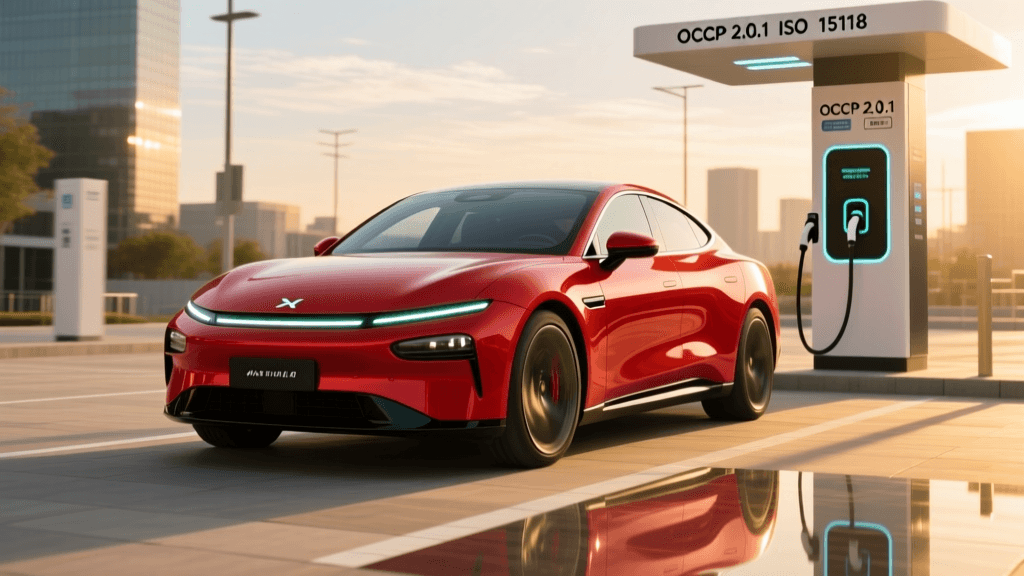
This technology deep dive explores the latest updates in EV charging interoperability, specifically focusing on the transition to OCPP 2.0.1 and the advanced capabilities introduced by ISO 15118-20. We will break down the technical architecture, security requirements, and actionable steps necessary to future-proof your charging infrastructure.
OCPP 2.0.1: A Quantum Leap in Charge Point Management
For years, OCPP 1.6 has been the workhorse of the EV charging industry, providing reliable JSON-over-WebSocket communication between Electric Vehicle Supply Equipment (EVSE) and backend Charging Station Management Systems (CSMS). However, as charging networks scale to thousands of nodes, the limitations of 1.6 regarding security, device management, and complex smart charging scenarios have become apparent. The Open Charge Alliance developed OCPP 2.0.1 to address these exact pain points, introducing a modular architecture that fundamentally changes how charging stations are managed and secured.
Advanced Security and Hardware Requirements
The most significant architectural shift in OCPP 2.0.1 is the mandatory implementation of robust cybersecurity measures. Unlike 1.6, where TLS encryption was often an optional add-on, OCPP 2.0.1 mandates TLS 1.2 or higher for all WebSocket communications. Furthermore, it introduces a comprehensive security framework that relies on hardware-level root-of-trust. Modern EVSE mainboards deployed for OCPP 2.0.1 compliance are increasingly required to feature a Trusted Platform Module (TPM 2.0) or a Secure Element (SE). This hardware-level security ensures that cryptographic keys used for CSMS authentication and firmware update verification are physically isolated from the main operating system, drastically reducing the attack surface for remote exploitation.
Smart Charging Profiles and Grid Integration
OCPP 2.0.1 replaces the rudimentary smart charging profiles of 1.6 with a highly granular Smart Charging module. This allows the CSMS to dictate charging limits based on complex variables, including grid constraints, local solar generation availability, and dynamic utility pricing. For fleet depots managing dozens of Level 2 chargers or DC fast chargers, OCPP 2.0.1 enables the CSMS to orchestrate load balancing at the individual connector level, ensuring that total site power draw never exceeds the local transformer's capacity while prioritizing vehicles with the most urgent departure schedules.
ISO 15118: Enabling True Plug & Charge and V2G
While OCPP governs the cloud-to-station connection, ISO 15118 dictates the critical vehicle-to-station (V2S) communication. This protocol operates over Power Line Communication (PLC), utilizing the existing Control Pilot (CP) wire in the charging cable to transmit high-speed digital data between the EV's onboard charger and the EVSE. The widespread adoption of ISO 15118 is the key enabler for Plug & Charge (PnC) functionality, which eliminates the need for RFID cards or mobile app activations by automatically identifying the vehicle and initiating a secure billing transaction the moment the cable is connected.
The Public Key Infrastructure (PKI) Behind Plug & Charge
Implementing ISO 15118 Plug & Charge requires a sophisticated Public Key Infrastructure (PKI). When a vehicle plugs in, it presents a digital Contract Certificate to the EVSE. The EVSE then forwards this certificate via OCPP to the CSMS, which verifies it against a centralized V2G Root Certificate Authority. According to the technical guidelines maintained by CharIN e.V., the global association driving ISO 15118 adoption, this handshake must occur in milliseconds and requires seamless integration between the CPO's backend and various eMSP clearing houses. For network operators, this means upgrading legacy CSMS platforms to support the ISO 15118-2 certificate provisioning and revocation protocols (OCSP).
ISO 15118-20 and Bidirectional Power Transfer (BPT)
The latest iteration, ISO 15118-20, expands the protocol's scope beyond basic AC and DC charging to include Bidirectional Power Transfer (BPT). This update standardizes the communication required for Vehicle-to-Grid (V2G) and Vehicle-to-Home (V2H) applications. By defining the exact parameters for reverse power flow, including safety interlocks and grid-code compliance signaling, ISO 15118-20 allows EVs to act as distributed energy resources (DERs). The Vehicle-to-Grid Hub, managed by the U.S. Department of Energy and Argonne National Laboratory, highlights that standardized BPT communication is the final missing link for utility companies to confidently integrate EV batteries into their demand-response and frequency-regulation markets.
Protocol Comparison Matrix
Understanding the distinct roles and capabilities of these protocols is essential for designing a compliant and future-proof charging architecture. The table below outlines the core differences between legacy and modern interoperability standards.
| Feature | OCPP 1.6 | OCPP 2.0.1 | ISO 15118-2 / -20 |
|---|---|---|---|
| Primary Function | EVSE to CSMS Telemetry & Control | Advanced EVSE Management & Security | Vehicle to EVSE Communication (V2S) |
| Communication Medium | Cellular / Ethernet (WebSockets) | Cellular / Ethernet (WebSockets) | Power Line Communication (PLC) over CP |
| Security Standard | Optional TLS, Basic HTTP Auth | Mandatory TLS 1.2+, TPM 2.0, PKI | TLS 1.2+, V2G PKI Contract Certificates |
| Smart Charging | Basic Profiles (AC/DC) | Advanced Profiles, External Limits | Negotiated EV charging schedules |
| Bidirectional (V2G) | Not Supported | Supported via external systems | Native BPT support (in 15118-20) |
Actionable Implementation Guide for CPOs and Fleet Operators
Transitioning to OCPP 2.0.1 and ISO 15118 requires coordinated hardware and software upgrades. Below is a practical, step-by-step guide for infrastructure operators looking to adopt these open protocols.
Step 1: Conduct a Hardware Security Audit
Before attempting a software migration to OCPP 2.0.1, audit your existing EVSE fleet. Verify if the mainboards are equipped with a TPM 2.0 chip or a Secure Element. If your current hardware relies on software-based key storage, it will fail the strict security profile requirements of OCPP 2.0.1. For new deployments, explicitly mandate TPM 2.0 and TLS 1.3 hardware acceleration in your Request for Proposals (RFPs) to ensure the chargers can handle the cryptographic overhead of ISO 15118 Plug & Charge handshakes without timing out.
Step 2: Upgrade CSMS Backend for V2G PKI
Plug & Charge is impossible without a CSMS capable of acting as a Secondary Actor in the V2G PKI ecosystem. Ensure your backend provider supports the OCPP 1.6 or 2.0.1 ISO 15118 Certificate Management messages (e.g., Get15118EVCertificate). You must also establish partnerships with V2G Root Certificate Authorities, such as Hubject or Gireve, to ensure your CSMS can validate the OEM-issued contract certificates presented by incoming EVs.
Step 3: Prepare for ISO 15118-20 and BPT Integration
If your network serves commercial fleets or utility-backed V2G pilot programs, ensure your DC fast chargers support the physical and communication layers of ISO 15118-20. This includes upgrading the EVSE's PLC modem to handle the higher data throughput required for BPT scheduling and ensuring your CSMS can process reverse-energy metering data for accurate financial settlement when vehicles discharge power back to the grid.
Conclusion
The shift toward OCPP 2.0.1 and ISO 15118 represents a maturation of the EV charging industry, moving from basic connectivity to a highly secure, automated, and grid-interactive ecosystem. By embracing these open interoperability standards, CPOs and fleet operators can unlock seamless Plug & Charge experiences, optimize energy costs through advanced smart charging, and prepare their infrastructure for the bidirectional V2G revolution. Staying ahead of these protocol updates is the definitive way to ensure your charging network remains resilient, profitable, and technologically relevant in the decades to come.