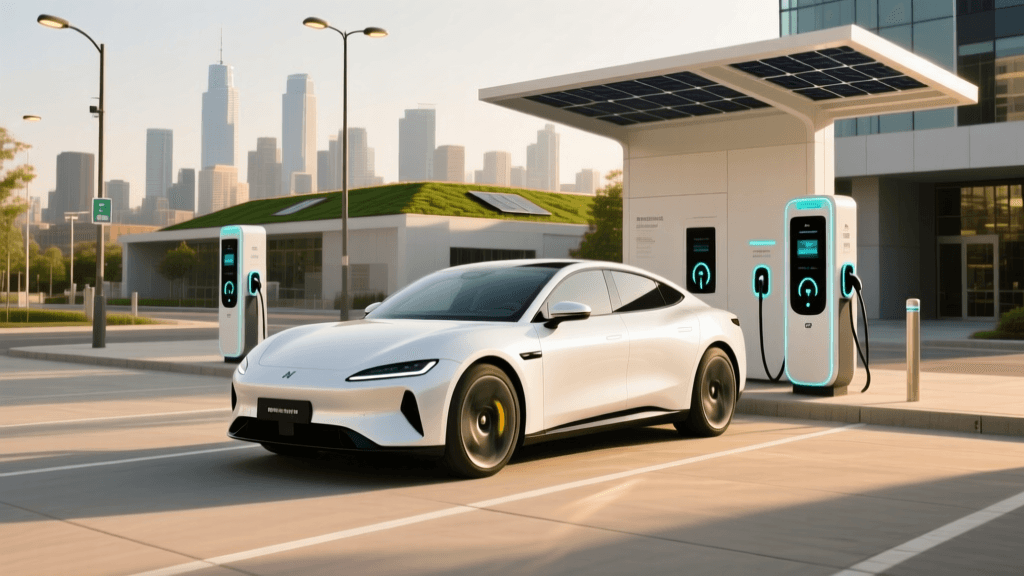
The Hidden Hurdle: When the Grid Cannot Handle Your EV Chargers
For commercial fleet operators, commercial real estate developers, and charging network providers, the most frustrating bottleneck in EV infrastructure deployment is rarely the availability of the chargers themselves. Instead, it is the invisible limitation of the local electrical grid. When a new depot or commercial site experiences tripped breakers, severe voltage drops, or multi-year utility interconnection delays, the root cause is almost always a failure to accurately predict electrical load. Troubleshooting these grid limitations requires moving beyond basic electrical math and embracing EV charging demand forecasting and rigorous grid impact studies.
In this guide, we will explore how to diagnose grid capacity issues, utilize advanced forecasting tools, and implement actionable problem-solving strategies to keep your EV charging projects on schedule and within budget.
The Core Problem: Guesswork vs. Grid Reality
Many site hosts attempt to size their electrical infrastructure using simple concurrent load calculations. For example, if you are installing ten 150 kW DC fast chargers, you might request 1.5 MW of capacity from the utility. However, this 'nameplate capacity' approach ignores the reality of EV charging behavior. Vehicles do not always charge at peak rates simultaneously, and charging curves taper significantly as batteries reach an 80 percent state of charge. Conversely, if you are managing a fleet of electric delivery vans that all plug in at 6:00 PM after their routes, you might create a massive, localized demand spike that the local distribution transformer cannot handle.
When the grid is pushed beyond its thermal or voltage limits, the consequences are severe. Transformers overheat and degrade, protection relays trip, and power quality degrades, leading to charger faults. To troubleshoot and prevent these failures, engineers must rely on sophisticated demand forecasting and localized impact studies.
What is EV Charging Demand Forecasting?
EV charging demand forecasting is the practice of using historical data, telematics, and behavioral modeling to predict exactly when, where, and how much electricity a charging site will draw from the grid. Rather than assuming maximum simultaneous draw, forecasting tools analyze variables such as dwell time, battery state-of-charge upon arrival, ambient temperature impacts on battery acceptance rates, and driver behavior.
One of the most authoritative tools in this space is the NREL EVI-Pro (Electric Vehicle Infrastructure Projections) model, developed by the National Renewable Energy Laboratory. EVI-Pro allows planners to simulate regional and localized charging demand based on specific vehicle types and use cases. By inputting your specific fleet telematics or expected customer dwell times, you can generate a realistic load profile that often reveals you need 30 to 40 percent less peak grid capacity than the raw nameplate math suggests.
Troubleshooting Grid Bottlenecks: A Step-by-Step Guide
When you suspect your site is facing grid constraints, or if your utility interconnection application has been flagged for a costly network upgrade, follow these troubleshooting steps to identify alternative solutions.
Step 1: Interrogate Utility Hosting Capacity Maps
Before signing a lease or purchasing a property for a charging hub, you must troubleshoot the site's baseline viability. Many modern utilities and public utility commissions now publish Hosting Capacity Maps (HCMs). These interactive maps color-code the distribution grid based on how much additional distributed energy resource (DER) or load capacity a specific circuit can handle without requiring infrastructure upgrades.
According to National Renewable Energy Laboratory (NREL) research on distribution system hosting capacity, these maps evaluate thermal limits, voltage regulation, and protection coordination. If your target site is located on a circuit marked 'red' or 'constrained,' you know immediately that a standard grid connection will trigger a massive utility bill for transformer upgrades. The problem-solving pivot here is to either choose a different site or plan for behind-the-meter mitigation strategies like Battery Energy Storage Systems (BESS).
Step 2: Conduct a Localized Grid Impact Study
If you are already committed to a site and facing interconnection delays, you must commission a localized grid impact study. This is a detailed engineering analysis that models the specific electrical characteristics of your proposed EV chargers against the utility's distribution feeder. A proper impact study will troubleshoot three main issues:
- Thermal Overloading: Will the combined kVA of your chargers exceed the ampacity of the local distribution lines or transformers during peak summer temperatures?
- Voltage Drop and Flicker: DC fast chargers draw massive inrush currents when a vehicle initiates a charge. An impact study will calculate if this sudden draw causes voltage sags that violate ANSI C84.1 standards (typically keeping voltage within 5 percent of nominal).
- Harmonic Distortion: The power electronics inside EV chargers and solar inverters can introduce harmonic noise back into the grid. The study will determine if you need to install active harmonic filters to comply with IEEE 519 standards.
Step 3: Implement Dynamic Load Management (DLM)
If your impact study reveals that your peak demand exceeds the site's transformer capacity, the most cost-effective troubleshooting solution is Dynamic Load Management (DLM). DLM software, such as ChargePoint Power Management or Ampcontrol, acts as a traffic cop for your electrical panel. It monitors the real-time load of the building and the chargers, dynamically throttling the power delivered to individual vehicles to ensure the main breaker never trips. For fleet operators, DLM can be integrated with fleet management software to prioritize vehicles that need to be dispatched first, ensuring operational readiness without blowing a fuse.
Data Table: Grid Impact Mitigation Strategies & Costs
When troubleshooting a grid capacity shortfall, site hosts have several engineering solutions at their disposal. The table below compares these strategies based on the specific grid problem they solve, estimated costs, and implementation timelines.
| Mitigation Strategy | Grid Problem Solved | Estimated Cost (per Site) | Implementation Time |
|---|---|---|---|
| Dynamic Load Management (DLM) | Prevents transformer thermal overload and main breaker trips. | $5,000 - $15,000 (Software & Gateways) | 1 - 3 Months |
| Battery Energy Storage (BESS) | Solves utility demand charges and offsets peak kVA limitations. | $150,000 - $500,000+ (Hardware & Install) | 6 - 12 Months |
| Active Harmonic Filters | Fixes power quality issues and IEEE 519 harmonic violations. | $20,000 - $60,000 | 2 - 4 Months |
| Utility Transformer Upgrade | Provides permanent, raw kVA capacity increase. | $100,000 - $1M+ (Often passed to site host) | 12 - 36 Months |
Real-World Problem Solving: Fleet Depot Voltage Drops
Consider a real-world troubleshooting scenario: A logistics company installs twenty 50 kW Level 2 chargers at a distribution center. During the first week of operation, the site experiences severe voltage drops, causing the chargers to fault out and reset. The utility claims the grid is fine and blames the site's internal wiring.
By utilizing the U.S. Department of Energy's Vehicle Grid Integration guidelines, the engineering team conducts a power quality audit. They discover that the simultaneous inrush current of twenty vehicles plugging in at exactly 4:00 PM is causing a momentary 9 percent voltage sag on the local feeder, tripping the chargers' internal under-voltage protection. The problem-solving fix? The team deploys a staggered charging schedule via their network management software and installs a localized BESS to provide the instantaneous inrush current, completely bypassing the grid's momentary impedance limitations. The chargers stop faulting, and the fleet operates smoothly.
Future-Proofing with Advanced Forecasting and V2G
As the EV charging industry matures, troubleshooting grid impacts will increasingly involve bidirectional power flows. Vehicle-to-Grid (V2G) and Vehicle-to-Building (V2B) technologies allow EV batteries to act as distributed grid assets. Advanced forecasting models are now being developed to predict not just when EVs will draw power, but when they can inject power back into the grid to alleviate local transformer congestion during peak evening hours.
For site hosts and fleet managers, mastering EV charging demand forecasting and grid impact studies is no longer optional. It is the fundamental troubleshooting skill required to navigate the complex intersection of transportation and electrical infrastructure. By leveraging hosting capacity maps, deploying DLM software, and utilizing predictive modeling tools, you can solve grid bottlenecks before they ever result in a tripped breaker or a delayed project.