The New EV Charging Wars: Automaker Partnerships Reshape the Grid
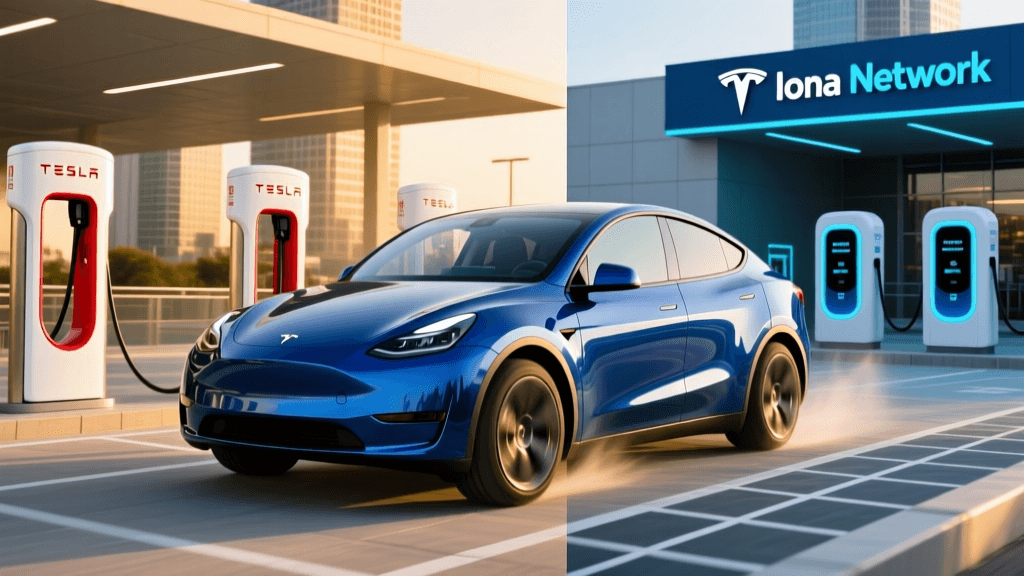
The electric vehicle landscape is undergoing a seismic shift. Gone are the days when automakers simply handed off the charging experience to third-party networks and hoped for the best. Today, the most significant developments in the EV space are driven by massive, multi-billion-dollar automaker partnerships. As an EV buyer, you are no longer just choosing a car; you are buying into a specific charging ecosystem. In this head-to-head product showdown, we are tracking the two most dominant automaker-backed charging networks in North America: the sprawling Tesla NACS Supercharger Alliance and the ambitious new challenger, Ionna. By analyzing their hardware, rollout strategies, and user experiences, we can determine which partnership ecosystem currently offers the superior product for EV drivers.
Contender 1: The Tesla NACS Supercharger Alliance
What began as a proprietary network for Tesla owners has rapidly evolved into the de facto standard for North American EV charging. By opening its network and licensing the North American Charging Standard (NACS), Tesla has forged alliances with nearly every major automaker, including Ford, General Motors, Rivian, Volvo, Polestar, and Mercedes-Benz. The 'product' here is not just the physical charger, but the seamless integration of Tesla's industry-leading reliability, vast footprint, and proprietary software ecosystem. According to the official Tesla NACS documentation, the standard is designed to be compact, lightweight, and capable of handling both AC and DC charging on a single pin, eliminating the need for bulky adapter cables in future vehicle designs.
Contender 2: Ionna (The Seven-Automaker Joint Venture)
Entering the arena as the ultimate challenger is Ionna, a joint venture formed by seven automotive giants: BMW, General Motors, Honda, Hyundai, Kia, Mercedes-Benz, and Stellantis. Unlike the Tesla alliance, which leverages existing infrastructure, Ionna is building a brand-new, ground-up high-power charging network. The Ionna official website outlines a massive commitment to deploy at least 30,000 high-power chargers across North America by 2030. Their product pitch focuses on premium, well-lit, canopy-covered charging hubs equipped with top-tier retail and food service amenities, aiming to solve the biggest complaints drivers have about current open-network charging stations.
Head-to-Head Comparison Matrix
To understand how these two partnership ecosystems stack up against each other, we have broken down their core specifications and strategic goals in the comparison table below.
| Feature | Tesla NACS Supercharger Alliance | Ionna Network |
|---|---|---|
| Founding Partners | Tesla (Ford, GM, Rivian, Volvo, etc. joining) | BMW, GM, Honda, Hyundai, Kia, Mercedes, Stellantis |
| Connector Standard | NACS (J3400) | CCS & NACS dual-cable dispensers |
| Max Charging Speed | 250kW (V3) / 350kW+ (V4 cabinets) | 350kW+ liquid-cooled dispensers |
| 2030 Target | 50,000+ total stalls (including open network) | 30,000+ high-power chargers |
| Current Station Count | ~6,000 stations / 60,000+ stalls (Global/NA) | Initial rollout phase (First station opened Q3 2024) |
| Amenities Strategy | Variable (often standalone or basic retail) | Premium hubs with dedicated canopies and retail |
Deep Dive: Hardware, Speeds, and User Experience
When evaluating these networks as products, hardware and user experience are paramount. Tesla's V4 Supercharger cabinets represent a significant leap in their hardware evolution, allowing for longer cables to reach non-Tesla charge ports and supporting higher voltage architectures. However, the physical footprint of many legacy Tesla stations lacks the overhead canopies and dedicated lounge areas that EV drivers increasingly demand during 20-minute charging sessions.
Ionna, on the other hand, is designing its stations from scratch with the modern EV road-tripper in mind. Their flagship stations feature robust overhead canopies to protect users from rain and sun, ultra-bright LED lighting for nighttime safety, and dedicated spaces for food trucks or permanent retail partners. Furthermore, Ionna stations are deploying next-generation liquid-cooled cables capable of sustaining 350kW+ charging speeds, which is critical for upcoming 800V architectures from Hyundai, Kia, and Porsche. Data from the U.S. Department of Energy highlights that high-power charging infrastructure is essential for reducing dwell times and increasing public charging throughput, an area where Ionna's new hardware aims to excel.
Partnership Announcement Tracker: Recent Milestones
To keep you informed on how these partnerships are materializing into actual infrastructure, here is our latest tracker of major announcements and deployments from both camps:
- Q3 2024 - Ionna Energizes First Station: The seven-automaker joint venture officially opened its first high-power charging hub in North Carolina, featuring eight 350kW liquid-cooled dispensers, premium canopy coverage, and Plug & Charge capabilities.
- Q3 2024 - Ford's Native NACS Rollout: Ford began delivering the first F-150 Lightning and Mustang Mach-E models equipped with native NACS ports, eliminating the need for adapters on the Tesla network and enabling seamless Plug & Charge.
- Q2 2024 - GM's Adapter Distribution: General Motors started mailing approved CCS-to-NACS adapters to existing Ultium EV owners, granting them access to over 15,000 additional Tesla Superchargers while Ionna's network is under construction.
- Q1 2024 - Tesla Opens Supercharger API: Tesla expanded its backend API integration, allowing partner automakers like Rivian and Ford to display real-time Supercharger stall availability, routing, and payment directly in their native vehicle infotainment systems.
Network Reliability and Uptime Guarantees
The most critical metric for any charging network is uptime. Tesla has historically maintained an industry-leading 99% uptime across its Supercharger network, a massive selling point for the NACS Alliance. Because Tesla controls both the vehicle software and the charger hardware, troubleshooting is centralized and highly efficient. Conversely, open networks have historically struggled with broken screens, payment failures, and offline stalls. Ionna is tackling this head-on by implementing strict service level agreements (SLAs) backed by NEVI funding requirements, promising 97%+ uptime and 24/7 live customer support integrated directly into the partner automakers' infotainment screens.
Actionable Advice for EV Buyers
So, how do these competing partnership ecosystems impact your next EV purchase? Here is our practical advice for navigating the current landscape:
1. If You Buy a CCS-Equipped EV Today
If you purchase a vehicle with a CCS port (like a current Hyundai Ioniq 5 or a pre-2025 GM Ultium vehicle), you are not locked out of the Tesla network. Ensure your automaker provides an officially approved CCS-to-NACS adapter. Avoid cheap, third-party adapters on Amazon, as they can overheat and void your vehicle's battery warranty. Use the Tesla adapter to access the Supercharger network for road trips, while relying on Ionna and other open networks for local charging.
2. If You Are Waiting for Native NACS
If you are cross-shopping a Ford, GM, or Rivian, consider waiting for the 2025 model years that feature native NACS ports. Native ports eliminate the hassle of carrying heavy adapters, reduce points of failure, and offer the cleanest Plug & Charge experience on the Tesla network.
3. Factor in the Ionna Rollout Timeline
While Ionna promises a superior physical station experience with canopies and retail amenities, their footprint will remain small until 2026. If your lifestyle demands immediate, widespread rural and highway charging coverage today, the Tesla NACS Alliance currently offers the undisputed best product. However, if you primarily drive in major metropolitan corridors and value premium station amenities, keep a close eye on Ionna's expansion map as they target high-traffic retail centers.