Introduction: The Shift to City-Led EV Infrastructure
As electric vehicle (EV) adoption accelerates across the globe, the responsibility for building out charging infrastructure is increasingly falling on local governments. While private networks like Tesla's Superchargers or Electrify America dominate highway corridors, municipal EV charging infrastructure deployment plans are the unsung heroes of daily, local EV ownership. These city-led initiatives are what allow residents without home charging capabilities—such as those living in apartments or dense urban centers—to own and operate an electric vehicle reliably.
For beginners and seasoned EV owners alike, understanding how your city plans, funds, and deploys public chargers can completely change how you interact with your local infrastructure. This comprehensive guide will walk you through the mechanics of municipal EV charging deployment plans, the hardware you can expect to see on your streets, and actionable advice on how to navigate, utilize, and even advocate for better local charging networks.
What Are Municipal EV Charging Deployment Plans?
A municipal EV charging deployment plan is a strategic, multi-year roadmap created by city or county governments to install publicly accessible EV chargers on public property. Unlike private developers who prioritize high-traffic retail locations or highway exits for maximum profit, municipalities prioritize equity, accessibility, and civic utility.
These plans typically involve several key phases:
- Feasibility and Grid Analysis: City planners work with local utility companies to identify which public lots, libraries, parks, and curbsides have the electrical grid capacity to support high-power chargers without requiring millions of dollars in transformer upgrades.
- Equity Mapping: Using census and environmental justice data, cities identify underserved neighborhoods where residents are less likely to have access to private home charging, ensuring public infrastructure bridges the gap.
- Zoning and Right-of-Way Adjustments: Updating local ordinances to allow for curbside charging, dedicated EV parking signage, and the protection of charging spots from traditional gas-powered vehicles.
- Request for Proposals (RFP): The city issues a public bidding document to invite private charging networks (like ChargePoint, EVgo, or Blink) to install, operate, and maintain the hardware on city land.
How Cities Fund Public Chargers
One of the most common questions beginners have is: Who is paying for all these public chargers? Municipalities rarely foot the entire bill using local tax dollars alone. Instead, they leverage a patchwork of federal, state, and local grants. According to the U.S. Department of Energy EV Charging Hub, the integration of federal funds has drastically accelerated local deployment timelines.
Below is a breakdown of the primary funding sources driving municipal EV charging infrastructure deployment plans today:
| Funding Program | Administering Body | Primary Municipal Use Case | Typical Hardware Funded |
|---|---|---|---|
| NEVI Formula Program | FHWA / State DOTs | Highway corridors & major transit hubs | 150kW+ DC Fast Chargers |
| CFI Discretionary Grants | FHWA | Community charging, rural & underserved areas | Level 2 & DC Fast Chargers |
| Local Municipal Bonds | City / County Gov | Public parking garages, library lots, curbside | Level 2 (20kW - 80kW) |
| Utility Make-Ready Programs | Local Power Companies | Upgrading grid capacity to public lots | Infrastructure / Trenching |
For a deeper dive into how federal dollars reach local communities, the Charging and Fueling Infrastructure (CFI) Discretionary Grant Program provides extensive documentation on how cities can apply for funds specifically meant for community-level charging, which is distinct from highway-focused NEVI funding.
The Hardware: What to Expect at City-Run Stations
When a city deploys chargers, the hardware selected is heavily dependent on the location's intended use case. Municipal deployment plans generally categorize chargers into two distinct tiers:
1. Destination and Curbside Level 2 Chargers (19kW - 80kW)
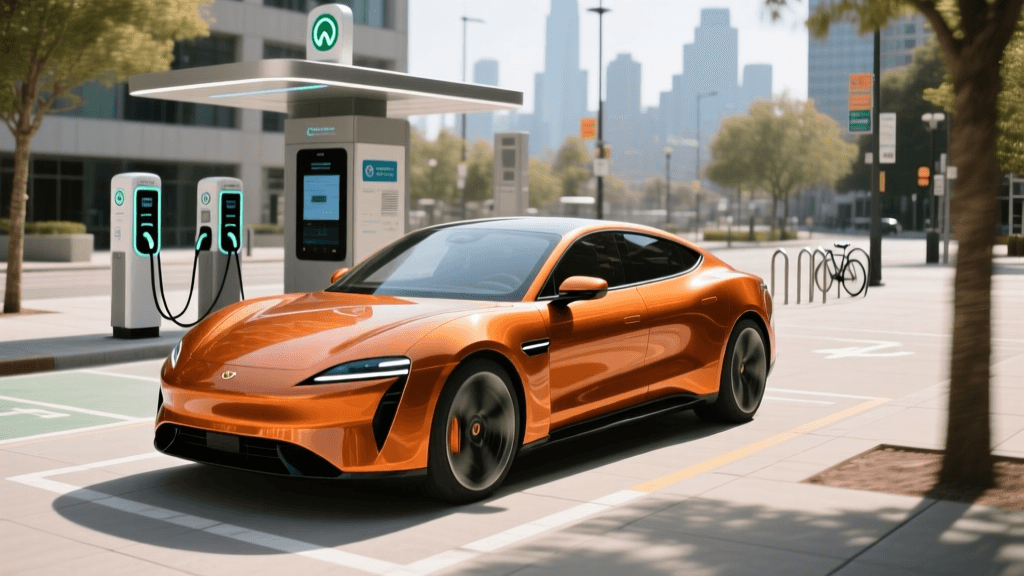
These are the workhorses of municipal plans. You will find them at public libraries, community centers, city parks, and increasingly, integrated directly into curbside parking spaces. Cities favor Level 2 chargers for these locations because they are cheaper to install, place less strain on the local electrical grid, and align with the 2-to-4 hour dwell time of a resident running errands or visiting a civic building. Brands like ChargePoint, Blink, and Shell Recharge are common municipal partners for these deployments.
2. Transit Hub DC Fast Chargers (150kW - 350kW)
For municipal transit centers, airport parking garages, and major intermodal hubs, cities deploy DC Fast Chargers (DCFC). These are designed for rapid turnover. However, municipalities are currently facing a massive transitional challenge regarding charging standards. With the industry shifting toward the North American Charging Standard (NACS), many city RFPs now require newly deployed hardware to include both CCS and NACS cables, or utilize Magic Dock adapters, ensuring no resident is locked out of public infrastructure based on their vehicle brand.
Navigating ADA Compliance in Public Deployments
A critical, often overlooked aspect of municipal EV charging plans is accessibility. Unlike private parking lots, city-owned rights-of-way must strictly adhere to the Americans with Disabilities Act (ADA) and the Public Rights-of-Way Accessibility Guidelines (PROWAG).
According to the Joint Office of Energy and Transportation, municipalities are required to ensure that a specific percentage of their deployed chargers are fully accessible. This means the charging screen must be at a reachable height for wheelchair users, the charging cable must be light enough and routed to prevent tripping hazards or stretching across pedestrian sidewalks, and the parking space must feature proper grading and access aisles. As an EV owner, if you notice a municipal charger that blocks the sidewalk or features an unreachable interface, you have the right to report it to your city's ADA coordinator for remediation.
Actionable Guide: Finding and Using Municipal Chargers
Navigating city-owned chargers requires a slightly different approach than using private highway networks. Here is your actionable guide to making the most of municipal EV charging infrastructure:
- Filter for 'Public' and 'Municipal' on Apps: When using apps like PlugShare or A Better Routeplanner, use the filters to isolate chargers located in 'Public Parking Lots' or 'City Garages'. These are often significantly cheaper than private retail chargers, and some cities even offer the first 2 hours of Level 2 charging for free to encourage EV adoption.
- Understand Local 'ICEing' Laws: 'ICEing' occurs when an Internal Combustion Engine vehicle parks in an EV spot. Many municipalities have passed strict ordinances allowing city parking enforcement to ticket and tow gas cars blocking municipal chargers. Always look for the green-painted curbs and specific municipal signage that legally designates the spot as EV-only.
- Watch for Time Limits vs. Charging Limits: Cities often implement dual-limits. A sign might read '2 Hour Parking' AND 'EV Charging Only While Plugged In'. This means even if your car is plugged in, you can still receive a parking ticket if you exceed the 2-hour municipal parking window. Always read the fine print on the city-issued signage, not just the sticker on the charger.
- Leverage Off-Peak Utility Rates: Some smart-city deployments are tied to local utility grids. If your city offers dynamic pricing on their public Level 2 chargers, schedule your municipal charging sessions during off-peak hours (typically after 9 PM) to secure drastically reduced per-kWh rates.
How Residents Can Advocate for Local Charger Deployment
Because municipal EV charging infrastructure deployment plans are governed by local city councils and planning boards, they are uniquely susceptible to public input. If your neighborhood lacks public charging options, you do not have to wait passively for a private developer to notice your area.
- Review the City's Climate Action Plan: Most mid-to-large cities have a published 'Climate Action Plan' or 'Sustainability Master Plan' that includes specific EV infrastructure targets. Find out if your district is meeting its deployment goals.
- Attend RFP Public Comment Sessions: Before a city awards a contract to a charging network, they often hold public comment periods. Show up (or submit written comments) to advocate for specific features, such as requiring credit card readers on all new municipal chargers (eliminating the need to download proprietary apps) or demanding better lighting and security cameras at the proposed sites.
- Propose Curbside Make-Ready Programs: Advocate for your city to adopt 'make-ready' infrastructure. This is where the city pays to run the underground electrical conduit to the curb, allowing residents or private companies to simply 'plug in' the actual charging pedestal later, drastically reducing the cost and time of neighborhood deployment.
Conclusion
Municipal EV charging infrastructure deployment plans are the backbone of equitable, accessible, and reliable local electric mobility. By understanding how cities fund, site, and regulate these chargers, you can better navigate your local charging landscape, avoid parking fines, and take advantage of subsidized public power. Furthermore, by engaging with your local planning boards, you can help shape a deployment plan that truly serves the needs of your specific community, ensuring the EV revolution leaves no neighborhood behind.