The rapid expansion of the electric vehicle (EV) charging network has brought unprecedented convenience to drivers, but it has also exposed a critical vulnerability: fragmented communication protocols. As the industry shifts from proprietary walled gardens to open, interoperable ecosystems, understanding the backend technologies that govern charger-to-cloud and vehicle-to-charger communication is essential. For Charge Point Operators (CPOs), fleet managers, and automotive engineers, the transition to Open Charge Point Protocol (OCPP) 2.0.1 and ISO 15118-20 represents a monumental leap in grid integration, cybersecurity, and user experience. This technology deep dive explores the mechanics of these open protocols, their real-world applications, and actionable steps for implementation.
The Backbone of Network Communication: OCPP 2.0.1 vs. 1.6
The Open Charge Point Protocol (OCPP) is the universal language that allows charging hardware to communicate with a Charging Station Management System (CSMS). While OCPP 1.6 has been the industry workhorse for the better part of a decade, its limitations in security and smart charging have necessitated an upgrade. According to the Open Charge Alliance, OCPP 2.0.1 was designed specifically to address the growing complexities of modern grid management and cybersecurity threats.
Key Technical Upgrades in OCPP 2.0.1
- Enhanced Security: OCPP 1.6 relied heavily on basic web socket connections, leaving networks vulnerable to man-in-the-middle attacks. OCPP 2.0.1 mandates Security Profile 3, which enforces TLS 1.2 or higher, mutual authentication via X.509 certificates, and secure firmware update mechanisms.
- Advanced Smart Charging: The new protocol introduces a highly granular smart charging module. It allows the CSMS to send complex charging profiles that account for three-phase balancing, local grid constraints, and renewable energy availability in real-time.
- Transaction Handling and Display Messaging: OCPP 2.0.1 separates the concept of a 'session' from a 'transaction,' allowing for more accurate billing when a vehicle is plugged in but not actively drawing power. It also standardizes display messages, ensuring that a driver sees the same error codes and instructions regardless of the charger manufacturer.
Actionable Advice for CPOs Upgrading to OCPP 2.0.1
For CPOs managing mixed fleets of legacy and modern hardware, a rip-and-replace strategy is rarely cost-effective. Instead, operators should utilize OCPP proxy gateways. These middleware solutions sit between the physical charger and the CSMS, translating OCPP 1.6 messages from older hardware into OCPP 2.0.1 for the backend. Budget approximately $15,000 to $40,000 for enterprise-grade middleware licensing, and allocate 4 to 6 months for integration testing. Always verify that your hardware vendor supports OCPP 2.0.1 Security Profile 3 natively in their latest firmware releases before committing to a full CSMS migration.
Vehicle-to-Grid and Plug & Charge: ISO 15118-20 Explained
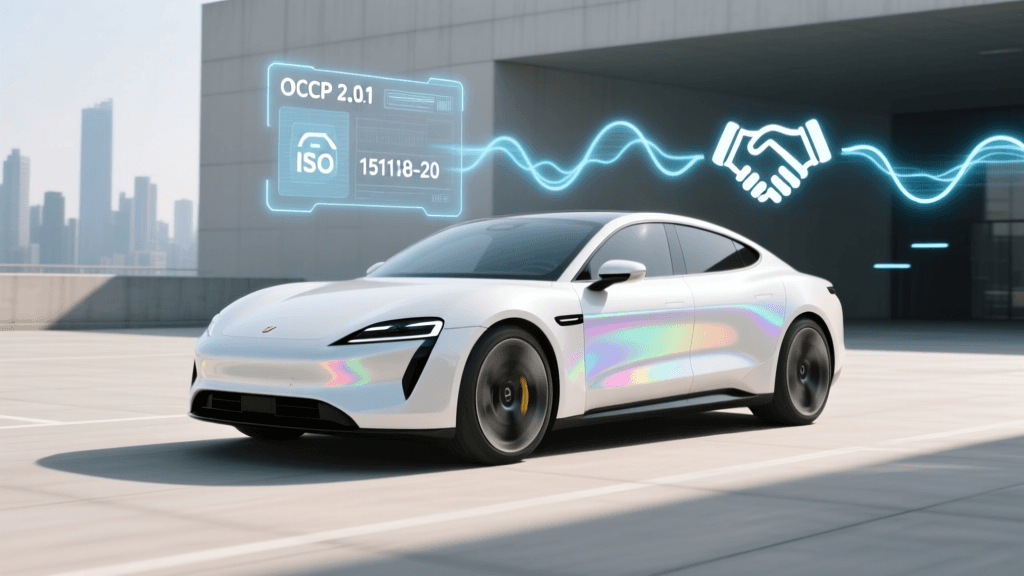
While OCPP handles the communication between the charger and the cloud, ISO 15118 governs the digital handshake between the electric vehicle and the Electric Vehicle Supply Equipment (EVSE). The original standard, ISO 15118-2, enabled basic AC Plug & Charge and rudimentary DC communication. However, the publication of ISO 15118-20 has revolutionized the capabilities of the EV-to-charger connection, paving the way for true bidirectional energy flow and seamless DC fast charging.
As highlighted by CharIN e.V., the global initiative driving the adoption of Plug & Charge, ISO 15118-20 is critical for the next generation of EV infrastructure. It introduces support for Bidirectional Power Transfer (BPT), allowing vehicles to not only draw power from the grid (G2V) but also feed it back into the grid (V2G) or power a home (V2H) safely and efficiently.
Comparing ISO 15118-2 and ISO 15118-20
| Feature | ISO 15118-2 (Legacy) | ISO 15118-20 (Current Standard) |
|---|---|---|
| DC Fast Charging | Limited / Basic Support | Full Native Support with advanced scheduling |
| Bidirectional (V2G/V2H) | Not Supported | Full BPT (Bidirectional Power Transfer) Support |
| Plug & Charge Security | TLS 1.2 | TLS 1.3 with advanced PKI and MAC-based security |
| AC Charging | Basic PWM and basic digital comms | Enhanced scheduling and dynamic load balancing |
| Wireless Charging (WPT) | Not Supported | Native support for inductive charging alignment |
The Convergence: How OCPP and ISO 15118 Work Together
A common misconception in the EV industry is that OCPP and ISO 15118 are competing standards. In reality, they are highly complementary. When a driver plugs in a vehicle equipped with ISO 15118-20, the car and the charger negotiate the power transfer parameters, battery state of health, and V2G capabilities. Once this local negotiation is complete, the charger uses OCPP 2.0.1 to relay this data to the CSMS and the local Distribution System Operator (DSO).
This convergence is what makes dynamic smart charging possible. For example, if a local solar farm experiences a sudden drop in generation due to cloud cover, the DSO can send a signal via OCPP 2.0.1 to the CSMS, which then pushes a new charging profile to the EVSE. The EVSE instantly communicates this updated profile to the vehicle via ISO 15118-20, adjusting the charge rate in milliseconds without interrupting the session. The U.S. Department of Energy's Alternative Fuels Data Center emphasizes that this level of interoperability is vital for preventing grid overload as EV adoption scales into the tens of millions of vehicles.
Practical Implementation for Fleet Operators and CPOs
Transitioning to these advanced open protocols requires careful planning, capital allocation, and hardware validation. Fleet operators and CPOs should follow a structured implementation roadmap to ensure compliance and maximize return on investment.
Step 1: Audit Existing Infrastructure
Begin by auditing your current EVSE hardware. Most DC fast chargers manufactured after 2021 possess the physical processing power to support ISO 15118-20 and OCPP 2.0.1, but may require a paid firmware unlock or a control board replacement. Expect control board upgrades to cost between $800 and $1,500 per unit, excluding labor.
Step 2: PKI Certificate Management
Both OCPP 2.0.1 (Security Profile 3) and ISO 15118 Plug & Charge rely heavily on Public Key Infrastructure (PKI). You must partner with a recognized Sub-CA (Certificate Authority) such as Hubject or Gireve to issue and manage the digital certificates required for vehicle authentication and secure backend communication. Budget an ongoing annual cost of $5,000 to $12,000 for enterprise PKI management services.
Step 3: CSMS Integration and Testing
Do not deploy OCPP 2.0.1 directly to a live production environment. Utilize OCA-certified testing tools like the OCPP Compliance Test Tool (OCTT) to simulate edge cases, such as network dropouts during a V2G transaction or failed firmware updates. Allocate 6 to 9 months for software validation before rolling out the update across your entire network.
Future Outlook: Open Protocols and the NACS Transition
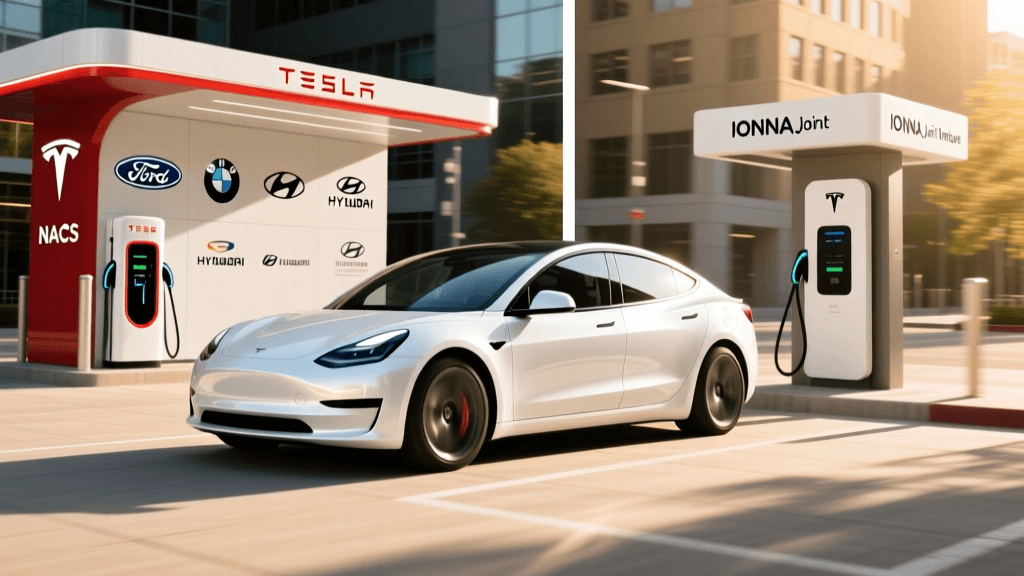
The North American Charging Standard (NACS), now standardized as SAE J3400, is rapidly becoming the dominant physical connector in North America. However, NACS is strictly a physical and electrical specification; it does not dictate the digital communication layer. The seamless 'Plug & Charge' experience that Tesla pioneered relies entirely on backend protocols that map perfectly to ISO 15118 and OCPP.
As legacy automakers transition their fleets to NACS, they are simultaneously adopting ISO 15118-20 to ensure their vehicles can utilize DC Plug & Charge on third-party networks like Electrify America and EVgo. The interoperability standards are the invisible glue that will make the NACS transition successful. Without robust implementation of ISO 15118-20 and OCPP 2.0.1, the industry risks creating a network of 'dumb' chargers that require cumbersome RFID cards and mobile app authorizations, severely degrading the consumer experience.
Conclusion
The shift toward OCPP 2.0.1 and ISO 15118-20 is not merely a software update; it is a fundamental restructuring of how electric vehicles interact with the power grid. By enabling robust cybersecurity, seamless Plug & Charge authorization, and true bidirectional energy flow, these open protocols are future-proofing EV infrastructure. For CPOs, fleet managers, and network operators, early adoption and rigorous testing of these standards will provide a distinct competitive advantage, ensuring reliability, grid compliance, and a superior user experience in the rapidly evolving electromobility landscape.