Introduction to Municipal EV Charging Infrastructure
As electric vehicle (EV) adoption accelerates, the spotlight has shifted from the vehicles themselves to the infrastructure required to power them. For everyday drivers, apartment dwellers, and local business owners, understanding municipal EV charging infrastructure deployment plans is no longer just for urban planners—it is essential knowledge. Cities across the globe are actively rolling out comprehensive strategies to install public chargers on city streets, in municipal parking lots, and along major transit corridors. This beginner's complete guide will demystify how city charging networks are planned, funded, and deployed, and how you can navigate this rapidly expanding ecosystem.
What Drives City EV Charging Deployment Plans?
Municipalities are not installing chargers randomly; they are executing highly structured deployment plans driven by three main factors: climate action mandates, equity requirements, and federal funding. Most major cities have committed to aggressive greenhouse gas reduction targets, which necessitate a rapid transition from internal combustion engines to zero-emission vehicles. However, a significant barrier to this transition is the lack of home charging options for residents living in multi-family housing or dense urban neighborhoods without driveways.
To solve this, city departments of transportation (DOT) and local utility companies collaborate to map out "charging deserts"—areas with high EV interest but low charging availability. By strategically placing public chargers in these neighborhoods, municipalities ensure that EV ownership is accessible to everyone, not just homeowners with private garages.
The Funding Engine: NEVI and Make-Ready Programs
A massive catalyst for municipal EV charger deployment is the National Electric Vehicle Infrastructure (NEVI) Formula Program. Established under the Bipartisan Infrastructure Law, the NEVI program provides $5 billion in federal funding to states, which is then distributed to local municipalities and private contractors to build out charging networks along designated alternative fuel corridors and within urban centers. You can explore the specifics of these federal and state partnerships on the official Joint Office of Energy and Transportation website, which tracks how these funds are being allocated to ensure reliable, nationwide coverage.
Beyond federal grants, municipalities rely heavily on utility Make-Ready Programs. In a make-ready program, the local electric utility covers the cost of upgrading the electrical grid and running the necessary conduit and wiring to the curb or parking lot. The city or private business then only has to pay for the charging hardware itself. This drastically reduces the financial barrier for deploying municipal charging hubs.
Understanding the Hardware: What Cities Are Installing
When a city announces a new charging deployment, it typically involves a mix of charging speeds designed for different use cases. Municipal procurement officers must balance the high cost of ultra-fast chargers with the practical need for overnight or long-duration parking. Below is a comparison of the most common hardware deployed in city plans.
| Charger Type | Typical Municipal Location | Power Output | Best Use Case | Common Hardware Examples |
|---|---|---|---|---|
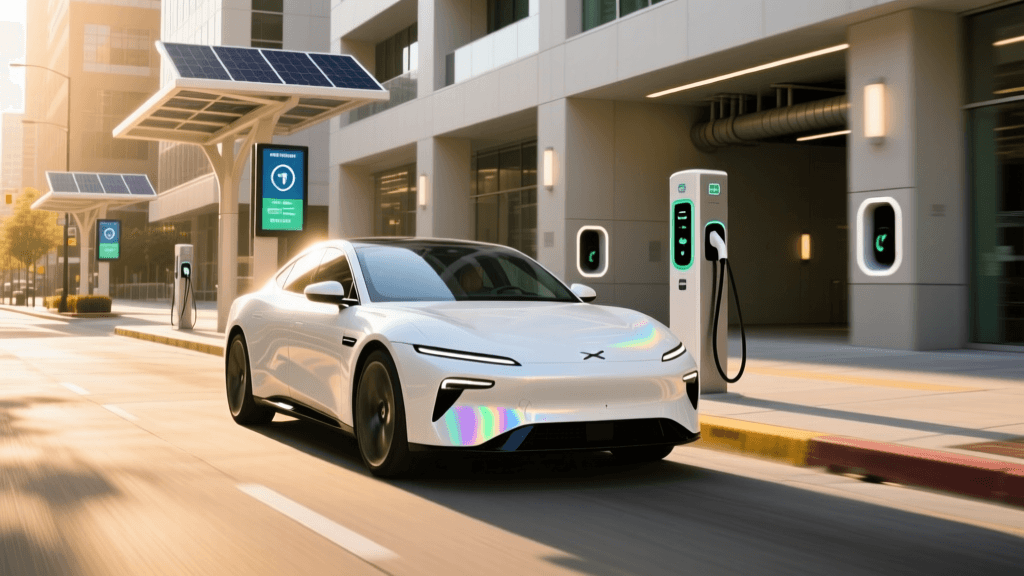
| Curbside Level 2 | Residential streets, lamp posts | 7 kW - 19 kW | Overnight parking for apartment dwellers | ChargePoint CT4000, Enel X JuicePole |
| Municipal Lot Level 2 | City parks, library lots, transit hubs | 19 kW - 50 kW | Destination charging (2-4 hour stays) | Blink HQ200, FLO X5 |
| DC Fast Charging (DCFC) | Highway adjacent, large fleet depots | 50 kW - 350 kW | Rapid top-ups, rideshare, commercial fleets | Electrify America, Tritium RTM |
According to data from the U.S. Department of Energy's Alternative Fuels Data Center, Level 2 chargers still make up the vast majority of municipal deployments due to their lower installation costs and lower strain on local neighborhood transformers. However, DCFC hubs are increasingly being integrated into city plans to support commercial fleets and highway travelers.
Curbside Charging Challenges: ADA, Snow, and Street Sweeping
Deploying chargers on public streets is vastly more complicated than installing them in a private driveway. Municipal planners must navigate a web of local ordinances and physical constraints. For beginners wondering why a charger isn't simply placed on every corner, consider the following municipal hurdles:
- ADA Compliance: The Americans with Disabilities Act (ADA) requires public charging stations to have accessible pathways, specific screen heights, and cable management systems that do not create tripping hazards. Cities are now deploying specialized cable retraction systems to keep cords off the sidewalk.
- Street Sweeping and Snow Removal: Curbside chargers must be placed in designated cutouts or protected by heavy-duty steel bollards so that municipal street sweepers and snowplows do not destroy the expensive equipment during routine maintenance.
- Right-of-Way (ROW) Permits: Cities must manage the public right-of-way carefully. Installing a charger requires digging up the sidewalk, which means coordinating with water, gas, and fiber-optic utility lines buried beneath the concrete.
The NACS vs. CCS Transition in Public Procurement
One of the most critical aspects of modern municipal deployment plans is future-proofing. Historically, public chargers utilized the CCS (Combined Charging System) or CHAdeMO connectors. However, with the automotive industry's massive shift toward the North American Charging Standard (NACS), pioneered by Tesla, cities are currently revising their procurement guidelines. Modern municipal contracts now require charging vendors to provide dual-cable machines or modular units that can be easily swapped from CCS to NACS in the field. This ensures that taxpayer-funded infrastructure will remain compatible with the next generation of EVs hitting the road.
How to Track and Utilize Your City’s Rollout
As a resident, you don't need to attend city council meetings to know where new chargers are going. Here are the best actionable ways to track municipal deployments in your area:
- Local DOT GIS Portals: Many cities, such as Seattle and Los Angeles, publish interactive Geographic Information System (GIS) maps on their Department of Transportation websites showing approved, pending, and completed public charging sites.
- PlugShare and ChargePoint Filters: Use these apps and filter specifically for "City Owned" or "Municipal" networks. Many cities integrate their chargers into these major networks for seamless payment and status tracking.
- Utility Company Maps: Check your local electric utility's EV page. They often publish maps of their make-ready infrastructure investments, which are strong indicators of where future public chargers will be activated.
How Residents Can Advocate for Neighborhood Chargers
If your neighborhood lacks public charging options, you can actively influence your municipality's deployment plan. Most cities have an open request process for curbside chargers. Here is a step-by-step approach to advocating for infrastructure on your street:
- Step 1: Gather Neighborhood Data. Survey your neighbors to gauge EV ownership and interest. Cities prioritize locations with demonstrated demand.
- Step 2: Identify Optimal Locations. Look for streets with high residential density, nearby multi-family dwellings, and existing streetlights (which can sometimes be retrofitted for charging to save on trenching costs).
- Step 3: Submit a Formal Request. Use your city's 311 system or the specific DOT EV charging request portal to submit your location for the next round of NEVI or local grant funding.
- Step 4: Engage Local Council Members. Present your data to your local city council representative, highlighting how a charging hub supports the city's broader climate equity goals.
Conclusion
Municipal EV charging infrastructure deployment plans are the backbone of the public charging network. By understanding the interplay between federal NEVI funding, local utility make-ready programs, and the physical realities of curbside installation, beginners can better navigate the evolving landscape of public charging. Whether you are an EV owner looking for reliable city charging, or a resident advocating for greener neighborhood infrastructure, staying informed about your city's deployment strategy is the key to unlocking a seamless, electrified future. For ongoing updates on federal infrastructure guidelines, the Federal Highway Administration's NEVI program page remains an invaluable resource for understanding how national policies translate into local street-level chargers.