The 'Charging Desert' Phenomenon in LMI Neighborhoods
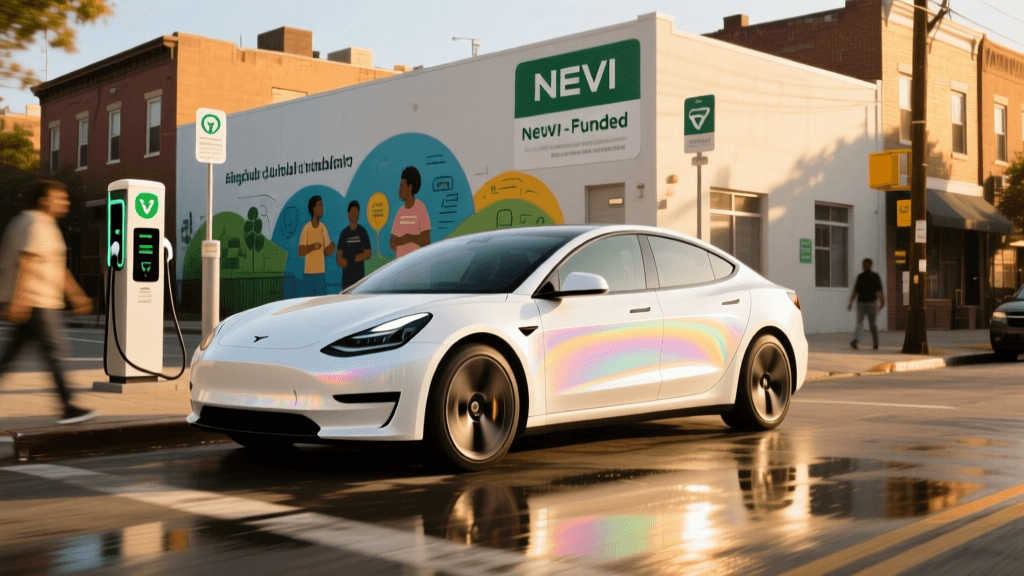
The transition to electric mobility is accelerating at an unprecedented pace, but a glaring disparity remains in the deployment of public charging infrastructure. While affluent suburban neighborhoods and major highway corridors are rapidly saturating with Level 2 and DC Fast Charging (DCFC) stations, low-to-moderate income (LMI) and underserved urban communities are frequently left in 'charging deserts.' These areas are characterized by a high density of multi-unit dwellings (MUDs), a lack of private off-street parking, and aging electrical grids that make traditional charger installation prohibitively expensive.
From an industry outlook perspective, solving the EV charging equity gap is no longer just a corporate social responsibility initiative; it is a fundamental prerequisite for mass EV adoption. If residents in underserved communities cannot reliably charge their vehicles near their homes or workplaces, the transition to zero-emission transportation will stall. Fortunately, a convergence of federal policy, innovative hardware, and utility partnerships is beginning to reshape the landscape for equitable charging deployment.
Federal Catalysts: NEVI, IRA, and the Justice40 Initiative
The most significant driver for equitable infrastructure deployment over the next decade is federal funding, specifically structured to prioritize disadvantaged communities. The Federal Highway Administration's NEVI Program provides $5 billion over five years to build a national charging network. Crucially, NEVI guidelines mandate that states prioritize projects that benefit disadvantaged communities, aligning with the White House's Justice40 Initiative, which dictates that 40 percent of the overall benefits of certain federal investments must flow to marginalized neighborhoods.
Additionally, the Inflation Reduction Act (IRA) has revitalized the 30C Alternative Fuel Vehicle Refueling Property Credit. This tax credit offers up to 30 percent of the cost of hardware and installation (capped at $100,000 per item for commercial properties and $1,000 for residential). However, to claim the maximum commercial credit, the infrastructure must be placed in service within a designated low-income or non-urban census tract. This financial incentive fundamentally alters the return-on-investment (ROI) calculus for Charge Point Operators (CPOs), making it financially viable to deploy chargers in neighborhoods that previously lacked the demand density to attract private capital.
Next-Generation Hardware for Dense Urban Grids
Deploying traditional 150kW to 350kW DCFC plazas in older urban neighborhoods often requires extensive trenching, new utility transformers, and miles of conduit. At $50 to $150 per linear foot for trenching alone, these grid upgrade costs can easily exceed the cost of the chargers themselves, stalling projects in underserved areas. The industry is responding with specialized hardware designed to bypass these grid constraints.
Battery-Buffered Fast Chargers
Battery-buffered systems, such as the FreeWire Boost Charger, integrate large-scale lithium-ion battery packs (e.g., 120kWh to 240kWh) with DCFC dispensers. These units trickle-charge their internal batteries using standard, low-amperage 200A or 400A 240V/480V commercial connections—power levels already available at most neighborhood strip malls and community centers. When an EV plugs in, the system dispatches power at 50kW to 120kW. This eliminates the need for costly utility grid upgrades, reducing site preparation time from months to weeks and cutting installation costs by up to 40 percent.
Curbside and Lamppost Integration
For residential streets dominated by on-street parking, companies like Ubitricity and ChargePoint are deploying curbside Level 2 chargers integrated directly into existing municipal lampposts or streetlight poles. Because the existing electrical mains are already trenched and active, installation requires only a simple pole swap and a meter drop, costing between $2,000 and $4,000 per port compared to $10,000+ for standalone pedestal installations.
Strategic Deployment Comparison Chart
To understand how developers are adapting their strategies for underserved communities, consider the following comparison of deployment models, costs, and grid impacts.
| Deployment Strategy | Typical Hardware | Estimated Install Cost | Grid Upgrade Needed | Best Use Case in LMI Areas |
|---|---|---|---|---|
| Traditional DCFC Plaza | 150kW - 350kW CCS/NACS | $120,000 - $250,000+ | Heavy (New 480V 3-phase transformer) | Suburban retail hubs, transit depots, highway corridors |
| Battery-Buffered DCFC | FreeWire Boost Charger (50kW-120kW) | $80,000 - $130,000 | Light (Existing 200A/400A panel) | Urban community centers, older strip malls, grocery stores |
| Curbside Level 2 | Ubitricity / ChargePoint Omni | $2,000 - $4,500 per port | Minimal (Taps existing street lighting) | Dense residential zones, multi-unit dwelling street parking |
| Workplace / Fleet Depot | Networked Level 2 (19.2kW) | $3,000 - $6,000 per port | Moderate (Panel upgrades common) | Local municipal fleets, delivery hubs, large local employers |
Utility Make-Ready Programs and TOU Rates
Public utilities are increasingly recognizing that equitable EV adoption requires proactive grid management and financial support. 'Make-Ready' programs, pioneered by utilities like Con Edison in New York and PG&E in California, are expanding into underserved territories. These programs cover the 'front-of-the-meter' (utility side) and sometimes 'behind-the-meter' (customer side) infrastructure costs, effectively removing the largest financial barrier for small business owners and community organizations looking to host chargers.
Furthermore, utilities are introducing specialized Time-of-Use (TOU) rates and demand charge waivers for community charging hubs. Demand charges—which bill commercial customers based on their highest 15-minute peak power draw in a month—have historically destroyed the business case for low-utilization chargers in developing EV markets. By offering 5-to-10-year demand charge holidays or subscriptions for battery-buffered chargers, utilities are ensuring that CPOs can maintain reliable networks in underserved areas while utilization rates gradually climb.
Actionable Blueprint for Equitable Deployment
For municipalities, real estate developers, and CPOs looking to capitalize on federal funding and genuinely serve underserved communities, a standard highway-corridor playbook will not work. The Joint Office of Energy and Transportation emphasizes community-centric design. Here is an actionable blueprint for equitable deployment:
- Mandate Payment Accessibility: App-only charging networks inherently exclude unbanked populations or those without smartphones. Equitable stations must feature tap-to-pay credit card readers, SMS-based payment options, and RFID card compatibility. Pricing must be transparently displayed on the physical unit.
- Prioritize ADA Compliance Beyond the Minimum: The Americans with Disabilities Act (ADA) requires specific clearances, but true equity means exceeding the baseline. Ensure cable management systems (retractors) are installed so heavy cables do not drag across the pavement or wheelchair ramps. Keep user interfaces and screens mounted no higher than 48 inches from the ground, and provide clear, level pathways free of curbs or bollards.
- Leverage Community-Based Organizations (CBOs): Site selection should not be done in a vacuum. Partner with local neighborhood associations, faith-based organizations, and community centers. Hosting chargers at trusted community hubs (e.g., YMCA parking lots, local health clinics) increases utilization and provides a safe, well-lit environment for drivers.
- Integrate with Local Workforce Development: Use NEVI and IRA grant stipulations to mandate local hiring. Partner with local trade schools and community colleges to train residents from the very neighborhoods where the chargers are being installed for careers in electrical maintenance and EV infrastructure management.
- Deploy Micro-Mobility and Transit Integration: Recognize that EV equity is not solely about personal vehicle ownership. Design charging hubs that also accommodate e-bikes, e-scooters, and electric shuttle buses, providing a holistic zero-emission transit ecosystem for neighborhoods with lower car-ownership rates.
Conclusion: The Outlook for 2025 and Beyond
The future of EV charging infrastructure is inextricably linked to equity. As the initial wave of highway and suburban corridor deployments reaches maturity, the industry's growth frontier is shifting toward the complex, dense, and historically underserved urban core. Driven by the financial tailwinds of the 30C tax credit and NEVI mandates, and enabled by grid-defying hardware like battery-buffered fast chargers, the economic barriers to entry in LMI neighborhoods are falling. Developers and policymakers who prioritize community engagement, accessible payment systems, and innovative grid solutions will not only fulfill federal equity mandates but will also capture the next massive wave of EV adoption.