The Growing Divide: Understanding EV Charging Deserts
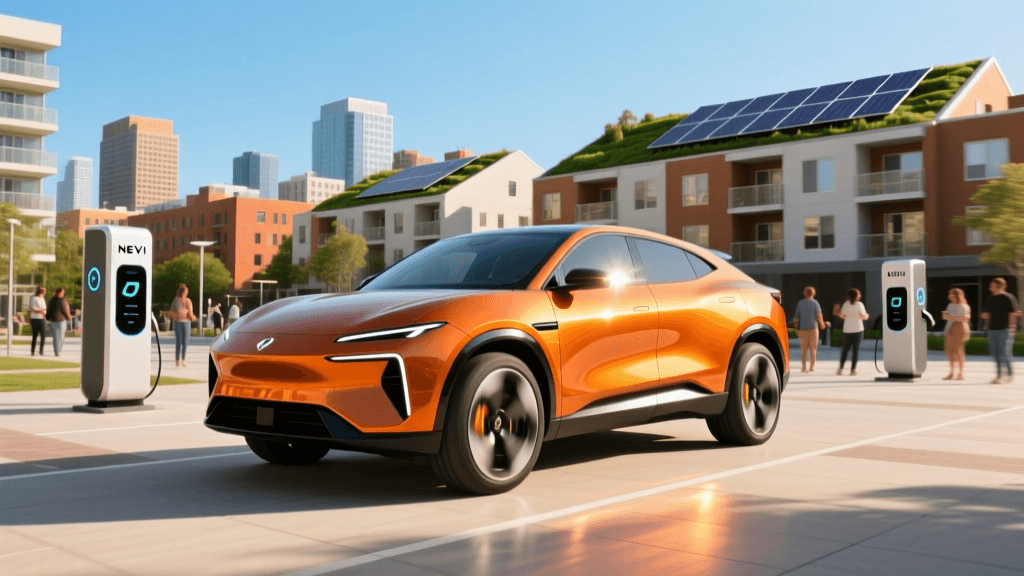
As the global automotive market accelerates its shift toward electrification, a glaring disparity has emerged in the deployment of charging infrastructure. While affluent suburbs and major commercial corridors see a rapid proliferation of Level 2 and DC Fast Charging (DCFC) stations, many low-income and underserved neighborhoods remain trapped in 'charging deserts.' These are typically census tracts characterized by a high density of multi-family dwellings (MFDs), a lack of off-street parking, lower average incomes, and historically low rates of EV adoption. Addressing this inequity is not merely a matter of social justice; it is a critical prerequisite for achieving national and global decarbonization goals. Without accessible, reliable, and affordable charging options, the transition to electric mobility will leave millions of Americans behind.
The Policy Engine: NEVI and the Justice40 Initiative
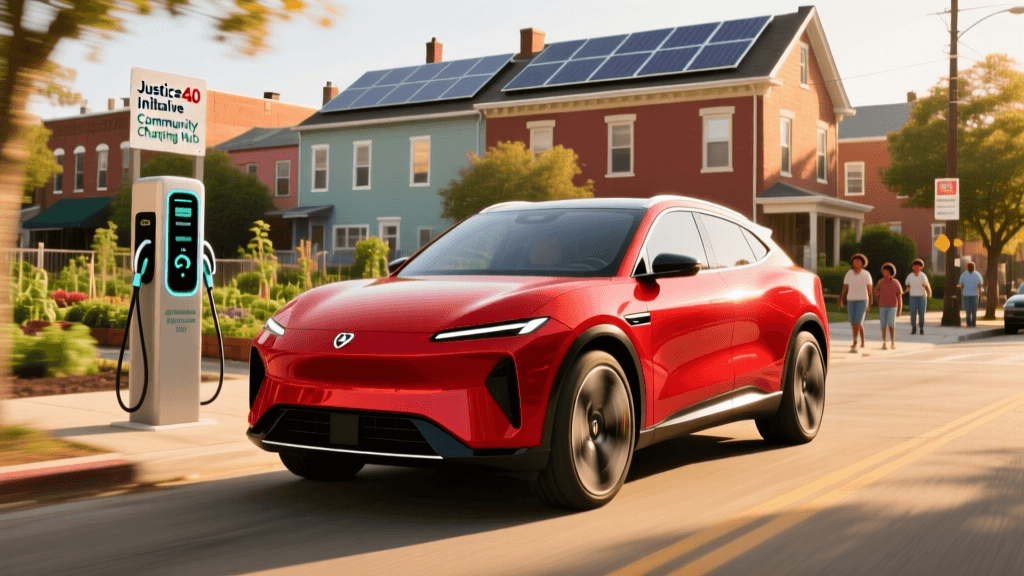
The future of EV charging equity is heavily intertwined with federal policy. The cornerstone of current infrastructure expansion is the National Electric Vehicle Infrastructure (NEVI) Formula Program, which provides $5 billion in funding to states to build a cohesive national charging network. Crucially, the NEVI program operates in tandem with the White House's Justice40 Initiative, which mandates that 40% of the overall benefits of certain federal investments flow to disadvantaged communities that are marginalized, underserved, and overburdened by pollution.
Looking toward 2025 and beyond, state departments of transportation are being held accountable for prioritizing these Disadvantaged Communities (DACs) in their NEVI deployment plans. This means we will see a deliberate shift away from exclusively funding highway corridor fast-charging plazas toward community-based charging hubs located in urban centers, near public transit nodes, and within underserved zip codes. Furthermore, federal grants are increasingly requiring Charge Point Operators (CPOs) to demonstrate community engagement and offer equitable pricing structures before funds are released.
Overcoming the Multi-Family Dwelling (MFD) Hurdle
The most significant barrier to EV adoption in underserved communities is the 'garage orphan' problem. Residents of apartment complexes and MFDs rarely have access to dedicated off-street parking or private garages where a standard Level 2 home charger can be installed. For property managers, retrofitting older buildings with EV infrastructure presents severe electrical and financial challenges.
Smart Hardware and Dynamic Load Management
To avoid the exorbitant costs of utility transformer upgrades—which can easily exceed $50,000 to $100,000 for older buildings—the industry is turning to Dynamic Load Management (DLM) software paired with smart Level 2 chargers. Hardware like the ChargePoint Express or Enel X Way JuiceBox commercial units can be networked together. DLM software continuously monitors the building's total electrical load in real-time. If the building's baseline power usage spikes (e.g., during peak evening hours when HVAC systems and appliances are running), the software automatically throttles down the amperage delivered to the EV chargers. This allows property managers to install dozens of 40-amp (9.6 kW) Level 2 ports on a single existing electrical panel without risking a blown main breaker.
Additionally, predictive load forecasting software, such as solutions provided by Amperon, uses AI to predict grid constraints and optimize charging schedules, ensuring that MFD residents can charge overnight at lower utility rates without overwhelming local distribution grids.
Curbside and Streetlight Charging Innovations
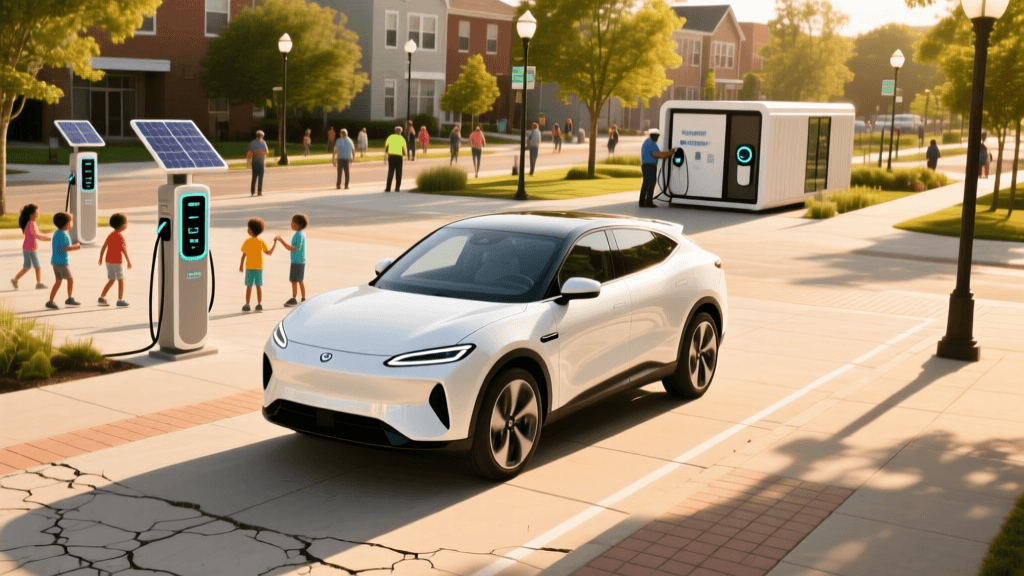
For neighborhoods where MFDs dominate and street parking is the only option, curbside charging is the next major frontier. Traditional DCFC stations require massive concrete pads, dedicated utility feeds, and significant right-of-way space, making them unsuitable for dense urban streets. Instead, the industry is scaling low-profile, integrated solutions.
Companies like Ubitricity (now part of Shell Recharge Solutions) have pioneered the integration of Level 2 charging sockets directly into existing municipal streetlights. By utilizing the existing electrical infrastructure of streetlamp poles, cities can deploy curbside charging at a fraction of the cost of standalone pedestals. While the charging speed is slower (typically 3 kW to 7 kW), it is perfectly suited for overnight charging for residents who park on the street. Another emerging trend is the deployment of modular, solar-integrated off-grid chargers like the EV ARC, which can be dropped into vacant lots or curbside parking spaces in underserved areas without requiring any trenching or utility grid interconnection.
Comparing Infrastructure Solutions for Underserved Areas
Choosing the right infrastructure depends on the specific layout and electrical capacity of the community. Below is a comparison of the leading equity-focused charging solutions:
| Solution Type | Ideal Use Case | Estimated Install Cost | Primary Challenge |
|---|---|---|---|
| Streetlight Integration (L2) | Dense urban streets, no off-street parking | $3,000 - $6,000 per pole | Limited power capacity (often max 7kW) |
| MFD Hub with DLM (L2) | Apartment complex parking lots | $4,000 - $8,000 per port | Requires property management buy-in |
| Community DCFC Plaza | Retail centers, transit hubs in DACs | $100,000 - $250,000+ per site | High utility demand charges and space needs |
| Solar Off-Grid (e.g., EV ARC) | Vacant lots, areas with weak grid capacity | $60,000 - $90,000 per unit | Slower charging speeds, high upfront hardware cost |
Utility Rate Structures and Equity Tariffs
Hardware is only half the equation; the cost of the electricity itself dictates whether EV ownership is financially viable for low-income drivers. Historically, Time-of-Use (TOU) rates have benefited homeowners who can program their chargers to run at 2:00 AM. However, underserved communities and MFD residents often lack the smart-home technology or the flexibility to optimize these rates.
Moving forward, we are seeing progressive utilities introduce 'EV Equity Tariffs.' These programs offer heavily discounted, flat-rate overnight charging for income-qualified customers, bypassing the need for complex TOU optimization. Furthermore, utilities like Southern California Edison (SCE) and Pacific Gas & Electric (PG&E) are expanding their 'make-ready' programs, where the utility covers 100% of the infrastructure costs (trenching, conduit, panel upgrades) for MFDs located in disadvantaged communities, removing the primary capital barrier for landlords.
The NACS vs. CCS Transition and Equity Implications
As the North American Charging Standard (NACS) championed by Tesla becomes the industry standard, there is a hidden equity risk. Many early-adopter EVs purchased on the used market by lower-income drivers utilize the older CCS or CHAdeMO connectors. As CPOs rip out CCS cables to replace them with NACS tethers, these drivers risk being stranded. According to research highlighted by the National Renewable Energy Laboratory (NREL), maintaining a diverse charging ecosystem is vital for consumer confidence. The industry trend for 2025 involves CPOs securing federal grants specifically to provide free or heavily subsidized CCS-to-NACS adapters to low-income EV owners, ensuring the legacy fleet is not prematurely obsoleted by the standards war.
Future Outlook 2025-2030: What to Expect
By 2030, the concept of 'charging as a public utility' will take root in underserved areas. Municipalities will treat curbside charging with the same regulatory framework as public Wi-Fi or municipal water. We expect to see a rise in 'charging cooperatives'—community-owned microgrids where local residents collectively own and profit from the solar canopies and DCFC stations installed in their neighborhoods, keeping the economic benefits local rather than extracting them to distant corporate CPOs.
Actionable Advice for Community Leaders and Property Managers
If you are advocating for EV equity or managing properties in underserved areas, take these immediate steps:
- Audit Your Electrical Capacity: Before applying for grants, hire an electrical contractor to perform a load study on your MFD. Knowing your available amperage will dictate whether you need DLM software or a utility transformer upgrade.
- Leverage Utility Make-Ready Programs: Contact your local utility's EV department to inquire about income-qualified infrastructure rebates. Never pay out-of-pocket for trenching if a utility equity program can cover it.
- Demand Adapter Inclusivity in RFPs: When issuing Requests for Proposals (RFPs) to CPOs for community charging hubs, mandate that a minimum of 20% of the stalls feature native CCS cables or provided magic-dock adapters to serve the used EV market.
- Engage Local Workforce Development: Tie your charging infrastructure projects to local trade schools. Many NEVI and state-level grants offer bonus points if the installation utilizes minority-owned businesses or local apprenticeship programs.
The future of EV charging equity relies on moving beyond the 'build it and they will come' mentality of highway corridors, and instead embedding accessible, intelligent, and affordable charging directly into the fabric of our most vulnerable communities.