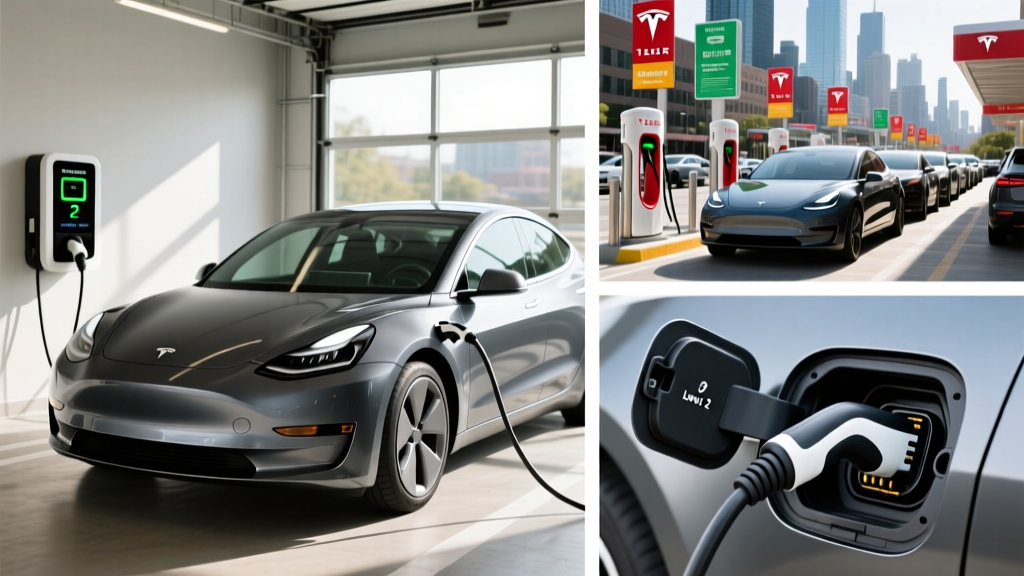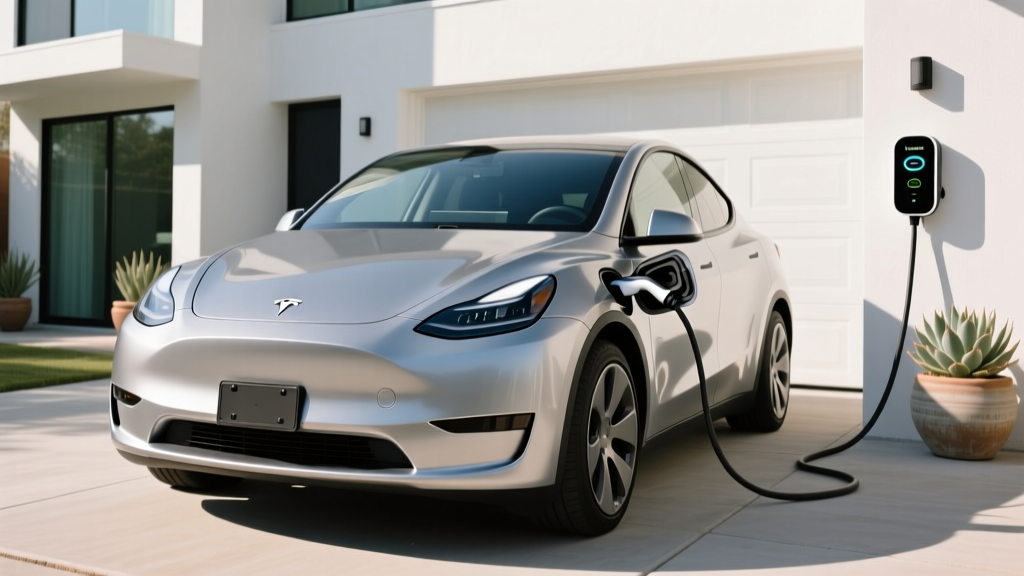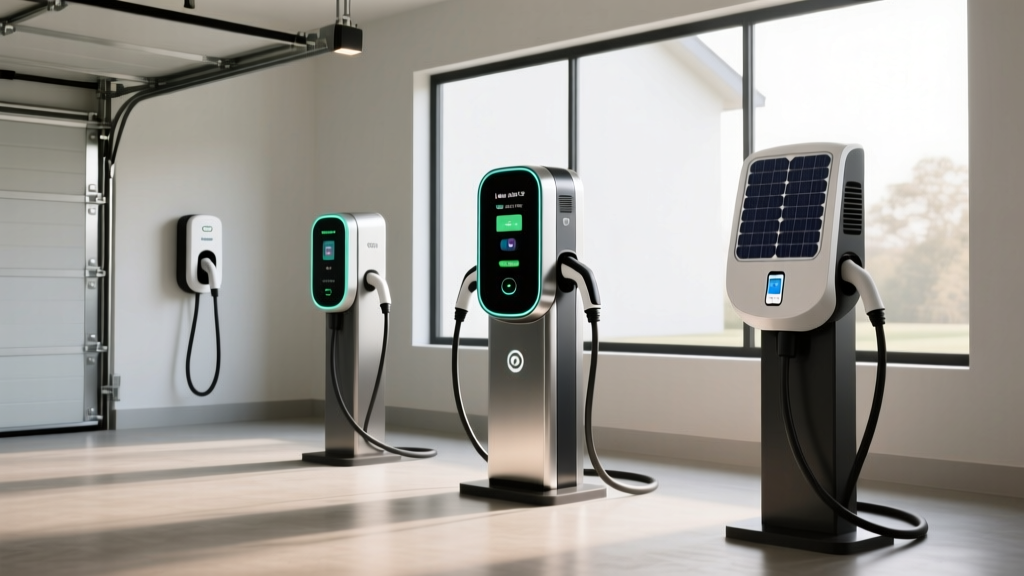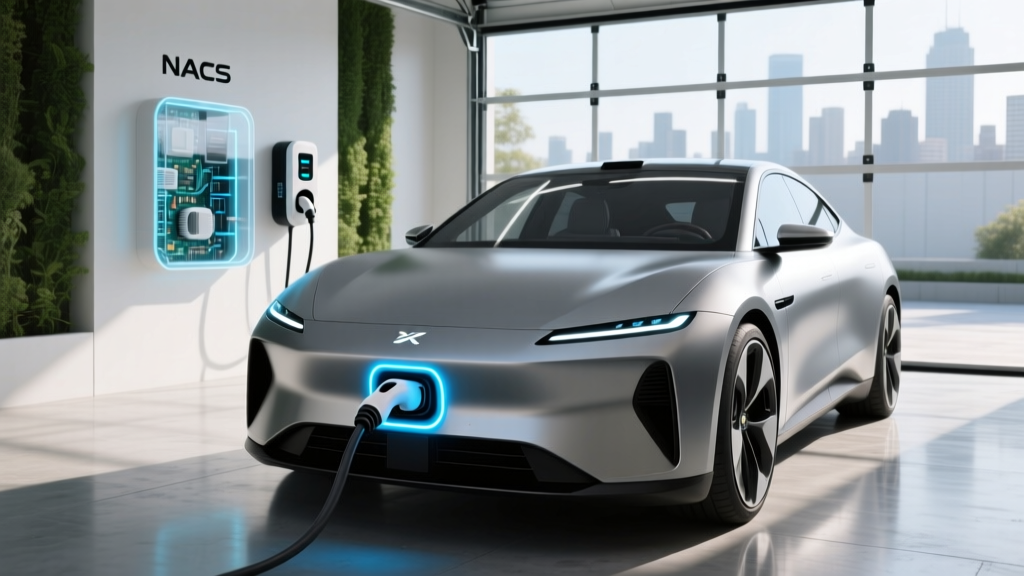
If you've shopped for an electric vehicle in the last two years, you've probably encountered the acronym NACS and wondered: what exactly is a NACS charger, and does it affect which EV you should buy? As of 2026, the North American Charging Standard (NACS) has become the dominant EV charging connector in the United States, adopted by nearly every major automaker. But understanding what NACS means for your daily charging routine — and your wallet — requires unpacking connector types, charging speeds, home electrical requirements, and real-world costs.
This guide explains NACS in practical terms: what it is, how it compares to CCS1 and CHAdeMO, what you need at home, and exactly how much range you'll add per hour at each charging level. We'll use precise numbers throughout, because in the EV world, the difference between kW and kWh is the difference between a 20-minute pit stop and a 9-hour overnight charge.
What Is NACS and Why Did It Win the Connector War?
NACS stands for North American Charging Standard. Originally developed by Tesla as its proprietary connector, the design was opened to other automakers in late 2022 and subsequently standardized by SAE International as J3400. By 2026, the transition is largely complete: Ford, GM, Rivian, Volvo, Polestar, Mercedes-Benz, BMW, Hyundai, Kia, and others now ship vehicles with native NACS ports or provide CCS-to-NACS adapters.
The physical connector is notably compact — roughly half the size of a CCS1 plug — and handles both AC Level 2 charging and DC fast charging through the same pins. That single-connector simplicity is a major reason automakers adopted it. No more separate AC and DC inlet holes on the vehicle body.
kW (kilowatts) measures power — the rate at which energy flows into your car, like water pressure from a hose. kWh (kilowatt-hours) measures energy — the total amount stored in your battery, like gallons in a tank. A 72 kWh battery charged at 11.5 kW takes roughly 6.3 hours from empty. The same battery at a 250 kW DC fast charger can reach 80% in about 20–25 minutes. Never confuse the two.
Charging Levels: How Fast Will Each Level Add Range?
Every EV owner needs to understand the three charging levels. Your connector (NACS or otherwise) matters less than the power level available. Here's what each delivers:
| Level | Voltage | Power (kW) | Miles of Range / Hour | Best For |
|---|---|---|---|---|
| Level 1 | 120V AC | 1.0–1.4 kW | 3–5 mi/hr | Overnight top-up, PHEVs, emergencies |
| Level 2 | 240V AC | 3.3–19.2 kW | 12–75 mi/hr | Daily home charging, workplace, destinations |
| DC Fast | 400–800V DC | 50–350 kW | 150–1,000+ mi/hr (peak) | Road trips, rapid top-ups, commercial fleets |
Real-world context: A Level 2 home charger at 11.5 kW (48 amps on a 60-amp circuit) will fully replenish a 75 kWh battery — like the one in a Ford Mustang Mach-E Extended Range — in roughly 6.5 hours. That's an overnight charge from 10% to 100% while you sleep. DC fast charging at 150 kW can take that same battery from 10% to 80% in approximately 28 minutes, though the charge curve tapers significantly above 80% to protect battery health.
On a practical note, most EVs see their fastest DC charging between 10% and 50% State of Charge (SoC). Above 80%, speeds often drop to 30–50 kW regardless of the station's peak rating. Plan road-trip stops around 10–80% increments for the best time efficiency.
Connector Compatibility: NACS vs. CCS1 vs. CHAdeMO
The connector on your EV determines which public chargers you can use without an adapter. Here's the 2026 landscape:
| Connector | Native Vehicles | Adapter Needed? | Network Access |
|---|---|---|---|
| NACS (J3400) | Tesla (all), Ford, GM, Rivian, Volvo, Polestar, Mercedes, BMW, Hyundai, Kia (2025+) | CCS-to-NACS adapter for legacy CCS stations (~$100–$200) | Tesla Supercharger, Electrify America, EVgo, ChargePoint (NACS-equipped) |
| CCS1 | Older Hyundai/Kia, VW ID.4 (pre-2025), Stellantis, some legacy models | NACS-to-CCS adapter for Tesla Superchargers (~$150–$250) | Electrify America, EVgo, ChargePoint, non-NACS stations |
| CHAdeMO | Nissan Leaf (discontinued), Mitsubishi Outlander PHEV (older) | Limited adapters; network shrinking | Declining — fewer stations support CHAdeMO each year |
If you're buying a new EV in 2026, NACS is the connector to have. Tesla's Supercharger network — the most reliable DC fast-charging infrastructure in North America, with over 28,000 stalls — is now open to NACS-equipped non-Tesla vehicles. CCS1 isn't dead yet, but new station deployments overwhelmingly favor NACS, and CHAdeMO is effectively legacy-only.
How Much Does It Cost to Install a Home EV Charger?
Home Level 2 charging is where 80%+ of EV charging happens for owners with garage or driveway access. But installation cost varies enormously depending on your home's electrical panel, the distance from panel to charger location, and local permit requirements.
| Component | Simple Install | Complex Install | Notes |
|---|---|---|---|
| Level 2 charger (hardware) | $350–$600 | $500–$750 | Smart Wi-Fi chargers; NACS or J1772 with adapter |
| Electrician labor | $300–$600 | $800–$2,000 | Depends on run length, conduit, wall type |
| Permit & inspection | $50–$150 | $100–$300 | Required in most jurisdictions; varies by locality |
| Electrical panel upgrade | $0 | $1,500–$4,000 | 100A panels often need upgrade to 200A; common in pre-1990 homes |
| Total | $700–$1,350 | $2,900–$7,050 | Get 2–3 electrician quotes; ask about EV-specific experience |
The panel upgrade gotcha: A 48-amp Level 2 charger draws 11.5 kW continuously. The National Electrical Code requires the circuit be rated at 125% of continuous load — so you need a 60-amp dedicated circuit. If your home has a 100-amp service panel that's already near capacity (common in older homes with electric dryers, HVAC, and water heaters), you'll need a panel upgrade to 200 amps. This is the single biggest cost variable and the one most online guides gloss over. A licensed electrician can perform a load calculation to determine if an upgrade is necessary before you buy any equipment.
Electrical requirements for a standard 48A Level 2 install: 240V split-phase, 60-amp double-pole breaker, 6 AWG copper wire (or 4 AWG aluminum), NEMA 14-50 receptacle or hardwired connection. Hardwired is generally preferred for outdoor installs as it eliminates the receptacle as a failure point and may not require GFCI breaker protection depending on local code interpretation of NEC 625.
Charging Cost Per Mile: EV vs. Gas in 2026
The economic case for EV charging hinges on your electricity rate and how much you drive. Here's a realistic comparison using national averages:
| Scenario | Rate | Cost per kWh | Cost per Mile* |
|---|---|---|---|
| Home (national avg. residential) | $0.17/kWh | $0.17 | $0.051 |
| Home (off-peak time-of-use) | $0.09/kWh | $0.09 | $0.027 |
| Public Level 2 (network) | $0.25–$0.40/kWh | $0.32 avg | $0.096 |
| DC Fast (Electrify America, EVgo) | $0.35–$0.55/kWh | $0.45 avg | $0.135 |
| Gas car (28 MPG combined, $3.40/gal) | $3.40/gallon | — | $0.121 |
*Assumes EV efficiency of 3.3 miles per kWh (approx. 30 kWh/100 mi), representative of vehicles like the Tesla Model Y, Hyundai Ioniq 5, and Ford Mustang Mach-E. Source: fueleconomy.gov EPA data.
The takeaway is clear: home charging is the economic advantage. At off-peak rates, an EV costs roughly one-quarter what a gas car costs per mile. Even at public DC fast-charging rates, EVs are competitive with gasoline on a per-mile basis — but relying exclusively on DC fast charging erodes the savings and accelerates battery wear. Plan your ownership around reliable home Level 2 access for the best economics and battery longevity.
Recommended Home Level 2 Chargers for NACS-Equipped EVs
With NACS now the standard, most charger manufacturers offer native NACS connectors or J1772 models with included NACS adapters. Here are proven options as of 2026:
Tesla Wall Connector
- Power: 11.5 kW (48A) max
- Connector: Native NACS
- Cable length: 24 ft
- Smart features: Wi-Fi, OTA updates, power sharing between units, access control
- Price: ~$475
- Best for: Tesla owners and NACS-native EVs; cleanest integration
ChargePoint Home Flex
- Power: Up to 12 kW (50A) adjustable
- Connector: NACS (2025+ model) or J1772 with adapter
- Cable length: 23 ft
- Smart features: Wi-Fi, app scheduling, Alexa, load management
- Price: ~$550–$650
- Best for: Multi-EV households; flexible amperage settings
Emporia Vue Level 2 Charger
- Power: 11.5 kW (48A)
- Connector: J1772 (NACS adapter included)
- Cable length: 24 ft
- Smart features: Wi-Fi, energy monitoring, solar integration, scheduling
- Price: ~$399
- Best for: Budget-conscious buyers with solar panels
Grizzl-E Smart
- Power: 10 kW (40A)
- Connector: J1772 or NACS (select at purchase)
- Cable length: 24 ft
- Smart features: OCPP-compatible, app control, adjustable amperage
- Price: ~$449
- Best for: Cold climates (rated to -40°F); rugged outdoor installs
When selecting a charger, match the amperage to your electrical panel's available capacity. A 48A charger (requiring a 60A circuit) is ideal if your panel supports it, delivering the fastest Level 2 speeds. If panel headroom is tight, many smart chargers allow you to dial down to 32A or 40A, which still provides 25–35 miles of range per hour — more than enough for overnight replenishment for most drivers.
Real-World Charging Times: 10–80% for Common Battery Sizes
Charging time depends on both the vehicle's battery capacity (kWh) and the charge rate it can accept (kW). Not all EVs can sustain peak station rates. Here are representative 10–80% times:
| Vehicle | Battery (kWh usable) | Peak DC Rate (kW) | 10–80% Time (DC Fast) | 10–80% Time (11.5 kW L2) |
|---|---|---|---|---|
| Tesla Model Y Long Range | 75 kWh | 250 kW | ~22 min | ~4.5 hrs |
| Ford Mustang Mach-E Ext. Range | 78 kWh | 150 kW | ~35 min | ~4.7 hrs |
| Hyundai Ioniq 5 (84 kWh) | 84 kWh | 240 kW (800V) | ~18 min | ~5.1 hrs |
| Chevrolet Equinox EV | 85 kWh | 150 kW | ~38 min | ~5.2 hrs |
| Rivian R1S (Max Pack) | 141 kWh | 220 kW | ~42 min | ~8.6 hrs |
Charge curve reality check: Those peak DC rates (250 kW, 240 kW) are sustained only at low states of charge, typically 10–40%. Above 60% SoC, most vehicles throttle significantly. A "250 kW" Tesla Model Y may only average 130–150 kW across a full 10–80% session. This is why manufacturers quote 10–80% times rather than 0–100% — charging above 80% can take as long as the 10–80% portion itself. On road trips, charge to 80% and move on; the last 20% is rarely worth the wait.
Cold weather impact: In temperatures below 32°F, expect DC fast charging speeds to drop 20–40% unless your vehicle has battery preconditioning. Tesla, Hyundai/Kia (800V models), and Ford all offer preconditioning that warms the battery before you arrive at a charger. Always navigate to your charging stop using the car's built-in navigation to trigger preconditioning automatically.
Safety, Code, and Installation Best Practices
EV charging involves sustained high-current draw — more like running an electric furnace than plugging in a phone. Proper installation isn't optional:
- Dedicated circuit: Your Level 2 charger must be on its own dedicated breaker. Never share a circuit with other high-draw appliances.
- GFCI protection: NEC 625 requires ground-fault protection for EV charging equipment. Hardwired installations may handle this differently than receptacle-based installs; your electrician should confirm compliance with your local AHJ (Authority Having Jurisdiction).
- Outdoor rating: If your charger is installed outside, ensure the unit carries a NEMA 4 (weatherproof) rating. All recommended chargers above meet this standard.
- Wire gauge: For a 60A circuit, 6 AWG copper is standard. For runs over 100 feet, your electrician may upsize to 4 AWG to reduce voltage drop.
- Permit and inspection: Most municipalities require an electrical permit for EV charger installations. Skipping this can void home insurance coverage in the event of an electrical fire and may cause issues at home sale. The NEC is the baseline, but local amendments vary — always check with your jurisdiction.
- Load management: If your panel is near capacity but you want to avoid a costly upgrade, smart chargers like the Emporia Vue and some ChargePoint models offer load-sensing features that dynamically reduce charge rate when other household circuits are drawing heavily.
Frequently Asked Questions
What is a NACS charger and how is it different from CCS?
NACS (North American Charging Standard, SAE J3400) is the connector originally designed by Tesla and now adopted as the standard across most of the North American EV market. It's physically smaller than CCS1, uses the same connector for both AC and DC charging, and provides access to Tesla's Supercharger network. CCS1 uses a larger, two-part connector (AC pins on top, DC pins below) and is being phased out on new vehicles, though existing CCS vehicles can access NACS stations with an adapter.
Can I charge a non-Tesla EV at a Tesla Supercharger?
Yes — if your vehicle has a native NACS port (most 2025+ models from Ford, GM, Rivian, and others) or you're using an approved CCS-to-NACS adapter. Tesla has opened thousands of Supercharger stalls to non-Tesla NACS vehicles. Check the Tesla app or in-vehicle navigation for station availability, as not every Supercharger location has been retrofitted with the necessary software and cable management for non-Tesla access.
Do I need a panel upgrade to install a home Level 2 charger?
Not always, but it's common in older homes. A 48A Level 2 charger needs a 60A dedicated circuit. If your home has a 200A panel with available capacity, you're likely fine. If you have a 100A panel — common in homes built before 1990 — a load calculation by a licensed electrician will determine whether an upgrade to 200A is needed. Panel upgrades typically cost $1,500–$4,000 depending on your utility and local requirements.
How much does charging an EV cost compared to gas per mile?
At the national average residential electricity rate of ~$0.17/kWh and an EV efficiency of 3.3 mi/kWh, home charging costs approximately $0.05 per mile. With off-peak time-of-use rates (~$0.09/kWh), that drops to under $0.03 per mile. A comparable gas car at 28 MPG and $3.40/gallon costs about $0.12 per mile. Public DC fast charging at $0.45/kWh runs ~$0.14 per mile — slightly more than gas, which is why home charging access is the key economic variable.
What NACS home charger should I buy?
For native NACS vehicles, the Tesla Wall Connector ($475, 11.5 kW, 24 ft cable) is the most integrated and cost-effective choice. For mixed-connector households or those wanting adjustable amperage, the ChargePoint Home Flex ($550–$650, up to 12 kW) offers excellent flexibility. Budget buyers should consider the Emporia Vue ($399, 11.5 kW) with its strong energy-monitoring features and solar integration.
Is Level 1 (120V) charging enough for daily use?
For plug-in hybrids with small batteries (10–20 kWh), absolutely — Level 1 adds 3–5 miles per hour and can fully recharge overnight. For battery EVs with 60–100+ kWh batteries, Level 1 is impractical as a primary strategy: a full charge can take 60+ hours. It works as an emergency backup or for very low-mileage drivers who travel under 20 miles daily and can leave the car plugged in for 12+ hours.
NACS is the connector standard you should prioritize when buying a new EV in 2026. It provides the broadest charging-network access — including Tesla Superchargers — in the most compact physical package. Pair a NACS-equipped EV with a properly installed 48A home Level 2 charger, and you'll add 35–45 miles of range per hour of charging, cover most daily driving on off-peak electricity at under $0.03/mile, and have DC fast-charging compatibility for road trips at 150–250 kW. Budget $700–$1,350 for a straightforward home install, or up to $7,000 if a panel upgrade is needed.