Shopping for a home EV charger feels a lot like shopping for a car: the base model gets you moving, but the higher trim unlocks the features you actually want. In the EV charging world, those "trim levels" are really a combination of power output (kW), connector standard, cable length, and smart-software features. Pick the wrong one and you'll either wait 40 hours for a full charge or overpay for amps your electrical panel can't deliver.
This guide breaks down every charger trim level available to US buyers in 2026, maps each to real-world range gains, and shows the exact installation math — including the panel upgrade that catches 30% of older-home buyers off guard.
Charger Trim Levels 101: Level 1, Level 2, and DC Fast
Before comparing brands, understand the three power tiers. The difference isn't marketing — it's physics. kW (kilowatts) measures charging power (how fast energy flows); kWh (kilowatt-hours) measures battery capacity (how much energy the pack holds). A 10 kW charger delivering energy for one hour adds 10 kWh to your battery.
| Level | Voltage | Max Power | Miles of Range Added per Hour | Typical Use |
|---|---|---|---|---|
| Level 1 | 120V AC | 1.4–1.9 kW | 3–5 mi/hr | Overnight trickle; PHEV top-offs |
| Level 2 | 240V AC | 3.3–19.2 kW | 12–75 mi/hr | Daily home & workplace charging |
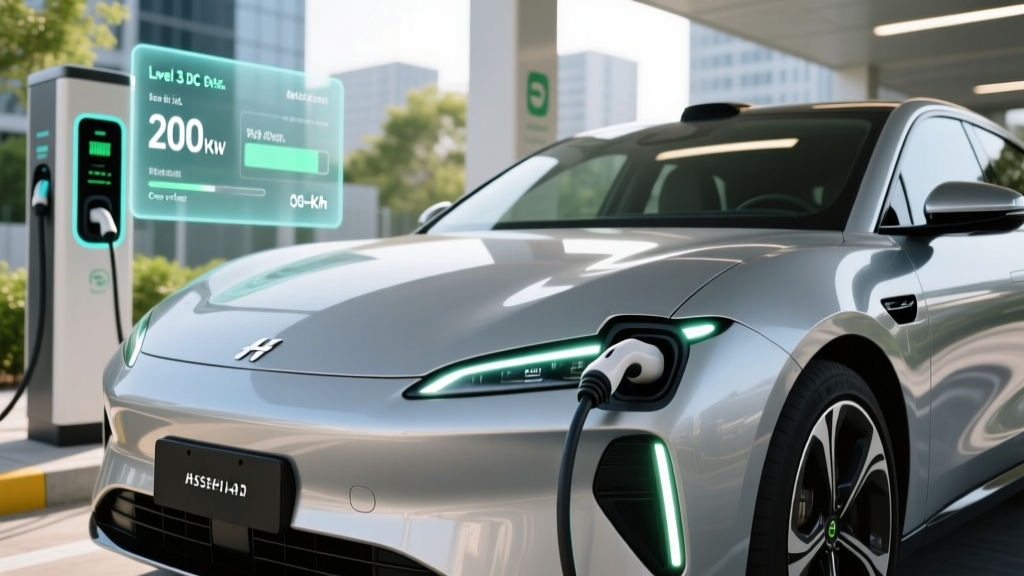
| DC Fast (Level 3) | 200–900V DC | 50–350 kW | 150–1,000+ mi/hr (equivalent) | Road trips; 10–80% in 18–40 min |
A Level 1 cord (included with most EVs) is fine for plug-in hybrids with 15–18 kWh batteries. For a BEV with a 75–100 kWh pack, Level 1 means 24+ hours for a full charge — impractical for daily driving beyond short commutes.
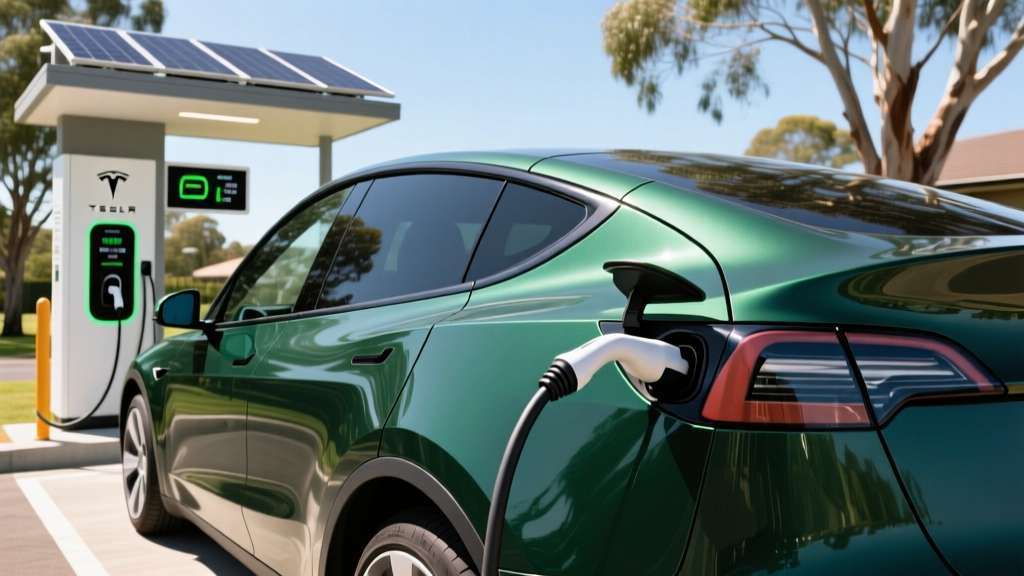
Level 2 is where 90% of EV owners live. A 48-amp (11.5 kW) hardwired unit on a 60-amp dedicated circuit adds roughly 35–45 miles of range per hour for a midsize SUV like the Hyundai Ioniq 5 or Tesla Model Y. That's a full overnight refill for any daily commute under 80 miles round-trip.
Real-World Charging Times by Battery Size
Manufacturer 10–80% times assume ideal conditions: preconditioned battery, peak charger output, and moderate ambient temperature. In practice, charging curves taper significantly above 80% State of Charge (SoC) to protect battery health. Here's what to expect at common home and public charger trim levels:
| Battery Size (usable kWh) | Example Vehicles | Level 1 (1.4 kW) | Level 2 (11.5 kW / 48A) | DC Fast (150 kW peak) | DC Fast (350 kW peak) |
|---|---|---|---|---|---|
| 18 kWh (PHEV) | Toyota RAV4 Prime | ~9 hrs | ~1.2 hrs | N/A (no DC port on most PHEVs) | N/A |
| 58 kWh | VW ID.4 Standard | ~35 hrs | ~5 hrs | ~28 min | ~22 min |
| 77 kWh | Tesla Model Y LR, Ioniq 5 | ~46 hrs | ~6.5 hrs | ~26 min | ~18 min |
| 98 kWh | F-150 Lightning Ext., Rivian R1S | ~58 hrs | ~8.5 hrs | ~38 min | ~25 min |
Charge curve reality check: A 350 kW-capable vehicle like the Ioniq 5 or Porsche Taycan only sustains peak power between roughly 10–40% SoC. Above 80%, speeds drop to under 50 kW. For daily driving, charging to 80% and preheating the battery before a DC session (a feature called preconditioning) is the difference between a 20-minute and 45-minute stop.
Connector Compatibility: NACS, CCS1, and CHAdeMO
The connector landscape shifted dramatically in 2024–2025 when Ford, GM, Rivian, Volvo, and most major automakers adopted the North American Charging Standard (NACS), originally developed by Tesla. As of 2026, NACS is the dominant connector on new EVs sold in the US, while CCS1 remains on models from Stellantis and some legacy inventory, and CHAdeMO is effectively limited to the Nissan Leaf.
| Connector | Automakers Using It | Adapter Needed for Tesla Superchargers? |
|---|---|---|
| NACS (native) | Tesla, Ford, GM, Rivian, Volvo, Polestar, Mercedes, Honda, Hyundai/Kia (2025+) | No — plugs directly in |
| CCS1 | Stellantis (Jeep, Dodge), VW ID.4 (pre-2025), BMW iX (pre-2025) | Yes — CCS-to-NACS adapter (~$200–$300) |
| CHAdeMO | Nissan Leaf (discontinued after 2025) | Yes — limited adapter availability; shrinking network |
If you're buying a home Level 2 charger in 2026, NACS is the safest bet for future-proofing. Most major charger manufacturers (ChargePoint, Emporia, Wallbox) now ship NACS-equipped units, with CCS1 available as an option or via adapter. See the EPA's EV technology overview for updated connector details by model.
Home Charger Installation: Electrical Requirements and Cost
A Level 2 home charger isn't plug-and-play unless you already have a 240V outlet (like a dryer receptacle) in your garage. Here's what a proper installation requires:
- Dedicated circuit: A 48-amp charger requires a 60-amp breaker (NEC 80% rule: continuous loads can't exceed 80% of breaker rating).
- Wire gauge: 6 AWG copper for runs under 50 feet; 4 AWG for longer runs to prevent voltage drop.
- GFCI protection: Required for all receptacle-based (plug-in) installations per NEC 2023 and later. Hardwired units may not require a GFCI breaker in all jurisdictions, but many inspectors now require them regardless.
- Outdoor rating: If the charger is mounted outside, it must carry a NEMA 4 or NEMA 4X rating for weather resistance.
- Permit: Nearly all US jurisdictions require an electrical permit for new 240V circuits. Fees range from $50–$250 depending on municipality.
| Item | Low End | Typical | High End (panel upgrade) |
|---|---|---|---|
| Level 2 charger unit (40–48A, hardwired, NACS) | $350 | $550 | $750 |
| Electrician labor (240V circuit, 6 AWG, ~30 ft run) | $400 | $800 | $1,500 |
| Permit & inspection | $50 | $150 | $250 |
| Electrical panel upgrade (100A → 200A, if needed) | $0 | $0 | $2,500–$4,000 |
| Total | $800 | $1,500 | $6,500 |
Panel upgrade gotcha: Homes built before 1990 often have 100-amp main panels already near capacity. Adding a 60-amp EV circuit can push total load beyond the panel's rating, triggering a mandatory upgrade to 200 amps. Budget $2,500–$4,000 for this work. An electrician's load calculation (usually $100–$200 as part of the estimate) will tell you before any work begins.
Charger Trim Levels Compared: Equipment Picks for 2026
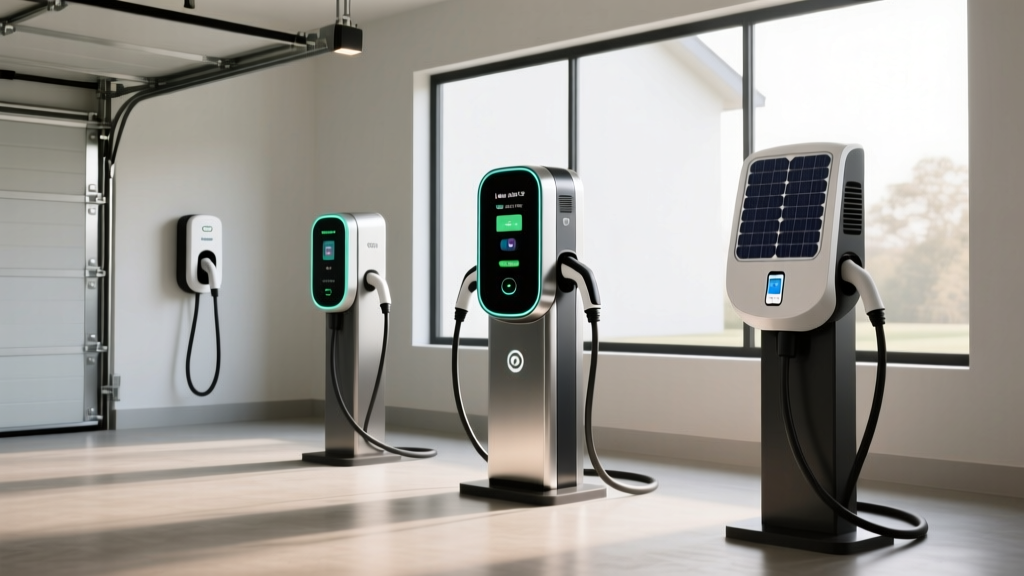
Not all Level 2 chargers are created equal. The "trim level" you choose determines max power output, cable length, smart scheduling, load management, and connector type. Here are four widely available units mapped to different buyer needs:
Emporia Vue + EV Charger (Budget Pick)
- Power: 48A / 11.5 kW (hardwired) or 40A / 9.6 kW (plug-in NEMA 14-50)
- Connector: NACS (native), J1772 adapter included
- Cable: 24 ft
- Smart features: Solar integration, scheduled charging, energy monitoring via Emporia app
- Price: ~$399 (hardwired)
- Best for: Solar-panel owners, budget-conscious buyers
ChargePoint Home Flex (Versatile Mid-Range)
- Power: Adjustable 16–50A / up to 12 kW (hardwired)
- Connector: NACS or J1772 (configurable at purchase)
- Cable: 23 ft
- Smart features: Alexa integration, flexible amperage dial (match to your circuit), ChargePoint network app
- Price: ~$599
- Best for: Homes with 40A or 50A circuits; renters who may move
Tesla Wall Connector (Best for NACS Ecosystem)
- Power: 48A / 11.5 kW (hardwired, 60A circuit)
- Connector: NACS native; J1772 adapter sold separately
- Cable: 24 ft
- Smart features: Wi-Fi OTA updates, power sharing (link two units on one circuit), Tesla app integration
- Price: ~$475
- Best for: Tesla owners; multi-EV households with power-sharing needs
Wallbox Pulsar Max (Compact + Load Management)
- Power: 48A / 11.5 kW (hardwired)
- Connector: NACS or J1772
- Cable: 25 ft
- Smart features: Eco-Smart mode (charges only from solar surplus), dynamic load balancing (avoids tripping main breaker)
- Price: ~$649
- Best for: Homes near panel capacity; solar + battery setups
Cost Per Mile: Home Charging vs. Gas vs. Public DC Fast
The financial case for home charging is overwhelming — but it depends heavily on your electricity rate and whether you can charge during off-peak hours. Here's a cost-per-mile comparison using a midsize EV averaging 3.0 miles per kWh (roughly 112 MPGe combined):
| Scenario | Rate / Price | Cost per Mile | Annual Cost (12,000 mi) |
|---|---|---|---|
| Home off-peak (utility time-of-use plan) | $0.09/kWh | $0.030 | $360 |
| Home standard rate (national avg.) | $0.17/kWh | $0.057 | $680 |
| Public Level 2 (ChargePoint, EVgo L2) | $0.30/kWh | $0.100 | $1,200 |
| DC Fast Charging (Electrify America, Tesla Supercharger) | $0.40/kWh | $0.133 | $1,600 |
| Gasoline (25 MPG combined, $3.40/gal) | $3.40/gallon | $0.136 | $1,632 |
At off-peak home rates, an EV costs roughly $0.03 per mile — less than a quarter of gasoline. Even at standard residential rates, home charging saves $900+ per year versus a 25 MPG gas car. But if you rely exclusively on DC fast charging at $0.40/kWh, the cost advantage nearly disappears. This is why home Level 2 installation is the single highest-ROI upgrade an EV owner can make.
According to the EPA's fuel economy data, most 2026 BEVs achieve between 2.5 and 4.0 miles per kWh depending on weight, aerodynamics, and drivetrain. The Hyundai Ioniq 6 (RWD) leads at ~4.0 mi/kWh (140 MPGe), while the GMC Hummer EV sits near 1.6 mi/kWh (53 MPGe).
Safety, Code, and Common Installation Mistakes
EV charging draws sustained high current for hours — a fundamentally different load profile than a dryer or oven that cycles on and off. Cutting corners on installation invites tripped breakers, overheated wiring, or fire risk.
- Never share a circuit. A Level 2 charger must have a dedicated breaker. Sharing with a dryer, HVAC, or workshop outlet violates NEC and creates overload risk.
- Don't use extension cords. Even heavy-duty 240V extension cords introduce resistance, voltage drop, and heat at connection points. If the charger cable doesn't reach, move the charger or have an electrician extend the circuit.
- Verify outdoor ratings. Indoor-rated chargers (NEMA 1 or 2) installed outside will fail prematurely and may void the warranty. Require NEMA 4 or 4X for any exterior mount.
- Load calculation first. Before purchasing a 48A charger, have your electrician run a NEC Article 220 load calculation. If your panel is near capacity, a 32A (7.7 kW) charger on a 40A circuit may be the right trim level for your home — it still adds ~25 miles per hour, enough for most commutes.
- Smart load management. Chargers like the Wallbox Pulsar Max and Emporia Vue offer dynamic load balancing, which monitors your home's total draw and reduces charging power if other appliances kick on. This can avoid a costly panel upgrade.
Decision Framework: Which Charger Trim Level Is Right for You?
Choose a 32A (7.7 kW) Level 2 charger if:
- Your electrical panel has only a 40A spare slot
- Your daily commute is under 50 miles round-trip
- You want to avoid a panel upgrade
- You own a PHEV with a smaller battery
Choose a 48A (11.5 kW) Level 2 charger if:
- Your panel can support a dedicated 60A circuit
- You drive 50+ miles daily or own a large-battery BEV (80+ kWh)
- You want faster turnaround between trips (e.g., afternoon top-off before evening plans)
- You plan to add a second EV in the next 2–3 years
Stick with Level 1 (120V) if:
- You own a PHEV and drive under 20 electric miles per day
- You're renting and can't install a 240V circuit
- Your BEV is a secondary car driven fewer than 30 miles daily
Frequently Asked Questions
How much does it cost to install a home EV charger?
A typical Level 2 installation (48A hardwired charger, 30-foot wire run, 60A breaker, no panel upgrade) costs between $1,200 and $1,800 including equipment, electrician labor, and permit. If your home needs a 200-amp panel upgrade, add $2,500–$4,000. The IRS Alternative Fuel Vehicle Refueling Property Credit may cover up to 30% of the cost (capped at $1,000) if your home is in a qualifying census tract.
How fast will each charging level add range?
Level 1 (120V) adds 3–5 miles per hour. Level 2 at 48 amps (11.5 kW) adds roughly 35–45 miles per hour for a midsize EV. DC fast charging at 150 kW can add 150+ miles in 15–20 minutes, but only between 10–60% SoC — speeds taper sharply above 80%.
Which connector/charger is compatible with my EV?
If your EV is a 2025 or newer model from Tesla, Ford, GM, Rivian, Hyundai, Kia, or Volvo, it almost certainly uses NACS. Older VW, BMW, and Stellantis models use CCS1. The Nissan Leaf uses CHAdeMO. Check your vehicle's charge port or the manufacturer's spec page. Most home chargers are available in both NACS and J1772/CCS1 configurations, and adapters are widely available.
How much does charging cost per mile vs. gas?
Home charging at the national average rate of $0.17/kWh costs about $0.057 per mile for an EV averaging 3 mi/kWh — roughly $680 per year at 12,000 miles. A comparable 25 MPG gas car at $3.40/gallon costs $0.136 per mile, or $1,632 per year. Off-peak home charging drops the EV cost to under $0.03 per mile.
What electrical upgrades might I need?
The most common upgrade is a panel replacement from 100A to 200A service ($2,500–$4,000), needed when your existing panel is near capacity. Some homes also need a meter base upgrade or utility service wire replacement. An electrician's load calculation will determine this before any work begins. Smart chargers with load-balancing features can sometimes avoid a panel upgrade by dynamically reducing charging power.
Can I install a Level 2 charger myself?
Technically yes if you have electrical experience, but most jurisdictions require a licensed electrician and permit for new 240V circuits. DIY errors with sustained high-current circuits carry fire risk, and unpermitted work can void homeowner's insurance coverage for related claims. Budget for a licensed electrician — it's worth the $400–$1,500 in labor.
Choosing the right charger trim level comes down to three inputs: your daily miles, your panel capacity, and your budget. A 48A hardwired NACS unit on a 60A circuit is the sweet spot for most BEV owners in 2026 — it delivers a full overnight charge, supports the dominant connector standard, and costs under $2,000 installed if your panel has headroom. Get the load calculation done first, and the right charger trim level becomes obvious.