If you're researching the Toyota bZ lineup — particularly the bZ4X crossover — the first question is usually about real-world range. The second, more practical question, is how you'll actually keep it charged day to day. This guide covers Toyota bZ range expectations across model years, breaks down every charging level with exact speeds, and walks through what a home Level 2 installation actually costs and requires in 2026.
Toyota bZ Range: EPA Numbers vs. Real-World Expectations
The Toyota bZ4X launched with modest range figures, and subsequent model years have seen incremental improvements. Here's where the lineup stands for current models based on EPA data from fueleconomy.gov:
| Trim / Drivetrain | Battery (usable kWh) | EPA Range | MPGe (Combined) | Real-World Range Estimate |
|---|---|---|---|---|
| XLE FWD | 71.4 kWh (LFP/NMC) | 252 mi | 114 MPGe | ~210–230 mi (mixed), ~180 mi (cold/highway) |
| XLE AWD | 72.8 kWh | 228 mi | 102 MPGe | ~190–210 mi (mixed), ~165 mi (cold/highway) |
| Limited FWD | 71.4 kWh | 236 mi | 107 MPGe | ~200–220 mi (mixed), ~175 mi (cold/highway) |
| Limited AWD | 72.8 kWh | 214 mi | 98 MPGe | ~180–195 mi (mixed), ~155 mi (cold/highway) |
For the upcoming bZ SUV variants that Toyota has announced, preliminary specs suggest larger battery packs and 280+ mile EPA targets, but those figures remain unconfirmed until production models are tested. Always verify final EPA ratings on the fueleconomy.gov database before purchasing.
Charging Levels Explained: Speeds in kW and Miles Per Hour
Before we get into hardware, let's clarify the single most important distinction in EV charging: kW (kilowatts) measures power — how fast energy flows, while kWh (kilowatt-hours) measures energy — the total capacity of the battery. Think of kW as the width of a pipe and kWh as the size of the tank you're filling. A wider pipe (higher kW) fills the tank faster, but the tank size (kWh) determines how far you can go.
| Level | Voltage | Power (kW) | Miles of Range Added Per Hour | Typical Use Case |
|---|---|---|---|---|
| Level 1 | 120V AC | 1.0–1.4 kW | 3–5 mi/hr | Overnight trickle; emergency top-ups |
| Level 2 | 240V AC | 3.3–19.2 kW | 12–70 mi/hr | Home daily charging; workplace; public destinations |
| DC Fast Charge | 400–800V DC | 50–350 kW | 150–800+ mi/hr (peak) | Road trips; rapid top-ups at highway stations |
For the Toyota bZ4X specifically, the onboard charger accepts up to 7.4 kW on Level 2 (single-phase, 32A). On DC fast charging, the bZ4X peaks at approximately 150 kW on FWD models, though sustained rates taper significantly past 60% state of charge (SoC). A 10–80% DC fast charge takes roughly 30 minutes under ideal conditions at a 150 kW station. Real-world charging sessions often run 35–45 minutes because the charge curve slows dramatically above 80% to protect battery health.
Home Level 2 Installation: Electrical Requirements & Costs
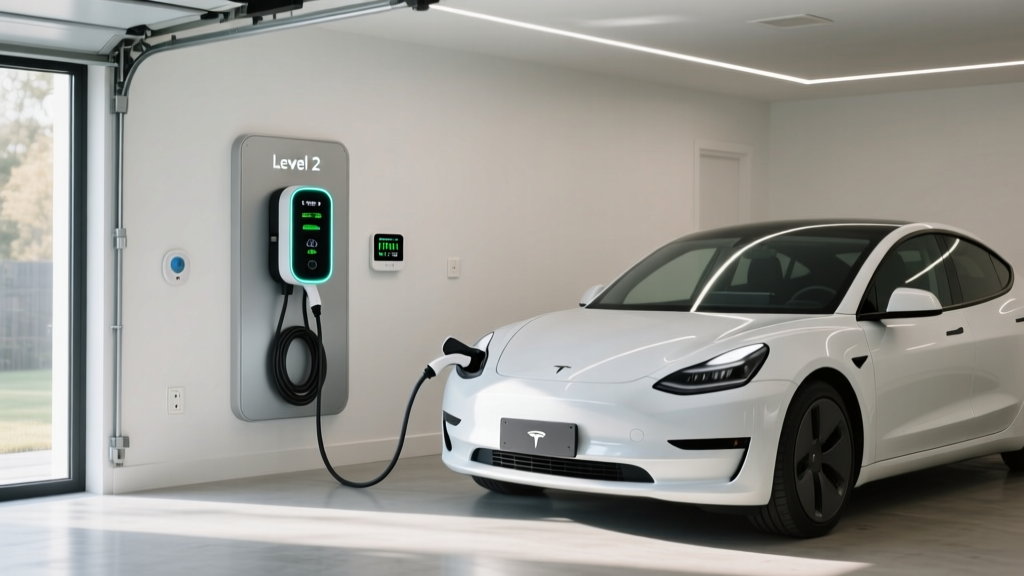
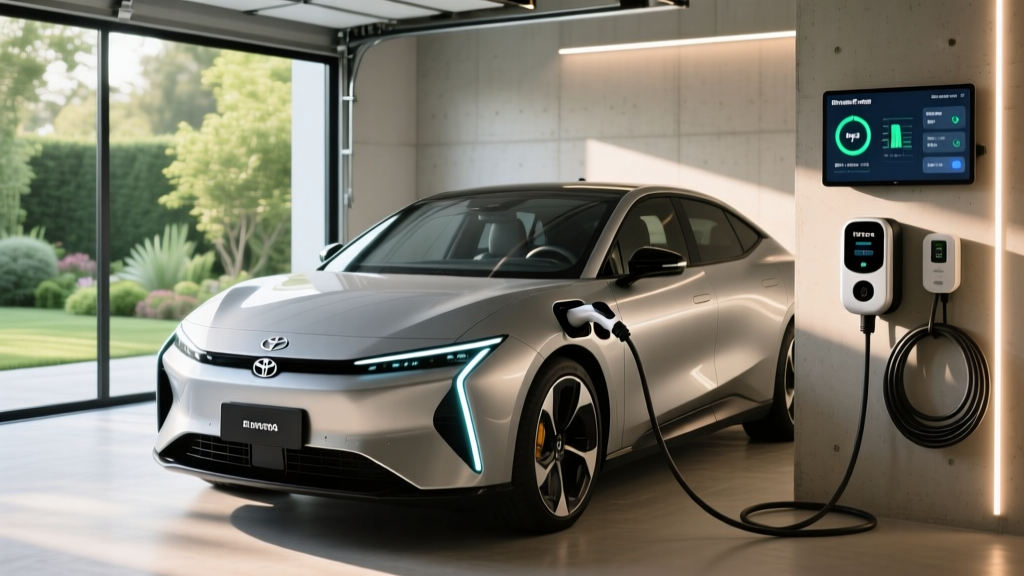
Most bZ4X owners will want a Level 2 home charger — it's the only practical way to wake up to a full battery every morning. Here's what the installation actually involves.
Electrical Requirements
A Level 2 charger requires a dedicated 240V circuit. The most common home setup is a NEMA 14-50 outlet (the same type used for electric ranges and RV hookups) on a 50-amp breaker, which supports continuous charging at 40 amps (9.6 kW). Since the bZ4X maxes out at 7.4 kW (32A), a 50A circuit provides ample headroom and future-proofs for a higher-power EV down the road.
Your electrical panel must have enough spare capacity to add a 50A double-pole breaker. Many modern homes with 200A service can accommodate this without issue. Older homes with 100A panels may require a panel upgrade to 200A, which is one of the most significant hidden costs of EV adoption.
Installation Cost Breakdown
| Cost Component | Typical Range | Notes |
|---|---|---|
| Level 2 Charger (Equipment) | $350 – $750 | Smart Wi-Fi chargers, 32–48A, 20–25 ft cable |
| Electrician Labor (standard install) | $500 – $1,500 | Outlet or hardwire near panel; runs 10–30 ft |
| Electrician Labor (complex run) | $1,500 – $3,500 | Long conduit runs, wall penetrations, trenching |
| Electrical Permit | $50 – $250 | Required in most jurisdictions; varies by locality |
| Panel Upgrade (if needed) | $1,500 – $4,000 | 100A → 200A service upgrade; older homes only |
| Total (standard, no panel upgrade) | $900 – $2,500 | Most common scenario for newer homes |
| Total (with panel upgrade) | $2,400 – $7,750 | Older homes or high-load panels |
Get at least three quotes from licensed electricians. Ask specifically whether the quote includes the permit, whether the circuit will be dedicated (it must be), and whether they'll pull a permit — unpermitted work can void homeowner's insurance claims and cause issues at resale.
What Electrical Upgrades Might I Need?
Beyond the circuit itself, consider these potential upgrades:
- Panel capacity: If your panel is near its rated load (common in homes with electric heat, A/C, and dryers), you may need a 200A upgrade or a smart load-management device like the Span smart panel or a charger with built-in load sharing.
- Conduit and wire run length: If your garage is far from the panel (detached garage, basement-to-garage), costs climb with every foot of copper wire and conduit.
- GFCI breaker: The 2023 NEC (and subsequent 2026 adoptions) requires GFCI protection for EV outlets in many jurisdictions. GFCI 50A breakers cost $80–$150 more than standard breakers.
- Outdoor-rated installation: If you park outside, you'll need a NEMA 4-rated (weatherproof) enclosure or a hardwired charger rated for outdoor use.
Connector Compatibility: NACS, CCS1 & the bZ
The Toyota bZ4X sold in North America through the 2025 model year came equipped with a CCS1 (Combined Charging System) port for both Level 2 (J1772 AC portion) and DC fast charging. Starting with the 2026 model year, Toyota has begun transitioning to the NACS (North American Charging Standard) connector, which grants native access to Tesla's Supercharger network.
| Model Year | Native Connector | Level 2 (AC) | DC Fast | Adapter Needed? |
|---|---|---|---|---|
| 2023–2025 bZ4X | CCS1 | J1772 (built-in) | CCS1 | CCS-to-NACS adapter for Tesla Superchargers (~$200–$250) |
| 2026+ bZ4X / bZ SUV | NACS | NACS (built-in) | NACS | NACS-to-CCS adapter for Electrify America, etc. (~$200) |
Practical advice: If you own a 2023–2025 bZ4X with CCS1, you can purchase a certified CCS-to-NACS adapter (from brands like Lectron or A2Z) to access Tesla Superchargers. Verify that the adapter is rated for the bZ4X's peak DC rate (150 kW) and that it's UL-listed. For home Level 2 charging, any J1772 charger will work natively — no adapter needed.
Charging Cost Per Mile: Home vs. Public vs. Gas
One of the strongest arguments for the bZ4X over a gas-powered RAV4 is fuel cost — but the savings depend heavily on where you charge.
| Scenario | Rate | Cost Per Mile (bZ4X AWD, ~3.4 mi/kWh) | Cost Per Mile (RAV4 AWD, ~28 MPG combined) |
|---|---|---|---|
| Home charging (off-peak utility rate) | $0.12/kWh | $0.035/mi | $0.114/mi (at $3.20/gal) |
| Home charging (average US rate) | $0.17/kWh | $0.050/mi | $0.114/mi |
| Public Level 2 (network pricing) | $0.30/kWh | $0.088/mi | $0.114/mi |
| DC Fast Charging (typical network) | $0.48/kWh | $0.141/mi | $0.114/mi |
| DC Fast Charging (peak pricing) | $0.65/kWh | $0.191/mi | $0.114/mi |
The takeaway: Charging at home on off-peak rates costs roughly one-third what you'd spend on gas per mile. Even average home rates cut fuel costs in half. However, if you rely exclusively on DC fast charging at premium-priced networks, you can actually exceed the cost of gas. The economics of EV ownership depend on reliable home charging access.
For a bZ4X owner driving 12,000 miles per year, home charging at $0.12/kWh costs approximately $420/year in electricity. The equivalent gas cost in a RAV4 AWD at 28 MPG and $3.20/gallon is $1,370/year — a savings of nearly $950 annually.
Recommended Home Chargers for the Toyota bZ
Since the bZ4X onboard charger maxes at 7.4 kW (32A), you don't need a 48A charger — but buying one gives you flexibility for future vehicles. Here are proven picks across budget tiers:
Emporia Vue Level 2 (Budget Pick)
- Power: 48A / 11.5 kW (240V)
- Connector: J1772 (NACS version available)
- Cable: 24 ft
- Smart features: Wi-Fi, app scheduling, energy monitoring, load management
- Price: ~$399
- Best for: Budget-conscious bZ owners who want scheduling and energy data
ChargePoint Home Flex (Best Overall)
- Power: Configurable 16–50A / up to 12 kW (240V)
- Connector: J1772 or NACS (select at purchase)
- Cable: 23 ft
- Smart features: Wi-Fi, app, Alexa, scheduled charging, amperage dial adjustment
- Price: ~$599
- Best for: Most bZ owners — configurable amperage matches your circuit exactly
Tesla Wall Connector (Premium / NACS Homes)
- Power: 48A / 11.5 kW (240V)
- Connector: NACS (native) — J1772 adapter included for non-Tesla EVs
- Cable: 24 ft
- Smart features: Wi-Fi, OTA updates, power sharing between two units, load management
- Price: ~$450
- Best for: Households with a Tesla + bZ (2026 NACS model) or future NACS plans
Grizzl-E Smart (Rugged / Outdoor)
- Power: 40A / 9.6 kW (240V)
- Connector: J1772 or NACS
- Cable: 24 ft
- Smart features: Wi-Fi, OCPP support, adjustable amperage, extreme-temp rated (-40°F)
- Price: ~$499
- Best for: Outdoor installations, cold-climate garages, unheated spaces
For a 2023–2025 bZ4X (CCS1/J1772), any J1772 charger works directly. For a 2026+ NACS bZ, you'll want a NACS-native charger or use the J1772-to-NACS adapter that typically ships with the vehicle for Level 2 charging on existing J1772 equipment.
Safety, Code & Installation Best Practices
EV charging involves sustained high-current draw — unlike a dryer that cycles on and off, an EV charger can pull maximum current for 8+ hours straight. This makes proper installation non-negotiable.
- Dedicated circuit: Your Level 2 charger must be on its own dedicated breaker — never shared with other appliances. A 50A breaker supports 40A continuous draw (NEC requires circuits to be rated at 125% of continuous load).
- GFCI protection: Under the 2023 NEC (adopted in most states by 2026), 240V EV charging outlets require GFCI breakers. Hardwired chargers may be exempt in some jurisdictions — ask your electrician.
- Outdoor rating: If installing outside, the charger must carry a NEMA 4 or NEMA 4X rating for weather resistance. The outlet itself needs a weatherproof in-use cover (bubble cover).
- Wire gauge: A 50A circuit requires 6 AWG copper wire (THHN in conduit) or 4 AWG aluminum. Undersized wire creates a fire hazard.
- Permit and inspection: Most jurisdictions require a permit for new 240V circuits. The inspection ensures wire gauge, breaker sizing, grounding, and GFCI compliance. Skipping this risks insurance denial in the event of an electrical fire.
- Surge protection: Consider a whole-home surge protector or a charger with built-in surge suppression. DC fast chargers and grid switching events can send voltage spikes through your panel.
Charging Time Examples for the Toyota bZ4X
Here's how long it takes to charge the bZ4X's ~72 kWh battery at various levels:
| Charging Method | Power | 10–80% Time | Notes |
|---|---|---|---|
| Level 1 (120V outlet) | 1.2 kW | ~58 hours | Not practical for daily use; emergency only |
| Level 2 (240V, 32A) | 7.4 kW | ~7 hours | Standard home charge; overnight fill |
| Level 2 (240V, 40A) | 9.6 kW | ~7 hours | Limited by bZ4X's 7.4 kW onboard charger |
| DC Fast (150 kW peak) | ~100 kW avg | ~30–35 min | Peak rate not sustained; tapers above 60% |
| DC Fast (50 kW station) | ~45 kW avg | ~65–75 min | Older CHAdeMO/CCS stations; adequate but slow |
A critical note on the charging curve: DC fast chargers advertise peak rates (e.g., 150 kW), but the bZ4X — like all EVs — only sustains peak power between roughly 10–50% SoC. Above 60%, the charge rate drops significantly to protect the battery cells. Above 80%, it slows to a trickle. This is why 10–80% is the standard metric — charging from 80–100% on DC fast can take as long as 10–80%. For road trips, plan to leave at 80% and move on.
Frequently Asked Questions
How much does it cost to install a home EV charger for my Toyota bZ?
A standard installation (50A/240V outlet, short wire run, no panel upgrade) typically costs $900–$2,500 including equipment, electrician labor, and permit. If your home needs a 200A panel upgrade, total costs can reach $2,400–$7,750. Always get multiple quotes from licensed electricians and confirm the permit is included.
How fast will each charging level add range to the bZ4X?
Level 1 (120V) adds roughly 3–5 miles per hour — enough for overnight trickle if you drive under 30 miles daily. Level 2 (240V, 32A) adds about 25 miles per hour, fully replenishing the battery in roughly 7 hours. DC fast charging at 150 kW can add approximately 150+ miles in 15 minutes at peak rate, though sustained averages are lower due to the charge curve taper.
Which connector and charger is compatible with my Toyota bZ?
Model years 2023–2025 use CCS1 (J1772 for AC, CCS for DC). Model year 2026+ transitions to NACS. For home Level 2, any J1772 charger works with 2023–2025 models; NACS chargers or adapters are needed for 2026+. For DC fast charging on road trips, verify the station's connector matches your vehicle or carry the appropriate adapter.
How much does charging a bZ4X cost per mile compared to gas?
At home off-peak rates ($0.12/kWh), the bZ4X AWD costs roughly $0.035 per mile — about 69% less than a RAV4 AWD at $3.20/gallon. At average home rates ($0.17/kWh), it's $0.050/mile. Public DC fast charging at $0.48/kWh costs $0.14/mile, which can exceed gas costs. Home charging access is the key to EV savings.
What electrical upgrades might I need for a home charger?
The most common upgrade is a panel capacity increase from 100A to 200A service ($1,500–$4,000), needed in older homes. You may also need a GFCI breaker ($80–$150 extra), a longer wire run if the garage is far from the panel, or a load-management device if your panel is near capacity. A licensed electrician can perform a load calculation to determine whether an upgrade is necessary.
Sources: EPA fuel economy data via fueleconomy.gov; Toyota Motor Corporation official specifications; IRS §30D Clean Vehicle Credit guidelines. Installation cost estimates based on 2025–2026 electrician market rates; actual costs vary by region and home configuration. Always consult a licensed electrician for your specific installation.