Search "Tesla Supercharger free for life" and you'll find a tangle of forum posts, expired referral codes, and legacy owner bragging rights. The short answer: unconditional, transferable, unlimited free Supercharging is effectively dead for new buyers in 2026. What remains are narrow legacy credits, time-limited promotions, and a charging network where the real savings come from understanding kW (power — how fast you charge) versus kWh (energy — what you actually pay for).
This guide untangles what "free Supercharging for life" actually covers today, then shows you how to set up home Level 2 charging, pick the right equipment, and calculate your real cost per mile — whether you drive a Tesla or a NACS-equipped Ford, Hyundai, or Rivian.
What "Tesla Supercharger Free for Life" Actually Means Today
Unlimited free Supercharging was once Tesla's main sales incentive. It applied to Model S and Model X vehicles ordered before specific cutoff dates (most commonly January 15, 2017 for transferable credits, and vehicles delivered through December 31, 2017 for non-transferable credits). These legacy credits are tied to the VIN and, for the transferable variant, survive one ownership change.
As of 2026, Tesla no longer offers unconditional free Supercharging on new Model 3, Model Y, Cybertruck, or refreshed Model S/X purchases. Promotional credits — typically 10,000 Supercharger miles or 1–3 months of complimentary charging — appear sporadically tied to end-of-quarter delivery pushes or referral programs. These are limited, not "for life."
If you're buying a used Tesla and the listing advertises "free Supercharging for life," verify the VIN through Tesla's support portal. Non-transferable credits extinguish on resale. Transferable credits are increasingly rare and command a premium in the used market — typically $2,000–$4,000 in resale value, per industry trackers.
Charging Levels Explained: Speeds, kW, and Miles Per Hour
Before comparing costs, you need the three charging tiers straight. Remember: kW measures power (charge speed), while kWh measures energy (battery capacity and what you're billed for).
| Level | Voltage | Power (kW) | Miles of Range per Hour | Typical Use Case |
|---|---|---|---|---|
| Level 1 | 120V AC | 1.0–1.4 kW | 3–5 mi/hr | Overnight trickle, PHEVs, emergencies |
| Level 2 | 240V AC | 7.2–19.2 kW | 25–70 mi/hr | Home daily charging, workplace, destinations |
| DC Fast (Level 3) | 400–800V DC | 50–350 kW | 150–1,000+ mi/hr (peak) | Road trips, highway corridors, Tesla Superchargers |
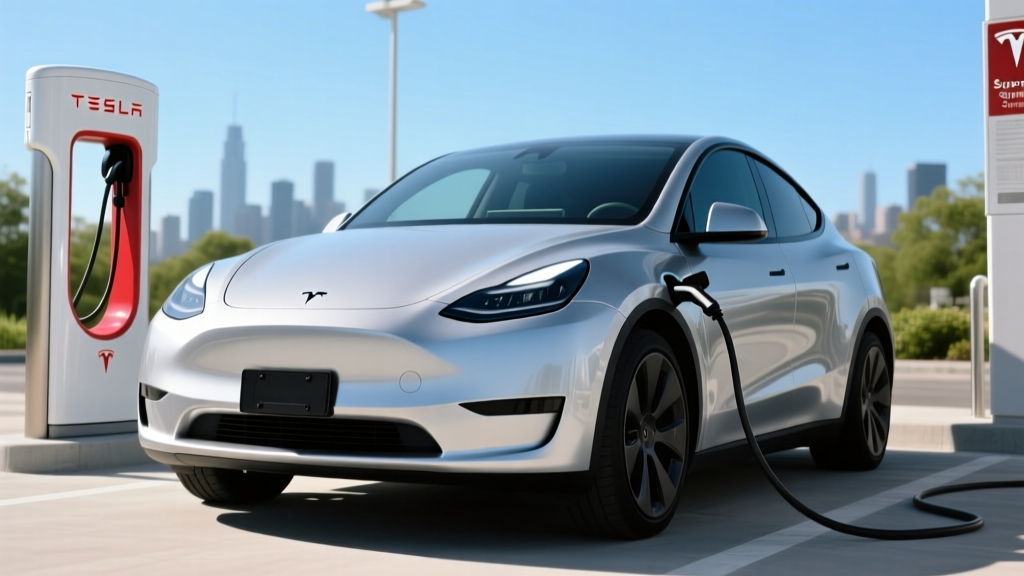
A Tesla Model Y Long Range (75 kWh usable battery, ~320 miles EPA) charging on a V3 Supercharger at a peak of 250 kW can add roughly 160 miles in 15 minutes under ideal conditions. But the charging curve tapers: the car pulls peak power only up to roughly 40–50% state of charge (SoC), then steps down. A realistic 10–80% session takes 25–30 minutes. Plan road-trip stops around that reality, not the peak number.
At home on a 48-amp (11.5 kW) Level 2 circuit, the same Model Y adds roughly 44 miles per hour — enough to fully replenish overnight. Level 1 from a standard 120V outlet adds just 3–4 miles per hour; it's viable only for plug-in hybrids with small batteries or as a backup.
How Much Does It Cost to Install a Home EV Charger?
Home Level 2 installation is where most EV owners save the most money long-term, but upfront costs vary enormously based on your electrical panel's capacity and the distance from the panel to the charger location.
| Component | Low-End | High-End | Notes |
|---|---|---|---|
| Level 2 charger hardware | $350 | $750 | 32A–48A smart chargers; Tesla Wall Connector ~$475 |
| Electrician labor (standard install) | $500 | $1,500 | Short run, same wall as panel |
| Electrician labor (long run/conduit) | $1,200 | $3,500 | Detached garage, attic crawl, concrete boring |
| Electrical permit | $50 | $250 | Varies by municipality |
| Panel upgrade (100A → 200A) | $1,800 | $4,500 | Required on older homes with 100A service |
| Total (no panel upgrade) | $900 | $2,500 | Typical suburban install |
| Total (with panel upgrade) | $2,700 | $6,000 | Older homes, pre-1990 construction |
Electrical Requirements and What Your Electrician Will Check
A 48-amp Level 2 charger requires a dedicated 60-amp, 240-volt circuit (National Electrical Code requires circuits rated at 125% of continuous load). Your electrician will verify:
- Panel capacity: A 200-amp panel with spare breaker slots is ideal. A 100-amp panel already near capacity will need an upgrade or a load-management device.
- Wire gauge: 6 AWG copper for runs under 50 feet; 4 AWG for longer runs to minimize voltage drop.
- GFCI protection: NEC 2020 and later require GFCI breakers for EV receptacles; hardwired chargers often bypass this requirement and are generally preferred for reliability.
- Outdoor rating: If the charger is outside, it must carry a NEMA 4 or NEMA 4X rating for weather resistance.
Panel-upgrade gotcha: Many homeowners with pre-2000 construction discover their 100-amp service can't support a 60-amp EV circuit plus existing loads (electric range, dryer, HVAC). Budget for this possibility — it's the single biggest surprise cost in EV adoption.
Check the IRS Residential Clean Energy Credit (IRC §25D) — as of 2026, it no longer covers EV charger hardware (that was §30C, which expired for residential use). However, some states and utilities offer rebates of $250–$1,000 for Level 2 equipment and installation. Check your utility's website before buying.
Connector Compatibility: NACS, CCS, and CHAdeMO
The connector landscape consolidated significantly between 2023 and 2026. Tesla's North American Charging Standard (NACS) is now the dominant connector for new EVs sold in North America, after Ford, GM, Rivian, Hyundai, Kia, Volvo, and others adopted it.
| Connector | Brands Using It | Tesla Supercharger Access | Adapter Needed? |
|---|---|---|---|
| NACS (Tesla) | Tesla, Ford (2025+), GM (2025+), Rivian, Hyundai (2025+), Kia (2025+), Volvo, Polestar | Native access | No |
| CCS1 | VW, BMW, older Ford/GM/Hyundai (pre-2025), most legacy EVs | Via Tesla CCS adapter (~$200–$250) | Yes, for Superchargers |
| CHAdeMO | Nissan Leaf (legacy), Mitsubishi Outlander PHEV | No — network shrinking | N/A |
If you own a CCS-equipped EV and want Supercharger access, Tesla sells a CCS-to-NACS adapter. Note that not every Supercharger stall has been retrofitted with the "Magic Dock" CCS adapter — check the Tesla app's station details before relying on it for a road trip.
CHAdeMO is effectively a legacy standard in North America. Electrify America and other networks still support it, but new stations increasingly omit CHAdeMO connectors. If you're buying a new EV in 2026, avoid CHAdeMO unless your use case is strictly local.
Cost to Charge: Home vs. Public vs. DC Fast Charging
Even without "free Supercharging for life," home charging on off-peak utility rates delivers fuel costs that gas cars can't match. Here's how the numbers stack up.
| Scenario | $/kWh | Cost to Add 200 Miles* | Cost Per Mile |
|---|---|---|---|
| Home, off-peak utility rate | $0.08–$0.14 | $4.80–$8.40 | $0.024–$0.042 |
| Home, standard residential rate | $0.14–$0.22 | $8.40–$13.20 | $0.042–$0.066 |
| Tesla Supercharger (typical 2026) | $0.28–$0.48 | $16.80–$28.80 | $0.084–$0.144 |
| Electrify America / EVgo DC fast | $0.35–$0.55 | $21.00–$33.00 | $0.105–$0.165 |
| Gas car (25 MPG, $3.40/gal) | — | $27.20 | $0.136 |
*Based on a vehicle efficiency of 3.0 miles/kWh (typical midsize EV like Model Y or Ioniq 5). Your actual efficiency varies by model, driving style, and temperature.
The takeaway: home off-peak charging costs roughly one-quarter to one-third what gasoline costs per mile. Even public DC fast charging at $0.40/kWh is often cheaper than gas at $3.40/gallon for a 25 MPG vehicle. The "free Supercharger for life" advantage was real when it existed, but disciplined home charging delivers most of the same economic benefit without needing a legacy credit.
According to fueleconomy.gov, the average EV in 2026 achieves 3.0–4.0 miles per kWh, making electricity cost highly predictable once you know your local $/kWh rate.
Equipment Recommendations: Level 2 Chargers Worth Buying
Not all Level 2 chargers are equal. Here are three proven units for 2026, chosen for reliability, connector compatibility, and smart features.
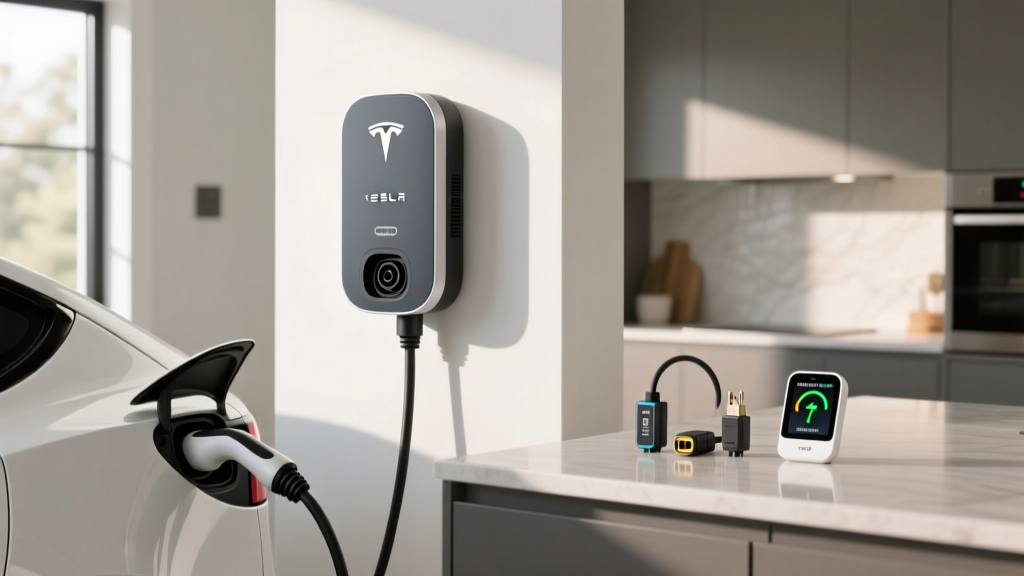
Tesla Wall Connector (Gen 4)
- Power output: Up to 48 amps (11.5 kW) on a 60A circuit
- Connector: NACS native; CCS adapter included in box
- Cable length: 24 feet
- Smart features: Wi-Fi, OTA updates, load sharing between multiple units, Powerwall integration
- Price: ~$475
- Best for: Tesla owners and NACS-equipped EVs; cleanest ecosystem integration
ChargePoint Home Flex (2nd Gen)
- Power output: Configurable 16A–50A (up to 12 kW) on a 20A–60A circuit
- Connector: NACS (2025+ models); CCS1 on earlier units
- Cable length: 23 feet
- Smart features: Wi-Fi, app-based scheduling, utility demand-response programs, Alexa integration
- Price: ~$550–$650
- Best for: Multi-EV households, utility time-of-use optimization
Emporia Level 2 EV Charger
- Power output: Up to 48 amps (11.5 kW) on a 60A circuit
- Connector: NACS or J1772 variants available
- Cable length: 24 feet
- Smart features: Wi-Fi, solar integration with Emporia Vue energy monitor, load management
- Price: ~$350–$400
- Best for: Budget-conscious buyers, solar-panel households wanting charge-on-excess
For most homeowners, a 48-amp hardwired charger on a 60-amp circuit hits the sweet spot: fast enough to replenish any consumer EV overnight, and compatible with most residential panels without requiring a 200A+ upgrade.
Charging Time Examples: 10–80% for Common Battery Sizes
Charge times depend on battery size (kWh), the charger's peak power (kW), and the vehicle's charge-curve taper. Here are realistic 10–80% estimates:
- Tesla Model Y Long Range (75 kWh, NACS, 250 kW peak): ~25–28 minutes on a V3 Supercharger. Expect ~30–35 minutes if the battery is cold and not preconditioned.
- Hyundai Ioniq 5 (77.4 kWh, 800V architecture, 350 kW peak): ~18 minutes on a 350 kW Electrify America station — one of the fastest-charging EVs available.
- Ford F-150 Lightning Extended Range (131 kWh, 150 kW peak): ~40–45 minutes on a 150 kW DC fast charger. Large battery, moderate charge rate.
- Chevrolet Equinox EV (85 kWh, 150 kW peak): ~30–35 minutes on a compatible DC fast charger.
- Level 2 home charging (48A / 11.5 kW) for a 75 kWh battery: ~6 hours from 10–80%. Plug in at 10 PM, full by morning.
Preconditioning matters: Tesla's navigation system automatically warms the battery when you route to a Supercharger, enabling peak charge rates from the moment you plug in. Non-Tesla EVs with preconditioning (Ioniq 5, Rivian, Porsche Taycan) do the same. Without it, a cold battery can cut peak charge speed by 30–50% for the first 5–10 minutes.
Safety, Code, and Practical Installation Tips
Beyond the electrical basics, keep these safety and code considerations in mind:
- Dedicated circuit: Your Level 2 charger must be on its own dedicated breaker — never shared with other appliances.
- Hardwired vs. plug-in: Hardwired installations (no NEMA 14-50 outlet) avoid GFCI nuisance trips and are generally more reliable. Plug-in 14-50 outlets offer portability but require a GFCI breaker under current NEC.
- Outdoor rating: Any charger mounted outside must carry a NEMA 4 rating. Look for UL or ETL certification — avoid uncertified imports from marketplace sellers.
- Cable management: A 24-foot cable drags on the ground and collects dirt. Wall-mount a cable organizer or choose a charger with integrated retraction.
- Permit and inspection: Skipping the permit saves $50–$250 but voids your homeowner's insurance coverage for electrical fires. Always pull a permit and schedule inspection.
For detailed safety standards, refer to NHTSA's EV charging equipment guidance and your local building authority's adopted NEC edition.
Frequently Asked Questions
Can I still get Tesla Supercharger free for life on a new Tesla?
No. Tesla discontinued unconditional free Supercharging for new vehicles. Occasional promotional credits (e.g., 10,000 free miles or 3 months of complimentary charging) appear during end-of-quarter pushes, but these are time- or mileage-limited — not lifetime.
How much does it cost to install a home EV charger?
A standard Level 2 installation with no panel upgrade costs $900–$2,500 including equipment, electrician labor, and permit. If your home has a 100-amp panel that needs upgrading to 200 amps, add $1,800–$4,500, bringing the total to $2,700–$6,000.
How fast will each charging level add range?
Level 1 (120V) adds 3–5 miles per hour. Level 2 (240V, 48A) adds 25–44 miles per hour depending on vehicle efficiency. DC fast charging (150–350 kW) adds 150–1,000+ miles per hour at peak, though the charge curve tapers significantly above 80% SoC.
Which connector is compatible with my EV?
If your EV is a 2025+ Tesla, Ford, GM, Hyundai, Kia, Rivian, or Volvo, it uses NACS natively. Older CCS-equipped vehicles need a Tesla CCS adapter (~$200–$250) to access Superchargers. CHAdeMO is legacy-only — Nissan Leaf and Mitsubishi Outlander PHEV use it, but the network is shrinking.
How much does charging cost per mile vs. gas?
Home charging at $0.12/kWh costs roughly $0.036–$0.04 per mile for a typical EV (3 mi/kWh). Gasoline at $3.40/gallon in a 25 MPG car costs $0.136 per mile. Home charging is roughly 70–75% cheaper per mile. Public DC fast charging at $0.35–$0.48/kWh costs $0.10–$0.16 per mile — still competitive with or cheaper than gas.
What electrical upgrades might I need for a home charger?
The most common upgrade is a panel replacement from 100 amps to 200 amps ($1,800–$4,500). You may also need a new conduit run if the charger location is far from the panel, or a load-management device if your panel is near capacity but you want to avoid a full upgrade.
Is "free Supercharging for life" transferable when I sell my Tesla?
Only if the vehicle originally received transferable free Supercharging credits (typically Model S/X ordered before January 15, 2017). Most credits issued after that date are non-transferable and extinguish on the first resale. Always verify via Tesla's VIN lookup before paying a premium for a used vehicle advertised with this feature.
The era of Tesla Supercharger free for life is over for new buyers, but the economics of EV charging remain compelling. A $1,500 home Level 2 installation pays for itself within 1–3 years of gasoline displacement for most drivers. Pair that with off-peak utility rates, a properly sized circuit, and a quality NACS charger, and you'll spend less per mile than any legacy free-charging credit ever delivered.