Why the 2023 Super Bee Charger Matters for Your EV Setup
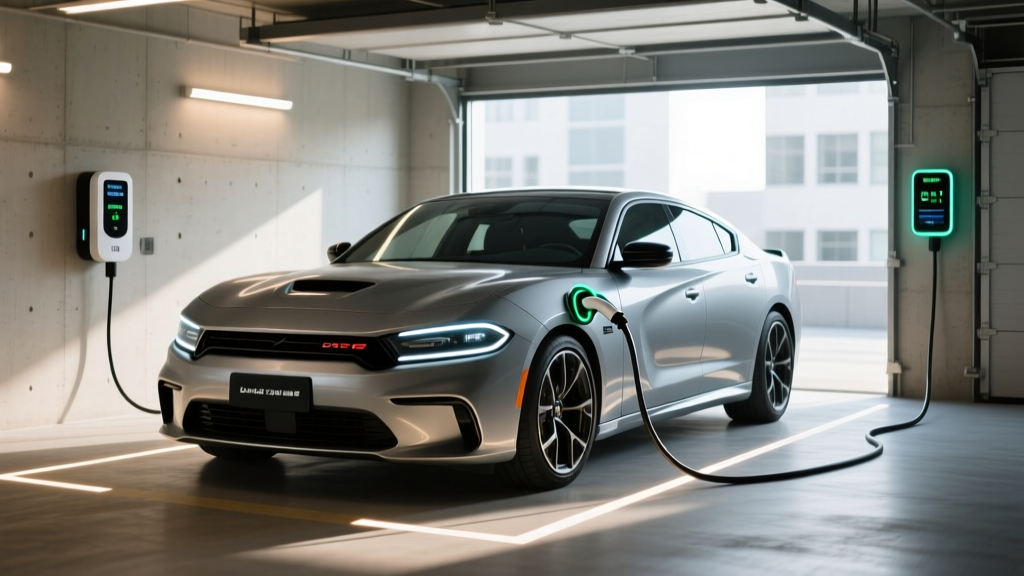
If you've searched for the 2023 Super Bee Charger, you likely already know Dodge released a 717-horsepower, supercharged 6.4L HEMI V8 muscle car that year — a limited-run send-off to the internal-combustion Charger lineup before Stellantis pivoted to the all-electric Charger Daytona platform. The 2023 Super Bee is not an EV, but it sits squarely in the conversation for enthusiasts now cross-shopping Dodge's electric future or adding an EV to a multi-car garage that already includes a Super Bee.
This guide covers the full EV charging ecosystem — home installation, public networks, equipment, connectors, and cost-per-mile math — written for buyers weighing an electric vehicle alongside (or as a replacement for) a legacy performance car. Every figure below reflects 2026 equipment pricing, current §30D tax-credit rules, and the latest connector standards.
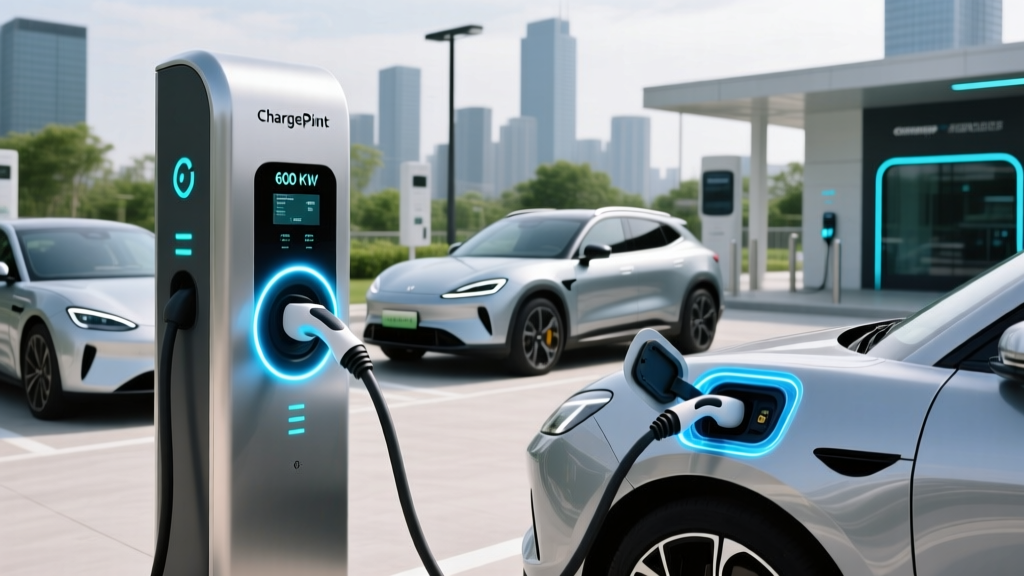
Charging Levels Explained: kW, Miles Per Hour, and Real Charge Times
The single most important literacy point in EV ownership: kW (kilowatts) measures power — how fast energy flows into the battery. kWh (kilowatt-hours) measures energy — the battery's total capacity. Think of kW as the width of a hose and kWh as the size of the bucket. Confusing them is the most common mistake new EV owners make.
| Level | Voltage | Power (kW) | Miles of Range Added Per Hour | Typical Use Case |
|---|---|---|---|---|
| Level 1 | 120V AC | 1.0–1.4 kW | 3–5 mi/hr | Overnight top-off, low-mileage commuters, PHEVs |
| Level 2 | 240V AC | 3.3–19.2 kW | 12–75 mi/hr | Home daily charging, workplace, shopping centers |
| DC Fast Charge (DCFC) | 400–800V DC | 50–350 kW | 150–1,200+ mi/hr (peak) | Road trips, highway corridors, rapid top-ups |
Real 10–80% Charge Times for Common Battery Sizes
Most EV owners charge from roughly 10% to 80% on road trips — beyond 80%, the charge curve tapers sharply to protect battery health, cutting power by 50–75%. Here's what to expect with real-world sustained rates, not just the peak kW marketing number:
- 60 kWh battery (e.g., Nissan Leaf, base Hyundai Kona Electric): ~28 minutes on a 150 kW DCFC (sustained ~90 kW average).
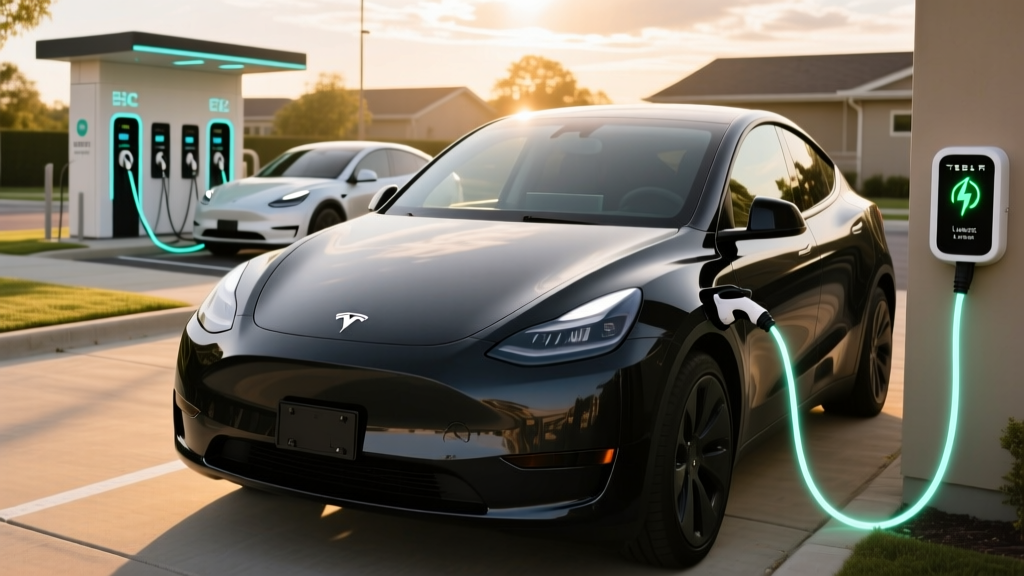
- 84 kWh battery (e.g., Tesla Model Y Long Range): ~18–22 minutes on a 250 kW Supercharger (sustained ~140 kW average).
- 100+ kWh battery (e.g., Ford F-150 Lightning Extended, Rivian R1T Max): ~28–35 minutes on a 350 kW Electrify America station (sustained ~180 kW average).
- Level 2 at home (11.5 kW / 48A): A 84 kWh battery charges 10–80% in roughly 5–6 hours — ideal for overnight.
Home EV Charger Installation: Electrical Requirements and True Cost
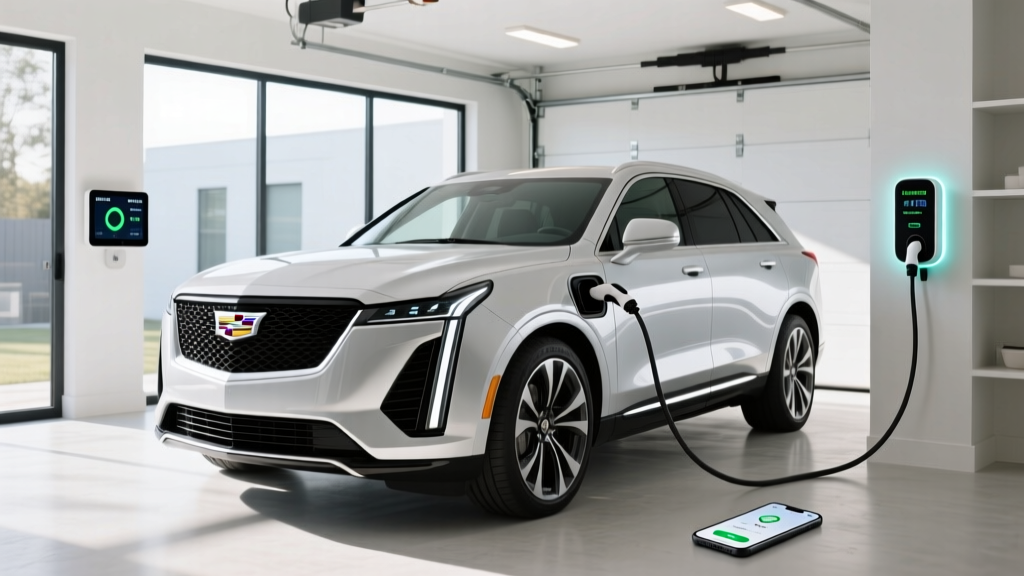
A Level 2 home charger is the single highest-impact upgrade for EV ownership. Most daily charging happens at home, and a properly installed 240V unit eliminates range anxiety for 95% of driving. But costs vary enormously depending on your electrical panel's age, available amperage, and the distance from panel to charger location.
Electrical Requirements
- Circuit: A dedicated 240V circuit is mandatory. Common sizes are 40A (supports up to 32A continuous / 7.7 kW), 50A (40A continuous / 9.6 kW), or 60A (48A continuous / 11.5 kW).
- Wire gauge: 6 AWG copper for 50A circuits; 4 AWG for 60A. Your electrician will size this to the run length.
- GFCI protection: NEC 2020 and later require GFCI breakers for EV receptacles in garages — adds ~$50–$120 to the breaker cost.
- Hardwired vs. plug (NEMA 14-50): Hardwired units avoid the GFCI breaker requirement in some jurisdictions and eliminate a common failure point (the receptacle). NEMA 14-50 outlets offer portability but require the GFCI breaker.
Panel Upgrade: The Hidden Cost
Homes built before 1990 often have 100A or 150A service panels. Adding a 50–60A EV circuit may exceed the panel's spare capacity, requiring a service upgrade to 200A. This is the single biggest variable in installation cost and can double or triple the total.
| Component | Basic Install (Short Run, Adequate Panel) | Complex Install (Long Run or Panel Upgrade) |
|---|---|---|
| Level 2 Charger Equipment | $350–$650 | $500–$750 |
| Electrical Permit | $50–$150 | $100–$250 |
| Electrician Labor (2–4 hrs basic / 6–10 hrs complex) | $300–$600 | $800–$1,500 |
| Wire, Conduit, Breaker, Hardware | $100–$250 | $300–$700 |
| Panel Upgrade to 200A (if needed) | Not required | $1,500–$3,500 |
| Total | $800–$1,650 | $3,200–$6,700 |
Federal Tax Credit for Home Charging Equipment
The IRS §30C Alternative Fuel Vehicle Refueling Property Credit covers 30% of home EV charger equipment and installation costs, up to $1,000. Eligibility depends on whether your census tract qualifies as a non-urban or low-income area — the IRS provides a lookup tool. This credit is separate from the §30D new-vehicle credit and can be claimed in the tax year the charger is installed.
Connector Compatibility: NACS, CCS1, and CHAdeMO in 2026
The North American connector landscape has consolidated dramatically since 2024. Tesla's NACS (North American Charging Standard) has been adopted by Ford, GM, Rivian, Hyundai, Kia, BMW, and most major OEMs. CCS1 remains on many 2023–2025 model-year vehicles. CHAdeMO is effectively legacy — only the Nissan Leaf continues to use it, and Nissan is expected to transition future models to NACS.
| Connector | Brands Using It (2026) | Public Network Availability | Adapter Needed? |
|---|---|---|---|
| NACS (Tesla standard) | Tesla, Ford, GM, Rivian, Hyundai, Kia, BMW, Volvo, Polestar, Mercedes, Fisker | Tesla Supercharger (25,000+ stalls), growing Electrify America / EVgo adoption | CCS→NACS adapter ($150–$250) for older CCS vehicles to access Superchargers |
| CCS1 | VW ID.4 (2023–2025 MY), Porsche Taycan (pre-2025), some Stellantis models | Electrify America, EVgo, ChargePoint — robust coverage | NACS→CCS adapter for Tesla vehicles at non-Tesla DCFC |
| CHAdeMO | Nissan Leaf (legacy) | Declining — many networks have removed CHAdeMO plugs | No widely available adapter to CCS/NACS |
Practical advice: If you're buying a 2026 model-year EV, prioritize NACS-equipped vehicles for the widest fast-charging access. If you own a 2023–2025 CCS vehicle (such as a VW ID.4 or Hyundai Ioniq 5 from those years), Ford and Tesla sell CCS-to-NACS adapters that unlock the Supercharger network — a meaningful advantage on road trips through charging deserts.
Cost to Charge: Per-Mile Math vs. Gasoline
One of the strongest ownership arguments for an EV is fuel cost, but the savings depend heavily on where and when you charge. A Super Bee Charger owner accustomed to 14 MPG on premium fuel (at $4.20/gallon in 2026) pays roughly $0.30 per mile. Here's how EV charging compares:
| Scenario | Rate ($/kWh) | Efficiency Assumption | Cost Per Mile | Annual Fuel Cost (12,000 mi) |
|---|---|---|---|---|
| Home, off-peak utility rate | $0.11–$0.14 | 3.5 mi/kWh (avg EV) | $0.03–$0.04 | $360–$480 |
| Home, standard residential rate | $0.16–$0.20 | 3.5 mi/kWh | $0.05–$0.06 | $600–$720 |
| Public Level 2 (ChargePoint, workplace) | $0.25–$0.40 | 3.5 mi/kWh | $0.07–$0.11 | $840–$1,320 |
| DC Fast Charge (Electrify America, EVgo) | $0.40–$0.60 | 3.5 mi/kWh | $0.11–$0.17 | $1,320–$2,040 |
| Gas comparison: 2023 Super Bee (14 MPG, premium) | $4.20/gal | 14 MPG | $0.30 | $3,600 |
| Gas comparison: 30 MPG economy car | $3.60/gal regular | 30 MPG | $0.12 | $1,440 |
Bottom line: Home-charged EVs cost 80–90% less per mile than the Super Bee on premium fuel. Even exclusive DC fast charging undercuts the Super Bee by 40–55%. Against a 30 MPG economy car, home-charged EVs still save 50–75%. The EPA's fueleconomy.gov calculator lets you input your local electricity rate and specific EV model for a personalized comparison.
Equipment Recommendations: Level 2 Chargers Worth Buying in 2026
Not all Level 2 chargers are equal. Key differentiators include max amperage (and therefore kW output), cable length, smart features (Wi-Fi, scheduling, load management), and NEMA 4 outdoor rating. Here are four units that consistently perform well in owner reviews and independent testing:
| Charger Model | Max Power Output | Connector | Cable Length | Smart Features | Approx. Price |
|---|---|---|---|---|---|
| Tesla Wall Connector (Gen 4) | 11.5 kW (48A) | NACS (native); J1772 adapter included | 24 ft | Wi-Fi, OTA updates, load sharing, access control | $475 |
| ChargePoint Home Flex (NACS) | 12 kW (50A adjustable) | NACS or J1772 (configurable) | 23 ft | Wi-Fi, app scheduling, Alexa, load management | $599 |
| Emporia Vue Smart Charger | 11.5 kW (48A) | J1772 (NACS adapter available) | 24 ft | Wi-Fi, solar integration, real-time cost tracking | $399 |
| Grizzl-E Smart | 10 kW (40A) | J1772 or NACS | 24 ft | Wi-Fi, OCPP support, extreme-cold rated (-40°F) | $549 |
Selection framework: Choose the Tesla Wall Connector if you drive a NACS vehicle and want the simplest, most reliable setup. The ChargePoint Home Flex is the best all-rounder for mixed-connector garages. The Emporia Vue excels for solar-panel owners who want to track charging against production. The Grizzl-E is the cold-climate pick — it's built in Canada and tested to -40°F, which matters if your garage is unheated in Minnesota or Montana.
Safety, Code, and Installation Best Practices
EV charging draws sustained high current for hours — far longer than a dryer or oven cycle. This makes proper installation non-negotiable. Key safety considerations per the National Electrical Code (NEC):
- Dedicated circuit: The EV charger must be on its own breaker — never shared with other appliances. A 50A charger on a circuit also serving a freezer or sump pump is a fire hazard.
- Continuous-load derating: NEC defines EV charging as a continuous load, meaning the breaker must be rated at 125% of the charger's max draw. A 48A charger requires a 60A breaker — not 50A.
- Outdoor rating: If your charger mounts outside, it must be NEMA 4 rated (weather-sealed against rain, dust, and ice). All four units above meet this standard.
- Permit and inspection: Nearly all US jurisdictions require an electrical permit and post-install inspection for a new 240V circuit. Skipping this voids homeowner's insurance coverage for any resulting electrical fire.
- Cable management: Use a wall-mounted holster or retractable reel to keep the cable off the garage floor — prevents tripping, connector damage, and water exposure.
Frequently Asked Questions
How much does it cost to install a home EV charger?
A straightforward Level 2 installation (short wire run, adequate 200A panel) typically costs $800–$1,650 total including equipment, permit, and electrician labor. If your home needs a panel upgrade to 200A or the charger is far from the panel, expect $3,200–$6,700. The §30C federal tax credit covers 30% of costs up to $1,000 in eligible census tracts.
How fast will each charging level add range?
Level 1 (120V) adds 3–5 miles per hour — sufficient for PHEVs with small batteries or drivers covering under 30 miles daily. Level 2 (240V, 48A) adds 30–45 miles per hour for most EVs, fully replenishing overnight. DC fast charging at 150–350 kW adds 150–1,200+ miles per hour at peak, but real-world sessions are 18–35 minutes for a 10–80% charge due to curve tapering.
Which connector is compatible with my EV?
For 2026 model-year vehicles: Tesla, Ford, GM, Rivian, Hyundai, Kia, and BMW use NACS. Most 2023–2025 VW, Porsche, and some Stellantis models use CCS1. Nissan Leaf uses CHAdeMO. Check your vehicle's charge port or the manufacturer's spec page. CCS-to-NACS adapters ($150–$250) unlock Tesla Superchargers for CCS-equipped vehicles.
How much does charging cost per mile compared to gas?
Home charging at off-peak rates costs $0.03–$0.04 per mile. The 2023 Super Bee Charger on premium fuel at 14 MPG costs approximately $0.30 per mile — roughly 8–10x more. Even exclusive DC fast charging ($0.11–$0.17/mile) is 40–60% cheaper than the Super Bee.
What electrical upgrades might I need for a home charger?
The most common upgrade is a panel service increase from 100A or 150A to 200A, costing $1,500–$3,500. Homes with modern 200A panels usually have sufficient spare capacity for a 50–60A EV circuit. Your electrician will perform a load calculation per NEC Article 220 to determine if an upgrade is required. Older homes with knob-and-tube wiring or Federal Pacific / Zinsco panels may also require a full rewire of the circuit path.
Can I charge a future electric Dodge Charger Daytona at the same home setup?
Yes. The Dodge Charger Daytona EV uses the Stellantis STLA Large platform and is expected to charge via NACS. Any Level 2 home charger with a NACS connector (or J1772 with adapter) will work. The Daytona's 800V architecture supports DC fast charging at up to 350 kW at compatible public stations, but home Level 2 charging will replenish the battery overnight regardless of the vehicle's peak DC capability.