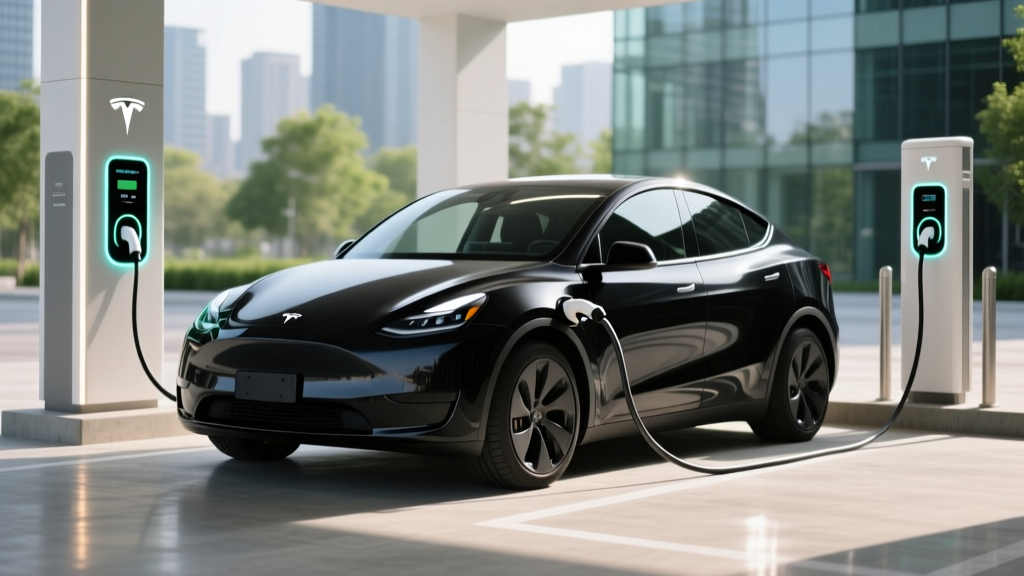
The Tesla Model Y continues to dominate EV sales, and the 2026 Long Range variant pushes efficiency further with an EPA-estimated range reaching up to 330 miles (approximately 531 km), while certain international and specialty trims have been marketed with figures approaching 821 km under the more optimistic WLTP cycle. Regardless of which specific Model Y trim you own or are considering, maximizing that range depends heavily on how you charge. This guide breaks down every charging level, home installation requirements, connector compatibility, real-world costs, and the best equipment to keep your Model Y powered efficiently in 2026.
Understanding the Tesla Model Y 821 km Range Claim
Before planning your charging setup, it is critical to understand what "821 km range" actually means. The 821 km figure (~510 miles) surfaces primarily in WLTP testing or specific international marketing materials for high-efficiency configurations. The U.S. EPA testing cycle is more conservative and typically rates the 2026 Model Y Long Range AWD at approximately 330 miles (531 km) with the 75 kWh (usable) battery pack. Real-world highway driving at 70+ mph in moderate temperatures typically yields 270–290 miles; in cold weather (below 32°F), expect a 15–30% reduction, dropping usable range to roughly 230–260 miles.
EPA Sticker: ~330 mi (531 km) | Real-world highway: ~270–290 mi | Cold-weather highway: ~230–260 mi
Source: fueleconomy.gov
The gap between WLTP's 821 km and EPA's 531 km is not a defect — it is a fundamental difference in testing methodology. WLTP uses lower average speeds, shorter test distances, and milder climate assumptions. For U.S. buyers, the EPA number is the one that matters for daily planning.
Charging Levels: Speeds, Power, and Range Added Per Hour
EV charging operates across three tiers. The critical distinction every owner must internalize: kW (kilowatts) measures power — how fast energy flows into the battery. kWh (kilowatt-hours) measures energy — how much the battery holds total. Think of kW as the width of a pipe and kWh as the size of the tank.
| Level | Voltage | Max Power (kW) | Miles of Range Per Hour | Best For |
|---|---|---|---|---|
| Level 1 (120V) | 120V AC | 1.4 kW | ~3–5 mi/hr | Overnight trickle, emergency top-off |
| Level 2 (240V) | 240V AC | 7.2–19.2 kW | ~23–60 mi/hr | Daily home charging, workplace |
| DC Fast Charging | 400–800V DC | 50–250+ kW | ~150–1,000+ mi/hr | Road trips, rapid top-ups |
How Fast Will Each Charging Level Add Range?
For the Model Y's ~75 kWh usable battery:
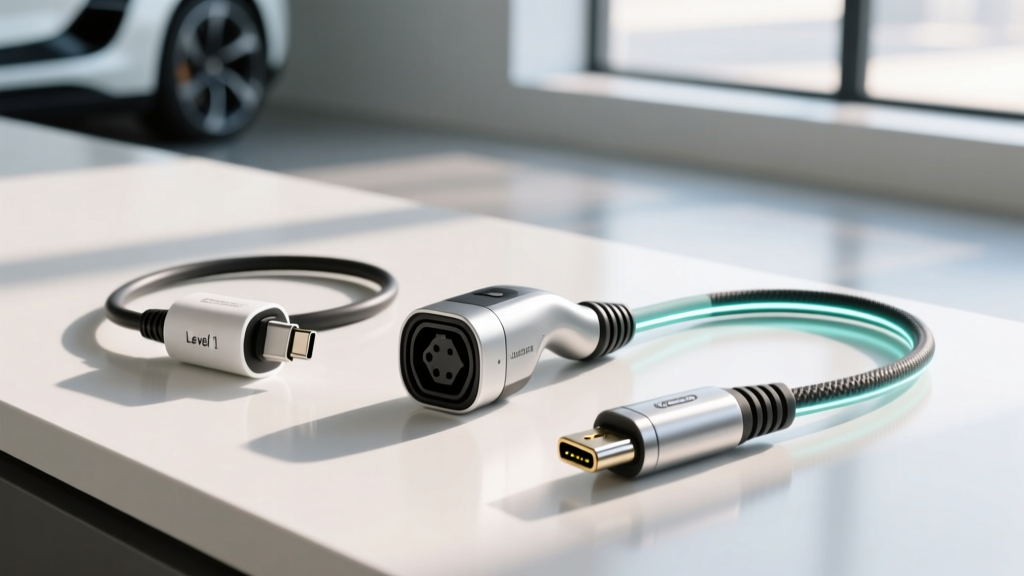
- Level 1 (120V, 12A): Adds roughly 3–5 miles of range per hour. A full 10–80% charge takes approximately 40–50 hours. Practical only for plug-in hybrids or very low daily mileage.
- Level 2 (240V, 48A): At 11.5 kW (the Model Y's onboard charger max), you gain ~37–44 miles per hour. A 10–80% charge completes in roughly 4.5–5 hours.
- DC Fast Charging (Tesla Supercharger V4, 250 kW): The Model Y peaks at approximately 250 kW on V3/V4 Superchargers. Expect a 10–80% charge in ~25–28 minutes with battery preconditioning active. Note: the charge curve tapers significantly above 80%, so charging from 80–100% can add another 15–20 minutes.
Home Charger Installation: Electrical Requirements and Costs
How Much Does It Cost to Install a Home EV Charger?
Home Level 2 charging is the backbone of practical EV ownership. For a Tesla Model Y, you will want a 240V circuit with a minimum 60A breaker (to support 48A continuous charging). Here is a realistic cost breakdown for a 2026 installation:
| Component | Low Estimate | High Estimate | Notes |
|---|---|---|---|
| Level 2 Charger (Equipment) | $400 | $750 | Tesla Wall Connector, ChargePoint, Emporia |
| Electrician Labor | $500 | $2,000 | Depends on run length, conduit, wall type |
| Electrical Permit | $50 | $300 | Varies by municipality |
| Panel Upgrade (if needed) | $1,500 | $4,000 | Required if panel lacks capacity for a new 60A circuit |
| Total (no panel upgrade) | $950 | $3,050 | Most common scenario for modern homes |
| Total (with panel upgrade) | $2,450 | $7,050 | Older homes with 100A service |
What Electrical Upgrades Might I Need?
Most homes built after 2000 have 200A electrical panels with sufficient spare capacity for a 60A EV circuit. However, if your home has a 100A panel, or if your panel is already near capacity (multiple large appliances, HVAC, hot tub), you may need:
- Panel upgrade to 200A: $1,500–$4,000 depending on utility connection, permit, and local labor rates.
- Load management device: Products like the Emporia Smart Load Manager or Tesla's built-in load-sharing can avoid a panel upgrade by dynamically reducing charger amperage when other large loads activate ($150–$300 additional hardware cost).
- Dedicated circuit: NEC code requires a dedicated breaker for EV charging. A 60A breaker with 6 AWG copper wire is standard for 48A continuous charging. Never share a circuit with other major appliances.
Connector Compatibility: NACS, CCS, and Adapters
Which Connector/Charger Is Compatible with My EV?
The 2026 Tesla Model Y uses the NACS (North American Charging Standard) connector natively — the same proprietary connector Tesla has used since 2012, now standardized as SAE J3400. As of 2025, nearly all major automakers (Ford, GM, Rivian, Hyundai, BMW, and others) have adopted NACS for their vehicles, making it the dominant standard in North America.
| Connector | Used By | Tesla Model Y Compatibility | Adapter Needed? |
|---|---|---|---|
| NACS (J3400) | Tesla, Ford, GM, Rivian, Hyundai, BMW, others (2025+) | Native — direct plug | None |
| CCS1 | Legacy non-Tesla EVs (2018–2024 models) | Via Tesla CCS adapter | Yes — Tesla CCS Adapter (~$250) |
| CHAdeMO | Nissan Leaf, Mitsubishi (discontinued standard) | Not compatible | No adapter available |
| J1772 (Level 2 AC) | All non-Tesla EVs for Level 2 | Via Tesla J1772 adapter (included) | Yes — included with vehicle |
For home charging, the Tesla Wall Connector uses NACS natively. If you install a third-party charger with a J1772 plug (ChargePoint, Emporia, EnelX), you will use the J1772-to-NACS adapter that ships with every Model Y. For public DC fast charging, Tesla Superchargers use NACS. If you need to access Electrify America or other CCS networks, the Tesla CCS adapter unlocks those stations.
Charging Cost: Per Mile vs. Gasoline
How Much Does Charging Cost Per Mile vs. Gas?
The Model Y Long Range AWD achieves approximately 122 MPGe combined per the EPA, consuming roughly 28 kWh per 100 miles. Here is how costs break down across different charging scenarios:
| Charging Scenario | Avg. Cost ($/kWh) | Cost Per 100 Miles | Cost Per Mile |
|---|---|---|---|
| Home Off-Peak (utility rate) | $0.08–$0.12 | $2.24–$3.36 | $0.02–$0.03 |
| Home Standard (avg. U.S.) | $0.16 | $4.48 | $0.045 |
| Public Level 2 (ChargePoint, etc.) | $0.25–$0.39 | $7.00–$10.92 | $0.07–$0.11 |
| Tesla Supercharger (avg. 2026) | $0.30–$0.40 | $8.40–$11.20 | $0.08–$0.11 |
| Gas Equivalent (25 MPG avg. SUV at $3.50/gal) | — | $14.00 | $0.14 |
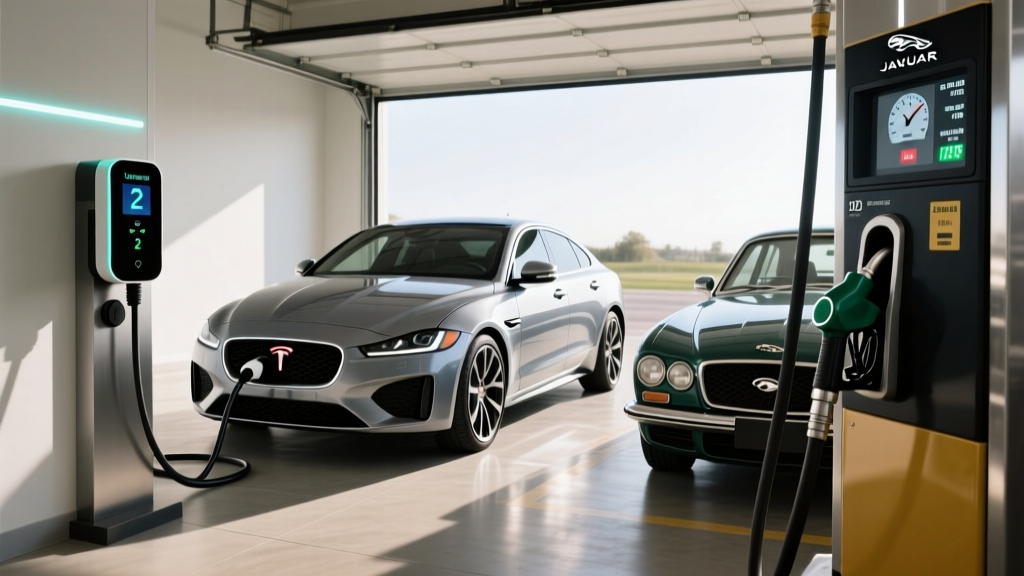
Even at the most expensive public DC fast charging rates, the Model Y costs roughly 40–60% less per mile than a comparable gasoline SUV. For home-charging owners on off-peak utility rates, the savings are dramatic: roughly $0.02–0.03 per mile versus $0.14 for gas, saving $1,200–$1,500 annually at 12,000 miles per year.
Recommended Home Chargers for the Model Y
Not all Level 2 chargers are equal. Below are our top picks for 2026, selected for NACS compatibility, reliability, and smart features:
Tesla Wall Connector (Gen 4)
- Power Output: Up to 11.5 kW (48A at 240V)
- Connector: NACS (native)
- Cable Length: 24 ft
- Smart Features: Wi-Fi, OTA updates, load sharing with multiple units, access control
- Price: ~$475
- Verdict: The default choice for Tesla owners. Seamless integration, no adapter needed, and supports power sharing if you install two units on one circuit.
Emporia Level 2 Smart Charger
- Power Output: Up to 11.5 kW (48A at 240V)
- Connector: J1772 (NACS via included adapter) or NACS version available
- Cable Length: 24 ft
- Smart Features: Energy monitoring, solar integration, scheduled charging, load management
- Price: ~$400
- Verdict: Best value for energy-conscious owners. The real-time energy dashboard and solar-aware scheduling are unmatched at this price.
ChargePoint Home Flex
- Power Output: Up to 12 kW (50A at 240V, configurable down to 16A)
- Connector: J1772 (use Tesla adapter) or NACS pigtail version
- Cable Length: 23 ft
- Smart Features: Alexa integration, scheduling, charging history, flexible amperage
- Price: ~$650
- Verdict: The flexible amperage dial is ideal for older homes — you can set it to 32A or 40A to match your available circuit without a panel upgrade.
Safety, Code, and Installation Best Practices
EV charger installation is regulated by the National Electrical Code (NEC) and local building departments. Key requirements for a safe, code-compliant Model Y home charging setup:
- Dedicated circuit: NEC 625 requires a dedicated branch circuit for EV charging. A 60A breaker with 6 AWG copper (or 4 AWG aluminum) wire is standard.
- GFCI protection: NEC 2020 and later requires GFCI protection for outdoor receptacles. Hardwired chargers (like the Tesla Wall Connector) are generally exempt from GFCI requirements since they have built-in ground-fault protection.
- Outdoor rating: If mounting outdoors, ensure the charger is rated NEMA 4 (weatherproof). The Tesla Wall Connector and Emporia are both NEMA 4 rated.
- Permit and inspection: Most jurisdictions require an electrical permit and post-installation inspection. Budget $50–$300 for the permit. Skipping this step can void homeowner's insurance claims related to electrical fires.
- Load calculation: A licensed electrician will perform an NEC Article 220 load calculation to confirm your panel can handle the new circuit. Do not skip this step — overloading a panel is a fire hazard.
Pro Tip: Always hire a licensed electrician experienced with EV charger installations. Ask for their load calculation in writing before work begins. If they dismiss a permit as "unnecessary," find another electrician. Source: National Fire Protection Association (NEC).
Federal Tax Credit for Home Charging Equipment
Under IRS §30C (Alternative Fuel Vehicle Refueling Property Credit), homeowners may qualify for a 30% tax credit on home charger equipment and installation, up to $1,000. This credit applies to both the charger hardware and electrician labor. Key eligibility requirements for 2026:
- The charger must be installed at your primary residence.
- The property must be located in a qualifying census tract (low-income or non-urban area — check the IRS eligibility tool).
- The credit is non-refundable (it reduces your tax liability to zero but does not generate a refund).
This credit is separate from the §30D new vehicle credit and can be claimed in the same tax year.
Tesla Model Y Charging Specifications at a Glance
| Specification | 2026 Model Y Long Range AWD |
|---|---|
| EPA Range | ~330 mi (531 km) |
| Battery Capacity (Usable) | ~75 kWh (NMC chemistry) |
| Max AC Charging (Level 2) | 11.5 kW (48A) |
| Max DC Fast Charging | ~250 kW (peak) |
| 10–80% DC Fast Charge Time | ~25–28 minutes (with preconditioning) |
| 10–80% Level 2 Charge Time | ~4.5–5 hours |
| Connector | NACS (J3400) |
| EPA Efficiency | ~122 MPGe (28 kWh/100 mi) |
| Battery Warranty | 8 years / 120,000 miles (≥70% retention) |
| Base MSRP (Long Range AWD) | ~$48,990 |
Frequently Asked Questions
How much does it cost to install a home EV charger for the Tesla Model Y?
Expect $950–$3,050 for a standard installation (equipment, electrician, and permit) if your electrical panel has sufficient capacity. If a panel upgrade from 100A to 200A is required, total costs can reach $2,450–$7,050. The Tesla Wall Connector itself costs ~$475.
How fast will each charging level add range to my Model Y?
Level 1 (120V) adds 3–5 miles per hour. Level 2 (240V at 48A) adds 37–44 miles per hour, filling 10–80% in about 4.5–5 hours. Tesla Supercharger V3/V4 (250 kW DC) adds up to ~200 miles in 15 minutes, completing 10–80% in roughly 25–28 minutes with battery preconditioning.
Which connector does the Tesla Model Y use?
The 2026 Model Y uses the NACS (North American Charging Standard, SAE J3400) connector natively. For non-Tesla Level 2 chargers with J1772 plugs, use the included J1772-to-NACS adapter. For CCS public charging networks, the optional Tesla CCS Adapter (~$250) is required.
How much does charging cost per mile versus gas?
Home charging at average U.S. electricity rates (~$0.16/kWh) costs roughly $0.045 per mile in the Model Y. Off-peak rates can drop this to $0.02–$0.03 per mile. A comparable gasoline SUV at 25 MPG and $3.50/gallon costs $0.14 per mile — roughly 3–5x more expensive.
What electrical upgrades might I need for a Level 2 charger?
You need a dedicated 60A breaker on a 240V circuit with 6 AWG copper wire. If your home has a 100A electrical panel or the panel is near capacity, a panel upgrade to 200A ($1,500–$4,000) may be required. Load management devices can sometimes avoid this cost by dynamically adjusting charger amperage.
Does the Tesla Model Y 821 km range figure apply in the U.S.?
The 821 km figure comes from the WLTP testing cycle used in Europe and Asia, which is more optimistic than the U.S. EPA cycle. The EPA rates the 2026 Model Y Long Range at approximately 330 miles (531 km). Real-world highway and cold-weather driving further reduces this to 230–290 miles depending on conditions.
Can I charge my Model Y at non-Tesla public chargers?
Yes. The Model Y can use Electrify America, EVgo, and other CCS networks with the Tesla CCS Adapter (~$250). For Level 2 public chargers (J1772), the included J1772 adapter works. Tesla Superchargers remain the most reliable and fastest network, with over 6,000 stations across North America.
Charging the Tesla Model Y — whether you are targeting the WLTP-claimed 821 km or planning around the EPA's real-world 330 miles — is straightforward once you understand the infrastructure. A home Level 2 setup on a 60A circuit delivers the vast majority of daily charging needs, while the Supercharger network handles road trips. Budget $1,000–$3,000 for installation, choose a NACS-native charger like the Tesla Wall Connector, and take advantage of the §30C tax credit to offset costs. The math consistently favors home charging: at $0.03–$0.05 per mile, the Model Y delivers some of the lowest operating costs in its class.