If you've just ordered an electric vehicle — or you're tired of relying on the flimsy cable that came in the trunk — you're probably searching for a better car charger cord. The term covers everything from a basic 120-volt Level 1 cable to a hardwired 48-amp Level 2 wall unit, and choosing the wrong one can mean painfully slow charging, tripped breakers, or an expensive electrical retrofit you didn't budget for.
This guide breaks down exactly what each charging level delivers in real-world miles per hour, what your home's electrical panel can actually support, which connectors fit which EVs in 2026, and how much you'll spend per mile compared to gasoline. We'll also recommend specific charger models with exact power outputs, cable lengths, and pricing so you can make a spec-driven decision.
Understanding EV Charging Levels and How Fast Each Adds Range
Before picking any car charger cord, you need to understand the three charging levels and what they actually deliver. The critical distinction: kW (kilowatts) measures power — how fast energy flows into your car. kWh (kilowatt-hours) measures energy — the total capacity of your battery. A 100 kWh battery charged at 10 kW takes roughly 10 hours from empty. Confusing the two is the single most common EV mistake.
| Level | Voltage / Amps | Max Power (kW) | Miles of Range Added Per Hour | Best Use Case |
|---|---|---|---|---|
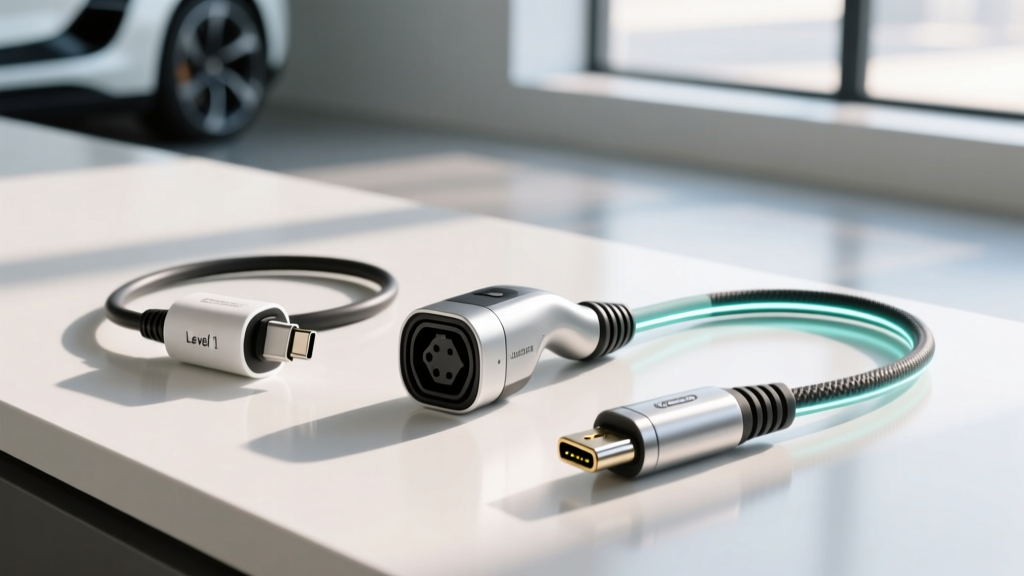
| Level 1 | 120V / 12A | ~1.4 kW | 3–5 miles | Overnight top-up for PHEVs or low-mileage drivers |
| Level 2 | 240V / 32A–48A | 7.7–11.5 kW | 25–44 miles | Daily home charging for most BEVs |
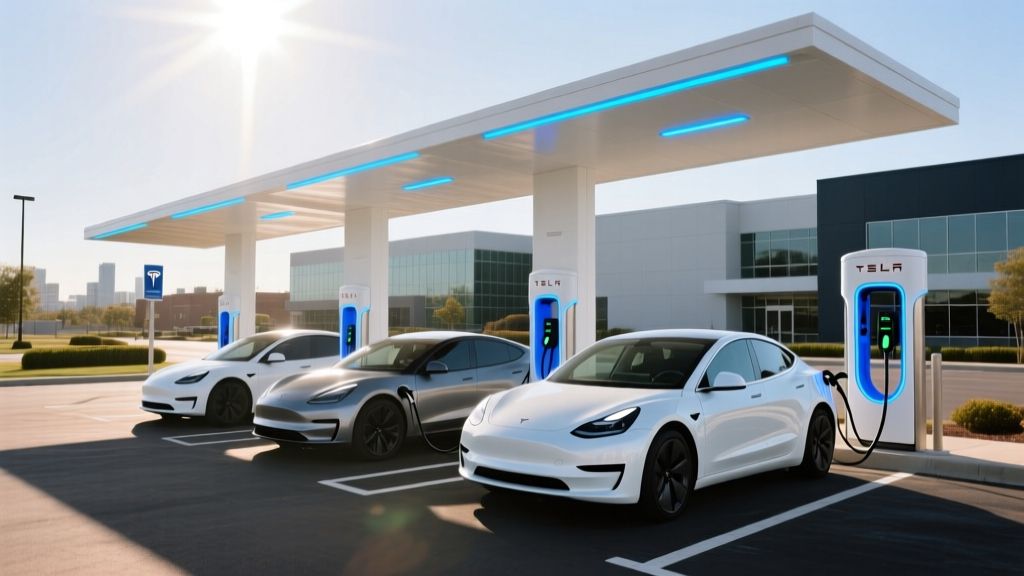
| DC Fast Charging | 400V–800V DC | 50–350 kW | 150–1,200+ miles (equivalent rate) | Road trips and rapid top-ups |
How Much Does It Cost to Install a Home EV Charger?
The total cost of a Level 2 home charging setup depends on three variables: the charger unit itself, the electrical work required, and local permitting. If your panel has spare capacity and the run from the panel to your garage is short, you might spend under $1,500 total. If you need a panel upgrade or a long conduit run through finished walls, costs can exceed $4,000.
| Component | Typical Range | Notes |
|---|---|---|
| Level 2 Charger Unit (32A–48A) | $350 – $750 | Smart Wi-Fi models cost more; basic non-smart units start ~$300 |
| Electrician Labor (240V circuit, 40A–60A breaker) | $500 – $2,000 | Depends on run length, wall type, and local labor rates |
| Electrical Permit | $50 – $200 | Required in most jurisdictions; some utilities include this in rebate programs |
| Panel Upgrade (if needed — 100A to 200A service) | $1,500 – $4,000 | Older homes with 100A panels often need this for a 48A charger circuit |
| Total (no panel upgrade) | $900 – $2,950 | Most homes built after 2000 won't need a panel upgrade |
| Total (with panel upgrade) | $2,400 – $6,950 | Common in homes built before 1990 |
The panel-upgrade gotcha: A 48-amp Level 2 charger requires a dedicated 60-amp breaker (the National Electrical Code requires circuits to be rated at 125% of continuous load). If your home has a 100-amp main panel that's already near capacity with HVAC, an electric range, and a dryer, an electrician will likely recommend upgrading to 200-amp service. Always get a load calculation before committing to a charger amperage. Some utilities offer rebates of $250–$1,000 that offset installation costs — check with your provider.
Which Connector and Car Charger Cord Fits Your EV?
The North American charging connector landscape consolidated significantly by 2026. Here's where things stand:
| Connector | Brands Using It (Native) | Adapter Needed For |
|---|---|---|
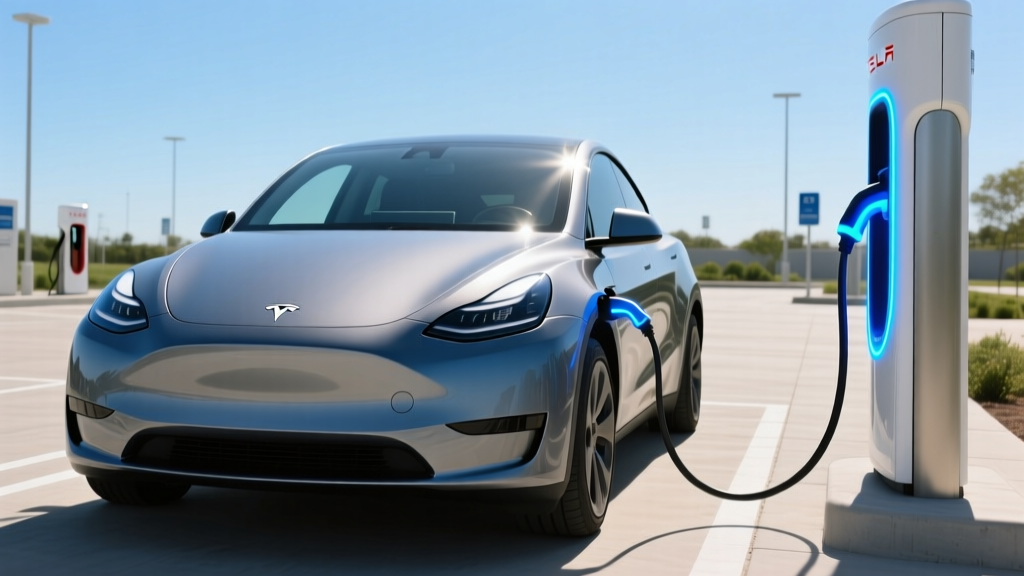
| NACS (Tesla / SAE J3400) | Tesla, Ford, GM, Rivian, Volvo, Polestar, Mercedes-Benz, Fisker, Lucid (2025+), Nissan (2025+) | CCS1 stations require a CCS-to-NACS adapter (~$200–$250) |
| CCS1 (Combined Charging System) | Hyundai, Kia, BMW, Volkswagen, Stellantis (Jeep/Chrysler), Honda (Prologue), Subaru (Solterra) | Tesla Superchargers require a CCS-to-NACS adapter or Magic Dock-equipped stations |
| CHAdeMO | Nissan Leaf (legacy, pre-2025) | Phasing out; adapters to CCS exist but are expensive (~$400+) |
If you're buying a home Level 2 car charger cord in 2026, the safest bet is a unit with a J1772 connector (the standard for Level 2 AC charging across all non-Tesla EVs). Tesla owners use the same J1772 Level 2 stations with the small adapter Tesla includes with every vehicle. For DC fast charging on the road, know your car's native connector and carry the appropriate adapter for the networks you'll encounter. The Alternative Fuels Data Center maintains a live map of connector availability by station.
Charging Time Examples for Common EV Battery Sizes
Charging times depend on both the charger's power output (kW) and the vehicle's onboard charger capacity. Most EVs in 2026 accept between 7.7 kW and 11.5 kW on Level 2 AC, and between 150 kW and 350 kW on DC fast charging. Here's what that looks like in practice:
| Vehicle (Battery Size) | Level 1 (1.4 kW) | Level 2 — 32A (7.7 kW) | Level 2 — 48A (11.5 kW) | DC Fast (Peak Rate) |
|---|---|---|---|---|
| Tesla Model Y LR (75 kWh usable) | ~45 hours | ~7 hours | ~4.7 hours | ~25 min at 250 kW peak |
| Hyundai Ioniq 5 (77.4 kWh) | ~47 hours | ~7.2 hours | ~4.9 hours | ~18 min at 240 kW peak (800V) |
| Ford F-150 Lightning Ext. (131 kWh) | ~80 hours | ~12.5 hours | ~8.3 hours | ~41 min at 150 kW peak |
| Chevrolet Equinox EV (85 kWh) | ~51 hours | ~8 hours | ~5.4 hours | ~30 min at 150 kW peak |
Cost to Charge: Per-Mile Breakdown vs. Gasoline
One of the strongest arguments for home charging is cost. Electricity prices vary by state and time of use, but the per-mile fuel cost for an EV is consistently lower than gasoline for an equivalent vehicle.
| Scenario | Cost per kWh | Vehicle Efficiency | Cost Per Mile |
|---|---|---|---|
| Home charging (off-peak, national avg.) | $0.13/kWh | 3.5 mi/kWh | $0.037 |
| Home charging (peak TOU rate) | $0.28/kWh | 3.5 mi/kWh | $0.080 |
| Public Level 2 (ChargePoint, EVgo) | $0.35/kWh | 3.5 mi/kWh | $0.100 |
| DC Fast Charging (Electrify America, Tesla) | $0.48/kWh | 3.5 mi/kWh | $0.137 |
| Gas vehicle (28 MPG combined, $3.40/gal) | — | 28 MPG | $0.121 |
| Gas vehicle (22 MPG, truck/SUV, $3.40/gal) | — | 22 MPG | $0.155 |
The takeaway: home off-peak charging costs roughly one-quarter of what gasoline costs per mile. Even public DC fast charging at premium rates is competitive with or cheaper than a 22 MPG gas truck. Over 12,000 miles per year, home charging saves the average driver $1,000–$1,400 annually compared to a 25 MPG gas car, based on EPA fuel economy data.
To minimize cost, set your charger's scheduling feature (available on most smart units) to charge during off-peak hours — typically 10 PM to 6 AM. Many utilities offer dedicated EV time-of-use plans that drop rates to $0.06–$0.10/kWh overnight.
Equipment Recommendations: Top Car Charger Cords for Home in 2026
Here are specific Level 2 charger units that deliver strong performance, reliability, and value for home installation. All use the J1772 connector (compatible with every EV except Tesla, which includes a J1772 adapter in the glovebox).
ChargePoint Home Flex
- Power: Up to 11.5 kW (48A) on a 60A circuit; configurable down to 16A
- Connector: J1772, 23-foot cable
- Smart Features: Wi-Fi, app scheduling, Alexa/Google integration, energy tracking
- Price: ~$649
- Best For: Drivers who want flexible amperage to match their panel capacity
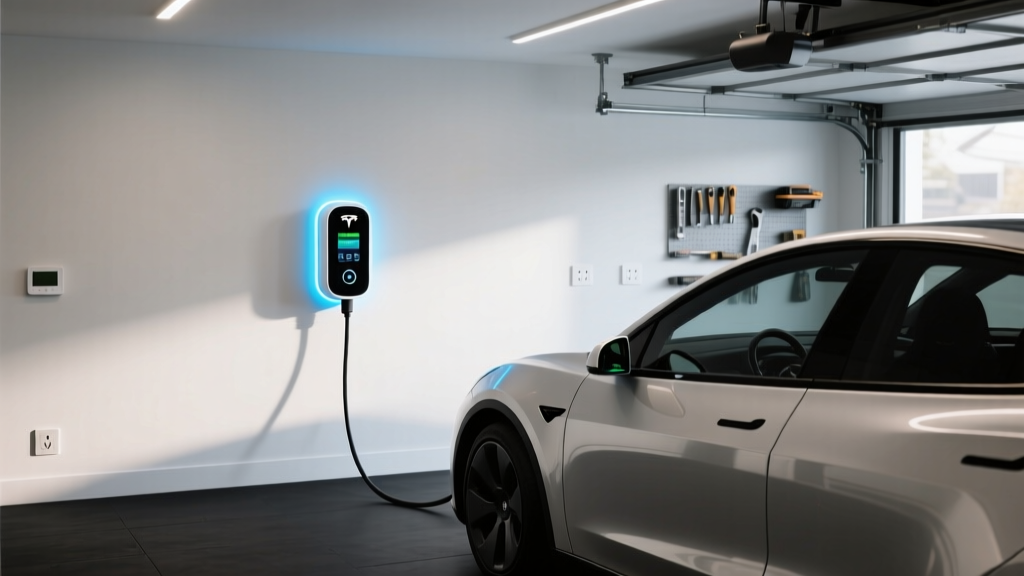
Tesla Wall Connector
- Power: Up to 11.5 kW (48A) on a 60A circuit
- Connector: NACS native (J1772 adapter available separately for ~$50)
- Smart Features: Wi-Fi, OTA updates, power-sharing with second unit, Tesla app integration
- Price: ~$475
- Best For: Tesla-only households; best value for 48A output
Emporia Level 2 EV Charger
- Power: Up to 11.5 kW (48A) on a 60A circuit
- Connector: J1772, 24-foot cable
- Smart Features: Wi-Fi, detailed energy monitoring, solar integration, scheduling
- Price: ~$399
- Best For: Budget-conscious buyers who want full smart features and energy tracking
Grizzl-E Smart
- Power: Up to 10 kW (40A) on a 50A circuit
- Connector: J1772, 24-foot cable
- Smart Features: Wi-Fi, OCPP-compatible, adjustable amperage (16A–40A)
- Price: ~$499
- Best For: Cold-climate durability (rated to -40°F); Canadian-built
Key buying criteria: Match the charger's amperage to what your electrical panel can support. A 48A charger needs a 60A dedicated circuit. If your panel can only spare a 40A breaker, choose a 32A charger (7.7 kW) — it still adds roughly 25–30 miles of range per hour, which covers most daily driving needs in an overnight session. Cable length matters too: 23–25 feet gives you flexibility for different parking orientations.
Safety, Electrical Code, and Installation Requirements
EV charging draws significant continuous current — more than most household appliances. Cutting corners on installation creates fire and insurance risks. Here's what proper installation requires:
- Dedicated circuit: Your Level 2 charger must be on its own dedicated breaker — not shared with any other outlet or appliance. A 48A charger requires a 60A breaker; a 32A charger requires a 40A breaker.
- Wire gauge: 6 AWG copper for 48A/60A circuits; 8 AWG for 32A/40A circuits. Aluminum wire requires larger gauge and specific connector ratings.
- GFCI protection: The 2023 NEC (National Electrical Code) requires GFCI protection for all EV charging outlets. Hardwired chargers with built-in ground-fault protection may exempt the breaker from this requirement — confirm with your electrician and local inspector.
- Outdoor rating: If your charger is mounted outside or in an open carport, it must carry a NEMA 4 (weatherproof) rating. All four units recommended above meet this standard.
- Permit and inspection: Most jurisdictions require an electrical permit and a post-installation inspection. Your electrician typically handles the permit application. Skipping this step can void your homeowner's insurance coverage for electrical fires.
- Hardwired vs. plug-in: Hardwired installations (no plug) avoid the NEC GFCI breaker requirement and are generally more reliable long-term. Plug-in units using a NEMA 14-50 outlet offer portability but require a GFCI breaker (~$100–$150 additional).
For authoritative electrical code guidance, the National Fire Protection Association's NEC page provides the current code cycle requirements. Your licensed electrician will handle compliance, but understanding these requirements helps you evaluate quotes and avoid unsafe shortcuts.
Frequently Asked Questions
Can I use the car charger cord that came with my EV for daily charging?
Most EVs ship with a dual-voltage mobile charger that works on both 120V (Level 1, ~1.4 kW) and 240V (Level 2, typically up to 32A/7.7 kW with the right outlet). If you have a NEMA 14-50 outlet already installed — common for electric ranges and RV hookups — the included cord can serve as your daily Level 2 charger. However, dedicated wall units charge faster (up to 48A/11.5 kW), offer smart scheduling, and don't occupy your mobile cord, which you'll want to keep in the car for emergencies and travel.
What electrical upgrades might I need for a Level 2 charger?
The most common upgrade is a panel capacity increase from 100A to 200A service, which costs $1,500–$4,000. You may also need to replace aluminum wiring with copper, add a sub-panel if your main panel is full, or upgrade your utility service drop. A licensed electrician will perform a load calculation (NEC Article 220) to determine if your existing panel can handle the additional continuous load. Some newer "smart" panels and load-management devices (like the Emporia VUE or Span drive) can dynamically limit charger draw to stay within panel capacity, avoiding a full upgrade.
Is a 32A charger enough, or do I need 48A?
For most drivers, 32A (7.7 kW) is sufficient. It adds roughly 25–30 miles of range per hour, meaning an 8-hour overnight session restores 200–240 miles — more than enough for daily driving and even most weekend trips. You benefit from 48A (11.5 kW) primarily if you drive a large-battery vehicle (Ford F-150 Lightning, Rivian R1T, Chevrolet Silverado EV) and regularly need to recover 300+ miles overnight, or if you frequently arrive home near-empty and need to be full by morning. The trade-off is a larger breaker and potentially a panel upgrade.
Do I need a smart charger, or is a basic unit fine?
A basic non-smart charger works perfectly for charging. Smart features — Wi-Fi scheduling, energy monitoring, and utility demand-response integration — are valuable if your utility offers time-of-use rates (scheduling lets you charge at off-peak prices automatically) or if you want to track your charging costs. For most owners, the $50–$100 premium for a smart charger pays for itself through optimized off-peak scheduling within the first year.
Will a home charger increase my property value?
A professionally installed, permitted Level 2 charging circuit is increasingly viewed as a home upgrade, similar to a 240V dryer outlet. While appraisals vary by market, a 2025 Zillow analysis found that homes with documented EV charging infrastructure sold for approximately 1.5% more than comparable homes without it in metro areas with high EV adoption. Keep your permit documentation and electrician's invoice for resale purposes.