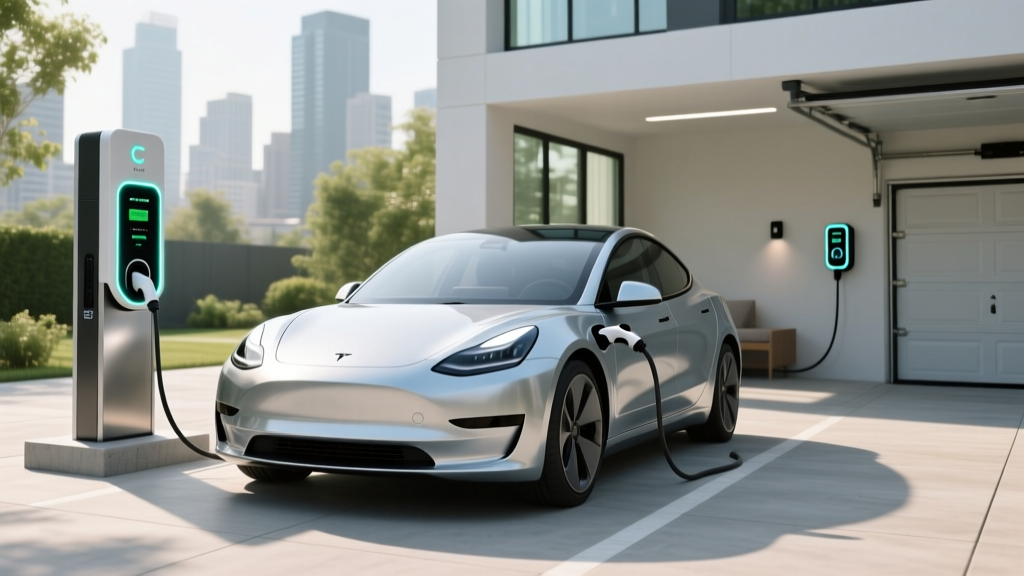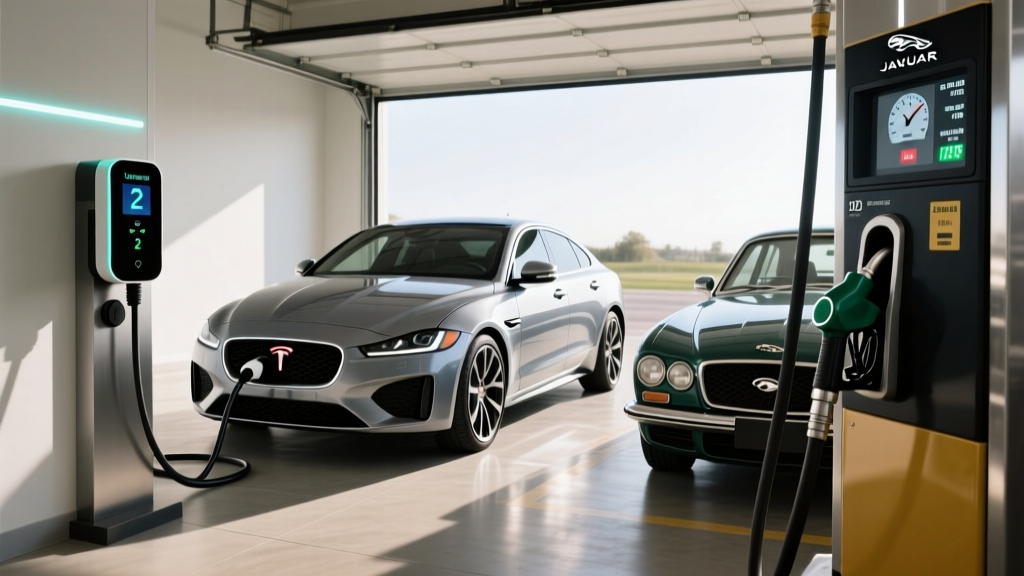
Why Compare Modern EV Charging to a 2009 Jaguar XF Supercharged?
The 2009 Jaguar XF Supercharged remains a benchmark for supercharged V8 performance — 420 horsepower, a 5.0-liter AJ-V8, and an EPA-rated 15 MPG city / 21 MPG highway (roughly 17 MPG combined in mixed driving). For enthusiasts transitioning from that era of performance sedans to a modern electric vehicle, the biggest question isn't 0-60 times — it's how charging actually works at home and on the road, and whether the economics beat pumping premium fuel into a 16.9-gallon tank.
This guide breaks down every charging level, the real cost to install a home Level 2 station, connector compatibility across brands, and per-mile cost comparisons against the XF Supercharged's thirst for 91-octane. All figures reflect 2026 EV hardware, current electrical code, and utility rate structures.
Charging Levels Explained: kW, Miles Per Hour, and What They Mean
The most critical distinction in EV literacy: kW (kilowatts) measures power — how fast energy flows into the battery. kWh (kilowatt-hours) measures energy capacity — the size of the battery itself. Confusing the two is like mixing up horsepower with fuel-tank size.
| Level | Voltage / Amps | Power (kW) | Miles of Range Added Per Hour | Best For |
|---|---|---|---|---|
| Level 1 | 120V / 12A | ~1.4 kW | 3–5 mi/hr | Overnight top-ups, PHEVs, low-mileage drivers |
| Level 2 (Home) | 240V / 32–48A | 7.7–11.5 kW | 25–44 mi/hr | Daily home charging, full BEV replenishment overnight |
| Level 2 (Public) | 208–240V / 30–80A | 6.6–19.2 kW | 22–70 mi/hr | Destination charging, workplaces, apartments |
| DC Fast Charging | 400–800V DC | 50–350 kW | 150–1,200+ mi/hr (peak) | Road trips, highway corridors |
How Much Does It Cost to Install a Home EV Charger?
A Level 2 home charger requires a dedicated 240V circuit, similar to an electric dryer or oven. Total cost depends on panel capacity, wire run distance, and local permit fees. Here's a realistic breakdown for 2026:
| Component | Typical Range | Notes |
|---|---|---|
| Level 2 Charger Equipment | $350–$750 | Hardwired or NEMA 14-50 plug; smart Wi-Fi models cost more |
| Electrician Labor (standard install) | $600–$1,800 | Depends on wire run length (short run near panel = cheaper) |
| Permit & Inspection | $50–$250 | Required in most jurisdictions; varies by municipality |
| Panel Upgrade (if needed) | $1,500–$3,500 | Needed if your panel is 100A or lacks spare breaker slots |
| Total (no panel upgrade) | $1,000–$2,800 | Most homes with 200A service and short wire runs |
| Total (with panel upgrade) | $2,500–$6,300 | Older homes, 100A panels, or long conduit runs |
Electrical requirements: A 48-amp charger requires a 60-amp dedicated breaker (NEC 80% continuous-load rule). A 40-amp charger needs a 50-amp breaker. Homes built before 2000 often have 100-amp panels that may lack capacity for a 60-amp EV circuit alongside existing loads. A licensed electrician will perform a load calculation before recommending an upgrade.
Safety and code essentials:
- Dedicated circuit — never share with other appliances
- GFCI breaker required for outdoor installations (2023 NEC and later)
- NEMA 4 (outdoor) rated enclosures for exterior mounts
- Hardwired connections preferred over plug-in for reliability and higher amperage
- Conduit protection for exposed wiring runs
Connector Compatibility: NACS, CCS1, and CHAdeMO in 2026
The connector landscape has consolidated significantly. Tesla's North American Charging Standard (NACS) is now the dominant plug for new vehicles, while CCS1 (Combined Charging System) remains on many 2023–2025 models. CHAdeMO is effectively discontinued for new vehicles but persists on older Nissan Leafs and Mitsubishi Outlander PHEVs.
| Connector | Brands Using It | Adapter Needed For Tesla Superchargers? |
|---|---|---|
| NACS (native) | Tesla, Ford, GM, Rivian, Volvo, Polestar, Hyundai/Kia (2026+), Mercedes | No — direct access |
| CCS1 | VW ID.4 (2025 and earlier), BMW i4/iX, Hyundai Ioniq 5 (2025), some Stellantis | Yes — CCS-to-NACS adapter (~$200–$250) for Supercharger access |
| CHAdeMO | Nissan Leaf (legacy), Mitsubishi Outlander PHEV (legacy) | Not compatible; limited public network |
For home Level 2 charging, all non-Tesla EVs use the J1772 connector. Teslas include a J1772 adapter in the glovebox. Most home chargers ship with a J1772 plug or a NACS plug — check compatibility before purchasing.
Cost to Charge Per Mile vs. Fueling the 09 Jaguar XF Supercharged
The 2009 Jaguar XF Supercharged requires premium 91-octane fuel and averages roughly 17 MPG combined. At $4.80/gallon (2026 national premium average), that's $0.282 per mile in fuel alone.
Here's how EV charging scenarios compare, using a mid-size EV with an efficiency of 3.0 miles per kWh (typical for a Tesla Model Y, Hyundai Ioniq 5, or Ford Mustang Mach-E):
| Scenario | Rate | Cost Per Mile | Savings vs. XF Supercharged |
|---|---|---|---|
| Home charging (off-peak utility rate) | $0.11/kWh | $0.037 | 87% cheaper ($0.245/mi saved) |
| Home charging (standard residential rate) | $0.16/kWh | $0.053 | 81% cheaper ($0.229/mi saved) |
| Public Level 2 (network pricing) | $0.30/kWh | $0.100 | 65% cheaper ($0.182/mi saved) |
| DC Fast Charging (Electrify America, EVgo) | $0.48/kWh | $0.160 | 43% cheaper ($0.122/mi saved) |
| DC Fast Charging (Tesla Supercharger, member rate) | $0.30/kWh | $0.100 | 65% cheaper ($0.182/mi saved) |
| 2009 Jaguar XF Supercharged | $4.80/gal, 17 MPG | $0.282 | — |
At 12,000 miles per year, a home-charged EV at $0.11/kWh costs roughly $444 annually in electricity. The XF Supercharged burns approximately $3,384 in premium fuel over the same distance — a difference of $2,940 per year that can offset a charger installation in the first six months.
For detailed efficiency data on specific models, see the EPA's EV technology and fuel economy resource page.
Charging Time Examples: 10–80% for Common Battery Sizes
Most EV owners charge between 10% and 80% State of Charge to preserve battery longevity and avoid the slow tapering above 80%. Here's how long that takes across typical battery capacities and charging methods:
| Battery (usable kWh) | Example Vehicles | Level 1 (1.4 kW) | Level 2 (11.5 kW) | DC Fast (peak rate / avg session) |
|---|---|---|---|---|
| 58 kWh | VW ID.4 Standard, base Hyundai Kona EV | ~33 hours | ~3.5 hours | ~22 min (130 kW peak) |
| 77 kWh | Tesla Model Y LR, Ford Mach-E Extended | ~44 hours | ~4.7 hours | ~18 min (250 kW peak) |
| 84–95 kWh | Tesla Model S, Rivian R1T, BMW iX | ~52 hours | ~5.5 hours | ~20 min (250–350 kW peak) |
| 100–115 kWh | GMC Hummer EV, Chevy Silverado EV Max | ~66 hours | ~7 hours | ~28 min (350 kW peak, 800V arch.) |
Equipment Recommendations: Top Home Level 2 Chargers for 2026
ChargePoint Home Flex (2nd Gen)
- Power: Up to 11.5 kW (48A, hardwired) or 9.6 kW (40A, plug-in)
- Connector: J1772 (NACS version available)
- Cable: 23 feet
- Smart Features: Wi-Fi, scheduling, Alexa, utility demand-response integration
- Price: ~$599 (J1772) / ~$649 (NACS)
Tesla Wall Connector
- Power: Up to 11.5 kW (48A, hardwired)
- Connector: NACS native (includes J1772 adapter for non-Tesla EVs)
- Cable: 24 feet
- Smart Features: Wi-Fi updates, power-sharing for multi-unit installs, access control
- Price: ~$475
Emporia Vue EV Charger
- Power: Up to 11.5 kW (48A)
- Connector: J1772 (NACS adapter included)
- Cable: 24 feet
- Smart Features: Energy monitoring, solar integration, time-of-use scheduling
- Price: ~$399
Grizzl-E Smart
- Power: Up to 10 kW (40A)
- Connector: J1772 or NACS
- Cable: 24 feet
- Smart Features: OCPP-compatible, adjustable amperage, extreme-cold rated (-40°F)
- Price: ~$449
What Electrical Upgrades Might Your Home Need?
Not every home can accept a 48-amp EV charger without modifications. Here are the most common scenarios:
- 100-amp main panel: Common in homes built before 1990. A load calculation may show insufficient headroom for a 60-amp breaker. Upgrade to 200A typically costs $1,500–$3,500.
- No spare breaker slots: Even a 200A panel may be full. A sub-panel addition ($500–$1,200) or tandem breakers (if code-compliant) can solve this.
- Long wire runs: If the charger is in a detached garage or far from the panel, wire gauge must increase to prevent voltage drop. 100+ foot runs in conduit can add $500–$1,500 in material and labor.
- Aluminum wiring: Older homes with aluminum service conductors may need copper pigtails or connectors rated for aluminum-to-copper bonding.
- Smart panel / load management: Devices like the Emporia Vue or Span panel can dynamically limit EV charging when household demand spikes, avoiding a full panel upgrade.
Always defer the final electrical specification to a licensed electrician. The NEC requires permits for new 240V circuits, and unpermitted work can void home insurance or create fire risk. For code details, see NFPA's National Electrical Code resources.
Frequently Asked Questions
How much does it cost to install a home EV charger?
A standard Level 2 home installation (equipment + electrician + permit) runs $1,000–$2,800 if your panel has capacity. Add $1,500–$3,500 if you need a panel upgrade from 100A to 200A service. Total project costs for older homes can reach $4,000–$6,300.
How fast will each charging level add range?
Level 1 (120V) adds 3–5 miles per hour. Level 2 (240V, 48A) adds 30–44 miles per hour depending on vehicle efficiency. DC fast charging adds 150–1,200+ miles per hour at peak — but only for the first 10–40% of the session before tapering.
Which connector or charger is compatible with my EV?
For 2026 models: Tesla, Ford, GM, Rivian, Hyundai/Kia, and most others now use NACS. Older CCS1 vehicles (2023–2025 VW, BMW, some Stellantis) need a CCS-to-NACS adapter (~$200–$250) for Tesla Supercharger access. For home Level 2, all EVs accept J1772 or NACS with the appropriate adapter.
How much does charging cost per mile compared to gas?
Home charging at $0.11/kWh costs roughly $0.037 per mile in a typical EV. The 2009 Jaguar XF Supercharged at 17 MPG on $4.80 premium costs $0.282 per mile — nearly 8 times more. Even expensive DC fast charging at $0.48/kWh ($0.16/mi) undercuts premium gasoline significantly.
What electrical upgrades might I need for a home charger?
The most common upgrade is a 100A-to-200A panel replacement ($1,500–$3,500). You may also need a sub-panel if breaker slots are full, heavier-gauge wire for long runs, or a load-management device to avoid overloading existing service. A licensed electrician's load calculation is the definitive answer.
Does the federal tax credit apply to home charger installation?
The IRS §30C Alternative Fuel Vehicle Refueling Property Credit covers 30% of home charger hardware and installation costs up to $1,000. Eligibility depends on the installation location being in a qualifying census tract. Consult a tax professional for your specific situation, as rules are subject to change.