The Short Answer: When Is Tesla Charging Actually Free?
If you've searched "tesla charging free" hoping to find a network of complimentary plugs, the reality is nuanced. As of 2026, routine Tesla Supercharging is not free for the vast majority of owners. Tesla phased out its legacy unlimited free Supercharging perk years ago, and the few remaining pathways to free electrons are limited-time promotions, referral credits, or specific destination-charger partnerships.
That said, charging a Tesla — whether at home or on the road — still costs dramatically less per mile than gasoline. The real question isn't whether it's free, but how much you'll actually spend and where the best value lies. This guide breaks down every cost scenario, the equipment you need, and how to minimize your charging bill in 2026.
- Home Level 2 (off-peak utility rate): ~$0.04–$0.06 per mile
- Public Level 2 (ChargePoint, EVgo L2): ~$0.07–$0.12 per mile
- Tesla Supercharger V4 (DC fast): ~$0.10–$0.16 per mile
- Gasoline (28 MPG avg, $3.50/gal): ~$0.125 per mile
Where Free Tesla Charging Still Exists (And Where It Doesn't)
Here are the scenarios where Tesla owners can still access free or effectively free charging in 2026:
Legacy Unlimited Free Supercharging
Model S and Model X vehicles purchased before January 2017 with transferable free Supercharging still retain the benefit — but only if the car has never been sold to a second owner (non-transferable variants exist). Tesla discontinued this perk for new purchases. If you're buying a used 2016 Model S, verify the Supercharging status in the Tesla app before purchasing.
Referral and Promotional Credits
Tesla periodically runs referral programs awarding Supercharging credits (typically 1,000–5,000 miles worth) when a new buyer uses an existing owner's referral link. These credits usually expire within 6–12 months. Check Tesla's current referral terms at the time of purchase — the program has been paused and restarted multiple times.
Destination Chargers at Hotels and Businesses
Many hotels, resorts, and restaurants offer complimentary Tesla Destination Charging (Level 2, typically 11.5–17 kW via Wall Connector) as a guest amenity. These are genuinely free but slow — expect 30–50 miles of range per hour. Use the Tesla app's "Destination Charging" filter or PlugShare to locate free sites.
Utility and Workplace Programs
Some utilities (e.g., Pacific Gas & Electric's EV rate plans, Con Edison's SmartCharge NY) offer bill credits or free off-peak kWh for EV owners. A growing number of employers provide free workplace Level 2 charging. These aren't Tesla-exclusive but reduce your effective cost to near zero.
How Much Does Tesla Supercharging Actually Cost?
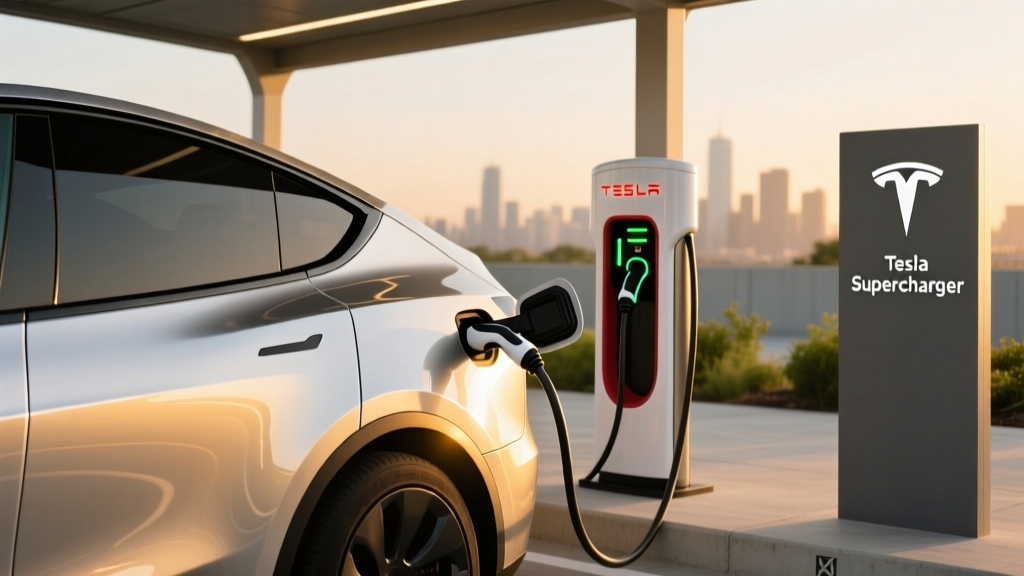
Tesla Supercharger pricing varies by location, time of day, and local electricity rates. In 2026, typical rates in the U.S. fall between $0.28 and $0.48 per kWh, with urban stations in California and the Northeast trending higher and rural Midwest stations trending lower.
Tesla does not charge a flat national rate. Some stations use time-of-use pricing where off-peak rates drop by $0.05–$0.10/kWh. Idle fees of $1.00/minute apply if your car remains plugged in after reaching its charge limit at a busy station.
Let's calculate real cost for common Tesla battery packs:
| Model (2026) | Battery (kWh usable) | 10–80% Charge (kWh) | Cost at $0.35/kWh | Cost at $0.48/kWh |
|---|---|---|---|---|
| Model 3 RWD (60 kWh) | ~57 | ~40 | $14.00 | $19.20 |
| Model Y Long Range (82 kWh) | ~78 | ~55 | $19.25 | $26.40 |
| Model S Plaid (100 kWh) | ~95 | ~67 | $23.45 | $32.16 |
Compare this to filling a 15-gallon gas tank at $3.50/gallon ($52.50), and the value proposition becomes clear even without free charging.
Charging Levels Explained: Speeds, kW, and Miles Per Hour
Understanding charging speed requires distinguishing kW (kilowatts) — the rate of power delivery — from kWh (kilowatt-hours) — the total energy stored in your battery. Think of kW as how fast water flows through a hose, and kWh as the size of the bucket.
| Level | Voltage / Amperage | Power (kW) | Miles of Range Per Hour | Best For |
|---|---|---|---|---|
| Level 1 | 120V / 12A | ~1.4 kW | 3–5 mi/hr | Overnight top-ups, low daily mileage |
| Level 2 (Home) | 240V / 32–48A | 7.7–11.5 kW | 25–44 mi/hr | Daily home charging, full overnight recharge |
| Level 2 (Public) | 208–240V / 32–80A | 6.6–19.2 kW | 22–60 mi/hr | Workplace, shopping centers, hotels |
| DC Fast (Supercharger V3) | 400V DC | Up to 250 kW | ~180 mi in 15 min | Road trips, rapid top-ups |
| DC Fast (Supercharger V4) | 400–800V DC | Up to 350 kW* | ~200 mi in 12 min* | Latest-gen stations, future Cybertruck/vehicles |
*Peak speeds depend on vehicle acceptance rate. The 2026 Model 3/Y architecture peaks around 250–270 kW; V4 cabinets can deliver 350 kW to future 800V vehicles. Charging slows significantly above 80% State of Charge to protect battery health — the "charge curve taper."
Home Charger Installation: Electrical Requirements and Costs
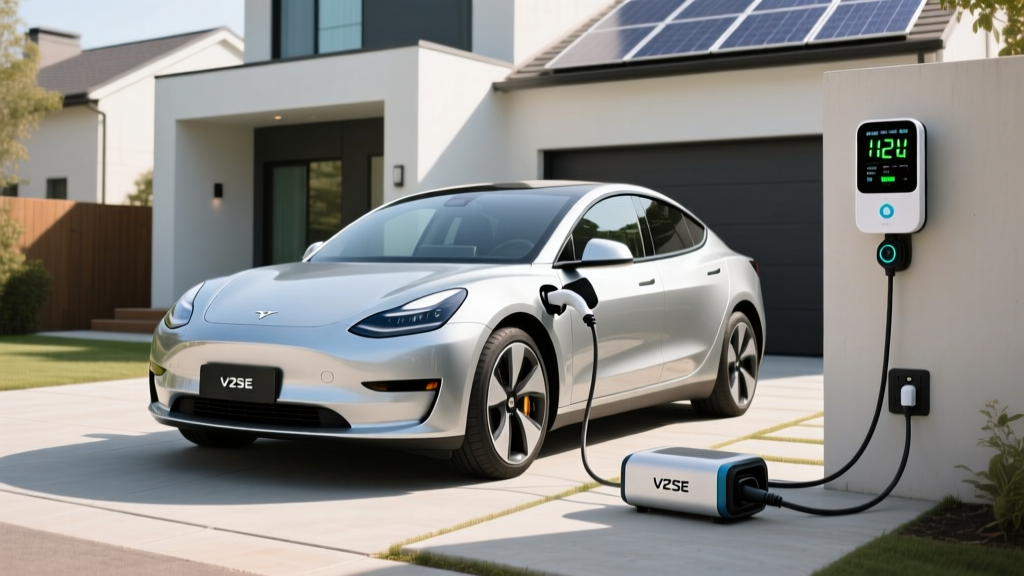
The single biggest cost advantage for EV owners is home charging, where electricity rates are lowest and convenience is highest. But installing a Level 2 home charger involves real upfront investment. Here's what's required:
Electrical Specifications
A standard Level 2 home charger requires a 240V dedicated circuit, typically rated at 40A, 50A, or 60A. The Tesla Wall Connector, for example, supports up to 48A continuous draw on a 60A breaker (electrical code requires breakers rated at 125% of continuous load). This delivers up to 11.5 kW — enough to fully recharge a Model Y Long Range overnight.
Panel Upgrade Considerations
Many older homes have 100A electrical panels that lack capacity for a 60A EV circuit alongside existing loads (HVAC, electric range, dryer). A panel upgrade to 200A typically costs $1,500–$3,500. Before purchasing any charger, have a licensed electrician perform a load calculation per NEC Article 220. Some utilities offer rebates covering part of the panel upgrade cost.
Installation Cost Breakdown
| Component | Low Estimate | High Estimate | Notes |
|---|---|---|---|
| Level 2 Charger (Equipment) | $350 | $700 | Tesla Wall Connector, ChargePoint, Emporia |
| Electrician Labor | $500 | $2,000 | Depends on run length, conduit, wall penetrations |
| Electrical Permit | $50 | $250 | Varies by municipality |
| Panel Upgrade (if needed) | $1,500 | $3,500 | 100A → 200A service upgrade |
| Total (no panel upgrade) | $900 | $2,950 | Most common scenario for newer homes |
| Total (with panel upgrade) | $2,400 | $6,450 | Common in homes built before 1990 |
The federal Residential Clean Energy Credit (IRS §25D) covers 30% of qualified EV charger equipment and installation costs up to $1,000 through 2032. This can offset $105–$885 depending on your project. Always consult a tax professional for your specific eligibility.
Connector Compatibility: NACS, CCS, and Adapters
The connector landscape shifted dramatically between 2023 and 2026. Tesla's North American Charging Standard (NACS) — now formalized as SAE J3400 — has been adopted by Ford, GM, Rivian, Volvo, Hyundai, and most major automakers. As of 2026, NACS is the dominant connector in North America.
| Connector | Used By | Max Power | Adapter Needed? |
|---|---|---|---|
| NACS (Tesla / J3400) | Tesla (all), Ford F-150 Lightning (2025+), GM Ultium (2025+), Rivian (2025+) | Up to 350 kW (DC) | No for Tesla; CCS vehicles need CCS→NACS adapter |
| CCS1 | Hyundai Ioniq 5/6, VW ID.4, BMW iX (pre-2025), Kia EV6 | Up to 350 kW (DC) | NACS→CCS adapter required at Tesla Superchargers |
| CHAdeMO | Nissan Leaf (legacy), Mitsubishi Outlander PHEV | Up to 100 kW (DC) | Limited adapters; network shrinking |
| J1772 | All EVs (Level 2 AC only) | Up to 19.2 kW (AC) | Tesla includes J1772→NACS adapter in glovebox |
Key takeaway for Tesla owners: Your car uses NACS natively. You can access Tesla Superchargers without adapters. To use non-Tesla public Level 2 stations with J1772 connectors, use the J1772 adapter included with every Tesla. Non-Tesla EVs with CCS ports can now access many Supercharger stations using Tesla's CCS→NACS adapter ($175 from Tesla's shop), but not all Supercharger stalls are enabled for non-Tesla vehicles — check the Tesla app for station compatibility.
Cost Per Mile: EV Charging vs. Gasoline
The most meaningful comparison for buyers is cost per mile. Let's model a Tesla Model Y Long Range AWD (2026, EPA 320 miles, ~78 kWh usable battery) against a comparable gas SUV averaging 28 MPG combined.
| Scenario | Cost per kWh / Gallon | Cost per Mile (Tesla Model Y) | Cost per Mile (28 MPG Gas SUV) |
|---|---|---|---|
| Home Level 2 — Off-Peak Rate | $0.12/kWh | $0.031 | — |
| Home Level 2 — Standard Rate | $0.18/kWh | $0.047 | — |
| Public Level 2 (avg) | $0.30/kWh | $0.078 | — |
| Tesla Supercharger (avg) | $0.36/kWh | $0.094 | — |
| Gasoline (national avg) | $3.50/gal | — | $0.125 |
| Gasoline (California avg) | $4.80/gal | — | $0.171 |
Annual savings for a driver covering 12,000 miles/year charging primarily at home (off-peak): approximately $1,128/year vs. the gas SUV at national average prices. Over five years, that's $5,640 in fuel savings — enough to offset most of the home charger installation cost and then some.
Even charging exclusively at Superchargers ($0.36/kWh), the Model Y costs $0.094/mile vs. $0.125/mile for gas — a 25% savings. The economics only fail if you rely entirely on premium-priced public chargers ($0.55+/kWh at some urban sites) and drive a highly efficient gas car.
Recommended Home Chargers for Tesla Owners (2026)
Here are three Level 2 chargers we recommend based on power output, reliability, smart features, and value:
Tesla Wall Connector (Gen 4)
- Power Output: Up to 11.5 kW (48A on 60A circuit)
- Connector: NACS native
- Cable Length: 24 ft
- Smart Features: Wi-Fi, OTA updates, load sharing with second unit, Power-Share with Tesla Powerwall
- Price: ~$475
- Best For: Tesla-only households wanting seamless app integration
Emporia Level 2 EV Charger
- Power Output: Up to 11.5 kW (48A)
- Connector: J1772 (use included Tesla adapter) or NACS version available
- Cable Length: 24 ft
- Smart Features: Energy monitoring, solar integration, scheduled charging, utility demand-response compatible
- Price: ~$399
- Best For: Solar homeowners wanting energy-tracking and utility rebates
ChargePoint Home Flex (NACS)
- Power Output: Up to 12 kW (50A on 60A circuit, configurable down to 16A)
- Connector: NACS (2025+ model) or J1772
- Cable Length: 23 ft
- Smart Features: Alexa integration, ChargePoint app scheduling, flexible amperage for older panels
- Price: ~$599
- Best For: Mixed-EV households needing adjustable amperage without a panel upgrade
Safety, Code, and Installation Best Practices
EV charger installation is not a DIY project. Per the National Electrical Code (NEC), a Level 2 charger requires:
- Dedicated circuit: The EV charger must have its own breaker — no sharing with other appliances.
- GFCI protection: NEC 2023 (Article 625.54) requires GFCI protection for all EV receptacles. Hardwired Wall Connectors have built-in ground-fault protection.
- Outdoor rating: If installed outdoors, the charger must be NEMA 4 rated (weatherproof). The Tesla Wall Connector and ChargePoint Home Flex both carry NEMA 4 ratings.
- Proper wire gauge: 6 AWG copper for 48A circuits; 4 AWG for 60A circuits with longer wire runs. Your electrician will calculate voltage drop.
- Permit and inspection: Most jurisdictions require an electrical permit and post-installation inspection. Skipping this voids homeowner's insurance coverage for electrical fires.
If your installer suggests plugging a high-amperage charger into an existing dryer outlet using a "splitter" or "adapter box" — decline. Shared-circuit solutions violate code and create fire risk. A dedicated circuit is non-negotiable.
Frequently Asked Questions
How much does it cost to install a home EV charger?
Most homeowners spend between $900 and $2,950 for a Level 2 charger installation without a panel upgrade, covering equipment ($350–$700), electrician labor ($500–$2,000), and permits ($50–$250). If your home needs a panel upgrade from 100A to 200A service, add $1,500–$3,500. The federal §25D credit offsets 30% up to $1,000.
How fast will each charging level add range?
Level 1 (120V) adds 3–5 miles per hour. Level 2 (240V, 48A) adds 30–44 miles per hour depending on the vehicle. DC Fast Charging at a Tesla Supercharger V3 (250 kW peak) adds approximately 180 miles in 15 minutes for a Model 3/Y, though the charge curve tapers significantly above 80% State of Charge.
Which connector/charger is compatible with my EV?
All Tesla vehicles use NACS natively and can access Tesla Superchargers and Destination Chargers directly. For public J1772 Level 2 stations, use the adapter included in your Tesla's glovebox. Non-Tesla EVs with CCS ports can access select Supercharger stations with Tesla's CCS→NACS adapter. CHAdeMO vehicles (Nissan Leaf) cannot use Superchargers.
How much does charging cost per mile vs gas?
Home charging at off-peak rates (~$0.12/kWh) costs a Model Y owner approximately $0.031/mile. Tesla Supercharging averages $0.094/mile. A comparable 28 MPG gas SUV costs $0.125/mile at $3.50/gallon. Home charging saves 75% per mile; even Supercharging saves ~25%.
What electrical upgrades might I need?
Homes with 100A electrical panels often need a 200A service upgrade ($1,500–$3,500) to safely add a 60A EV circuit. Homes built after 2000 typically have 200A panels with sufficient spare capacity. A licensed electrician will perform an NEC Article 220 load calculation to determine if your panel can handle the additional draw. Some utilities offer rebates of $500–$1,500 for panel upgrades paired with EV adoption.
Is Tesla Destination Charging really free?
Often yes — but it's a guest amenity, not a right. Hotels and restaurants set their own policies. Some restrict charging to overnight guests; others limit session duration. Always check the listing on the Tesla app or PlugShare for access notes before relying on a free Destination Charger during a road trip.
Sources: EPA Fuel Economy, IRS Residential Clean Energy Credit, Tesla Home Charging Installation Guide.