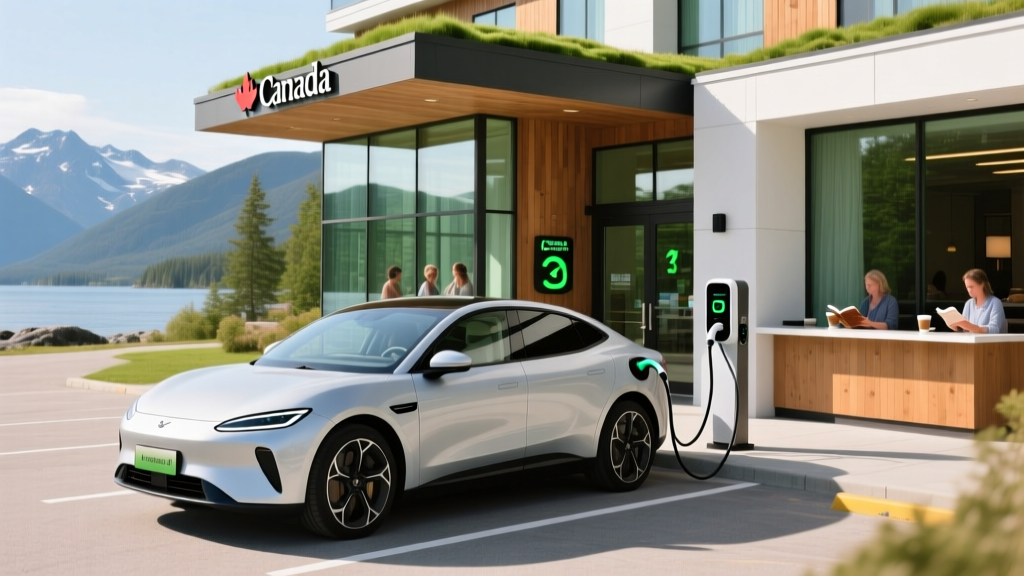
If you are driving an electric vehicle across Canada in 2026, the overnight charging situation at hotels is no longer a roll of the dice — but it is still wildly inconsistent. Some properties have 11 kW Level 2 wall connectors in the parking garage; others list "EV charging" on their booking page and deliver a single shared 3.7 kW trickle charger behind a loading dock. This guide maps the reality on the ground: which major hotel parent brands in Canada reliably offer EV charging, what speeds you can expect, and how to plan the rest of your charging life (home and public) so the hotel stop is just a bonus, not a lifeline.
Why Hotel Charging in Canada Is a Different Beast
Canadian EV road trips have two constraints that U.S. drivers often underestimate: cold-weather range loss (20–35% below EPA sticker at -15°C and below, per Natural Resources Canada testing) and sparse DC fast charging corridors outside the Quebec City–Windsor axis and the Lower Mainland. That makes overnight Level 2 charging at hotels strategically valuable — you arrive at 30% SoC, plug in, and wake up at 80–100% without hunting for a working Electrify America or Petro-Canada stall at 11 p.m. in Sudbury.
The catch: most hotel "EV charging" in Canada is Level 2 (typically 7.2–11.5 kW), which adds roughly 25–45 miles of range per hour depending on your vehicle's efficiency. That is excellent for topping up overnight but useless as your only strategy on a trans-Canada drive. You still need a DC fast charging plan for highway legs.
Charging Levels Explained: kW, Miles Per Hour, and What Hotels Actually Offer
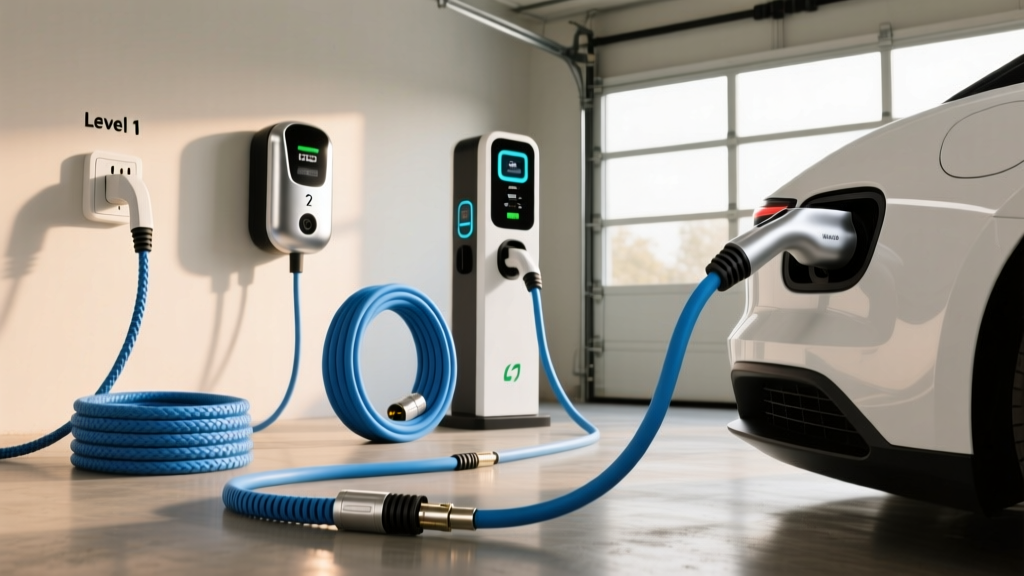
Before ranking brands, a quick literacy check on charging levels. Power is measured in kW (how fast energy flows); energy is measured in kWh (how much your battery holds). A 75 kWh battery charging at 7.2 kW takes roughly 10 hours from empty to full — fine overnight, painful on a lunch stop.
| Level | Voltage / Amps | Power (kW) | Miles of Range Added per Hour | Typical Use Case | Hotel Availability in Canada |
|---|---|---|---|---|---|
| Level 1 | 120V / 12A | 1.4 kW | 3–5 mi/hr | Emergency top-up, PHEVs | Rare (standard outlet in garage) |
| Level 2 | 208–240V / 30–48A | 7.2–11.5 kW | 25–45 mi/hr | Overnight, workplace, hotels | Most common hotel offering |
| DC Fast (Level 3) | 400–800V DC | 50–350 kW | 150–1,000+ mi/hr | Highway travel, 10–80% in 18–45 min | Very rare at hotels; common at highway rest stops |
Real-world example: a 2026 Hyundai Ioniq 5 (84 kWh usable battery, NMC chemistry, EPA 305 mi range) plugged into a hotel's 7.7 kW Level 2 charger will recover from 20% to 80% SoC in roughly 6.5 hours — perfect for a night's sleep. On a 350 kW DC fast charger, the same 20–80% jump takes about 18 minutes thanks to its 800V architecture (source: Hyundai News).
The Best Hotel Parent Brands in Canada for EV Charging, Ranked
We evaluated the six largest hotel parent brands operating in Canada by three criteria: number of properties listing EV chargers on their booking platforms, typical charger power (kW), and reliability signals (network brand, connector type, guest reviews on PlugShare). Here is how they stack up in 2026.
1. Marriott International (Marriott, Sheraton, Westin, Delta, Courtyard, Fairfield)
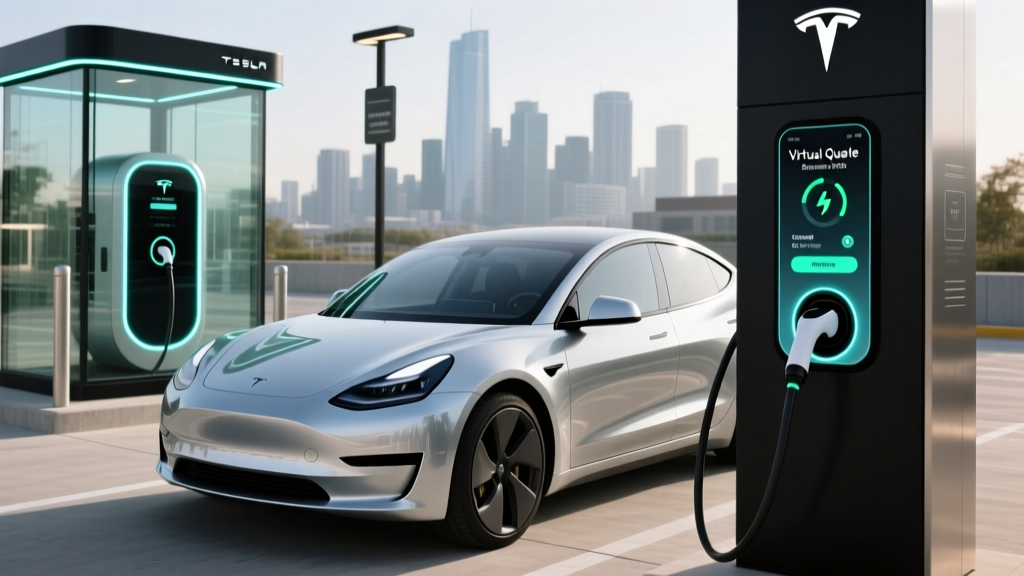
Marriott leads in Canada by sheer volume. Select-service brands like Courtyard and Fairfield in BC and Ontario increasingly feature 7.7–11.5 kW Level 2 ChargePoint or Flo units, often with J1772 connectors (NACS adapters included at Tesla-heavy properties). Premium brands (Westin, Delta) in downtown Vancouver, Toronto, and Montreal tend to have 4–8 Level 2 stalls in the parking garage, sometimes with a single 50 kW DC fast unit. Expect to pay $1.50–$2.50 CAD per hour or a flat overnight fee of $10–$20.
2. Hilton (Hilton, DoubleTree, Hampton, Homewood, Tru)
Hilton's Canadian portfolio is a mixed bag. Tru and Hampton properties along the 401 corridor and in Alberta have been retrofitting with Flo and EVduty Level 2 chargers (7.2 kW typical), but many older DoubleTree locations still rely on third-party networks in adjacent lots. Hilton's app integration with PlugShare data is improving, though — you can now filter "EV charging" in the booking flow.
3. IHG (Holiday Inn, Staybridge, Candlewood)
IHG is quietly strong in mid-market Canadian EV travel. Holiday Inn Express locations in smaller cities (Kelowna, Regina, Moncton) often have 2–4 Level 2 chargers as a competitive differentiator. Power is usually 7.2 kW on J1772, and pricing is often free for guests — a genuine perk on a long drive.
4. Accor (Fairmont, Novotel, ibis)
Fairmont's iconic properties (Banff Springs, Château Frontenac, Château Lake Louise) have installed Level 2 chargers, but the count is low relative to property size — expect 2–6 stalls at a 400-room hotel. Power is typically 7.2 kW, and in winter the cold slows charge acceptance further. Plan to arrive with at least 30% SoC as a buffer.
5. Choice Hotels (Comfort Inn, Quality Inn)
Choice is inconsistent. Some Comfort Inn locations in Ontario and Quebec have partnered with local utilities for Level 2 installs, but many do not list chargers at all. Use PlugShare to verify before booking.
6. Wyndham (Ramada, Days Inn, Super 8)
Wyndham trails the pack. A handful of Ramada properties in BC and Quebec have chargers, but it is not a brand standard. Budget travelers should assume no on-site charging and plan a DC fast stop nearby.
Connector Compatibility: Will the Hotel Charger Fit Your EV?
Canadian hotel chargers in 2026 are overwhelmingly J1772 (Level 2) or CCS1 (DC fast). Tesla's NACS connector is now the North American standard for new vehicles (Ford, GM, Rivian, Volvo, and others have switched), but hotel infrastructure lags vehicle adoption by 2–4 years. Here is what you need to know:
| Connector | Used By | Hotel Prevalence | Adapter Needed? |
|---|---|---|---|
| J1772 (Level 2) | All non-Tesla EVs (pre-2025); Teslas with adapter | ~90% of hotel Level 2 chargers | Tesla owners: use included J1772-to-NACS adapter |
| NACS (Tesla) | Tesla; 2025+ Ford, GM, Rivian, Volvo, etc. | Rare at hotels (mostly Tesla Destination Chargers) | Non-Tesla NACS vehicles: limited hotel options |
| CCS1 (DC Fast) | Most non-Tesla EVs | ~85% of hotel DC fast chargers (where present) | None for CCS vehicles; Tesla: use CCS adapter |
| CHAdeMO (DC Fast) | Nissan Leaf, Mitsubishi Outlander PHEV (legacy) | Declining; ~10% of older DC fast installs | None for CHAdeMO vehicles; no adapter exists to CCS |
Practical tip: if you drive a Tesla, carry the J1772-to-NACS adapter (included with the vehicle). It unlocks virtually every Level 2 hotel charger in Canada. Non-Tesla NACS vehicles (2025+ F-150 Lightning, Equinox EV, etc.) should confirm NACS or J1772 availability before booking, as many hotels have not yet upgraded to native NACS connectors.
How Much Does Hotel EV Charging Actually Cost?
Pricing at Canadian hotels varies widely — and sometimes not in your favor. Here are the common models you will encounter:
- Free for guests: Common at Holiday Inn Express, some Hampton Inns. Usually 7.2 kW, limited to 2–4 stalls.
- Flat overnight fee: $10–$25 CAD, regardless of kWh drawn. Good value if you charge 40+ kWh.
- Per-hour billing: $1.50–$3.00 CAD/hour. Adds up if you plug in for 10 hours.
- Per-kWh billing: $0.25–$0.45 CAD/kWh via ChargePoint or Flo app. This is the most transparent and usually the most expensive.
| Scenario | Price per kWh / Liter | Vehicle Efficiency | Cost per Mile (CAD) |
|---|---|---|---|
| Hotel Level 2 (free overnight) | $0.00/kWh | 3.0 mi/kWh | $0.00 |
| Hotel Level 2 (flat $15 fee, 45 kWh charged) | $0.33/kWh effective | 3.0 mi/kWh | $0.11 |
| Hotel Level 2 (per-kWh, $0.38 CAD) | $0.38/kWh | 3.0 mi/kWh | $0.13 |
| Public DC fast (Petro-Canada, $0.55 CAD/kWh) | $0.55/kWh | 3.0 mi/kWh | $0.18 |
| Home Level 2 (off-peak, $0.08 CAD/kWh) | $0.08/kWh | 3.0 mi/kWh | $0.03 |
| Gas car (8.0 L/100 km, $1.55 CAD/L) | $1.55/L | 29 mpg | $0.19 |
The takeaway: even paid hotel Level 2 charging is cheaper per mile than gas, and free hotel charging is essentially a $15–$25 nightly discount on your room. For context, fueleconomy.gov data shows the average EV costs roughly $0.04–$0.06 USD per mile on home electricity versus $0.12–$0.16 for a 25 mpg gas car.
Home Charging Setup: What You Actually Need (If the Hotel Isn't Your Primary Source)
Hotel charging is a convenience, not a strategy. Most Canadian EV owners do 85–95% of their charging at home. Here is what a proper Level 2 home install looks like in 2026, including the costs that catch first-time buyers off guard.
Electrical Requirements
A typical Level 2 home charger needs a dedicated 240V circuit at 40A (delivering 9.6 kW continuous) or 48A (11.5 kW). Your electrical panel must have spare capacity — usually 200A service minimum. Homes with 100A panels (common in pre-1990 builds in Montreal, Halifax, and Winnipeg) often require a panel upgrade ($2,000–$4,500 CAD) before a charger can be installed.
| Component | Typical Cost (CAD) | Notes |
|---|---|---|
| Level 2 charger unit (40–48A) | $650–$1,200 | ChargePoint Home Flex, Emporia Level 2, Flo Home X5 |
| Electrician labor (4–8 hours) | $800–$2,500 | Depends on run length from panel to garage |
| Electrical permit | $100–$300 | Required in all provinces; inspection included |
| Panel upgrade (if needed) | $2,000–$4,500 | 100A → 200A; common in older homes |
| Total (no panel upgrade) | $1,550–$4,000 | Most homes with 200A service |
| Total (with panel upgrade) | $3,550–$8,500 | Older homes, longer wire runs |
Provincial rebates can offset $250–$1,000 of this cost (e.g., Quebec's Roulez vert program, BC's CleanBC rebate). Always confirm current incentive amounts on official provincial sites, as these change annually.
Equipment Recommendations
Three Level 2 chargers dominate the Canadian market in 2026 for good reason:
- ChargePoint Home Flex ($999 CAD): Up to 50A (12 kW), 23-foot cable, NACS or J1772 connector options, Wi-Fi scheduling for off-peak rates, NEMA 14-50 plug or hardwired. The default recommendation for most buyers.
- Emporia Level 2 Smart Charger ($649 CAD): 48A (11.5 kW), 24-foot cable, J1772 connector (NACS adapter available), integrates with Emporia home energy monitor, excellent value.
- Flo Home X5 ($1,199 CAD): 48A, 25-foot cable, J1772, built in Quebec, cold-weather rated to -40°C, hardwired only. The pick for prairie and northern Canadian installs where cold resilience matters.
Safety and Code Considerations
Every Canadian province requires a licensed electrician and an ESA (or provincial equivalent) inspection for Level 2 charger installs. Key code requirements:
- Dedicated circuit — no sharing with dryer or HVAC.
- GFCI breaker for outdoor installs (required by Canadian Electrical Code since 2018).
- NEMA 4 (outdoor) rated enclosure if the charger is exposed to weather.
- Load management device if your panel is near capacity (avoids a full panel upgrade in some cases).
Planning a Canadian EV Road Trip: Hotel Charging + DC Fast Strategy
Here is the decision framework we use for trans-Canada EV trips:
Choose hotel Level 2 charging as your primary overnight strategy if:
- You are staying 8+ hours at the property.
- Your next-day driving leg is under 250 km (highway, cold weather adjusted).
- You can confirm charger availability and power (kW) on PlugShare before booking.
Plan a DC fast charging stop (50–350 kW) in addition to hotel charging if:
- Your next-day leg exceeds 300 km.
- You are driving in winter (add 25–35% range buffer for cold).
- The hotel only has 1–2 chargers (risk of them being occupied or broken).
- You are towing (range drops 30–50% at highway speeds with a trailer).
Use the PlugShare app to verify charger status, read recent user check-ins, and confirm whether the hotel charger is guest-only or public-access. A charger listed as "guest only" but actually in a public lot is a common frustration.
Frequently Asked Questions
How much does it cost to install a home EV charger in Canada?
Expect $1,550–$4,000 CAD for a standard Level 2 install in a home with adequate 200A panel capacity. If your home needs a panel upgrade (common in pre-1990 builds), add $2,000–$4,500, bringing the total to $3,550–$8,500. Provincial rebates can offset $250–$1,000.
How fast will each charging level add range to my EV?
Level 1 (120V, 1.4 kW) adds 3–5 miles per hour — essentially useless for BEVs. Level 2 (240V, 7.2–11.5 kW) adds 25–45 miles per hour, which is ideal for overnight hotel and home charging. DC fast charging (50–350 kW) adds 150–1,000+ miles per hour, with a typical 10–80% charge taking 18–45 minutes depending on vehicle architecture and charger power.
Which connector is compatible with my EV at Canadian hotels?
Most Canadian hotel Level 2 chargers use the J1772 connector, which works with all non-Tesla EVs natively and with Teslas via the included J1772-to-NACS adapter. DC fast chargers at hotels (rare) are mostly CCS1. CHAdeMO is declining and limited to older Nissan Leaf and Mitsubishi models.
How much does charging cost per mile compared to gas?
Home Level 2 charging at off-peak rates ($0.08 CAD/kWh) costs roughly $0.03 per mile in an efficient EV (3 mi/kWh). Hotel Level 2 at $0.38/kWh costs about $0.13 per mile. A comparable gas car at 8.0 L/100 km and $1.55/L costs about $0.19 per mile. EVs win on cost in nearly every charging scenario except the most expensive public DC fast networks.
What electrical upgrades might I need for a home charger?
The most common upgrade is a panel replacement from 100A to 200A service ($2,000–$4,500 CAD), required in many older Canadian homes. You may also need a load management device if your panel is near capacity but replacement is impractical. A licensed electrician will assess this during a site visit — do not skip the assessment.
Are Canadian hotel EV chargers reliable in winter?
Generally yes, but cold temperatures slow charge acceptance. A battery at -20°C may accept only 50–60% of its rated Level 2 power until it warms up. Precondition your battery (if your EV supports it) before arriving, and plan for 20–30% slower charging in deep cold. Flo and ChargePoint units rated to -40°C perform better than budget chargers in prairie winters.
Bottom Line: Book the Hotel, But Bring a Backup Plan
Marriott, Hilton, and IHG are the most reliable hotel parent brands in Canada for EV charging in 2026, with Level 2 infrastructure at a growing share of their Canadian properties. But "EV charging" on a booking page is not a guarantee — verify the charger count, power (kW), connector type, and pricing on PlugShare before you commit. And for any highway leg over 250 km, especially in winter, layer in a DC fast charging stop as insurance. The best Canadian EV road trips are planned with two charging options at every stop: the hotel for overnight convenience, and a nearby fast charger for peace of mind.