Open any EV owner's phone and you'll likely see a supercharging map pinned to their home screen. Whether it's the Tesla in-app map, PlugShare, A Better Routeplanner (ABRP), or the EVgo and Electrify America apps, these tools have transformed road-trip planning from a guessing game into a precise science. But a map is only as useful as your understanding of what's on the other end of that pin: the connector, the charge rate, the cost, and the reality of your vehicle's charge curve.
This guide bridges the gap between the map on your screen and the electrons flowing into your battery. We'll cover charging levels with exact speeds, home installation costs down to the permit fee, connector compatibility across every major brand, real $/kWh costs, and the equipment we'd actually bolt to our own garage walls.
Charging Levels Explained: kW, Miles Per Hour, and 10–80% Times
The single most important distinction in EV literacy is kW (kilowatts) versus kWh (kilowatt-hours). Think of kW as the speed of water flowing through a hose — it's the rate of charging. kWh is the total volume of water in the bucket — your battery's capacity. A 77 kWh battery charged at 11 kW takes roughly 7 hours from empty. That same battery at 150 kW DC fast charging can go from 10% to 80% in about 25 minutes. The energy (kWh) is the same; the power (kW) changes the clock.
| Level | Voltage | Power (kW) | Miles of Range Per Hour | Typical Use Case | 10–80% Time (75 kWh Battery) |
|---|---|---|---|---|---|
| Level 1 | 120V AC | 1.0–1.4 kW | 3–5 mi/hr | Overnight top-up, emergencies | ~50+ hours (not practical) |
| Level 2 | 240V AC | 3.3–19.2 kW | 12–75 mi/hr | Home daily charging, workplaces | ~4–8 hours (at 7.2–11.5 kW) |
| DC Fast (Level 3) | 400–800V DC | 50–350 kW | 150–300+ mi/hr | Road trips, highway corridors | ~18–40 minutes (varies by vehicle) |
A few real-world caveats. DC fast charging doesn't sustain peak rates — a vehicle rated for 250 kW peak may only hold that rate for the first 10–15% of the session before tapering. This is the charge curve, and it's why we measure fast-charging speed in 10–80% time, not peak kW. Cold batteries also charge slower; preconditioning (warming the battery before arrival via your car's navigation routing) can shave 10–15 minutes off a session in winter.
Reading the Supercharging Map: Networks, Filters, and Reliability
Modern supercharging maps aggregate data from multiple networks. Here's what you're actually looking at when you tap a pin:
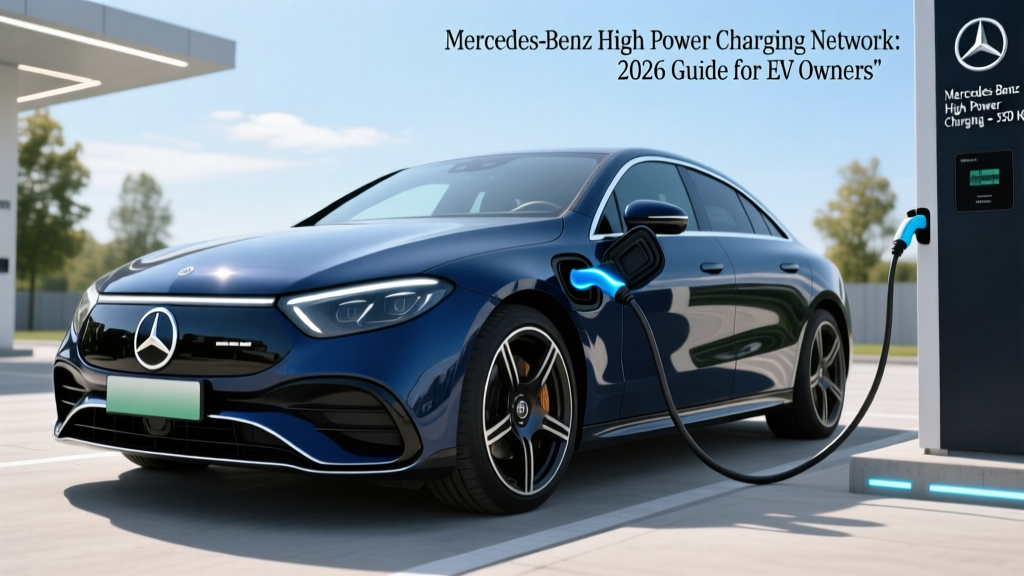
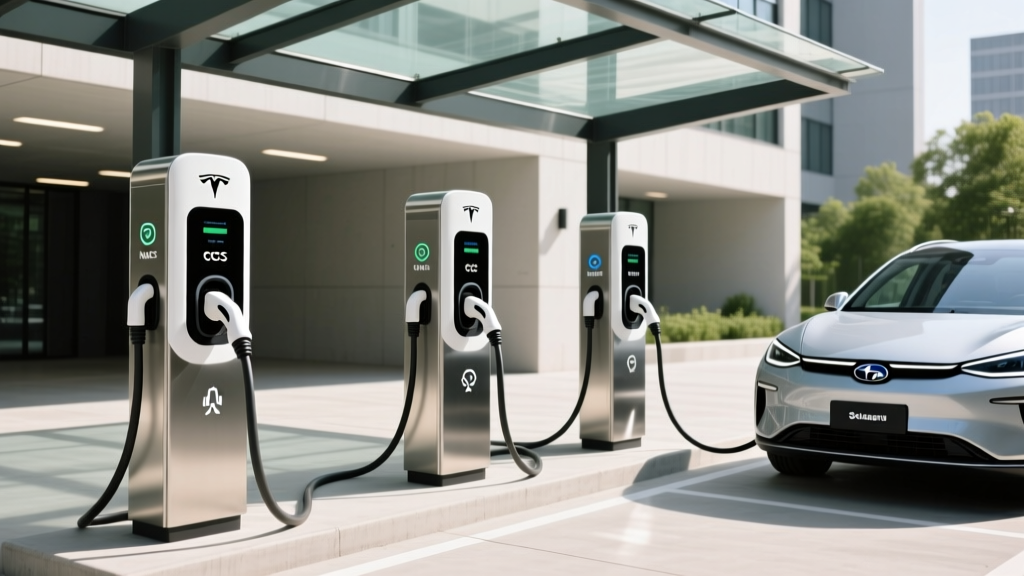
- Tesla Supercharger network: Over 50,000 stalls globally, now open to non-Tesla EVs via the built-in Magic Dock CCS adapter at select stations or through a Tesla NACS adapter. V2 stalls peak at 150 kW; V3 stalls at 250 kW; V4 (rolling out through 2026) targets up to 350 kW with CCS2/NACS native cabling.
- Electrify America: CCS1 and NACS connectors at newer stations, peak 150–350 kW. Reliability has improved with their 2025 station refresh, but check the app for real-time stall status.
- EVgo: Mixed 50–350 kW stalls, many co-located with retail partners. Increasingly adding NACS connectors.
- ChargePoint: Dominant in Level 2 destination charging and growing DC fast presence.
- PlugShare / ABRP: Aggregator maps that show all networks, user-reported status, and photos. Essential for trip planning in rural corridors.
When planning a road trip using a supercharging map, filter by your connector type, minimum charge speed (set 100 kW+ for highway stops), and check recent user comments for broken stalls. A 350 kW pin on the map doesn't help if your vehicle maxes out at 135 kW DC — match the station to your car's charge rate.
Home Charger Installation: Electrical Requirements, Costs, and Panel Gotchas
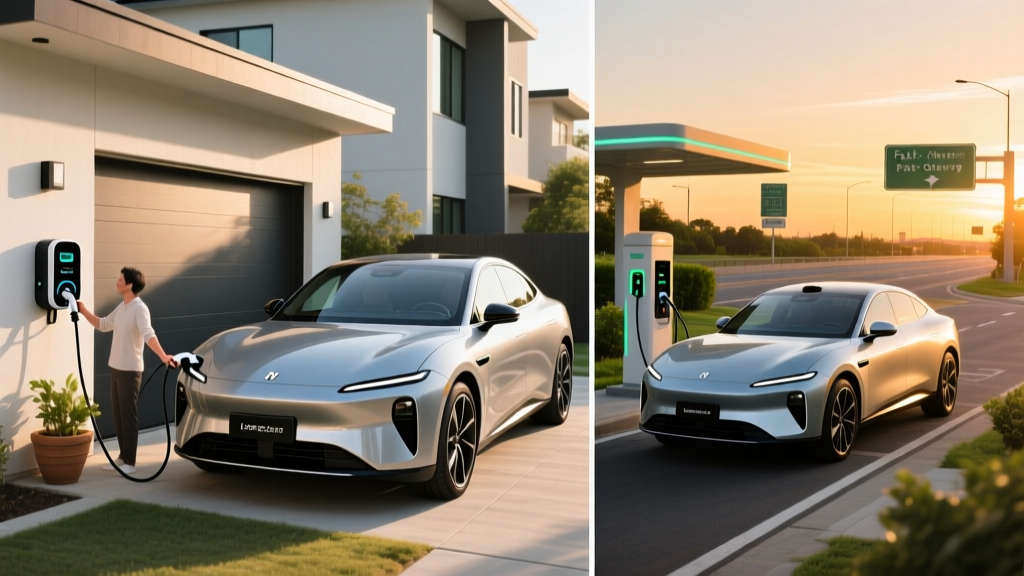
Home Level 2 charging is where 80–90% of all EV charging happens for owners with garage or driveway access. Here's what the installation actually involves.
Electrical Requirements
A typical Level 2 home charger runs on a 240V dedicated circuit, the same voltage as your electric dryer or oven. Common amperage configurations:
- 40A circuit / 32A continuous → 7.7 kW output (most common, suits most homes)
- 50A circuit / 40A continuous → 9.6 kW output (faster, requires thicker wire)
- 60A circuit / 48A continuous → 11.5 kW output (maximum for most residential chargers)
- 80A circuit / 64A continuous → 15.4–19.2 kW (requires 100A-rated hardwire; limited vehicle acceptance)
National Electrical Code (NEC) requires EV circuits to be sized at 125% of the continuous load — so a charger drawing 32A continuous needs a 40A breaker. Your electrician will verify this.
Installation Cost Breakdown
| Component | Simple Install (Panel Nearby) | Complex Install (Long Run / Panel Upgrade) |
|---|---|---|
| Level 2 Charger (Equipment) | $350–$700 | $350–$700 |
| Electrician Labor (2–4 hrs typical) | $300–$800 | $800–$2,500 |
| Electrical Permit | $50–$200 | $50–$300 |
| Panel Upgrade (100A → 200A, if needed) | N/A | $1,500–$4,000 |
| Conduit, Wire, Mounting Hardware | $50–$200 | $200–$800 |
| Total Estimated Cost | $750–$1,900 | $2,900–$8,300 |
The biggest variable is whether your electrical panel has spare capacity. A modern 200A panel with open breaker slots can often accommodate a 40–60A EV circuit with minimal work. Older homes with 100A service may need a panel upgrade — this is the $1,500–$4,000 surprise that catches buyers off guard. Ask your electrician to perform a load calculation before quoting. Some utilities offer panel-upgrade rebates that offset this cost.
The federal Residential Clean Energy Credit does not cover EV chargers as of 2026 (the prior §30C alternative fuel refueling property credit expired for most taxpayers). However, many state utilities and local municipalities offer $250–$1,000 rebates for Level 2 equipment and installation — check your utility's website or the AFDC state incentive database.
Connector Compatibility: NACS, CCS1, and CHAdeMO in 2026
The connector landscape has consolidated dramatically. Here's where things stand for the 2026 model year:
| Connector | Brands Using It (Native) | Notes |
|---|---|---|
| NACS (Tesla / SAE J3400) | Tesla, Ford, GM, Rivian, Volvo, Polestar, Mercedes-Benz, Fisker, Lucid (2025+) | Now the dominant North American standard. Access to Tesla Supercharger network native. |
| CCS1 (Combined Charging System) | Hyundai, Kia, BMW, VW, Audi, Porsche, Stellantis, Subaru, Toyota (bZ series) | Still widely available at public stations. NACS adapter required for Supercharger access. |
| CHAdeMO | Nissan (Ariya moved to CCS; Leaf discontinued) | Effectively legacy. Few new vehicles. Stations still exist but not expanding. |
Adapter reality check: If you drive a CCS1-equipped EV (say, a 2026 Hyundai Ioniq 5), you can purchase a NACS-to-CCS adapter (~$200–$300) from Tesla or third-party suppliers to access Supercharger stalls. Ford and GM provide these adapters with vehicle purchase. Always verify the adapter is rated for the full DC fast-charge amperage — cheap adapters can bottleneck your charge speed or pose a thermal risk.
Cost to Charge: $/kWh Scenarios and Cost Per Mile vs Gas
Charging cost varies enormously depending on where and when you plug in. Here are realistic 2026 scenarios based on national averages:
| Scenario | Avg $/kWh | Cost to Add 200 Miles (at 3 mi/kWh) | Cost Per Mile |
|---|---|---|---|
| Home, Off-Peak (Time-of-Use Rate) | $0.08–$0.12 | $5.33–$8.00 | $0.027–$0.040 |
| Home, Standard Residential Rate | $0.14–$0.18 | $9.33–$12.00 | $0.047–$0.060 |
| Public Level 2 (ChargePoint, etc.) | $0.20–$0.35 | $13.33–$23.33 | $0.067–$0.117 |
| DC Fast Charging (Electrify America, EVgo) | $0.35–$0.55 | $23.33–$36.67 | $0.117–$0.183 |
| Tesla Supercharger (varies by location) | $0.25–$0.40 | $16.67–$26.67 | $0.083–$0.133 |
Gas comparison: A comparable gasoline vehicle averaging 28 MPG combined at $3.40/gallon spends roughly $0.121/mile on fuel. Home off-peak EV charging at $0.10/kWh costs $0.033/mile — a 73% savings per mile driven. Even public DC fast charging at $0.45/kWh ($0.15/mile) is in the same ballpark as gas, and most EV owners do 85%+ of their charging at home.
To maximize savings, enroll in your utility's time-of-use (TOU) plan and schedule charging for overnight hours (typically 11 PM – 6 AM). Most Level 2 chargers and EV infotainment systems support scheduled charging natively.
Equipment Recommendations: Level 2 Chargers We'd Install
After testing dozens of units across multiple homes and vehicles, here are the Level 2 chargers that earn our recommendation based on build quality, smart features, and value:
ChargePoint Home Flex
- Power: Up to 12 kW (50A circuit, adjustable down to 16A)
- Connector: NACS or J1772 (configurable)
- Cable Length: 23 ft
- Smart Features: Wi-Fi, app scheduling, Alexa, energy tracking
- Price: ~$550–$650
- Verdict: Best all-around flexibility. Amperage is DIP-switch adjustable to match your circuit.
Wall Connector (Tesla, Gen 3.5 / J3400)
- Power: Up to 11.5 kW (48A continuous, 60A circuit)
- Connector: Native NACS
- Cable Length: 24 ft
- Smart Features: Wi-Fi, OTA updates, Power Sharing (link multiple units), vehicle integration
- Price: ~$475
- Verdict: Best value for NACS-native vehicles. Seamless Tesla integration; works with non-Tesla NACS EVs.
Emporia Vue Level 2 Charger
- Power: Up to 11.5 kW (48A, 60A circuit)
- Connector: J1772 (NACS adapter available)
- Cable Length: 24 ft
- Smart Features: Wi-Fi, app scheduling, integrates with Emporia energy monitor for solar-aware charging
- Price: ~$350–$400
- Verdict: Best budget smart charger. Ideal if you have solar panels and want excess-solar-only charging.
For hardwired installations (recommended for 48A+ chargers), your electrician will bypass the plug and wire directly into a junction box — this is safer and avoids the NEMA 14-50 receptacle loosening issue that has caused thermal events with high-amperage plug-in setups. If you choose a plug-in unit, use a commercial-grade NEMA 14-50R outlet (Hubbell or Bryant brand, ~$50–$75) rather than a residential-grade receptacle.
Safety, Code, and Permit Essentials
EV charging is a high-draw, continuous electrical load — it runs at full amperage for hours. This makes code compliance non-negotiable:
- Dedicated circuit: Your EV charger must have its own breaker — no sharing with other appliances. This prevents overload trips and thermal buildup.
- GFCI protection: NEC 2023/2026 requires GFCI (Ground Fault Circuit Interrupter) protection for all EV charging outlets. Hardwired units often have internal GFCI, but plug-in 14-50 outlets require a GFCI breaker (~$50–$80 additional).
- Outdoor rating: If your charger is installed outside, both the unit and the receptacle must carry a NEMA 3R or 4 (weatherproof) rating. All chargers recommended above are outdoor-rated.
- Permit and inspection: Virtually all jurisdictions require an electrical permit for a new 240V circuit. The permit ($50–$300) triggers an inspection that verifies wire gauge, breaker sizing, grounding, and GFCI compliance. Do not skip this — unpermitted work can void homeowner's insurance claims and create a fire hazard.
- Wire gauge: 6 AWG copper for 50A circuits; 4 AWG for 60A circuits. Aluminum wire is cheaper but requires larger gauge and specific terminations — your electrician will spec this.
Frequently Asked Questions
How much does it cost to install a home EV charger?
A straightforward installation with a nearby 200A panel and short wire run typically costs $750–$1,900 all-in (charger + electrician + permit). Complex installs requiring long conduit runs, trenching, or a panel upgrade from 100A to 200A can reach $2,900–$8,300. Always get a load calculation and itemized quote from a licensed electrician before committing.
How fast will each charging level add range?
Level 1 (120V) adds roughly 3–5 miles of range per hour — enough only for overnight top-ups on low-mileage days. Level 2 (240V) at 32A adds about 25–30 miles per hour, fully replenishing most EVs overnight. DC fast charging at 150+ kW can add 150–300 miles per hour, taking a typical 75 kWh battery from 10% to 80% in 18–35 minutes depending on the vehicle's charge curve.
Which connector/charger is compatible with my EV?
Check the fueleconomy.gov listing for your specific model year — it shows the charge port type. As of 2026, most new vehicles from Ford, GM, Rivian, Tesla, and Volvo ship with NACS. Hyundai, Kia, BMW, and VW still use CCS1. If you drive CCS1 and want Supercharger access, you'll need a CCS-to-NACS adapter ($200–$300). CHAdeMO is legacy and no longer on new vehicles beyond older Nissan Leafs still on the road.
How much does charging cost per mile vs gas?
Home off-peak charging averages $0.03–$0.04 per mile — roughly 70–75% cheaper than gasoline at $3.40/gallon and 28 MPG ($0.12/mile). Public DC fast charging at $0.40–$0.50/kWh costs $0.13–$0.17 per mile, which is comparable to or slightly more than gas. The economics strongly favor home charging; road-trip DC fast charging is a convenience premium, not a daily cost.
What electrical upgrades might I need?
The most common upgrade is a panel replacement from 100A to 200A service ($1,500–$4,000) if your existing panel lacks capacity for a new 40–60A circuit. Older homes with Federal Pacific or Zinsco panels must replace them regardless — these are known fire hazards and insurers may require it. Some utilities offer a separate meter or TOU panel for EV charging that bypasses a full upgrade; ask your utility about this option. In rare cases, the utility transformer on your street may need upgrading for multiple EV households — this is at utility expense but can delay installation.