The Adapter Landscape Has Changed Everything About EV Charging
If you bought an EV before 2025, you probably didn't think much about charging connectors. Tesla had its proprietary plug, everyone else used CCS1 or CHAdeMO, and that was that. But the industry-wide shift to the North American Charging Standard (NACS) has turned EV adapters from a niche accessory into an essential piece of ownership hardware — one that determines whether you can access 25,000+ Tesla Superchargers or get stranded at a broken CCS-only station.
As of 2026, nearly every major automaker — Ford, GM, Rivian, Hyundai, Kia, BMW, Mercedes-Benz, and others — has transitioned to NACS ports on new vehicles. That's great for buyers of new EVs. But it leaves millions of existing CCS-equipped EVs needing an adapter to access the expanding Supercharger network, and it means new NACS-equipped EVs may need a CCS adapter for older public chargers that haven't been retrofitted.
This guide covers every adapter scenario you'll face, the charging infrastructure behind them, home installation realities, and the exact costs involved. We'll keep the physics honest: kilowatts (kW) measure charging power — how fast energy flows — while kilowatt-hours (kWh) measure battery capacity — how much energy is stored. Confusing them is the single most common mistake in EV coverage, and we won't make it here.
Charging Levels: Speeds, Power, and What Adapters Apply Where
Before matching adapters to connectors, you need to understand the three charging levels and where each operates. The speeds below assume a typical mid-size EV consuming roughly 3.0–3.5 miles per kWh.
| Level | Voltage | Power (kW) | Miles Added per Hour | Typical Use | Adapter Needed? |
|---|---|---|---|---|---|
| Level 1 | 120V AC | 1.0–1.9 kW | 3–5 mi/hr | Emergency / overnight trickle | No (J1772 standard or NACS) |
| Level 2 | 240V AC | 3.3–19.2 kW | 12–75 mi/hr | Home, workplace, retail | Sometimes (J1772-to-NACS) |
| DC Fast | 400–900V DC | 50–350 kW | 150–1,000+ mi/hr (peak) | Highway / road-trip | Yes — NACS↔CCS, CHAdeMO→NACS |
Level 2 home charging at 11.5 kW (48A on a 60A circuit) adds roughly 35–42 miles of range per hour — enough to fully replenish a 75 kWh battery overnight in about 7–8 hours. DC fast charging is where adapters matter most: a CCS-equipped Ford Mustang Mach-E needing access to a V4 Supercharger requires a CCS-to-NACS adapter rated for at least 250 kW to avoid throttling the charge speed.
Connector Compatibility: Which Plug Does Your EV Use?
The connector on your vehicle determines which adapters you need. Here's the 2026 landscape by brand:
| Connector | Brands Using It (2026) | Public Network Access |
|---|---|---|
| NACS (Tesla standard) | Tesla, Ford, GM, Rivian, Hyundai, Kia, BMW, Mercedes, Volvo, Polestar, Nissan (new models) | Tesla Supercharger + growing NACS Electrify America / EVgo stalls |
| CCS1 | Pre-2025 models from VW, Audi, Ford, GM, Hyundai, Kia, BMW; most 2023–2024 EVs | Electrify America, EVgo, ChargePoint DC, Ionity (EU) |
| CHAdeMO | Nissan Leaf (legacy), Mitsubishi Outlander PHEV (older) | Declining network; limited new installations |
The critical adapter scenarios in 2026:
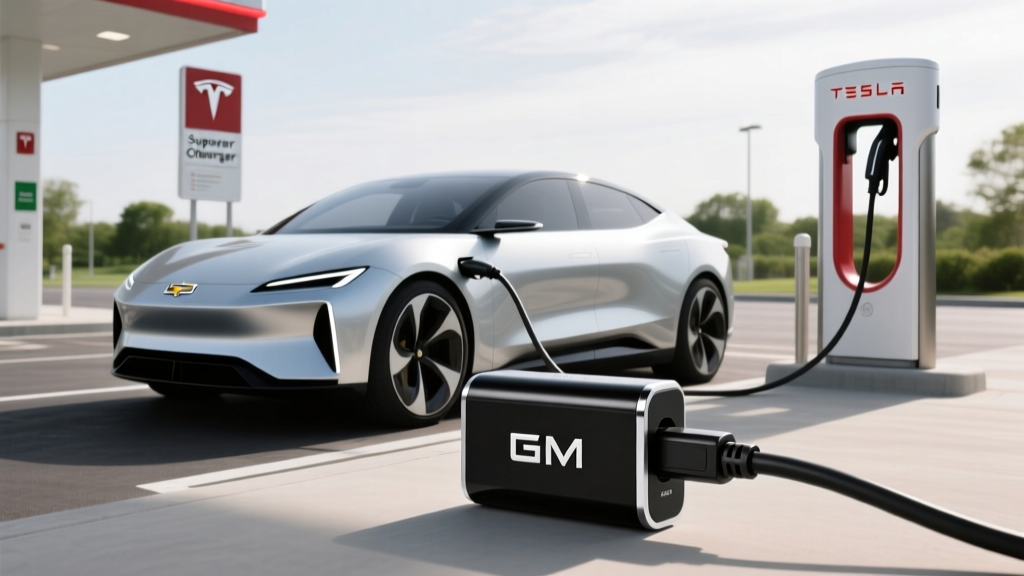
- CCS vehicle → NACS Supercharger: You need a CCS-to-NACS DC fast-charging adapter. Ford, GM, and Rivian provide or sell these for their older CCS-port vehicles. Third-party options from Lectron and A2Z exist but verify UL certification and kW rating before purchasing. Expect to pay $150–$300.
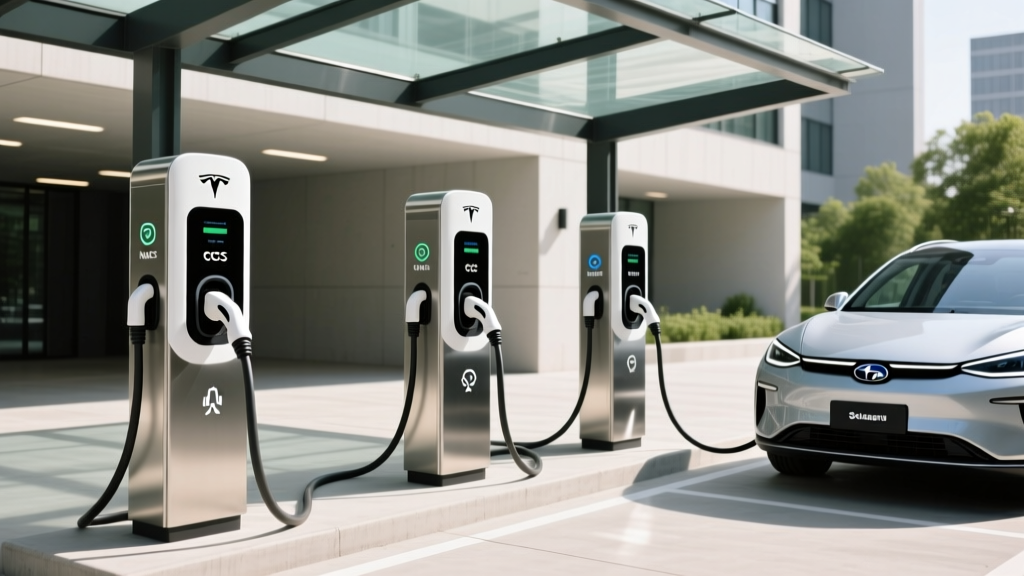
- NACS vehicle → CCS public charger: You need a NACS-to-CCS adapter. Tesla sells one for $195 rated to 250 kW. Essential if your road trip routes through Electrify America corridors that haven't added NACS cables yet.
- CHAdeMO vehicle → anything modern: CHAdeMO adapters to CCS or NACS are extremely rare and expensive ($400+). If you drive a Nissan Leaf with CHAdeMO, your DC fast-charging options are shrinking. Plan accordingly.
- Level 2 J1772 → NACS port: Most new NACS vehicles ship with a J1772-to-NACS adapter in the trunk because many public Level 2 chargers still use the J1772 connector. Tesla has included this adapter for years.
Home Charger Installation: Costs, Electrical Requirements, and Panel Upgrades
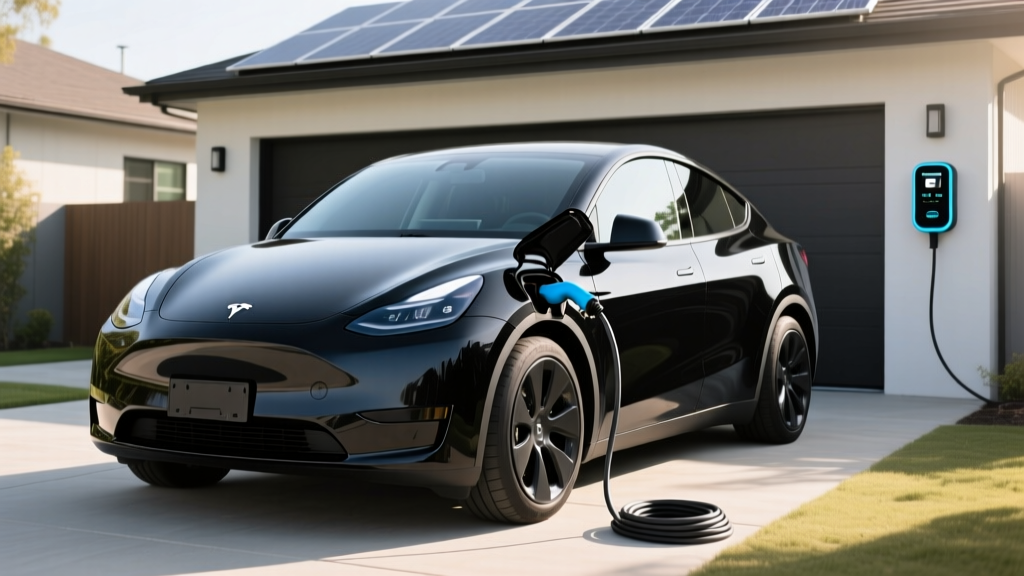
Your home charging setup is where you'll do 80–90% of your charging. Getting it right means understanding what your electrical panel can deliver and what the installation actually costs — not just the charger unit itself.
Standard Level 2 home charger requirements:
- Voltage: 240V (same as your dryer or oven)
- Circuit amperage: 40A, 50A, or 60A dedicated breaker (EVSE amperage is typically 80% of breaker rating: 48A continuous on a 60A breaker)
- Wire gauge: 6 AWG copper for 48A–60A circuits; 8 AWG for 40A
- Dedicated circuit: Required by NEC — you cannot share the circuit with other appliances
- GFCI protection: Required for outdoor installations per NEC 2023/2026 code; many jurisdictions now require it indoors as well
| Component | Simple Install (panel nearby) | Complex Install (panel far / upgrade needed) |
|---|---|---|
| Level 2 EVSE unit (hardware) | $350–$700 | $350–$700 |
| Electrician labor (2–4 hrs simple; 6–12 hrs complex) | $400–$1,200 | $1,200–$3,500 |
| Permit and inspection | $50–$200 | $50–$200 |
| Electrical panel upgrade (100A → 200A, if needed) | N/A | $1,500–$4,000 |
| Conduit, wire, junction boxes | $100–$300 | $300–$800 |
| Total estimated cost | $900–$2,400 | $3,400–$9,200 |
The panel upgrade is the budget killer. Homes built before 1990 often have 100-amp service, and adding a 48A continuous EV load (which draws 57.6A at peak) can exceed the panel's capacity once you factor in HVAC, electric range, and dryer loads. A licensed electrician will perform a load calculation per NEC Article 220 before recommending whether an upgrade is needed. Don't skip this step — an overloaded panel is a fire risk, and your insurance company may deny a claim if work was done without a permit.
Many utility companies offer rebates of $250–$500 for Level 2 charger installation, and some states offer additional incentives. The federal Residential Clean Energy Credit does not currently cover EVSE hardware (it covers solar, battery storage, and similar), but the Alternative Fuel Vehicle Refueling Property Credit (IRC §30C) may cover up to 30% of hardware and installation costs, capped at $1,000, depending on your census tract eligibility. Consult a tax professional for your specific situation.
Equipment Picks: Level 2 Chargers Worth Buying in 2026
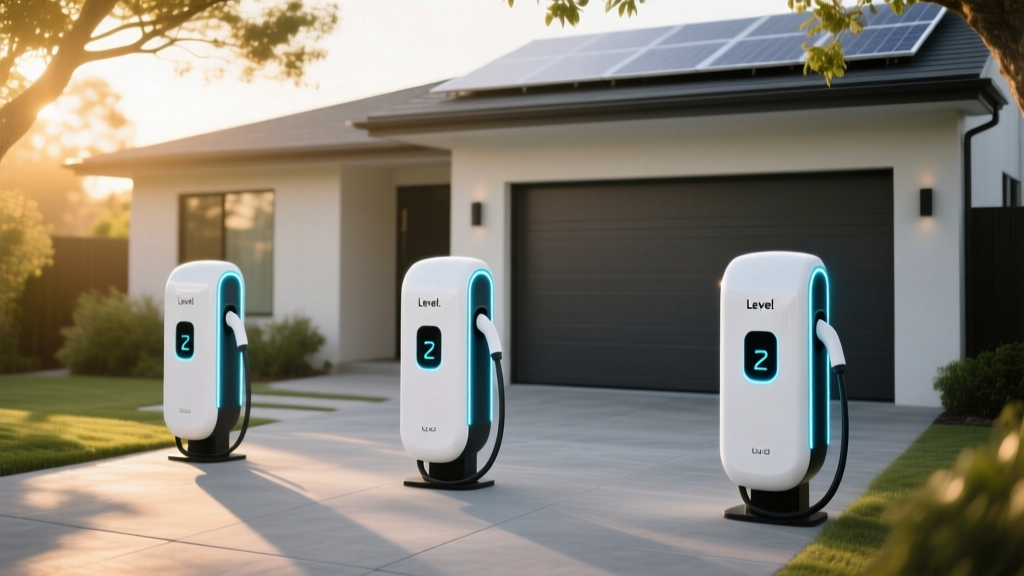
Not all Level 2 chargers are equal. The right unit depends on your vehicle's onboard charger capacity (most accept 11.5 kW / 48A; some accept 19.2 kW / 80A), your connector type, and whether you want smart scheduling for off-peak utility rates.
Best Overall: ChargePoint Home Flex
- Power output: Up to 12 kW (50A) — configurable from 16A to 50A
- Connector: NACS or J1772 (configurable)
- Cable length: 23 feet
- Smart features: Wi-Fi, app scheduling, utility rate optimization, Alexa
- UL listed: Yes, indoor/outdoor rated (NEMA 4)
- Price: ~$550–$650
Best for NACS Vehicles: Tesla Wall Connector
- Power output: Up to 11.5 kW (48A)
- Connector: NACS native — no adapter needed for Tesla or new NACS vehicles
- Cable length: 24 feet
- Smart features: Wi-Fi, OTA updates, Power-Share between two units, load management
- UL listed: Yes, indoor/outdoor rated
- Price: ~$450–$500
Best for High-Capacity Onboard Chargers: Grizzl-E Smart
- Power output: Up to 19.2 kW (80A) on compatible circuits
- Connector: J1772 or NACS
- Cable length: 24 feet
- Smart features: OCPP-compatible, works with utility demand-response programs
- UL listed: Yes, NEMA 4X (extreme outdoor rated, -40°F)
- Price: ~$600–$750
If you drive a CCS-equipped vehicle and want maximum flexibility at home, buy a J1772 charger and use your car's included J1772-to-CCS adapter (or a J1772-to-NACS adapter for newer vehicles). This avoids buying a hardwired NACS charger you can't plug your current car into without a separate adapter.
Charging Cost per Mile: Home vs. Public vs. Gas
The economics of EV charging depend entirely on where you charge. The same 75 kWh battery fill can cost $9 at home or $35 at a highway DC fast charger. Here's how the numbers stack up against gasoline for a vehicle averaging 3.2 mi/kWh (roughly 110 MPGe):
| Scenario | Price | Cost per Mile | Annual Cost (12,000 mi) |
|---|---|---|---|
| Home Level 2 (off-peak utility rate) | $0.09–$0.14/kWh | $0.028–$0.044 | $336–$528 |
| Home Level 2 (standard rate) | $0.15–$0.22/kWh | $0.047–$0.069 | $564–$828 |
| Public Level 2 (ChargePoint, EVgo) | $0.25–$0.49/kWh | $0.078–$0.153 | $936–$1,836 |
| DC Fast Charging (Electrify America, Tesla) | $0.32–$0.56/kWh | $0.100–$0.175 | $1,200–$2,100 |
| Gasoline (28 MPG combined, $3.40/gal) | $3.40/gallon | $0.121 | $1,457 |
The takeaway: home charging on off-peak rates makes EVs dramatically cheaper to fuel — roughly a third of the cost of gasoline. But if you rely exclusively on public DC fast charging, your per-mile cost can exceed gasoline. This is why home charger installation isn't just a convenience — it's the economic backbone of EV ownership.
For charging time context, here's what a typical 10–80% DC fast-charge session looks like by vehicle class, assuming the vehicle's peak charge rate is sustained to ~50% SoC and then tapers (which all lithium-ion batteries do to protect cell longevity):
- Hyundai Ioniq 5 (84 kWh, NMC, 240 kW peak): 10–80% in ~18 minutes on a 350 kW charger; ~25 minutes on a 150 kW charger
- Tesla Model Y (75 kWh, LFP/NMC, 250 kW peak): 10–80% in ~20 minutes on a V3 Supercharger
- Ford F-150 Lightning (131 kWh extended, NMC, 155 kW peak): 10–80% in ~41 minutes on a 150+ kW charger
- Chevrolet Equinox EV (85 kWh, NMC, 150 kW peak): 10–80% in ~30 minutes on a 150+ kW charger
That taper above 80% is significant. Charging from 80–100% can take as long as the 10–80% session. On road trips, the efficient strategy is to charge to 80% and drive — don't sit at the charger waiting for a full battery.
Safety, Code, and the Install Mistakes That Cost Thousands
EV charging draws sustained high current for hours — something most household circuits never do. A dryer cycles on and off; an EV charger pulls 40–48 amps continuously for 6–10 hours. This makes proper installation non-negotiable.
Non-negotiable safety requirements:
- Dedicated circuit: Your EVSE must have its own breaker — no shared circuits with laundry, HVAC, or kitchen loads.
- Correct wire gauge: Undersized wire causes voltage drop and heat buildup inside walls. A 48A continuous load requires wire rated for 60A (6 AWG copper minimum in most jurisdictions).
- Torque-rated connections: Loose terminal connections arc under sustained load. Licensed electricians use torque screwdrivers to spec — this isn't a DIY wire-nut job.
- GFCI protection: Required outdoors per NEC and increasingly indoors. EVSE units have built-in ground-fault protection, but the breaker may also need GFCI depending on local code.
- Outdoor rating: If your charger mounts outside, it must carry at minimum a NEMA 4 rating (weatherproof). NEMA 4X adds corrosion resistance for coastal or road-salt environments.
- Permit and inspection: Most jurisdictions require an electrical permit for EVSE installation. Skipping it risks failed insurance claims and code violations at resale. The inspection typically costs $50–$150 and takes 15 minutes — there's no reason to skip it.
The most expensive mistake we see: homeowners who buy a 48A charger, install it on a panel with only 20A of spare capacity, and then discover they need a $3,000 panel upgrade after the charger is mounted. Get the load calculation done first. A reputable electrician will do this before quoting the job.
Frequently Asked Questions
How much does it cost to install a home EV charger?
A straightforward Level 2 installation with the electrical panel nearby and sufficient spare capacity runs $900–$2,400 including equipment, labor, and permit. If your panel needs upgrading from 100A to 200A service, or the charger location is far from the panel requiring extensive conduit runs, expect $3,400–$9,200. Always get a load calculation before purchasing hardware.
How fast will each charging level add range?
Level 1 (120V) adds 3–5 miles per hour — suitable only for plug-in hybrids or emergency trickle charging. Level 2 (240V) at 48A/11.5 kW adds roughly 35–42 miles per hour for most EVs, fully replenishing overnight. DC fast charging at 150–350 kW adds 150–1,000+ miles per hour at peak, though the rate tapers significantly above 50–60% state of charge. A 10–80% session takes 18–41 minutes depending on the vehicle's battery size and peak charge rate.
Which connector and charger is compatible with my EV?
Check your vehicle's charge port. If it's a 2025+ model from Ford, GM, Rivian, Hyundai, Kia, BMW, or most other brands, it likely has NACS. Older models (2024 and earlier, non-Tesla) typically have CCS1. The Nissan Leaf uses CHAdeMO. For home Level 2 charging, your vehicle either accepts J1772 directly or needs the J1772-to-NACS adapter that ships with most new NACS vehicles. For DC fast charging on road trips, match your vehicle's port to the station's connector — and carry the appropriate adapter.
How much does charging cost per mile vs. gas?
Home charging on off-peak utility rates costs roughly $0.03–$0.04 per mile — about a third of gasoline at $3.40/gallon in a 28 MPG vehicle ($0.12/mile). Public DC fast charging costs $0.10–$0.18 per mile, which can equal or exceed gasoline. The financial case for EV ownership depends heavily on reliable home charging access.
What electrical upgrades might I need?
The most common upgrade is an electrical panel replacement from 100A to 200A service, costing $1,500–$4,000. You may also need a dedicated 240V circuit run with 6 AWG wire, a new breaker, and possibly a sub-panel if your main panel is full. Homes with existing 200A service and spare breaker slots typically need no panel upgrade. Always have a licensed electrician perform an NEC Article 220 load calculation before committing to a charger purchase.