Why High-Range EVs Demand a Smarter Charging Strategy
If you're shopping for the longest range EV of 2025, you've likely seen the headline numbers: the Lucid Air Grand Touring at an EPA-estimated 516 miles, the Tesla Model S Long Range at 402 miles, and the Rivian R1T Dual-Motor Max Pack at 420 miles. But a massive battery pack—often 100 kWh or more—changes the charging equation entirely. A larger battery means longer charge sessions at lower power levels, greater sensitivity to charging-curve tapering, and higher home electrical demands to make daily top-ups practical.
This guide breaks down exactly how to charge today's longest-range electric vehicles at home and on the road, with precise kW speeds, installation costs, connector compatibility, and real-world cost-per-mile comparisons. We'll also clarify the single most common EV literacy gap: the difference between kW (power, or how fast energy flows) and kWh (energy, or how much the battery holds). Think of kW as the width of a hose and kWh as the size of the bucket.
Charging Levels Explained: Speeds, kW, and Miles Per Hour
Every EV owner needs to understand the three charging tiers. Here's how each level performs with large-battery, long-range vehicles:
| Level | Voltage | Power (kW) | Miles of Range Added Per Hour | Best Use Case |
|---|---|---|---|---|
| Level 1 | 120V AC | 1.0–1.4 kW | 3–5 mi/hr | Emergency / overnight trickle for PHEVs |
| Level 2 | 240V AC | 7.2–19.2 kW | 25–70 mi/hr | Daily home charging, workplace, hotels |
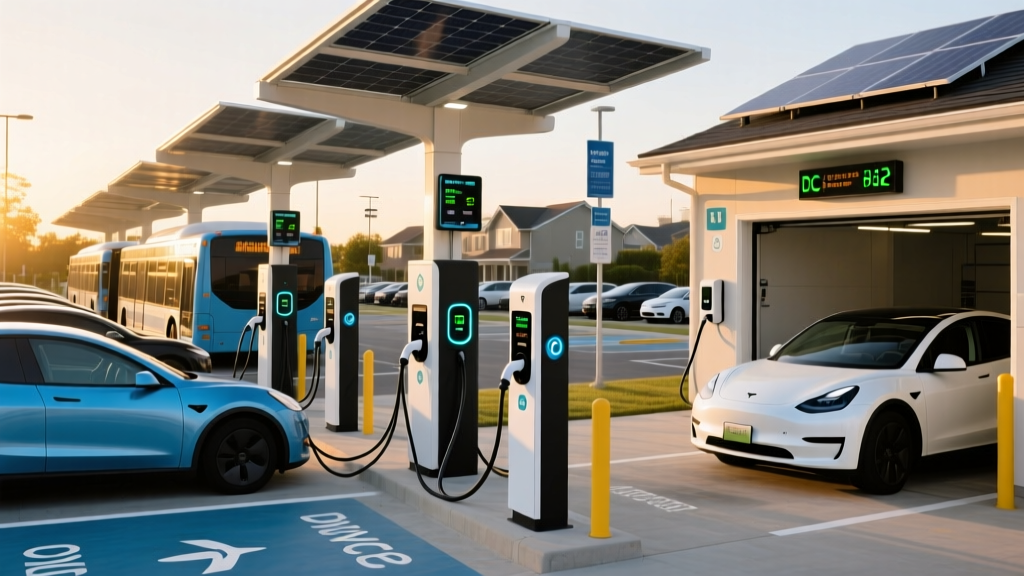
| DC Fast Charge | 400–900V DC | 50–350 kW | 150–800+ mi/hr (peak) | Road trips, rapid top-ups |
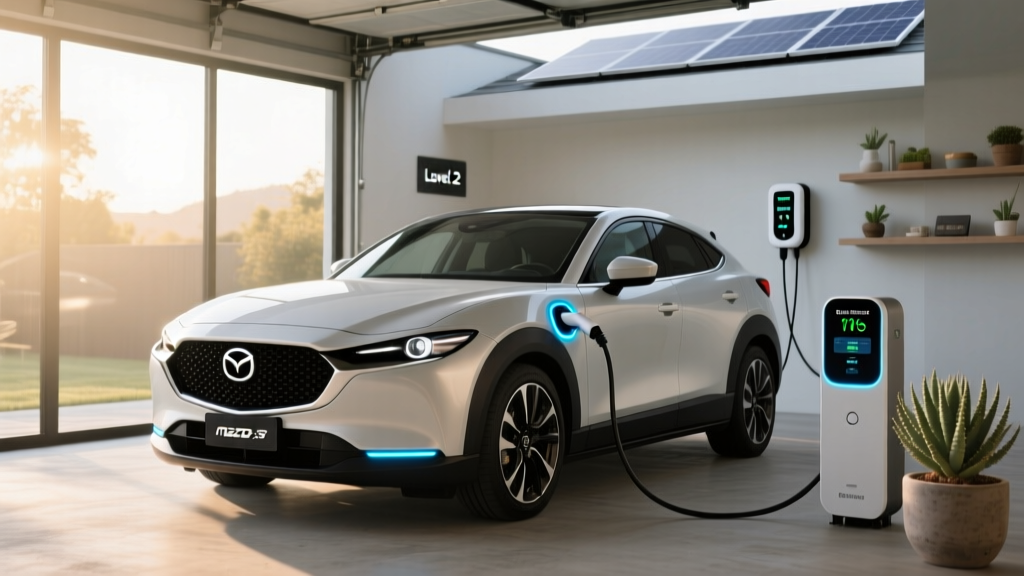
For a long-range EV with a 112 kWh usable battery like the Lucid Air Grand Touring, Level 1 charging is essentially useless for a full replenishment—it would take over 80 hours. Level 2 at 11.5 kW (a common 48-amp home charger) adds roughly 40 miles per hour, meaning an overnight session of 8 hours restores about 320 miles of range. That's practical for most daily needs.
Home Charger Installation: Electrical Requirements and Costs
Installing a Level 2 home charger is the single most impactful upgrade for any long-range EV owner. Here's what's involved electrically and financially.
Electrical Requirements
A Level 2 charger requires a dedicated 240-volt circuit. Most popular home chargers draw between 32 amps and 48 amps, which requires a circuit rated 25% higher than the continuous draw (per NEC Article 625). That means:
- 32A charger → 40A breaker, 8 AWG wire
- 40A charger → 50A breaker, 6 AWG wire
- 48A charger → 60A breaker, 4 AWG wire
Your main electrical panel must have enough spare capacity. Many modern homes have 200A service, which typically supports a 60A EV circuit. Older homes with 100A or 150A panels may require a panel upgrade—one of the most expensive variables in the installation.
Installation Cost Breakdown
| Component | Typical Cost Range | Notes |
|---|---|---|
| Level 2 Charger (Equipment) | $350–$750 | Hardwired or NEMA 14-50 plug |
| Electrician Labor (standard install) | $500–$1,500 | Depends on run length from panel to garage |
| Electrical Permit | $50–$200 | Varies by municipality |
| Panel Upgrade (if needed) | $1,500–$3,500 | 100A → 200A service upgrade |
| Total (no panel upgrade) | $900–$2,450 | Most common scenario |
| Total (with panel upgrade) | $2,400–$6,150 | Older homes, high-draw setups |
Always hire a licensed electrician and pull a permit. Unpermitted work can void home insurance claims and cause safety hazards. The IRS also requires proper installation documentation if you claim the Alternative Fuel Vehicle Refueling Property Credit (up to $1,000 for home charger equipment through 2032).
Connector Compatibility: NACS, CCS, and CHAdeMO
The connector landscape has consolidated significantly since 2024, but long-range EV shoppers still need to know what plugs into what.
| Connector | Brands Using It (2025–2026) | DC Fast Charge Networks | Adapter Needed? |
|---|---|---|---|
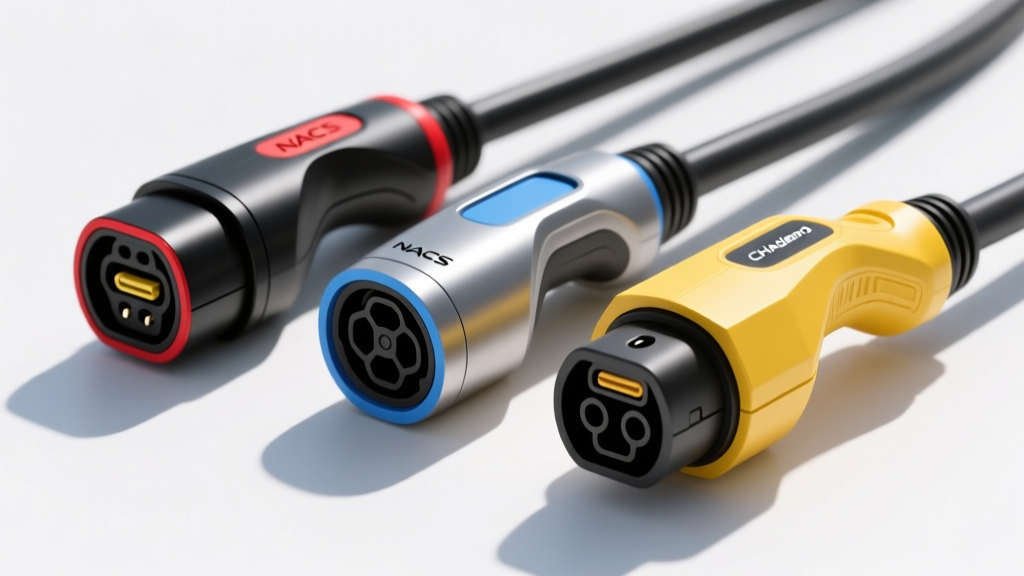
| NACS (Tesla / J3400) | Tesla, Ford, GM, Rivian, Volvo, Polestar, Hyundai, Kia, BMW (2025+) | Tesla Supercharger, Electrify America (partial), EVgo | CCS→NACS adapter included with many new models |
| CCS1 | Legacy models (pre-2025 VW ID.4, some Stellantis) | Electrify America, EVgo, ChargePoint | NACS→CCS adapter available (~$200) |
| CHAdeMO | Nissan Leaf (discontinued), Mitsubishi Outlander PHEV | Limited availability | No adapter; network shrinking |
For the longest range EVs of 2025, the picture is straightforward: the Tesla Model S uses NACS natively and accesses the Supercharger network directly. The Lucid Air ships with a CCS port but includes a NACS adapter in the box for Supercharger access. The Rivian R1T/R1S transitioned to NACS for the 2025 model year and can use Tesla Superchargers without an adapter.
Charging Times for Today's Longest-Range EVs
Peak charge rate doesn't tell the whole story. Every EV follows a charging curve: power ramps up, peaks at a moderate state of charge (SoC), then tapers significantly above 80% to protect battery longevity. Here's what real 10–80% sessions look like for top range contenders:
| Vehicle | Battery (kWh usable) | Peak DC Rate (kW) | 10–80% Time | Level 2 Time (0–100%, 11.5 kW) |
|---|---|---|---|---|
| Lucid Air Grand Touring | 112 kWh (NMC) | ~300 kW (900V architecture) | ~25 minutes | ~10 hours |
| Tesla Model S Long Range | 95 kWh (est.) | ~250 kW | ~30 minutes | ~8.5 hours |
| Rivian R1T Dual-Motor Max | 141 kWh (NMC, est.) | ~220 kW | ~42 minutes | ~12.5 hours |
| Mercedes EQS 450+ | 108 kWh (NMC) | ~200 kW | ~35 minutes | ~9.5 hours |
A few practical notes from real-world charging sessions:
- Preconditioning matters. Tesla and Lucid both warm the battery when you navigate to a DC fast charger. Arriving without preconditioning can cut peak charge rates by 30–50%, especially in cold weather.
- The taper is real. Charging from 80–100% on DC fast charge can take as long as 10–80%. For road trips, plan stops at 10–80% and move on.
- Lucid's 900V architecture gives it a genuine advantage at 350 kW chargers, sustaining higher power deeper into the charge curve than 400V competitors.
Cost Per Mile: Home Charging vs. Public vs. Gas
One of the strongest arguments for a long-range EV is the cost-per-mile advantage—if you charge strategically.
| Scenario | Rate ($/kWh) | Cost for 100 kWh Fill | Cost Per Mile (at 3.5 mi/kWh) |
|---|---|---|---|
| Home (off-peak utility rate) | $0.09–$0.14 | $9–$14 | $0.026–$0.040 |
| Home (standard residential avg.) | $0.16–$0.20 | $16–$20 | $0.046–$0.057 |
| Public Level 2 (ChargePoint, etc.) | $0.25–$0.49 | $25–$49 | $0.071–$0.140 |
| DC Fast Charge (Electrify America, EVgo) | $0.35–$0.60 | $35–$60 | $0.100–$0.171 |
| Tesla Supercharger (avg. 2025) | $0.28–$0.40 | $28–$40 | $0.080–$0.114 |
| Gasoline car (28 MPG, $3.40/gal) | — | $12.14 per gallon equiv. | $0.121 |
The takeaway: home charging at off-peak rates delivers a massive 3–4x cost advantage over gasoline. Even DC fast charging on the road is often cheaper per mile than gas, though the gap narrows at premium networks. For a Lucid Air owner driving 12,000 miles/year with 80% home charging, annual fuel costs land around $400–$550—versus roughly $1,450 for a comparable gas sedan at 28 MPG.
According to fueleconomy.gov, EVs convert over 77% of electrical energy to wheels, compared to 12–30% for gasoline vehicles. That thermodynamic efficiency is what makes the cost-per-mile gap so wide.
Equipment Recommendations: Best Home Chargers for Long-Range EVs
Not all Level 2 chargers are equal. For large-battery EVs, you want maximum amperage your electrical panel supports, a long cable, and smart scheduling features to exploit off-peak utility rates.
ChargePoint Home Flex
- Power: Up to 12 kW (50A, adjustable down to 16A)
- Connector: NACS or J1772 (select at purchase)
- Cable: 23 feet
- Smart features: Wi-Fi, app scheduling, Alexa integration, energy tracking
- Price: ~$550–$650
- Best for: Flexible amperage adjustment for older panels
Tesla Wall Connector
- Power: Up to 11.5 kW (48A)
- Connector: NACS native; J1772 adapter available
- Cable: 24 feet
- Smart features: Wi-Fi, OTA updates, power sharing between units, load management
- Price: ~$475
- Best for: Tesla and NACS-equipped owners; cleanest ecosystem integration
Emporia Vue Level 2 Charger
- Power: Up to 11.5 kW (48A)
- Connector: NACS or J1772
- Cable: 24 feet
- Smart features: Real-time energy monitoring, solar integration, utility rate scheduling
- Price: ~$400–$500
- Best for: Solar-panel owners wanting to charge on excess production
Grizzl-E Smart
- Power: Up to 10 kW (40A)
- Connector: J1772 (NACS adapter required for newer EVs)
- Cable: 24 feet
- Smart features: OCPP-compatible, app control, extreme-weather rated (-40°C)
- Price: ~$450
- Best for: Cold-climate outdoor installs; durable build
Safety, Code, and Installation Best Practices
EV charging draws high continuous current for hours—closer to running an electric oven than plugging in a phone. Proper installation isn't optional.
- Dedicated circuit: NEC Article 625 requires a dedicated branch circuit for EVSE. Never share the circuit with other major appliances.
- GFCI protection: The 2020 NEC and later require GFCI protection for outdoor receptacles used for EV charging. Hardwired installations may have different requirements—your electrician will confirm local code.
- Outdoor rating: If your charger mounts outside, ensure it carries a NEMA 4 (or IP65+) weather rating. All chargers listed above meet this standard.
- Hardwired vs. plug: Hardwired chargers eliminate the NEMA 14-50 receptacle as a failure point and support higher amperage (up to 60A circuits). Plug-in units offer portability but are limited to 50A circuits (40A continuous).
- Cable management: For garage installs, a simple holster or retractable reel prevents tripping hazards and cable damage.
Frequently Asked Questions
How much does it cost to install a home EV charger?
A standard Level 2 home charger installation runs $900–$2,450 when your panel has capacity. If your home needs a panel upgrade (100A to 200A), total costs can reach $2,400–$6,150. Equipment itself costs $350–$750. Always get 2–3 electrician quotes and confirm they pull a permit.
How fast will each charging level add range?
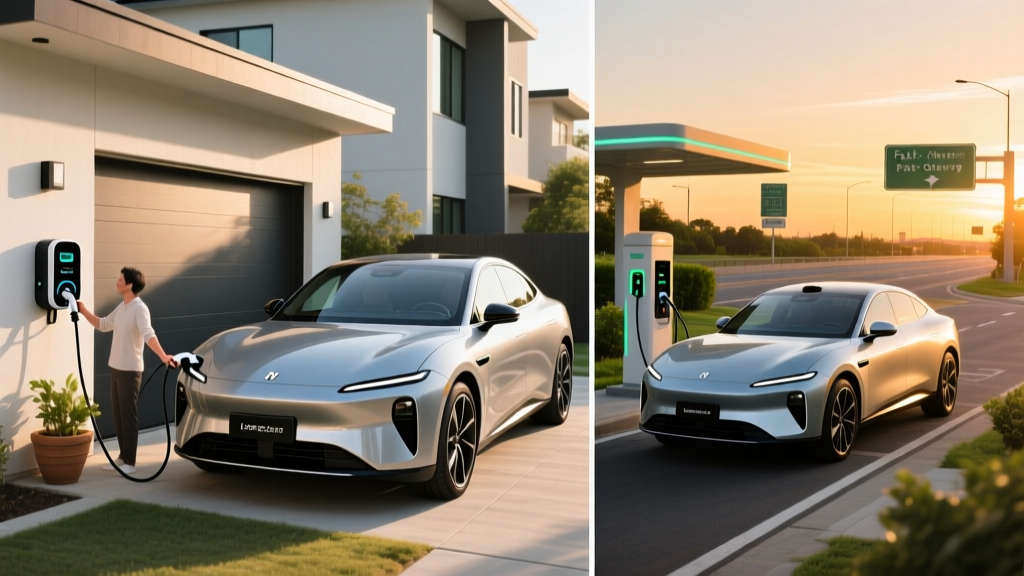
Level 1 (120V) adds roughly 3–5 miles per hour. Level 2 (240V) adds 25–70 miles per hour depending on amperage. DC fast charging can add 150–800+ miles per hour at peak, but sessions are typically measured in 10–80% time (20–45 minutes for most long-range EVs). See our charging-levels table above for specifics.
Which connector or charger is compatible with my EV?
For 2025 models, NACS (the Tesla/J3400 standard) has become dominant. Tesla, Ford, GM, Rivian, Hyundai, Kia, and Volvo all use NACS. If your EV has a CCS port (like some Lucid Air models or older VW ID.4s), you'll need a CCS-to-NACS adapter for Supercharger access—many automakers include one. CHAdeMO is effectively discontinued for new vehicles.
How much does charging cost per mile vs. gas?
Home charging at off-peak rates costs $0.03–$0.04 per mile for a long-range EV. Public DC fast charging costs $0.10–$0.17 per mile. A comparable gas car at 28 MPG with $3.40/gallon fuel costs about $0.12 per mile. Over 12,000 annual miles, predominantly home-charged EV ownership saves $800–$1,100 per year in energy costs.
What electrical upgrades might I need?
If your home has a 200A electrical panel with spare breaker slots and capacity, you likely need only a new 60A breaker and wire run. Homes with 100A or 150A service, or panels already near capacity (multiple EVs, electric heat, hot tubs), may need a panel upgrade to 200A or 400A. A licensed electrician can perform a load calculation per NEC Article 220 to determine your exact situation.
Does the federal tax credit cover home charger installation?
The Alternative Fuel Vehicle Refueling Property Credit covers up to 30% of home charger equipment and installation costs, capped at $1,000, through 2032. Eligibility depends on your census tract meeting certain low-income or non-urban criteria. Consult a tax professional and verify current IRS guidance before claiming.