Introduction to 240V Level 2 EV Charging
Upgrading to a Level 2 electric vehicle (EV) charger is the single most impactful improvement you can make to your daily EV ownership experience. While Level 1 charging relies on a standard 120V household outlet and delivers a mere 3 to 5 miles of range per hour, a 240V Level 2 home charger can replenish between 25 and 44 miles of range per hour. According to the U.S. Department of Energy, over 80% of all EV charging occurs at home, making a reliable, high-speed 240V installation an absolute necessity for modern EV drivers.
This comprehensive, step-by-step guide will walk you through the technical requirements, safety protocols, and installation procedures for a 240V Level 2 home EV charger. Safety Disclaimer: Working with 240V electricity carries a severe risk of arc flash, electrocution, and property damage. This guide is intended for educational purposes. We strongly recommend hiring a licensed, certified electrician to perform or oversee the physical installation to ensure compliance with the National Electrical Code (NEC) and local regulations.
Pre-Installation: Assessing Your Electrical Panel
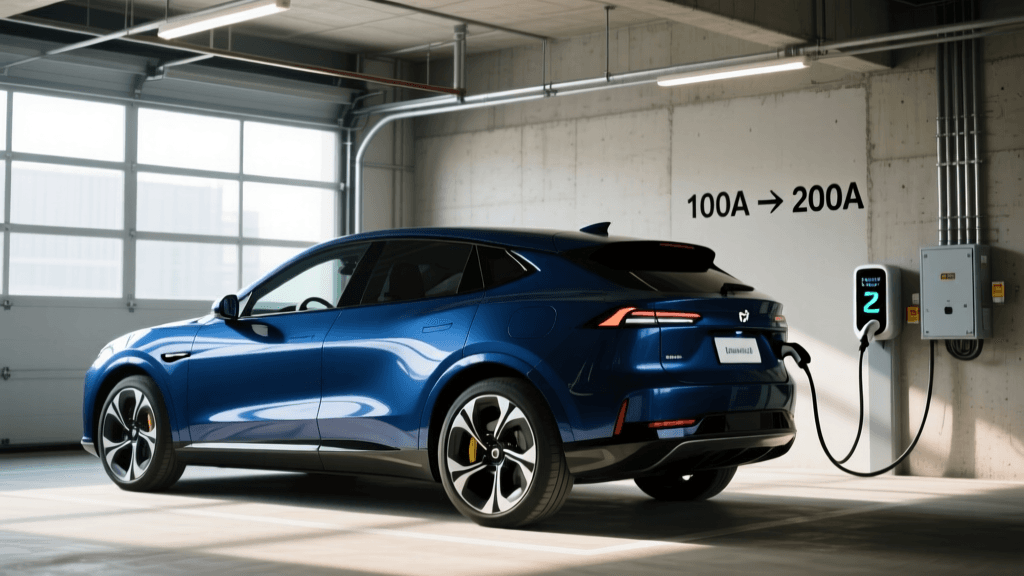
Before purchasing a charger or pulling wire, you must evaluate your home's electrical service panel. A typical modern home has a 200-amp main service panel, while older homes may only have 100-amp service. Level 2 chargers draw significant continuous current, and your panel must have the physical space and the amperage capacity to support the new load.
The 125% Continuous Load Rule
Under NEC Article 625, EV charging equipment is classified as a continuous load, meaning it is expected to operate for three hours or more. Therefore, the circuit must be rated for 125% of the charger's maximum output. For example, if you purchase a 40-amp Level 2 charger, you must install a 50-amp breaker and use wire rated for 50 amps. If you opt for a 48-amp charger, you will need a 60-amp breaker.
Performing a Load Calculation
An electrician will perform an NEC Article 220 load calculation to ensure your main breaker will not trip when the EV charger runs simultaneously with high-draw appliances like electric ovens, HVAC systems, and dryers. This calculation evaluates your service entrance conductors and total connected load. If your panel is maxed out, you may need a heavy-up (panel upgrade) or a smart load-management system that throttles charger output when household demand peaks.
Hardwired vs. NEMA 14-50 Receptacle: Which is Best?
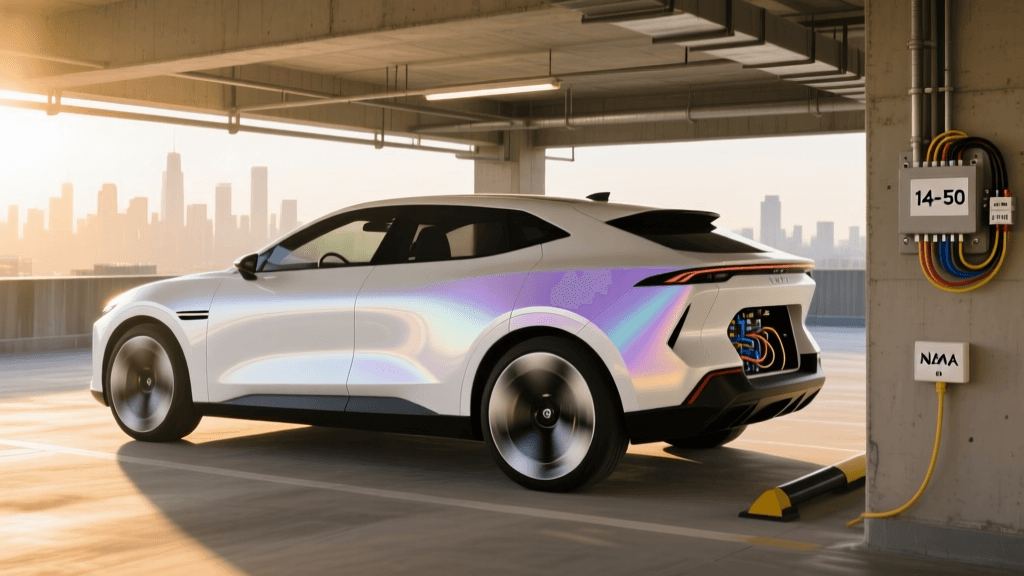
You have two primary options for connecting your 240V charger to your electrical system: hardwiring it directly into the junction box or installing a 240V receptacle (most commonly a NEMA 14-50). While the NEMA 14-50 plug offers portability, recent code changes have shifted the industry preference toward hardwired installations.
| Feature | Hardwired Connection | NEMA 14-50 Receptacle |
|---|---|---|
| Max Amperage | Up to 80A (requires 100A breaker) | 50A (Max 40A continuous charging) |
| GFCI Requirement | Not required by NEC | Required by NEC 2017/2020 updates |
| Nuisance Tripping | Highly reliable, no double-GFCI issues | Prone to tripping due to dual GFCI layers |
| Portability | Fixed to the wall | Charger can be unplugged and taken on trips |
| Installation Cost | Generally lower (fewer parts) | Higher (requires industrial receptacle & GFCI breaker) |
The GFCI Dilemma: The 2017 and 2020 NEC updates mandate Ground Fault Circuit Interrupter (GFCI) protection for all 14-50 receptacles. However, most high-quality EVSEs (Electric Vehicle Supply Equipment) already have internal GFCI sensors. Stacking a GFCI breaker on top of a GFCI-equipped EVSE frequently causes nuisance tripping, leaving you with a dead charger in the middle of the night. For this reason, most master electricians now recommend hardwired installations for 240V Level 2 chargers.
Step-by-Step 240V Installation Process
Step 1: Pulling Permits and Planning the Route
Almost all municipalities require an electrical permit for a new 240V circuit. Your electrician will submit a diagram detailing the wire gauge, breaker size, conduit type, and routing path. When planning the route from the panel to the garage or driveway, aim for the shortest, most protected path to minimize voltage drop and material costs. Avoid running cables near gas lines or high-heat sources.
Step 2: Running Conduit and Pulling Wire
For a 50-amp circuit (supporting a 40-amp charger), you will need three strands of 6 AWG copper THHN/THWN wire (two hots and one ground) if using metallic conduit, or four strands (two hots, one neutral, one ground) if installing a NEMA 14-50 receptacle. The wires must be pulled through rigid metal conduit (EMT) or Schedule 80 PVC to protect them from physical damage in the garage environment. All conduit fittings must be securely fastened and, in the case of PVC, properly glued to maintain code compliance.
Step 3: Installing the Breaker and Terminations
At the main service panel, the electrician will seat the new 50-amp or 60-amp double-pole breaker onto the bus bar. The wires are then stripped and terminated. Pro Tip: Professional installers use a calibrated torque screwdriver to tighten the breaker and receptacle lugs to the manufacturer's exact specifications. Under-torqued connections create electrical resistance, which generates excessive heat and is a leading cause of electrical fires in EV charging setups.
Step 4: Mounting the EVSE and Final Connections
The charger's wall mount bracket is secured to the wall studs using heavy-duty lag screws. If hardwiring, the EVSE's internal pigtail wires are connected to the conduit wires using appropriately sized wire nuts or Wago connectors, ensuring no bare copper is exposed outside the connectors. The unit is then sealed according to its IP rating to prevent moisture ingress.
Post-Installation: Testing and Inspection
Before plugging in your vehicle, the installer must perform a series of diagnostic tests. Using a multimeter, they will verify that the voltage across the two hot legs reads between 240V and 250V, and that the ground continuity is solid. Premium electricians will also use thermal imaging cameras to check for hot spots at the breaker and receptacle connections while the system is under load. Once the electrical tests pass, the local Authority Having Jurisdiction (AHJ) will conduct a final inspection to verify that the installation matches the permitted plans and adheres to all local building codes. Only after passing this inspection should you begin regular charging.
Cost Breakdown and ROI
The cost of a 240V Level 2 installation varies wildly based on your home's layout and panel capacity. A simple installation where the charger is mounted on the wall directly behind the electrical panel might cost between $500 and $800 for labor and materials. However, if you require a 100-foot trench to reach a detached garage, or if your home needs a 200-amp panel upgrade, costs can easily exceed $2,500 to $4,000. Fortunately, many local utilities and the federal government offer tax credits and rebates for residential EVSE infrastructure. The Federal Alternative Fuel Infrastructure Tax Credit (AFITC) can provide a credit of up to $1,000 for residential charging equipment and installation costs, significantly offsetting the initial capital expenditure.
Conclusion
Installing a 240V Level 2 home charger transforms the EV ownership experience, turning range anxiety into effortless daily convenience. By understanding the electrical requirements, choosing between hardwired and receptacle configurations, and adhering strictly to NEC safety standards, you ensure a charging setup that is fast, reliable, and safe for decades to come. Always prioritize professional installation to protect your home, your vehicle, and your family.