Rivian R2 Native NACS Charging: The Complete 2026 Buyer's Guide
The Rivian R2 arrives with a major advantage baked into its charging port: native NACS (North American Charging Standard). That means no adapters, no CCS-to-Tesla dongles, and direct access to the largest fast-charging network in North America — Tesla's Supercharger network — right out of the box. For a compact electric SUV targeting mainstream buyers at an expected starting MSRP around $45,000, native NACS is one of the most practical hardware decisions Rivian has made.
But plugging into a Supercharger is only half the equation. Most R2 owners will do 80% or more of their charging at home on a Level 2 wall connector. This guide covers the full charging picture for the R2: what native NACS actually unlocks, how to spec and install a home charger, what you'll pay per mile, and which equipment earns our recommendation based on real-world ownership patterns.
Battery: ~86 kWh usable (estimated, NMC chemistry) | EPA Range: ~330 miles (estimated)
Real-world expectation: ~270–290 miles highway at 70 mph; ~230–250 miles in sub-30°F cold weather. DC fast charge peak: estimated 175–200 kW, 10–80% in approximately 25–30 minutes.
Charging Levels Explained: Speed, Power, and What the R2 Can Accept
Before we get into equipment, let's nail down the three charging levels and what each delivers. A critical distinction: kW (kilowatts) measures power — the rate of energy flow. kWh (kilowatt-hours) measures energy — the total capacity of the battery. Think of kW as how fast water flows from a hose, and kWh as the size of the bucket. You'll see both used throughout this guide, and confusing them is the single most common mistake in EV coverage.
| Level | Voltage | Max Power (kW) | Miles of Range Added Per Hour | Best For |
|---|---|---|---|---|
| Level 1 (120V) | 120V AC | 1.4 kW | ~3–5 mi/hr | Emergency / overnight trickle |
| Level 2 (240V) | 240V AC | 11.5 kW (R2 onboard charger limit) | ~30–37 mi/hr | Daily home charging |
| DC Fast Charging | 400V+ DC | ~175–200 kW (est. peak) | ~600+ mi/hr (at peak) | Road trips, rapid top-ups |
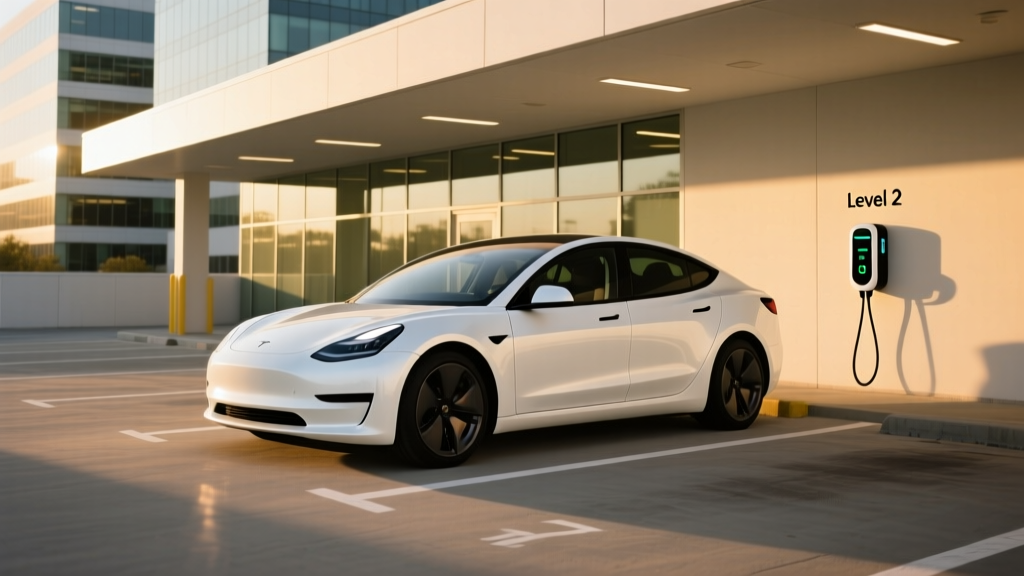
The Rivian R2 is expected to carry an 11.5 kW onboard charger for AC Level 2 charging, consistent with the R1S and R1T Gen 2 architecture. That means even if you install a 19.2 kW wall connector, the R2 will only draw up to 11.5 kW. At that rate, charging from 10% to 80% on a home Level 2 unit takes roughly 5.5 to 6 hours — perfect for overnight sessions on a time-of-use electricity plan.
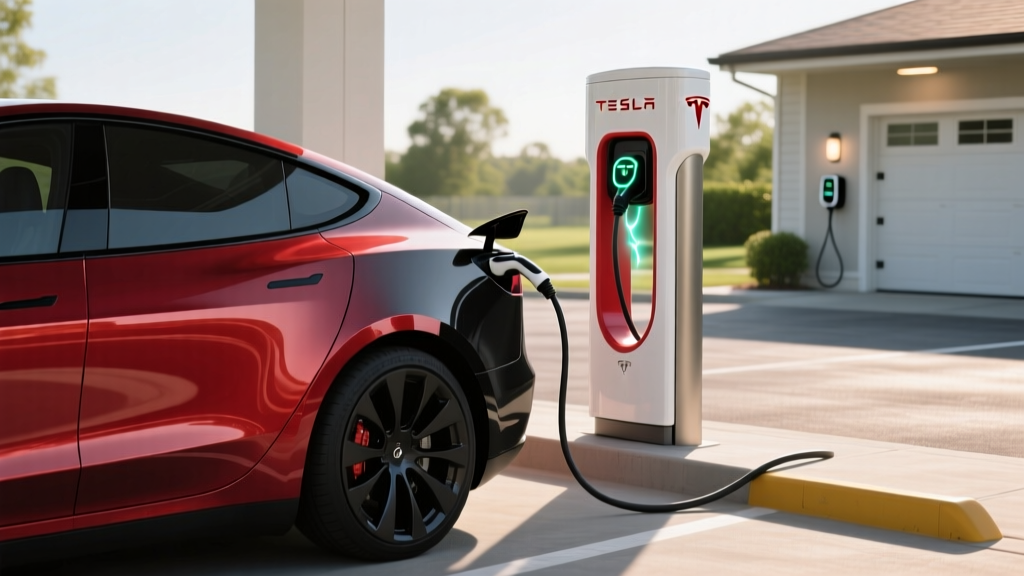
On DC fast charging, the R2's native NACS port connects directly to Tesla Superchargers (V3 at 150 kW and V4 at up to 250 kW, though the R2 will likely peak below V4's maximum). Expect a 10–80% session in approximately 25–30 minutes under ideal thermal conditions. Real-world note: charge speed tapers significantly above 80% State of Charge (SoC) to protect the battery. A 10–90% session will take noticeably longer than 10–80%, and cold batteries will precondition before accepting peak power — always enable navigation to a charger so the R2 can warm the pack en route.
Home Charger Installation: Electrical Requirements, Costs, and Panel Upgrades
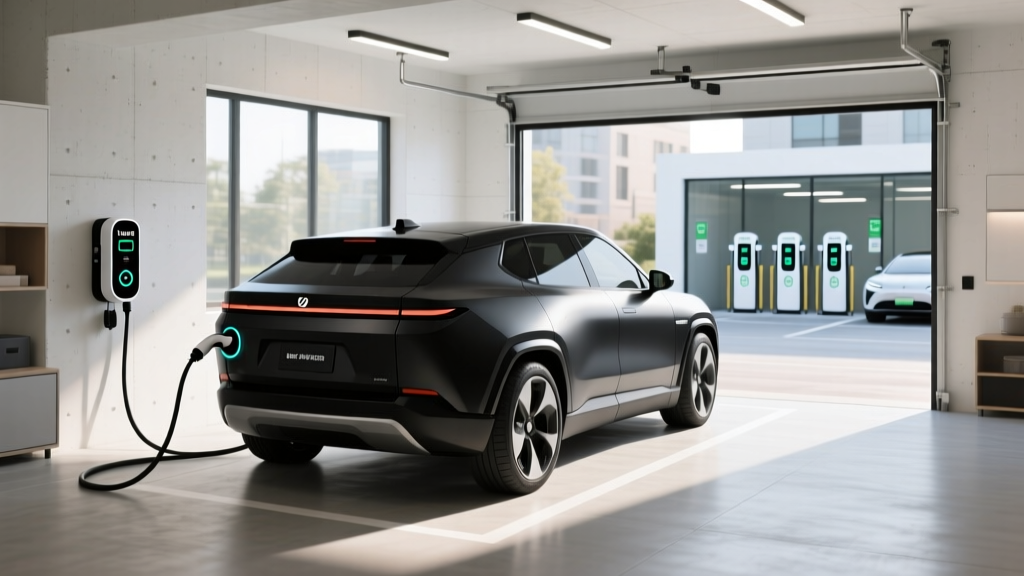
Installing a Level 2 home charger for the Rivian R2 requires a dedicated 240V circuit, typically rated at 48 amps or 60 amps to support continuous charging at the R2's 11.5 kW maximum (which requires a 48A circuit per the National Electrical Code's 80% continuous-load rule: 48A × 240V = 11.5 kW).
Here's where costs get real — and where many online guides understate the expense:
| Component | Low Estimate | High Estimate | Notes |
|---|---|---|---|
| Level 2 Charger (Equipment) | $400 | $750 | 48A NACS wall connector |
| Electrician Labor | $500 | $2,000 | Depends on run length, conduit, wall type |
| Electrical Permit | $50 | $300 | Varies by municipality |
| Panel Upgrade (if needed) | $1,500 | $4,000 | 100A → 200A service upgrade for older homes |
| Total (no panel upgrade) | $950 | $3,050 | Most newer homes with 200A service |
| Total (with panel upgrade) | $2,450 | $7,050 | Homes with 100A or maxed-out panels |
Panel upgrade reality check: If your home has a 100-amp electrical panel, or your existing 200-amp panel is already near capacity (multiple EVs, electric range, heat pump, dryer), you'll likely need a service upgrade. This is the single biggest variable in installation cost. Have a licensed electrician perform a load calculation before committing to equipment. The National Electrical Code (NEC) requires that a new 48A circuit not exceed 80% of your panel's rated capacity when combined with existing loads.
Safety and code requirements to confirm with your electrician:
- Dedicated circuit — the charger must have its own breaker, not shared with other appliances
- GFCI protection — required for outdoor installations and many jurisdictions now require it for garage outlets as well
- NEMA 14-60 outlet (if using a plug-in charger) or hardwired connection (preferred for 48A+ circuits; hardwired avoids the plug-and-receptacle as a failure point)
- Outdoor-rated equipment (NEMA 4 or IP65) if the charger is mounted outside
- Proper wire gauge — 6 AWG copper for 48A circuits, 4 AWG for 60A circuits, per NEC Table 310.16
Native NACS: Connector Compatibility and What It Means for the R2
The Rivian R2's native NACS port is the same physical connector used by Tesla vehicles and now adopted by Ford, GM, Hyundai, Kia, BMW, and most other major automakers for 2025–2026 models. Here's what that means in practice:
| Connector Type | Compatibility | Adapter Needed? | Network Examples |
|---|---|---|---|
| NACS (native) | ✅ Direct plug | No | Tesla Supercharger, Rivian Adventure Network, Electrify America (NACS stalls), BP Pulse, most new deployments |
| CCS1 | ⚠️ With adapter | Yes — NACS-to-CCS adapter (~$200–$300) | Older Electrify America stalls, some ChargePoint and EVgo locations still on CCS |
| CHAdeMO | ⚠️ With adapter | Yes — NACS-to-CHAdeMO (limited availability) | Legacy Nissan Leaf infrastructure; increasingly rare |
| J1772 (Level 2 AC) | ⚠️ With adapter | Yes — NACS-to-J1772 adapter (usually included with vehicle) | Public Level 2 stations, older home chargers |
The big win: the R2 can pull up to any of the 20,000+ Tesla Supercharger stalls across North America and plug in directly. No CCS adapter fumbling, no compatibility headaches. As of 2026, most new public DC fast-charging deployments are being built with NACS connectors, and existing CCS-only networks are adding NACS cables. The transition is nearly complete at major networks.
One practical note: if you already own a J1772-based Level 2 home charger from a previous EV, Rivian is expected to include a J1772-to-NACS adapter with the R2 (as Tesla and Ford do). You can continue using your existing home charger without replacing it, though a native NACS wall connector eliminates the adapter as a point of wear.
Charging Cost Per Mile: R2 vs. Gasoline Compact SUVs
One of the strongest ownership arguments for the R2 is fuel cost. Let's break it down with concrete numbers based on the R2's estimated efficiency of ~3.0 miles per kWh (approximately 111 MPGe combined).
| Scenario | Rate | Cost per kWh | Cost per Mile (R2) | Comparable Gas SUV (28 MPG @ $3.50/gal) |
|---|---|---|---|---|
| Home — off-peak utility rate | $0.09/kWh | $0.09 | $0.030 | $0.125 |
| Home — average residential rate | $0.16/kWh | $0.16 | $0.053 | $0.125 |
| Public Level 2 (network pricing) | $0.25/kWh | $0.25 | $0.083 | $0.125 |
| DC Fast Charging (Supercharger avg.) | $0.32/kWh | $0.32 | $0.107 | $0.125 |
| DC Fast Charging (peak pricing) | $0.48/kWh | $0.48 | $0.160 | $0.125 |
At home on an off-peak rate, the R2 costs roughly $0.03 per mile — about one-quarter the cost of a gasoline compact SUV averaging 28 MPG. Even on DC fast charging at typical Supercharger rates, the R2 is slightly cheaper per mile than gas. The only scenario where electricity costs more is peak-priced public DC fast charging ($0.48/kWh or higher at some urban chargers).
Annual savings estimate: A driver covering 12,000 miles per year, charging 80% at home (off-peak) and 20% on DC fast charging, would spend approximately $580 on electricity versus $1,500 on gasoline — a savings of roughly $920 per year in fuel costs alone. Over five years, that's $4,600, which offsets a meaningful portion of the R2's purchase price.
Recommended Home Charging Equipment for the Rivian R2
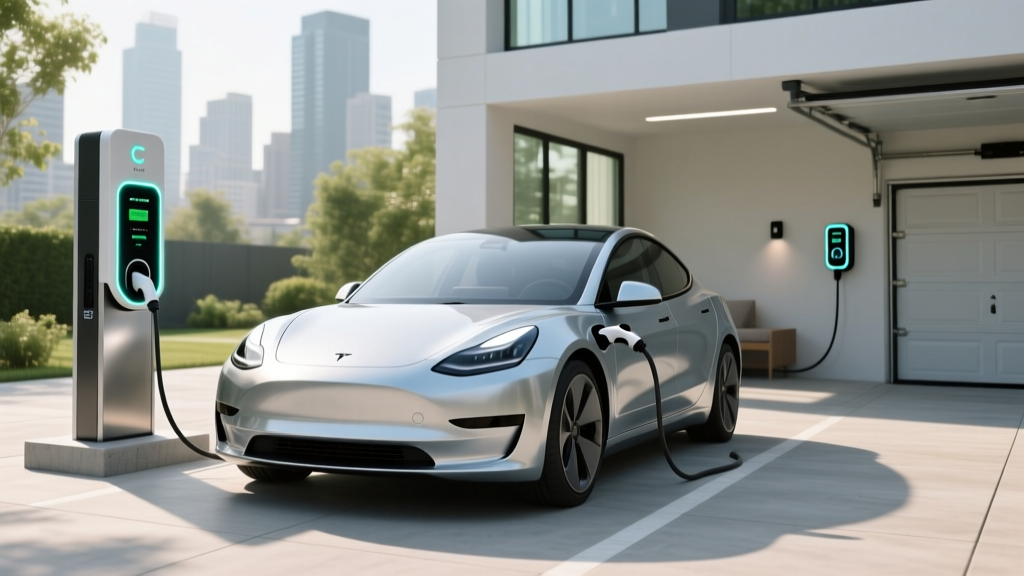
Since the R2's onboard charger maxes out at 11.5 kW (48A), you want a wall connector rated for at least 48A on a 60A circuit. Here are our top picks for native NACS home chargers as of 2026:
🏆 Best Overall: Tesla Wall Connector (NACS)
- Power Output: 11.5 kW (48A)
- Connector: Native NACS
- Cable Length: 24 feet
- Smart Features: Wi-Fi, OTA updates, power sharing (pair two units on one circuit), load management
- Price: ~$475
- Why: Native NACS, proven reliability, integrates seamlessly with the R2's port. Power sharing lets you install two connectors on a single 60A circuit — ideal for two-EV households.
Best Smart Charger: ChargePoint Home Flex (NACS version)
- Power Output: Up to 12 kW (50A) — adjustable down to match circuit
- Connector: Native NACS (2025+ models)
- Cable Length: 23 feet
- Smart Features: Wi-Fi, app scheduling, utility demand-response integration, Alexa/Google Home, detailed energy reports
- Price: ~$550
- Why: Best-in-class app, utility integration for off-peak scheduling, and adjustable amperage means it works on circuits from 20A to 60A without swapping hardware.
Best Budget: Emporia Vue Level 2 Charger (NACS)
- Power Output: 11.5 kW (48A)
- Connector: Native NACS
- Cable Length: 24 feet
- Smart Features: Wi-Fi, app control, solar integration, energy monitoring
- Price: ~$399
- Why: Lowest price for a full-featured 48A NACS charger. Solar integration pairs well with home solar owners who want to charge on excess production.
For all three chargers, we recommend hardwired installation over plug-in (NEMA 14-60). Hardwiring eliminates the receptacle as a potential failure point, is required by code in some jurisdictions for 48A+ circuits, and is generally more reliable for daily use. Your electrician can advise based on local code.
Public Charging with Native NACS: Networks, Speeds, and Trip Planning
The R2's native NACS port opens up the broadest public charging access of any connector type in North America as of 2026:
- Tesla Supercharger Network: 20,000+ stalls, V3 (150 kW) and V4 (up to 250 kW). The R2 will charge at its peak rate on both, limited by its own battery acceptance curve. Expect 10–80% in ~25–30 minutes at a V3 or V4 stall.
- Rivian Adventure Network: Rivian's own DC fast-charging network, expanding through 2026 with NACS-native stalls at adventure-oriented locations (national parks, trailheads, ski areas). Power levels expected at 200+ kW.
- Electrify America: Transitioning to NACS connectors at new and retrofitted stations. Existing CCS stalls require an adapter. Peak speeds 150–350 kW (the R2 won't utilize 350 kW capability).
- EVgo, ChargePoint, BP Pulse: All deploying NACS connectors at new installations. Coverage varies by region.
Trip planning tip: The Rivian app and built-in navigation will route you through compatible chargers and precondition the battery for optimal charge speed. Always navigate to a DC fast charger rather than driving there without preconditioning — a cold battery can cut peak charge rate by 50% or more, turning a 25-minute stop into a 45-minute stop.
Federal Tax Credit and Home Charger Incentives
Two federal incentives apply to R2 buyers and home charging setup in 2026:
- §30D New Clean Vehicle Credit (IRS): The R2 may qualify for up to $7,500 in federal tax credits, subject to MSRP caps ($80,000 for SUVs), buyer income limits ($300,000 joint / $150,000 single), and battery critical-mineral and component sourcing requirements. As of 2026, point-of-sale transfer is available, meaning the credit can be applied as a down-payment reduction at the dealer. Verify current eligibility on IRS.gov §30D guidance before purchase, as sourcing rules tighten annually.
- §30C Alternative Fuel Vehicle Refueling Property Credit: Home EV charger installation may qualify for a tax credit of up to 30% of equipment and installation costs, capped at $1,000. This credit has specific census-tract eligibility requirements (must be in a non-urban or low-income area). Check the IRS §30C page and consult a tax professional for your specific situation.
Frequently Asked Questions
How much does it cost to install a home EV charger for the Rivian R2?
Expect $950–$3,050 for a standard installation in a home with a 200-amp electrical panel and short conduit runs. If your home needs a panel upgrade (100A to 200A), add $1,500–$4,000, bringing the total to $2,450–$7,050. The charger itself costs $400–$750; electrician labor is typically $500–$2,000; permits run $50–$300 depending on your municipality.
How fast will each charging level add range to the R2?
Level 1 (120V): approximately 3–5 miles per hour — useful only for overnight trickle or emergencies. Level 2 (240V at 48A): approximately 30–37 miles per hour, adding roughly 200+ miles overnight. DC Fast Charging (NACS at 175–200 kW peak): approximately 600+ miles per hour at peak, delivering a 10–80% charge in 25–30 minutes.
Which connector is compatible with the Rivian R2?
The R2 has a native NACS port. It plugs directly into Tesla Superchargers and all new NACS-equipped public chargers without any adapter. For legacy CCS1 chargers, you'll need a NACS-to-CCS adapter. For older J1772 Level 2 public chargers, a J1772-to-NACS adapter (expected to be included with the vehicle) is required.
How much does charging the R2 cost per mile compared to gas?
At home on off-peak electricity ($0.09/kWh), the R2 costs about $0.03 per mile — roughly 75% less than a 28 MPG gasoline SUV at $3.50/gallon ($0.125/mile). Even on DC fast charging at $0.32/kWh, the R2 is slightly cheaper per mile. Only peak-priced public charging ($0.48/kWh+) exceeds gasoline cost per mile.
What electrical upgrades might I need for a home charger?
If your home has a 200-amp panel with available capacity, you likely only need a new 60A breaker and conduit run — no upgrade required. If your panel is 100-amp, already near capacity, or you plan to add a second EV, you'll likely need a panel upgrade to 200A ($1,500–$4,000). A licensed electrician can perform a load calculation to determine your exact needs. Some utilities offer rebates for panel upgrades that support EV charging.
Can I use my existing J1772 home charger with the R2?
Yes, with a J1772-to-NACS adapter. Most NACS-equipped vehicles in 2026 ship with this adapter included. However, if your existing charger is only 32A (7.7 kW), you'll charge about 30% slower than the R2's maximum 11.5 kW capability. Upgrading to a 48A NACS-native charger is worth considering for faster overnight sessions.
Does the Rivian R2 qualify for the $7,500 federal tax credit?
Eligibility depends on multiple factors: the vehicle's MSRP must be under $80,000 (SUV cap), your adjusted gross income must be under $300,000 (joint) or $150,000 (single), and the battery must meet critical-mineral and component sourcing thresholds that tighten each year. The credit can be transferred to the dealer at point of sale as a price reduction. Always verify current eligibility on fueleconomy.gov and IRS.gov before purchasing, as rules change and vary by model year and build date.
Note: Rivian R2 specifications cited in this guide are based on pre-production estimates and Rivian announcements as of early 2026. Final EPA range, battery capacity, and charging speeds will be confirmed at production launch. Always verify specs with Rivian before purchase.