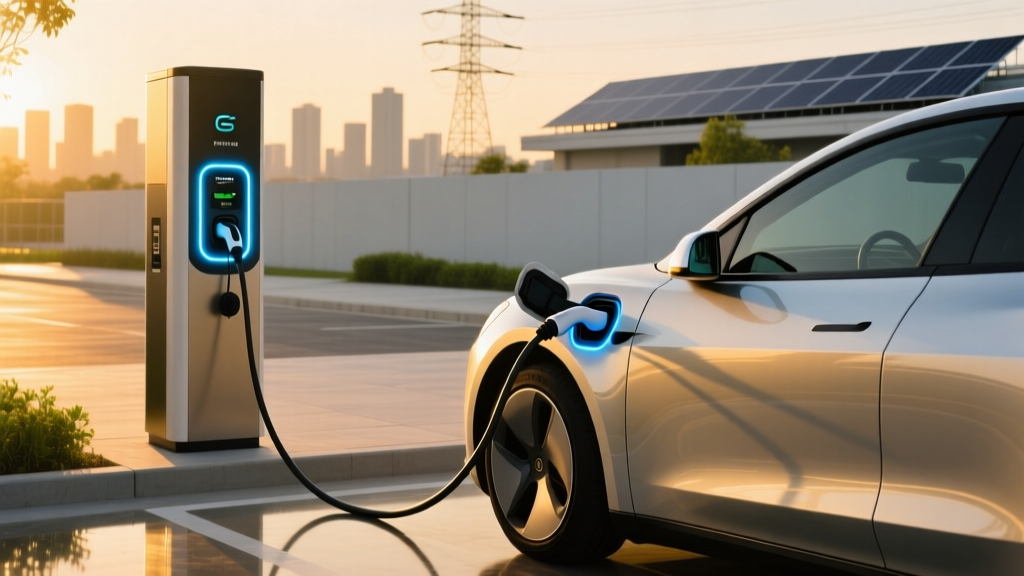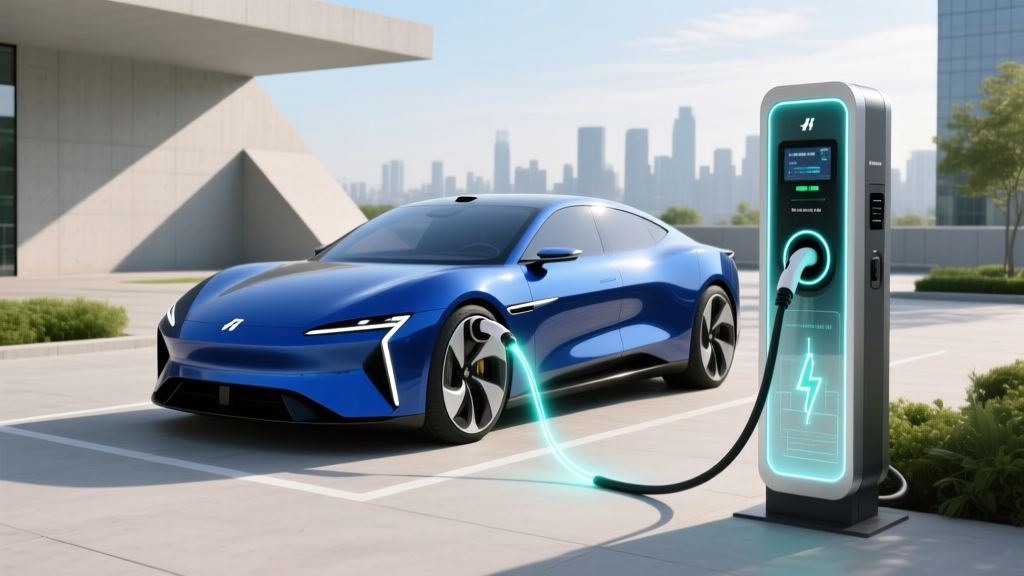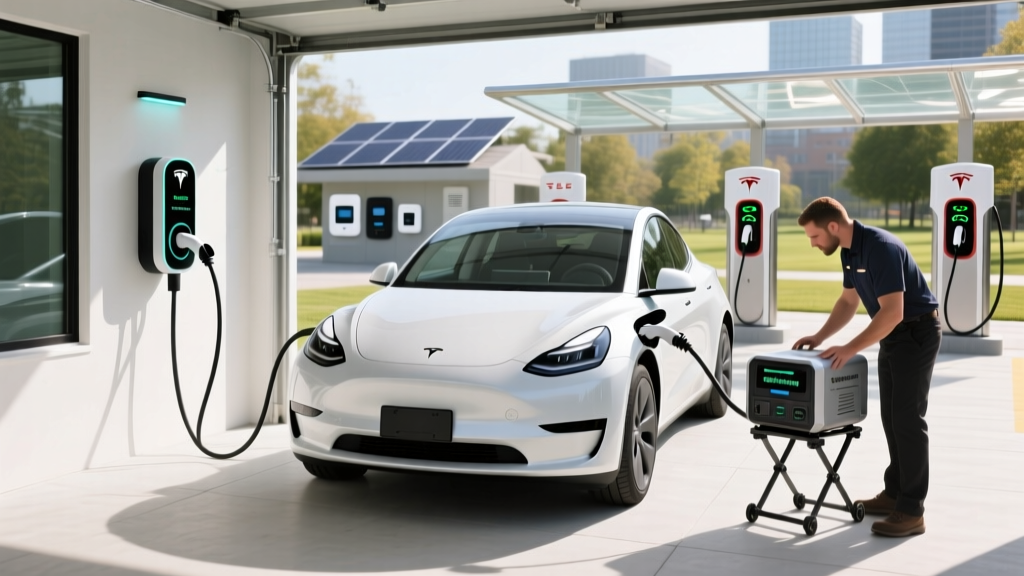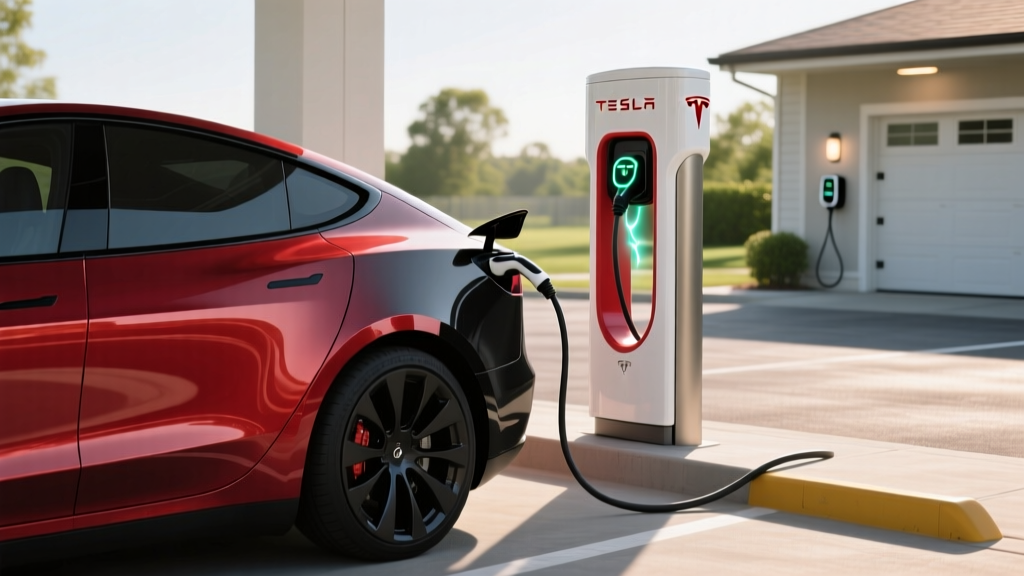
Tesla has periodically offered free Supercharging as a referral perk, a trade-in bonus, or a limited-time new-vehicle incentive. While the idea of never paying for DC fast charging sounds appealing, most EV owners find that a properly set-up home Level 2 charger delivers far greater long-term savings and convenience. This guide explains exactly what the Tesla free Supercharging incentive covers, how it stacks up against home charging economics, and what you need to know to set up a complete charging ecosystem at home and on the road.
What the Tesla Free Supercharging Incentive Actually Includes
Tesla's free Supercharging promotions have taken several forms over the years. As of early 2026, the most common versions include:
- Limited-time new vehicle promotions: Tesla occasionally offers 10,000 free Supercharger miles or 1–3 years of unlimited free Supercharging on new Model 3, Model Y, Model S, or Model X deliveries during end-of-quarter pushes.
- Referral program credits: Tesla's referral program has historically awarded Supercharging credits (measured in kWh or miles) when a referred buyer takes delivery.
- Transferable vs. non-transferable: Older Model S and Model X vehicles (pre-2017) sometimes carry lifetime free Supercharging that transfers with the vehicle. Newer promotional free Supercharging is almost always tied to the original buyer and expires after a set term.
The critical detail: even with free Supercharging, you still need a home charging solution. Over 80% of EV charging happens at home, and relying exclusively on DC fast charging accelerates battery degradation and costs you time. Free Supercharging is a bonus — not a replacement for Level 2 home infrastructure.
Charging Levels Explained: Speeds, Power, and Range Added
Understanding the three charging tiers is essential for planning both your daily routine and road trips.
| Level | Voltage / Power | Miles of Range Per Hour | 10–80% Time (75 kWh Battery) | Typical Use Case |
|---|---|---|---|---|
| Level 1 | 120V / 1.4–1.9 kW | 3–5 miles/hr | 30–40 hours | Overnight trickle; emergency top-up |
| Level 2 | 240V / 7.7–19.2 kW | 25–70 miles/hr | 4–8 hours | Daily home/workplace charging |
| DC Fast (Supercharger V3/V4) | 400–800V / 150–350 kW | 200–1,000+ miles/hr | 15–25 minutes | Road trips; rapid top-ups |
Real-world charging curve reality: A Tesla Model Y Long Range (75 kWh usable battery, NMC chemistry) at a V3 Supercharger peaks at roughly 250 kW but only sustains that rate between approximately 10–30% State of Charge (SoC). Above 50% SoC, the charge rate tapers to ~100 kW, and above 80% it drops further to ~40 kW to protect the battery. This is why manufacturers quote 10–80% times — the final 20% is disproportionately slow.
Home Charger Installation: Costs, Electrical Requirements, and Panel Upgrades
A Level 2 home charger is the backbone of practical EV ownership. Here is what a proper installation requires.
Electrical Requirements
- Circuit: A dedicated 240V circuit, typically 40A, 50A, or 60A, depending on charger amperage.
- Breaker sizing: EV chargers are considered continuous loads under NEC Article 625, so the circuit breaker must be rated at 125% of the charger's maximum draw. A 40A charger requires a 50A breaker; a 48A charger requires a 60A breaker.
- Wire gauge: 6 AWG copper for 50A circuits; 4 AWG for 60A circuits (varies by run length and local code).
- Hardwired vs. plug: Chargers above 40A typically must be hardwired. NEMA 14-50 outlets are common for 40A plug-in units but require proper installation — many electricians now recommend hardwired setups to avoid GFCI nuisance tripping issues that arose with the 2017/2020 NEC updates.
Panel Upgrade Considerations
If your home has a 100A electrical service panel (common in homes built before the 1990s), adding a 50A EV circuit may exceed your panel's capacity. An electrician will perform a load calculation per NEC Article 220 to determine if an upgrade is needed. A panel upgrade from 100A to 200A typically costs $1,500–$3,500 depending on your utility and local labor rates.
| Component | Low Estimate | High Estimate | Notes |
|---|---|---|---|
| Level 2 charger unit | $350 | $750 | Varies by brand, power, smart features |
| Electrician labor + materials | $500 | $2,000 | Depends on run length, conduit, wall type |
| Permit | $50 | $250 | Varies by municipality |
| Panel upgrade (if needed) | $1,500 | $3,500 | 100A → 200A service upgrade |
| Total (no panel upgrade) | $900 | $3,000 | Most homes with 200A panels |
| Total (with panel upgrade) | $2,400 | $6,500 | Older homes with 100A service |
Federal tax credit note: The IRS §30C Alternative Fuel Vehicle Refueling Property Credit covers up to 30% of home charger equipment and installation costs, capped at $1,000 per year. Eligibility depends on census-tract income and rural-area requirements — consult a tax professional and verify on IRS.gov.
Connector Compatibility: NACS, CCS, and Adapter Requirements
The North American connector landscape has shifted dramatically since Tesla opened its Supercharger network and the industry adopted the North American Charging Standard (NACS).
| Connector | Brands Using It (2026) | Adapter Needed? | Max DC Fast Power |
|---|---|---|---|
| NACS (Tesla) | Tesla, Ford, GM, Rivian, Volvo, Polestar, Honda, Fisker | No (native on most 2025+ models) | Up to 350 kW (V4 Supercharger) |
| CCS1 | Hyundai, Kia, BMW, VW, Audi (legacy models) | CCS-to-NACS adapter for Superchargers (~$200) | Up to 350 kW (EA, Ionity) |
| CHAdeMO | Nissan Leaf (legacy only; discontinued) | CHAdeMO-to-NACS adapters extremely limited | Up to 100 kW |
For 2026 model-year vehicles, nearly all new EVs sold in North America ship with a native NACS charge port. If you own a 2023–2024 model-year EV with a CCS1 port (such as a Hyundai Ioniq 5 or Kia EV6 from those years), Tesla and third-party manufacturers sell CCS-to-NACS adapters that enable Supercharger access. Confirm adapter compatibility with your specific model year before purchasing.
Cost to Charge: Home vs. Public vs. Supercharger Per-Mile Economics
This is where the Tesla free Supercharging incentive looks most attractive — until you compare it to the cost of home charging.
| Scenario | Rate ($/kWh) | Cost for 75 kWh (Full Charge) | Cost Per Mile (3.5 mi/kWh) |
|---|---|---|---|
| Home off-peak (utility TOU rate) | $0.09–$0.14 | $6.75–$10.50 | $0.026–$0.040 |
| Home standard residential rate | $0.15–$0.22 | $11.25–$16.50 | $0.043–$0.063 |
| Tesla Supercharger (paid, avg.) | $0.28–$0.40 | $21.00–$30.00 | $0.080–$0.114 |
| Non-Tesla DC fast (Electrify America, EVgo) | $0.35–$0.55 | $26.25–$41.25 | $0.100–$0.157 |
| Gasoline comparison (25 MPG avg., $3.40/gal) | — | $37.40 (equivalent distance) | $0.136 |
The math is clear: Even with free Supercharging, the majority of your charging should happen at home. At 12,000 miles per year, home off-peak charging costs roughly $312–$480 annually. Exclusive Supercharger use at $0.34/kWh averages $1,166 per year. The free Supercharging incentive saves you that $1,166 — but only while the promotion lasts. Once it expires, you'll want your home setup ready.
For a real-world reference, the EPA's fueleconomy.gov lists the 2026 Tesla Model Y Long Range at 119 MPGe combined with an energy consumption of 28 kWh/100 miles, making the per-mile cost calculations above directly applicable.
Recommended Home Charging Equipment for 2026
Below are three proven Level 2 chargers that cover different budgets and feature sets. All support NACS natively or via included adapter.
Tesla Wall Connector
- Power output: Up to 11.5 kW (48A at 240V)
- Connector: Native NACS
- Cable length: 24 feet
- Smart features: Wi-Fi, OTA updates, load sharing with multiple units, access control
- Price: ~$475
- Best for: Tesla owners who want seamless integration and maximum power on a 60A circuit
ChargePoint Home Flex
- Power output: Up to 12 kW (50A at 240V, configurable from 16A–50A)
- Connector: NACS (2025+ models); J1772 with adapter for older stock
- Cable length: 23 feet
- Smart features: Wi-Fi, Alexa/Google Home, scheduling, energy tracking, amperage adjustment
- Price: ~$550–$650
- Best for: Multi-EV households needing adjustable amperage to fit existing circuits
Emporia Vue Level 2 Charger
- Power output: Up to 11.5 kW (48A at 240V)
- Connector: NACS (2025+); J1772 available
- Cable length: 24 feet
- Smart features: Wi-Fi, solar integration, real-time energy monitoring, scheduling, load management
- Price: ~$399
- Best for: Budget-conscious buyers and homes with solar panels wanting energy-aware charging
Safety, Electrical Code, and Installation Best Practices
EV charging places a sustained high-current load on your home's electrical system — far more demanding than a dryer or oven. Cutting corners here creates fire risk.
- Dedicated circuit: Your EV charger must be on its own dedicated circuit — never shared with other appliances.
- GFCI considerations: The 2020 NEC requires GFCI protection on 240V receptacles in garages (NEC 625.54). However, many EV charger manufacturers recommend hardwired installation to avoid nuisance GFCI tripping, as the charger itself contains ground-fault protection internally.
- Outdoor-rated equipment: If your charger is installed outside, ensure the unit carries a NEMA 4 or IP65 rating. All outdoor conduit and junction boxes must be rated for wet locations.
- Permit and inspection: Most jurisdictions require an electrical permit for a new 240V circuit. The inspection ensures proper wire gauge, breaker sizing, grounding, and torque on connections — do not skip this step.
- Use a licensed electrician: EV charger installation is not a DIY project. Improperly torqued connections on a sustained 40A+ load can overheat and cause fires over time. Hire a licensed electrician familiar with NEC Article 625.
Is the Tesla Free Supercharging Incentive Worth Factoring Into Your Purchase?
Choose to prioritize the free Supercharging incentive if:
- You live in an apartment or condo without home charging access and rely heavily on public DC fast charging
- You frequently road-trip more than 10,000 miles per year on Tesla Supercharger corridors
- The promotion offers 2+ years of unlimited free charging, which could save $2,000–$3,500 over the term
Choose to invest in home charging infrastructure instead if:
- You have a garage or dedicated parking spot where a Level 2 charger can be installed
- Your daily driving is under 60 miles round-trip (easily covered by overnight Level 2 charging)
- The free Supercharging is limited to under 1 year or under 10,000 miles — the savings are modest compared to decades of cheap home charging
- You want to minimize battery degradation — frequent DC fast charging accelerates long-term capacity loss compared to Level 2 charging
For context on battery longevity, NMC batteries (used in Tesla Long Range models) typically retain 85–90% capacity after 150,000 miles when primarily Level 2 charged. Heavy DC fast charging use can increase degradation by 3–5 percentage points over the same distance, based on data from fleet operators and NREL transportation research.
Frequently Asked Questions
How much does it cost to install a home EV charger?
Expect $900–$3,000 for a standard installation in a home with an adequate 200A electrical panel. This includes the charger unit ($350–$750), electrician labor and materials ($500–$2,000), and permit fees ($50–$250). If your home requires a panel upgrade from 100A to 200A service, add $1,500–$3,500 to the total. The IRS §30C credit may cover up to $1,000 of these costs depending on your census tract eligibility.
How fast will each charging level add range?
Level 1 (120V) adds roughly 3–5 miles of range per hour. Level 2 (240V, 48A) adds 30–45 miles per hour depending on vehicle efficiency. DC fast charging at a V3 Supercharger (250 kW peak) can add up to 200 miles in 15 minutes, but only at low states of charge — the rate tapers significantly above 50% SoC.
Which connector and charger is compatible with my EV?
All 2026 Tesla vehicles use the native NACS connector. Most 2025–2026 non-Tesla EVs (Ford, GM, Rivian, Hyundai, Kia) also ship with NACS. If you own a 2022–2024 model with a CCS1 port, you will need a CCS-to-NACS adapter (~$200) to use Tesla Superchargers. For home Level 2 charging, a NACS-equipped charger like the Tesla Wall Connector or ChargePoint Home Flex (2025+ version) will work with all current NACS vehicles.
How much does charging cost per mile versus gasoline?
Home charging at off-peak utility rates costs approximately $0.03–$0.04 per mile for a typical EV like the Tesla Model Y. Paid Supercharging averages $0.08–$0.11 per mile. A comparable gasoline vehicle at 25 MPG and $3.40/gallon costs roughly $0.14 per mile. Even paid Supercharging is cheaper than gasoline per mile — but home charging delivers the deepest savings.
What electrical upgrades might I need for a home charger?
The most common upgrade is a panel capacity increase from 100A to 200A service, needed in older homes where the existing panel cannot accommodate a new 50A or 60A circuit alongside existing loads. Your electrician will perform an NEC Article 220 load calculation. Other potential upgrades include running new conduit from the panel to the garage, upgrading the meter socket if your utility requires it, or adding a sub-panel if your main panel is physically full but has sufficient amperage capacity.
Does the Tesla free Supercharging incentive transfer if I sell the car?
Generally no. Most promotional free Supercharging offered since 2019 is non-transferable and expires when the original purchaser sells the vehicle. The notable exception is certain 2012–2016 Model S vehicles with lifetime free Supercharging that was originally designated as transferable — but these are increasingly rare in the used market and command a price premium.
Is exclusive DC fast charging bad for my battery?
Frequent DC fast charging does accelerate battery degradation compared to primarily Level 2 charging, though modern thermal management systems have reduced this gap. Tesla's battery warranty covers 8 years or 120,000–150,000 miles (depending on model) with a minimum 70% capacity retention threshold. For maximum longevity, charge to 80% daily on Level 2, use DC fast charging primarily for road trips, and avoid routinely charging to 100% unless departing on a long drive.