The Hidden Variables in Regional EV Charging Costs
When homeowners begin researching Level 2 EV charger installations, they are often met with a bewildering array of price estimates. While the hardware itself—such as a ChargePoint Home Flex, Tesla Wall Connector, or Emporia Level 2 charger—typically ranges from $400 to $700, the installation costs can swing wildly from $500 in a best-case scenario to over $4,500 in complex setups. Many consumers mistakenly attribute these discrepancies solely to regional labor rates. However, from a technology and electrical engineering perspective, the true cost drivers are deeply rooted in regional grid topology, local climate constraints, and the staggered adoption of National Electrical Code (NEC) standards.
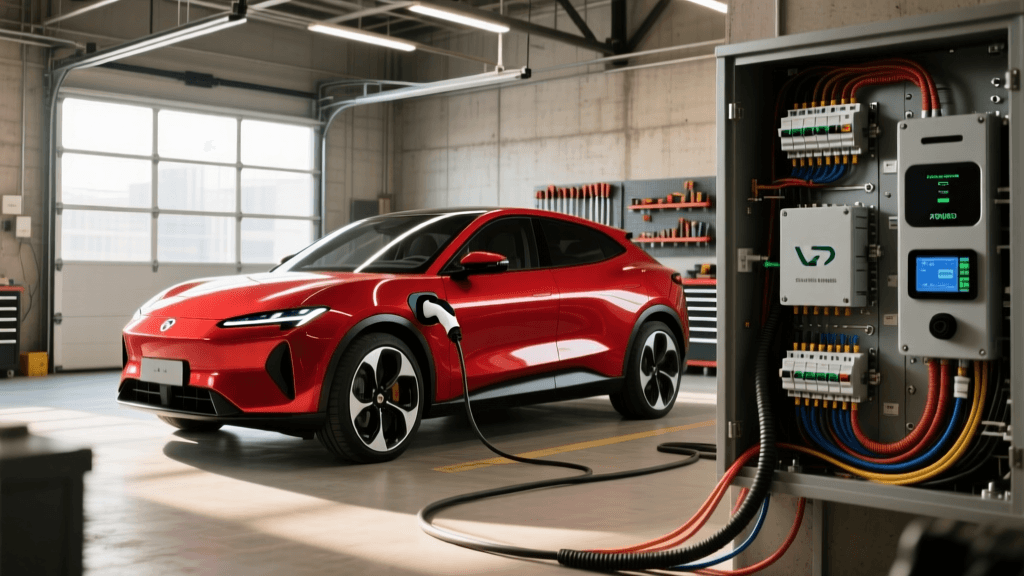
Understanding the technical anatomy of an EV charger installation requires looking past the drywall and into the utility infrastructure, conduit routing, and load management technologies that vary drastically across the United States. This deep dive explores the engineering and regulatory factors that dictate regional installation costs, providing actionable insights for residential and multi-unit dwelling deployments.
Wire Sizing, Voltage Drop, and Conduit Logistics
The physical distance between a home's main electrical panel and the desired charging location is a universal cost factor, but regional building practices heavily influence how that distance is bridged. According to the U.S. Department of Energy's Alternative Fuels Data Center, a standard Level 2 charger requires a 240-volt circuit, typically drawing 32 to 48 amps. Because EV charging is classified as a continuous load under NEC Article 210.20, the circuit must be derated by 80%, meaning a 48-amp charger requires a 60-amp breaker and appropriately sized wiring.
In regions like the Midwest and Northeast, where basements and unfinished utility areas are common, electricians can often run exposed EMT (Electrical Metallic Tubing) conduit or Romex (NM-B) cable through joists, keeping material and labor costs low. Conversely, in the Sunbelt and Southwest, where homes are predominantly built on concrete slab foundations with stucco or masonry exteriors, routing wire to an exterior garage wall or driveway pedestal requires extensive trenching, concrete saw-cutting, and the use of rigid PVC Schedule 80 conduit for physical protection.
Furthermore, voltage drop calculations dictate material costs. The NEC recommends a maximum voltage drop of 3% for branch circuits. In sprawling suburban or rural properties common in the South and Mountain West, a 100-foot run to a detached garage or driveway pedestal using standard 6 AWG copper wire will exceed this 3% threshold. Electricians must upsize the wire to 4 AWG or even 3 AWG copper, or switch to aluminum XHHW-2 conductors, which alters the terminal lug requirements on the charger and increases material costs by 30% to 50%.
Grid Topography and Transformer Constraints
One of the most expensive and least understood regional variables is the capacity of the local utility distribution transformer. A standard residential transformer (often 25 kVA to 50 kVA) serves multiple homes. In older, densely populated regions like the Northeast corridor or parts of California, these transformers are frequently operating near peak capacity due to aging infrastructure and high summer HVAC loads.
When a homeowner installs a 48-amp Level 2 charger, they are adding a continuous 11.5 kW load to the grid. If the utility determines that the local transformer cannot handle the additional load without risking a brownout, they may require a transformer upgrade before approving the final meter inspection. Data from the U.S. Energy Information Administration (EIA) highlights significant regional disparities in grid infrastructure age and capital investment, which directly correlates to the likelihood of a homeowner being hit with a $2,000 to $5,000 utility infrastructure surcharge or forced upgrade delay.
In contrast, newer developments in Texas and the Southeast often feature oversized, modernized distribution networks designed with higher baseline electrical loads, allowing for seamless EV charger integration without utility-side bottlenecks.
Local Code Adoptions: NEC 2020 vs. Legacy Standards
The National Fire Protection Association (NFPA) updates the National Electrical Code (NEC) every three years, but state and municipal adoption is entirely localized. This creates a fractured regulatory landscape that heavily impacts installation costs, particularly regarding NEC Article 625, which governs Electric Vehicle Charging System Equipment.
The GFCI Receptacle Mandate
A prime example of regional cost divergence is the treatment of NEMA 14-50 receptacles. Under NEC 2017 and 2020, Ground Fault Circuit Interrupter (GFCI) protection is mandated for 14-50 outlets in garages and outdoor locations. States that strictly enforce the latest NEC iterations (such as Washington, Massachusetts, and California) require electricians to install specialized 50-amp or 60-amp GFCI breakers. These breakers are notoriously expensive, adding $100 to $150 to the bill, and are prone to nuisance tripping when stacked with the internal GFCI protection already built into many modern EVSE (Electric Vehicle Supply Equipment) units.
In states operating on older NEC cycles, or those with specific local amendments that exempt hardwired EVSEs or dedicated EV receptacles from GFCI requirements, homeowners save on breaker costs and avoid complex troubleshooting. This is why many electrical contractors in strict-code regions strongly advocate for hardwired installations (which bypass the receptacle GFCI mandate under certain interpretations) over plug-in NEMA 14-50 setups.
California Title 24 and EV-Ready Requirements
California’s Title 24 building code mandates that new residential constructions include "EV-ready" circuits, meaning the conduit, wiring, and breaker space are pre-installed during the building phase. While this increases initial construction costs, it reduces retrofit installation costs to nearly zero. Conversely, in regions with no such forward-looking mandates, retrofitting older homes with 200-amp panels often requires complete service drop replacements, pushing costs into the thousands.
Climate-Driven Infrastructure Requirements
Regional climate profiles dictate the physical engineering of the installation. In the Upper Midwest and New England, the frost line can extend 48 inches or more below the surface. Any underground conduit run from a basement to a detached garage or outdoor pedestal must be trenched below this frost line to prevent ground heaving from crushing the PVC conduit and severing the conductors. The heavy machinery required for deep trenching in frozen or rocky soil can add $1,000 to $2,500 to the project.
In coastal and hurricane-prone regions like Florida and the Gulf Coast, exterior installations require marine-grade stainless steel enclosures, UV-rated conduit, and specialized wind-load strapping to ensure the charger and its disconnect switches survive extreme weather events. Standard NEMA 3R enclosures used in temperate climates will fail prematurely in high-salinity environments, necessitating a premium on corrosion-resistant materials.
Regional Cost and Technical Bottleneck Matrix
The following table outlines how regional characteristics directly influence the technical approach and final cost of a standard 48-amp Level 2 hardwired installation.
| Region | Avg. Cost Range | Primary Technical Bottleneck | Common Conduit / Wiring | Code Standard Impact |
|---|---|---|---|---|
| Northeast / Mid-Atlantic | $800 - $2,500 | Aging 100A panels; tight utility easements | EMT / BX Cable; NM-B in basements | Strict NEC adoption; high permit fees |
| West Coast (CA, OR, WA) | $1,200 - $4,500+ | Utility transformer limits; 400A service upgrades | PVC Schedule 80; THHN in conduit | Title 24; strict GFCI & load management rules |
| Midwest | $900 - $2,800 | Deep frost line trenching; detached garages | Underground PVC; Direct burial UF-B | Variable NEC adoption; lower permit friction |
| South / Sunbelt | $700 - $2,200 | Slab foundations; exterior masonry routing | Surface PVC; XHHW-2 aluminum | Moderate NEC adoption; heat derating requirements |
| Mountain West | $1,000 - $3,000 | Long wire runs; voltage drop mitigation | Large gauge copper (4 AWG+); Rigid metal | Rural code variances; high inspection travel times |
Bypassing the 400A Upgrade with Smart Load Management
In regions where upgrading a residential electrical service from 200 amps to 320 or 400 amps is prohibitively expensive—often costing between $3,000 and $8,000 due to utility trenching and new meter mains—smart load management technology has become a critical cost-saving intervention.
Devices like the Emporia Vue energy monitor or advanced smart panels like the SPAN Drive system utilize current transformers (CTs) clamped directly onto the home's main service conductors. These systems monitor the home's real-time electrical consumption. If the HVAC system, electric oven, and dryer turn on simultaneously, the load management software dynamically throttles the amperage sent to the EV charger, ensuring the main breaker never trips. Once the heavy appliances cycle off, the charger ramps back up to its maximum 48-amp capacity.
By deploying automated load management, homeowners in high-friction regions like California or New York can safely install high-output Level 2 chargers on their existing 200-amp panels, entirely bypassing the need for utility-side service upgrades and saving thousands of dollars in permitting and construction costs.
Actionable Advice for Regional Installations
- Request a Load Calculation: Before accepting a quote, ensure your electrician performs an NEC Article 220 residential load calculation. Do not rely on rule-of-thumb estimates, especially in older Northeast or Midwestern homes.
- Hardwire vs. Plug-In: In regions with strict NEC 2020 GFCI enforcement, opt for a hardwired charger to eliminate the $150 GFCI breaker requirement and prevent nuisance tripping issues.
- Investigate Local Rebates: Many regional utilities offer rebates specifically for panel upgrades or smart load management installations. Check your local utility's EV infrastructure programs before signing a contract.
- Plan for Future Solar/Battery: If you live in a high-sun region like the Southwest and plan to add solar or a Tesla Powerwall, ensure your electrician installs a critical loads sub-panel or a 400-amp meter collar with dual 200-amp breakers to future-proof your infrastructure.
Conclusion
The cost of installing an EV charger is rarely just about the price of copper and labor. It is a complex intersection of regional grid maturity, local climate realities, and the patchwork adoption of electrical safety codes. By understanding the technical bottlenecks specific to your geographic region—from frost-line trenching in the Midwest to transformer constraints on the coasts—homeowners can make informed decisions, leverage smart load management technologies, and navigate the permitting process with confidence. As the EV transition accelerates, regional grids and codes will continue to evolve, making technical literacy the most valuable tool in a homeowner's installation arsenal.