The Evolution of the Garage: From Storage to Smart Energy Hub
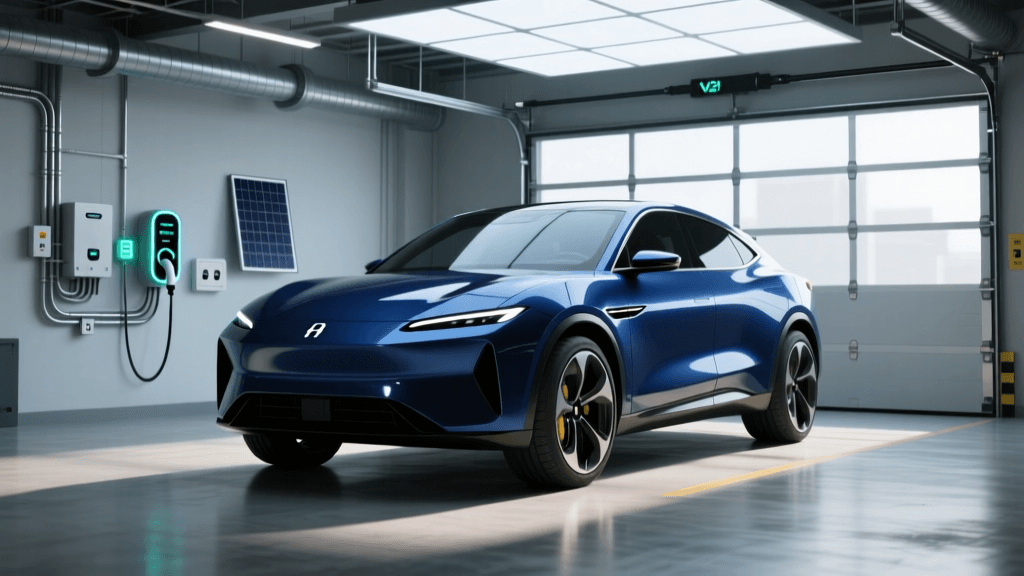
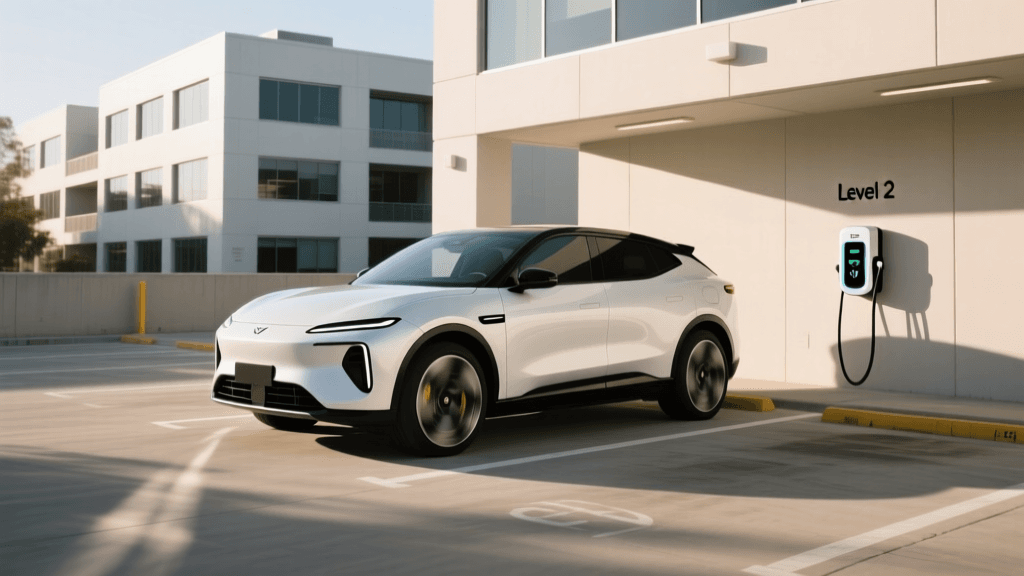
The modern garage is undergoing a radical transformation. It is no longer just a place to park your car and store holiday decorations; it is rapidly becoming the primary energy hub of the smart home. As electric vehicle (EV) adoption accelerates, homeowners are realizing that a standard Level 2 EV charger installation is just the beginning. The industry is shifting toward bidirectional charging, vehicle-to-home (V2H) integration, and AI-driven load management. Consequently, a thorough garage electrical wiring assessment before an EV charger install is no longer just about meeting today's minimum code requirements—it is about future-proofing your home's infrastructure for the next decade of automotive and energy innovation.
According to the Environmental Protection Agency (EPA), home charging remains the most convenient and cost-effective method for EV owners, yet the electrical demands of next-generation EVs are pushing residential grids to their limits. This guide will walk you through a comprehensive, forward-looking electrical assessment of your garage, ensuring your wiring, panels, and conduits are prepared for both current Level 2 charging and future V2H capabilities.
Step 1: The Baseline Electrical Panel Assessment
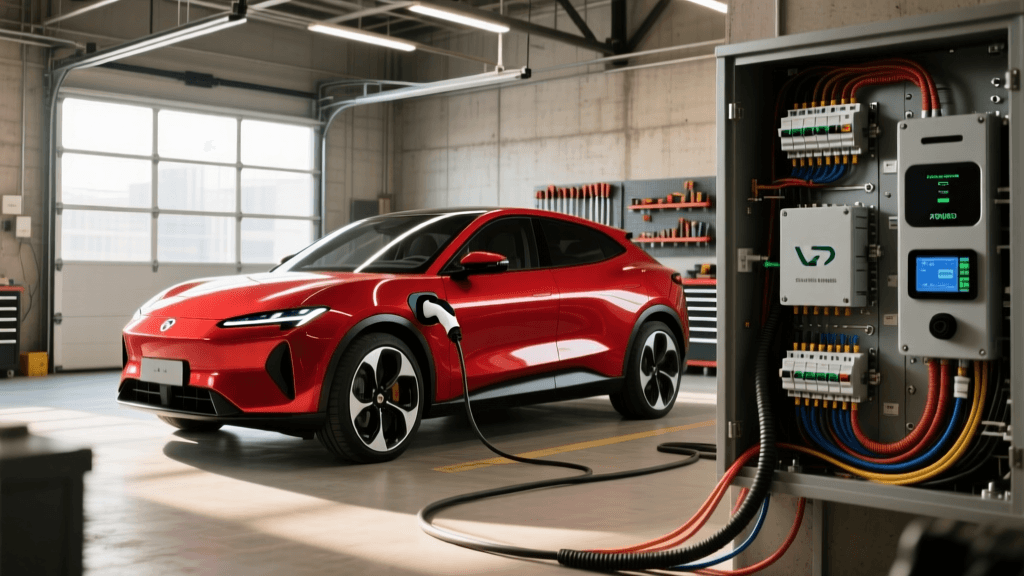
Before any wire is pulled or conduit is bent, a licensed electrician must perform a rigorous load calculation on your existing electrical panel. Most modern homes are equipped with a 200-amp main service panel, while older homes may still rely on 100-amp or 150-amp services. However, the main breaker size is only half the story.
During the assessment, the electrician will evaluate the bus bar rating and the existing continuous loads (HVAC, electric ovens, dryers, and water heaters). Under the National Electrical Code (NEC), specifically Article 220, a residential electrical panel cannot be loaded beyond 80% of its total capacity for continuous loads. If you have a 200-amp panel, your maximum safe continuous load is 160 amps. If your home's baseline peak usage already hovers around 140 amps, adding a 48-amp Level 2 charger (like the Tesla Wall Connector or ChargePoint Home Flex) will trip the main breaker or, worse, cause a thermal event.
Future-Proofing Tip: If your load calculation leaves less than 60 amps of headroom, do not simply downgrade to a 32-amp charger. Instead, assess the viability of a 400-amp service upgrade or the integration of a smart load management system (discussed below) to accommodate future dual-EV households.
Step 2: Wire Gauge, Conduit Sizing, and the 80% Rule
The physical wiring inside your garage walls or running through surface-mounted conduit dictates the maximum amperage your EV charger can safely draw. The National Fire Protection Association (NFPA) outlines strict ampacity tables in NEC Article 310. Because EV charging is considered a 'continuous load' (running for 3 hours or more), the wiring must be rated for 125% of the charger's maximum output.
Here is a quick reference for copper wire gauges (AWG) based on the breaker size and actual continuous charging amperage:
- 40-Amp Breaker (32A Continuous): Requires minimum 8 AWG copper wire.
- 50-Amp Breaker (40A Continuous): Requires minimum 6 AWG copper wire (Standard for NEMA 14-50 receptacles).
- 60-Amp Breaker (48A Continuous): Requires minimum 4 AWG copper wire (Standard for hardwired units like the Tesla Wall Connector).
- 100-Amp Breaker (80A Continuous): Requires minimum 2 AWG copper wire (Necessary for future high-speed residential charging or heavy-duty truck charging).
Future-Proofing Tip: Even if you are only installing a 48-amp hardwired charger today, have your electrician install 1.5-inch or 2-inch PVC conduit instead of the minimum required 3/4-inch. This allows you to easily pull thicker 2 AWG or 1/0 AWG wires in the future without tearing open drywall or replacing the entire conduit run.
Future Trend 1: Bidirectional Charging (V2H and V2G) Readiness
The most significant industry outlook trend is bidirectional charging. Vehicles like the Ford F-150 Lightning, Hyundai Ioniq 5, and upcoming Silverado EV are capable of Vehicle-to-Home (V2H) and Vehicle-to-Grid (V2G) power transfer. This turns your EV into a massive rolling battery capable of powering your home during a grid outage or selling energy back to the utility during peak pricing hours.
The U.S. Department of Energy (DOE) highlights that V2H integration requires specialized bidirectional EVSE (Electric Vehicle Supply Equipment) and a fundamentally different wiring topology. Standard NEMA 14-50 outlets are entirely insufficient for V2H. Bidirectional systems like the Ford Charge Station Pro require a hardwired connection, often necessitating heavier gauge wiring (such as 2 AWG or 1/0 AWG copper) and a dedicated communication line between the EVSE, the smart panel, and the home's automatic transfer switch.
When assessing your garage wiring for V2H readiness, you must also evaluate the physical space. Bidirectional wall units are significantly larger and heavier than standard Level 2 chargers. The assessment must verify that the garage wall framing can support the 40+ pound unit and that there is adequate clearance for the thicker, less flexible charging cables.
Future Trend 2: Smart Panels and AI Load Management
Historically, if a garage wiring assessment revealed insufficient panel capacity, the only solution was a costly and time-consuming utility service upgrade (e.g., moving from 200A to 400A). Today, the industry outlook points heavily toward Smart Electrical Panels and AI-driven circuit-level load management as the preferred alternative.
Products like the SPAN Drive smart panel or Schneider Electric Wiser energy management systems replace traditional dumb breakers with IoT-enabled, software-controlled breakers. During your wiring assessment, an installer can determine if your existing wiring can be seamlessly migrated to a smart panel. These systems use AI to monitor your home's real-time energy consumption. If you turn on the electric oven and the HVAC kicks in, the smart panel automatically throttles the EV charger's amperage down to prevent a main breaker trip, then ramps it back up when the oven turns off.
Comparison Chart: Traditional Panel Upgrade vs. Smart Load Management
| Feature | Traditional 400A Service Upgrade | Smart Panel / AI Load Management | Standard 200A (No Management) |
|---|---|---|---|
| Upfront Hardware Cost | $1,500 - $2,500 | $1,500 - $3,500 | $0 (Existing) |
| Labor & Utility Fees | $1,500 - $3,000+ | $500 - $1,500 | $0 |
| Installation Timeline | 2 - 6 Months (Utility dependent) | 1 - 2 Days | Immediate |
| V2H / Solar Integration | Excellent | Excellent (Software optimized) | Poor / Impossible |
| Outage Resilience | None (Without battery backup) | High (Prioritizes critical circuits) | None |
Step 3: Thermal Imaging and Safety Audits
A critical, often overlooked step in the modern garage wiring assessment is the thermal imaging scan. Older homes, or homes with DIY electrical work, may suffer from loose connections, degraded insulation, or failing bus bars that do not show up on a standard visual inspection. When a 48-amp EV charger runs continuously for 8 hours every night, it generates significant heat. A loose neutral wire or a corroded breaker connection will heat up rapidly, posing a severe fire hazard.
Require your electrical contractor to perform a FLIR thermal scan of your panel under a heavy baseline load before finalizing the EV charger installation plan. Furthermore, if your home was built in the 1960s or 1970s, the assessment must check for aluminum branch wiring. Aluminum wiring requires special CO/ALR rated connectors and torque specifications; failing to address this during the EVSE install is a leading cause of residential electrical fires.
Cost Analysis and ROI of Forward-Looking Assessments
Investing in a comprehensive, future-proof wiring assessment and subsequent infrastructure upgrades yields a strong return on investment. A standard NEMA 14-50 installation using existing 200A capacity typically costs between $500 and $1,200. However, if you proactively upgrade to a smart panel or pull oversized conduit for future V2H integration during the initial install, you might spend an additional $1,500 to $2,500.
While this increases the day-one cost, it prevents the need to rip open finished garage walls, replace conduit, or pay for secondary electrician mobilization fees when you inevitably purchase a second EV or a bidirectional-capable truck in the next three to five years. Additionally, many local utilities now offer rebates of up to $1,000 for installing smart, grid-interactive EVSE equipment and load management systems, effectively subsidizing the future-proofing process.
Conclusion: Preparing for the Next Decade of EVs
The days of simply plugging a car into a standard wall outlet are behind us. As the automotive industry pivots toward software-defined vehicles, bidirectional energy flow, and smart home integration, your garage's electrical infrastructure must be treated as a critical, long-term asset. By conducting a rigorous wiring assessment that looks beyond today's 40-amp requirements and prepares for V2H, smart panels, and heavier wire gauges, you ensure that your home is ready to support the next generation of electric mobility safely and efficiently.