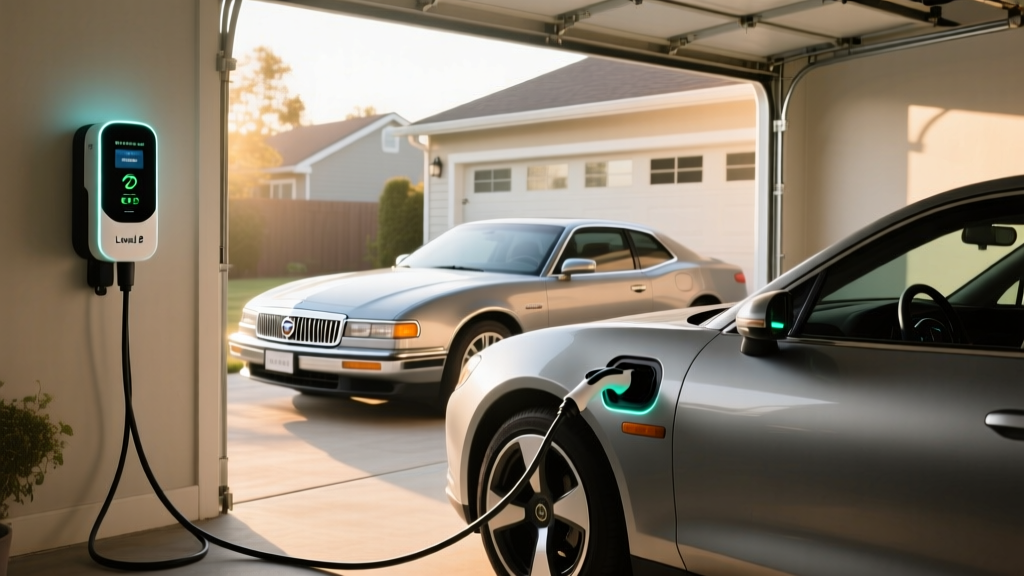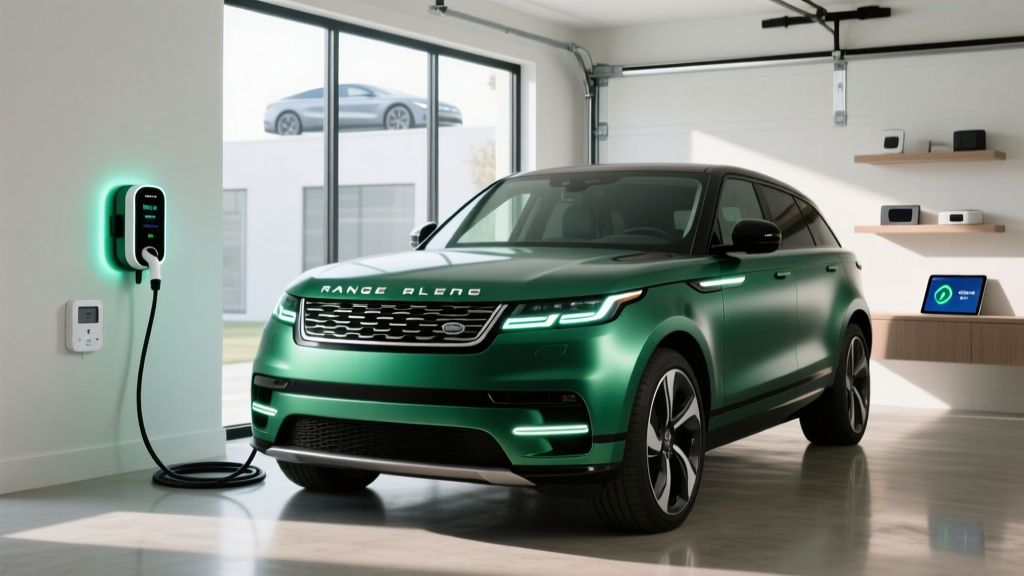
The 2026 Range Rover Electric marks Jaguar Land Rover's entry into the luxury full-size electric SUV segment, built on the flexible MLA (Modular Longitudinal Architecture) platform. With a large battery pack and premium positioning, owners will need a robust home charging strategy and a clear understanding of public charging logistics. This guide covers exactly what it takes to charge the 2026 Range Rover Electric — from electrical panel requirements to real-world cost-per-mile calculations.
2026 Range Rover Electric: Battery and Charging Specs at a Glance
Before planning your charging infrastructure, you need the vehicle's baseline numbers. The 2026 Range Rover Electric is expected to feature a large lithium-ion battery pack (estimated 100+ kWh usable capacity, NMC chemistry) with an EPA-estimated range targeting 300+ miles. JLR has confirmed DC fast-charging capability, though final peak kW figures remain preliminary as of early 2026.
| Spec | Value |
|---|---|
| Battery Capacity (Usable) | ~100–117 kWh (est., NMC) |
| EPA Range | ~300+ mi (preliminary) |
| Max DC Fast Charge Rate | ~200+ kW (est.) |
| 10–80% DC Fast Charge Time | ~25–35 min (est.) |
| Level 2 AC Onboard Charger | 11–22 kW (likely dual-phase capable) |
| Charge Port / Connector | CCS1 (with NACS adapter availability TBD) |
| Base MSRP | ~$120,000+ (announced; final pricing TBD) |
Note: As the 2026 Range Rover Electric has been announced but final production specs are still being confirmed by JLR, figures above are estimates based on the MLA platform's known capabilities and industry reporting. Check Land Rover's official site for updates.
Charging Levels Explained: Level 1, Level 2, and DC Fast Charging
Understanding the three charging tiers is essential. The critical distinction: kW (kilowatts) measures power — how fast energy flows into the battery. kWh (kilowatt-hours) measures energy — how much the battery holds. Think of kW as the width of a hose and kWh as the size of the bucket.
| Level | Voltage / Amperage | Power (kW) | Miles of Range Added per Hour | 0–100% Full Charge Time |
|---|---|---|---|---|
| Level 1 (120V household outlet) | 120V / 12A | ~1.4 kW | ~3–5 mi/hr | 70+ hours |
| Level 2 (240V home/public) | 240V / 40–48A | 9.6–11.5 kW | ~25–35 mi/hr | 10–14 hours |
| DC Fast Charging (public stations) | 400–800V DC | 50–200+ kW | ~150–500+ mi/hr | 10–80% in ~25–35 min |
For a vehicle with the Range Rover Electric's large battery, Level 1 is essentially an emergency trickle — it would take over three days of continuous plugging to fully recharge from empty. Level 2 home charging is the practical baseline for daily ownership. DC fast charging handles road trips and quick top-ups but isn't designed for daily use due to battery thermal stress and higher costs.
Home Charger Installation: Electrical Requirements and Costs
Installing a Level 2 home charger for a large-battery luxury EV requires careful electrical planning. Here's what you need to know.
Electrical Requirements
- Circuit: A dedicated 240V circuit, typically 50A or 60A (to support continuous 40A or 48A charging, per NEC 80% rule for continuous loads)
- Wire gauge: 6 AWG copper for 50A; 4 AWG for 60A circuits
- Outlet type: NEMA 14-50 (most common) or hardwired connection (often preferred for 48A+ chargers)
- Panel capacity: Most homes need a 200A main panel minimum. If your home has a 100A panel — common in pre-1990 construction — you'll likely need a panel upgrade
Panel Upgrade Considerations
A 200A panel upgrade from a licensed electrician typically runs $2,000–$4,500 depending on your utility's service drop, local code requirements, and whether the meter base also needs replacement. Some utilities offer panel-upgrade rebates — check with your provider before proceeding. If your panel is already 200A with available breaker slots and sufficient load calculation headroom, you can skip this step.
Permits and Inspections
Nearly all jurisdictions require an electrical permit for EV charger installation. Permit fees range from $50–$250 depending on your municipality. The inspection ensures the circuit, wiring, breaker sizing, and GFCI protection meet NEC Article 625 (EV charging equipment code). Do not skip this — unpermitted work can void home insurance claims and cause issues at resale.
| Item | Low Estimate | High Estimate | Notes |
|---|---|---|---|
| Level 2 Charger (Equipment) | $400 | $750 | 40A–48A smart charger, NEMA 14-50 or hardwired |
| Electrician Labor (standard install) | $500 | $1,500 | Varies by run length, wall type, conduit needs |
| Materials (wire, conduit, breaker) | $150 | $400 | Longer runs from panel to garage cost more |
| Electrical Permit | $50 | $250 | Varies by jurisdiction |
| Panel Upgrade (if needed) | $2,000 | $4,500 | 100A → 200A service upgrade |
| Total (No Panel Upgrade) | $1,100 | $2,900 | |
| Total (With Panel Upgrade) | $3,100 | $7,400 |
The IRS §30D credit does not cover home charging equipment for most buyers (the alternative fuel vehicle refueling property credit under §30C has separate eligibility and location-based restrictions). Check your state and utility for local rebates — many offer $250–$1,000 toward charger installation.
Connector Compatibility: CCS1, NACS, and Adapter Requirements
The 2026 Range Rover Electric is expected to ship with a CCS1 (Combined Charging System) charge port, consistent with JLR's current global EV architecture. However, the North American charging landscape is rapidly shifting toward the NACS (North American Charging Standard) pioneered by Tesla, with Ford, GM, Rivian, and others already adopting it.
| Connector | Used By | Network Access | Adapter Needed for Range Rover Electric? |
|---|---|---|---|
| CCS1 | VW, Hyundai, BMW, JLR, most legacy EVs | Electrify America, EVgo, ChargePoint, Ionity | Native — no adapter needed |
| NACS (Tesla) | Tesla, Ford, GM, Rivian (2025+), others | Tesla Supercharger network | Yes — CCS-to-NACS adapter (~$200–$300) |
| CHAdeMO | Nissan Leaf (legacy) | Limited, declining | Not recommended — no viable adapter |
Key recommendation: Purchase a CCS-to-NACS adapter to unlock Tesla Supercharger access. Tesla's Supercharger network remains the most reliable and widely deployed DC fast-charging infrastructure in the US, with over 6,000 stations and 30,000+ stalls. For a luxury EV buyer planning road trips, this adapter is nearly essential. Verify adapter compatibility with JLR once official specifications are released.
Recommended Level 2 Home Chargers for the Range Rover Electric
With a large ~110 kWh battery, you want a charger that delivers maximum practical Level 2 speed. A 48A charger on a 60A circuit delivers 11.5 kW — adding roughly 30–35 miles of range per hour, enough to fully replenish overnight.
ChargePoint Home Flex
- Power Output: Up to 12 kW (50A, adjustable down to 16A)
- Connector: CCS1 (J1772 + CCS combo)
- Cable Length: 23 feet
- Smart Features: Wi-Fi, Alexa integration, scheduling, energy tracking via app
- Installation: NEMA 14-50 plug or hardwired
- Price: ~$550–$650
Best for: Flexible amperage adjustment to match your panel capacity.
Wallbox Pulsar Plus (48A)
- Power Output: 11.5 kW (48A)
- Connector: CCS1 (J1772 + CCS combo)
- Cable Length: 25 feet
- Smart Features: Wi-Fi + Bluetooth, Power Sharing (daisy-chain two units on one circuit), app scheduling
- Installation: Hardwired (NEMA 14-50 version available)
- Price: ~$500–$600
Best for: Compact size and dual-charger setups for two-EV garages.
Emporia Vue + EV Charger
- Power Output: Up to 11.5 kW (48A)
- Connector: CCS1 (J1772 + CCS combo)
- Cable Length: 24 feet
- Smart Features: Whole-home energy monitoring, solar integration, real-time cost tracking, EV-only circuit monitoring
- Installation: Hardwired or NEMA 14-50
- Price: ~$400–$550 (charger); ~$100–$200 additional for Vue energy monitor
Best for: Solar-equipped homes and detailed energy-cost tracking.
Cost to Charge: Home vs. Public vs. Gas Comparison
Charging economics vary dramatically depending on where and when you plug in. Below is a realistic cost comparison using the Range Rover Electric's estimated ~110 kWh battery and ~300-mile range.
| Scenario | Cost per kWh | Full Charge Cost (~110 kWh) | Cost per Mile (~300 mi range) |
|---|---|---|---|
| Home (off-peak utility rate) | $0.12/kWh | $13.20 | $0.044/mi |
| Home (average US rate) | $0.17/kWh | $18.70 | $0.062/mi |
| Public Level 2 (network) | $0.25–$0.35/kWh | $27.50–$38.50 | $0.092–$0.128/mi |
| DC Fast Charging (public) | $0.35–$0.55/kWh | $38.50–$60.50 | $0.128–$0.202/mi |
| Gas Equivalent (Range Rover 3.0L I6, 20 MPG, $3.80/gal) | — | ~$76 per tank | $0.190/mi |
Home charging at off-peak rates delivers roughly 75–80% savings per mile compared to a comparable gas-powered Range Rover. Even at average residential rates, the EV cuts fuel costs by about two-thirds. However, exclusive reliance on DC fast charging narrows the savings gap significantly — in some markets, peak-rate DCFC can approach or exceed the cost of gasoline per mile. Home charging access is the single biggest economic factor in EV ownership.
Safety, Code, and Best Practices
EV charging involves sustained high-current draw — often 8–12 hours continuously. This is fundamentally different from typical household appliance use and demands proper installation.
- Dedicated circuit: Your Level 2 charger must be on its own dedicated breaker — never shared with other outlets or appliances
- GFCI protection: NEC 2020+ requires GFCI protection for outdoor EV outlets; many jurisdictions now require it indoors as well. Hardwired chargers may have GFCI built into the unit
- Outdoor rating: If your charge point is outside (carport, driveway), the charger must carry a NEMA 4 or NEMA 4X weatherproof rating. All three chargers recommended above meet this standard
- Cable management: Avoid running charging cables across walkways. Use a wall-mounted holster or cable reel to prevent trip hazards and cable damage
- Thermal monitoring: Quality chargers include built-in temperature sensors at the plug and internal components. If the plug overheats, the charger should auto-throttle or shut down. Check for UL listing (not just "UL pending")
- Never use extension cords: No extension cord is rated for sustained 40–48A EV charging. If the cable doesn't reach, relocate the charger or have an electrician extend the circuit
DC Fast Charging on the Road: What to Expect
The Range Rover Electric's estimated 200+ kW peak DC fast-charge capability means you can add significant range during a typical rest stop. However, real-world DC charging involves nuances that spec sheets don't convey.
Charge curve taper: Peak kW is only sustained at low state-of-charge (typically 10–40%). As the battery fills, the charge rate tapers to protect cell health. Expect the curve to look roughly like this:
- 10–40% SoC: Near peak rate (~180–200 kW)
- 40–60% SoC: Moderate taper (~120–150 kW)
- 60–80% SoC: Significant taper (~60–100 kW)
- 80–100% SoC: Very slow (~15–30 kW) — avoid unless necessary
Preconditioning: If the Range Rover Electric supports battery preconditioning (routing to a charger in the navigation system), use it. Preconditioning warms the battery to optimal temperature, enabling faster charge acceptance — especially critical in cold weather, where an un-preconditioned battery may accept only 40–60% of its peak charge rate.
Practical road-trip strategy: Plan stops at 150–200 mile intervals, charge from ~15% to ~80%, and move on. Charging from 80–100% at a DC fast charger can take as long as 10–80% due to taper — it's almost always faster to make two shorter stops than one long one.
Frequently Asked Questions
How much does it cost to install a home EV charger for the Range Rover Electric?
A standard Level 2 installation (48A charger, 60A circuit, NEMA 14-50 outlet, ~30-foot wire run) typically costs $1,100–$2,900 including equipment, electrician labor, materials, and permit. If your home needs a panel upgrade from 100A to 200A service, add $2,000–$4,500. Always get 2–3 quotes from licensed electricians who specialize in EV installations.
How fast will each charging level add range to the Range Rover Electric?
Level 1 (120V) adds approximately 3–5 miles of range per hour — essentially useless for a 110+ kWh battery. Level 2 (240V, 48A) adds roughly 25–35 miles per hour, fully recharging overnight in 10–14 hours. DC fast charging at 200 kW can add 150+ miles in 15–20 minutes, with a 10–80% session taking approximately 25–35 minutes.
Which connector is compatible with the 2026 Range Rover Electric?
The Range Rover Electric is expected to use CCS1 natively. For Tesla Supercharger access, you'll need a CCS-to-NACS adapter (estimated $200–$300). Confirm adapter compatibility with JLR closer to the vehicle's delivery date, as third-party adapter certification varies by manufacturer.
How much does charging cost per mile compared to gas?
At home off-peak rates ($0.12/kWh), the Range Rover Electric costs roughly $0.04–$0.06 per mile — about 75% less than a gas Range Rover at $0.19/mile. Public DC fast charging at $0.45/kWh narrows the gap to $0.15–$0.20/mile, approaching gas costs. Home charging access is essential for the economic case.
What electrical upgrades might I need for a home charger?
If your home has a 200A electrical panel with available breaker slots and sufficient load capacity (calculated by an electrician), you likely need only a new 60A double-pole breaker and wiring run. Homes with 100A panels — common in older construction — will likely need a full service upgrade to 200A, adding $2,000–$4,500. Some homes with 400A service (common in large luxury homes) will have no issues whatsoever.
Is DC fast charging bad for the battery long-term?
Occasional DC fast charging has minimal impact on modern battery health. However, daily DCFC use — especially at high state-of-charge and in hot climates — accelerates degradation. JLR's battery warranty (typically 8 years/100,000 miles with a 70% capacity retention threshold) covers excessive degradation. For daily use, Level 2 home charging is gentler and cheaper.
Does the 2026 Range Rover Electric qualify for the federal EV tax credit?
Federal §30D tax credit eligibility depends on MSRP caps ($80,000 for SUVs), buyer income limits ($300K joint / $150K single), and battery critical-mineral and component sourcing requirements. At an estimated $120,000+ MSRP, the Range Rover Electric will exceed the MSRP cap and will not qualify for the federal credit. Check IRS guidelines for current rules and consult a tax professional.
Sources: fueleconomy.gov (EPA efficiency data), IRS §30D clean vehicle credit rules, Land Rover USA (manufacturer specifications). All pricing and specifications are estimates based on available preliminary data as of early 2026 and are subject to change upon official release.