If you've ever owned or admired a 1996 Buick Riviera Supercharged, you know the 3800 Series II supercharged V6 delivers 240 horsepower and a throaty exhaust note that modern EVs simply can't replicate. But that L67 engine also returns roughly 18 MPG combined, meaning fuel costs add up fast. This guide breaks down exactly what it takes to set up home EV charging in 2026 — and compares the per-mile cost against filling up that classic Buick — so you can decide whether electrification makes financial sense alongside or instead of a cherished garage queen.
Charging Levels Explained: Speeds in kW and Miles Per Hour
The single most important distinction in EV charging is between kW (kilowatts), which measures power or flow rate, and kWh (kilowatt-hours), which measures energy or total capacity. Think of kW as the width of the pipe and kWh as the size of the bucket. A 10 kW charger fills a 75 kWh battery in roughly 7.5 hours, while a 150 kW DC fast charger can take it from 10–80% in under 30 minutes.
| Level | Voltage | Max Power (kW) | Miles of Range Added Per Hour | Best Use Case |
|---|---|---|---|---|
| Level 1 | 120V AC | 1.0–1.4 kW | 3–5 mi/hr | Overnight top-offs, PHEVs, low-mileage drivers |
| Level 2 | 240V AC | 7.2–19.2 kW | 25–70 mi/hr | Daily home charging, workplace charging |
| DC Fast Charge | 400–800V DC | 50–350 kW | 150–1,200 mi/hr (peak) | Road trips, highway corridors |
Real-world caveat: DC fast chargers do not sustain peak power for the entire session. A vehicle rated for 250 kW peak may only hold that rate between 10–40% State of Charge (SoC), then taper to 150 kW, then 75 kW, and finally 25 kW above 80%. This is the charge curve, and it's why manufacturers quote 10–80% times rather than 0–100%.
How Much Does It Cost to Install a Home EV Charger?
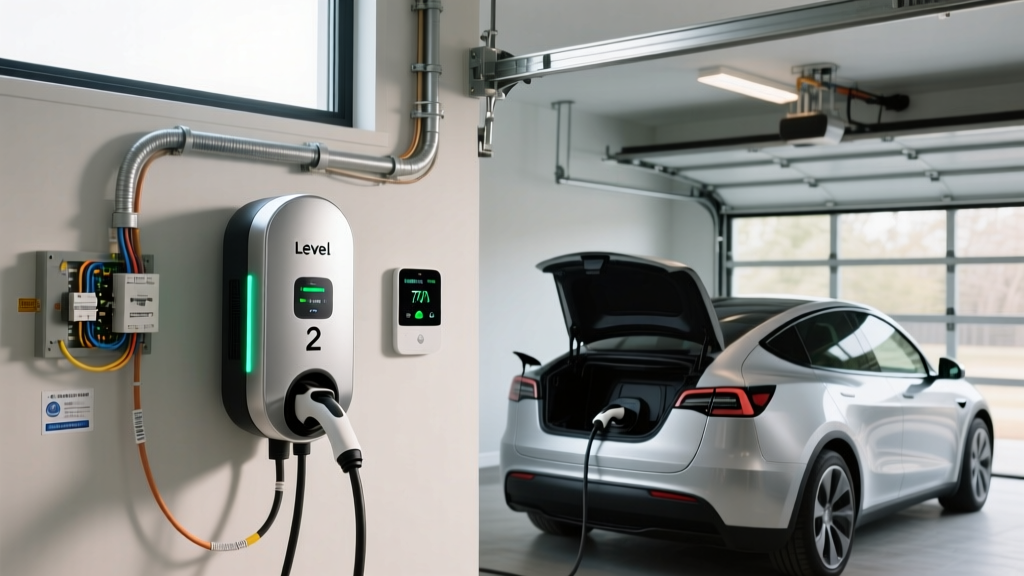
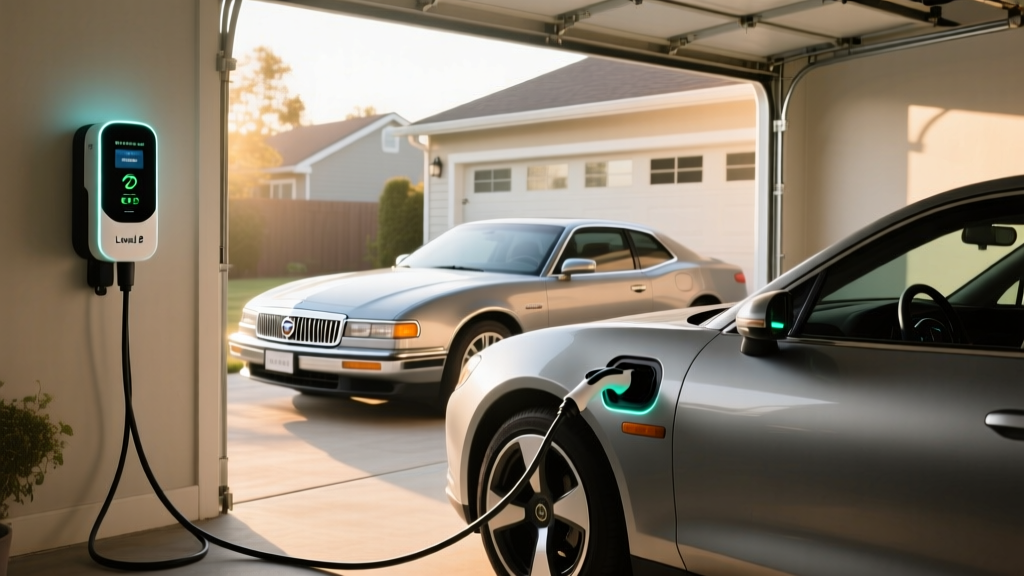
A Level 2 home charger installation in 2026 typically requires a dedicated 240V circuit, a hardwired wall connector or NEMA 14-50 outlet, and a permit from your local building department. Costs vary widely depending on your electrical panel's capacity and the distance from the panel to your garage or driveway.
| Cost Component | Simple Install (Panel Adjacent) | Complex Install (Long Run / Panel Upgrade) |
|---|---|---|
| EVSE Equipment (Level 2 charger) | $350–$650 | $350–$750 |
| Electrician Labor | $400–$800 | $1,200–$3,000 |
| Electrical Permit | $50–$150 | $50–$200 |
| Panel Upgrade (100A → 200A, if needed) | $0 (not needed) | $1,500–$3,500 |
| Total Estimated Cost | $800–$1,600 | $3,100–$7,450 |
Panel upgrade gotcha: Homes built before 2000 — including any garage that once housed a 1996 Buick Riviera Supercharged — often have 100-amp or even 60-amp service panels. Adding a 40-amp dedicated circuit for an EV charger on a 100-amp panel that's already near capacity will require a service upgrade to 200 amps. Budget $1,500–$3,500 for this, and factor in 2–4 weeks for utility coordination.
Some utilities offer rebates of $200–$500 for Level 2 installations, and certain states provide additional incentives. Always check with your local utility and consult a licensed electrician for a site-specific quote — never rely on generic online estimates for final pricing.
Connector Compatibility: NACS, CCS1, and CHAdeMO
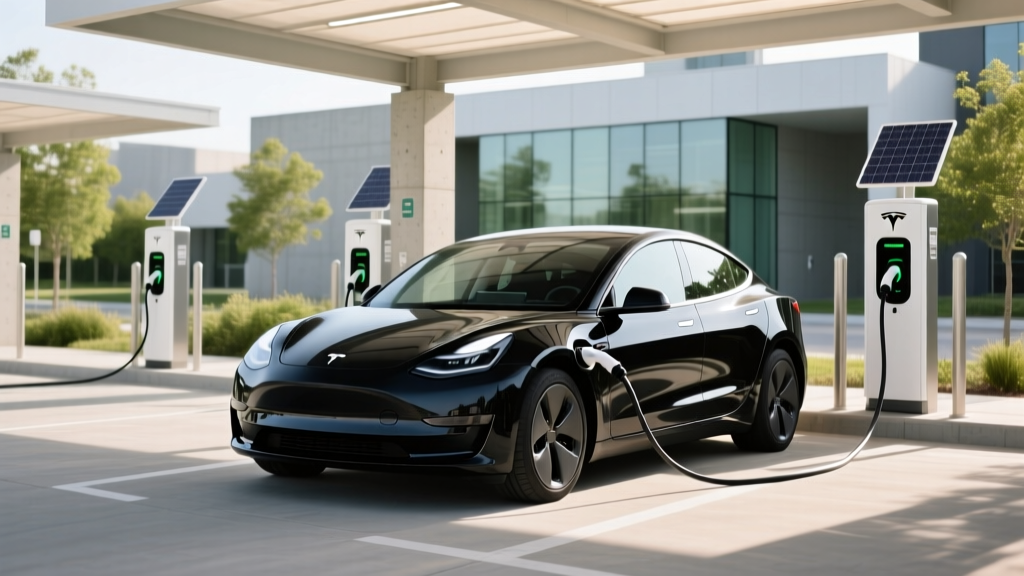
As of the 2026 model year, the connector landscape has consolidated significantly. The North American Charging Standard (NACS), originally developed by Tesla, is now the dominant plug for new vehicles sold in the US. Most legacy CCS1 vehicles can access Tesla Superchargers via a manufacturer-approved adapter, and CHAdeMO remains limited to the Nissan Leaf and a handful of older models.
| Connector | Brands Using It (2026 Models) | DC Fast Charge Networks | Adapter Needed? |
|---|---|---|---|
| NACS (Tesla) | Tesla, Ford, GM, Rivian, Volvo, Polestar, BMW, Hyundai, Kia, Subaru | Tesla Supercharger, Electrify America (select), EVgo, ChargePoint | No (native on new models) |
| CCS1 | Legacy VW ID.4, some 2023–2025 models, Stellantis EVs | Electrify America, EVgo, ChargePoint | NACS-to-CCS adapter (~$200) for Supercharger access |
| CHAdeMO | Nissan Leaf (final years) | Limited Electrify America / EVgo stations | No widely available adapter to NACS |
Adapter note: If you buy a home Level 2 charger with a NACS connector and own a CCS1 vehicle, you'll need a J1772-to-NACS or CCS-to-NACS adapter. Most Level 2 chargers still ship with J1772 connectors (the universal AC standard) and include a NACS adapter in the box, but always verify before purchasing.
Cost to Charge Per Mile vs. Fueling a 1996 Buick Riviera Supercharged
The 1996 Buick Riviera Supercharged carries EPA ratings of approximately 16 MPG city and 25 MPG highway, averaging about 19 MPG combined in real-world mixed driving, per fueleconomy.gov. At $3.40 per gallon (2026 national average for premium unleaded — the L67 supercharged engine recommends premium), fuel cost works out to roughly $0.179 per mile.
Now compare that with common EV charging scenarios:
| Charging Scenario | Rate ($/kWh) | Vehicle Efficiency (kWh/100 mi) | Cost Per Mile | Savings vs. Buick |
|---|---|---|---|---|
| Home off-peak (utility TOU rate) | $0.09 | 30 kWh/100 mi | $0.027 | 85% cheaper |
| Home standard residential rate | $0.15 | 30 kWh/100 mi | $0.045 | 75% cheaper |
| Public Level 2 (ChargePoint, etc.) | $0.30 | 30 kWh/100 mi | $0.090 | 50% cheaper |
| DC Fast Charging (Electrify America) | $0.48 | 30 kWh/100 mi | $0.144 | 20% cheaper |
| 1996 Riviera Supercharged (premium gas) | $3.40/gal | 19 MPG | $0.179 | Baseline |
The takeaway: Even at the most expensive public DC fast-charging rates, an efficient EV costs less per mile than the supercharged Riviera. At home off-peak rates, charging is roughly 6.6× cheaper per mile than premium gasoline. Over 12,000 miles per year, that's a savings of $1,824 annually using home off-peak charging vs. fueling the Buick.
Of course, the Riviera isn't a daily commuter for most owners — it's a weekend classic. But if you're considering an EV as your daily driver while keeping the Buick for car shows, the math overwhelmingly supports electrification for the miles that matter.
Charging Time Examples: What to Expect With Common Battery Sizes
Charge times depend on three variables: battery capacity (kWh), charger power output (kW), and the vehicle's onboard charge acceptance rate. Here are realistic estimates for popular 2026 EV battery sizes:
| Vehicle Example | Usable Battery (kWh) | Level 2 at 11.5 kW (48A) | DC Fast 10–80% | Level 1 at 1.2 kW |
|---|---|---|---|---|
| Tesla Model Y (Long Range) | 75 kWh | ~6.5 hours (0–100%) | ~22 min (250 kW peak) | ~62 hours |
| Hyundai Ioniq 5 (Long Range) | 77.4 kWh | ~7 hours (0–100%) | ~18 min (350 kW capable) | ~64 hours |
| Ford F-150 Lightning (Extended) | 131 kWh | ~11.5 hours (0–100%) | ~38 min (150 kW peak) | ~109 hours |
| Chevrolet Equinox EV | 85 kWh | ~7.5 hours (0–100%) | ~30 min (150 kW peak) | ~71 hours |
Cold-weather reality check: In temperatures below 32°F, DC fast charging can slow by 20–40% due to battery thermal management needs. Always precondition your battery (most EVs do this automatically when you set a charging stop in navigation) to warm the pack and restore peak charge acceptance. Level 2 home charging times are less affected by cold since the session is long enough that the thermal system can manage temperatures gradually.
Recommended Home EV Chargers for 2026
Here are four widely available, well-reviewed Level 2 home chargers, each with specific power output, connector type, and smart features. We selected these based on reliability, UL certification, and broad vehicle compatibility.
| Charger Model | Max Power Output | Amperage | Connector | Cable Length | Smart Features | Approx. Price |
|---|---|---|---|---|---|---|
| Tesla Wall Connector (Gen 4) | 11.5 kW | 48A | NACS (native) | 24 ft | Wi-Fi, OTA updates, load sharing, Powerwall integration | $425 |
| ChargePoint Home Flex (2nd Gen) | 12 kW (configurable) | Up to 50A | J1772 (NACS adapter included) | 23 ft | Wi-Fi, app scheduling, Alexa, utility demand-response | $550 |
| Emporia Level 2 EV Charger | 11.5 kW | 48A | J1772 (NACS adapter available) | 24 ft | Wi-Fi, energy monitoring, solar integration, time-of-use scheduling | $399 |
| Grizzl-E Smart (United Chargers) | 10 kW | 40A | J1772 or NACS | 24 ft | OCPP protocol, app control, extreme cold rated (-40°F), aluminum case | $499 |
Choosing the right amperage: Your charger's amperage should not exceed 80% of the circuit breaker rating (per National Electrical Code continuous-load rules). A 60-amp breaker supports a 48-amp charger; a 50-amp breaker supports a 40-amp charger. Always have your electrician size the circuit correctly — never oversize the charger for a circuit that can't handle it.
Safety, Electrical Code, and Installation Requirements
EV charging is a high-draw, continuous electrical load — the NEC defines continuous loads as those running 3 hours or more, and a full EV charge session routinely exceeds that. Here's what proper installation requires:
- Dedicated circuit: Your Level 2 charger must be on its own dedicated breaker — it cannot share a circuit with other outlets or appliances.
- GFCI protection: The 2023 NEC update (adopted by most jurisdictions by 2026) requires GFCI protection for all EV charging outlets. Hardwired chargers may have GFCI built into the unit; plug-in units via NEMA 14-50 require a GFCI breaker, which adds $50–$120 to the panel cost.
- Outdoor rating: If your charger is installed outdoors (driveway, exterior wall), the EVSE must carry a NEMA 4 or NEMA 4X weather rating. All four chargers listed above meet this standard.
- Permit and inspection: Most municipalities require an electrical permit and post-installation inspection for new 240V circuits. This typically costs $50–$200 and ensures the work meets code — skipping it risks insurance claim denials and home-sale inspection failures.
- Wire gauge: A 48-amp charger on a 60-amp circuit typically requires 4 AWG copper wire for runs under 50 feet; longer runs may need 3 AWG to prevent voltage drop. Your electrician will calculate this based on your specific layout.
Do not DIY the 240V wiring. Even experienced home-electrical hobbyists should defer to a licensed electrician for EV charger circuits. The continuous-load nature of EV charging means any undersized wire, loose connection, or improper breaker creates a sustained fire risk — not a brief spark. The National Fire Protection Association's NEC guidelines are the governing standard.
Frequently Asked Questions
How much does it cost to install a home EV charger?
A straightforward Level 2 installation with a panel adjacent to the garage typically costs $800–$1,600 including equipment, electrician labor, and permit. If your home needs a panel upgrade from 100A to 200A service, expect $3,100–$7,450 total. Always get a site-specific quote from a licensed electrician.
How fast will each charging level add range?
Level 1 (120V) adds 3–5 miles per hour. Level 2 (240V) adds 25–70 miles per hour depending on amperage and vehicle efficiency. DC fast charging adds 150–1,200 miles per hour at peak, but tapers significantly above 80% SoC — a 10–80% session on a modern EV takes 18–38 minutes depending on the vehicle and charger.
Which connector is compatible with my EV?
For 2026 models, most new EVs use NACS (Tesla's standard). Legacy CCS1 vehicles can use adapters for Supercharger access. CHAdeMO is limited to the Nissan Leaf. For Level 2 home charging, J1772 is the universal AC connector, and most new chargers include a NACS adapter in the box.
How much does charging cost per mile compared to gas?
At home off-peak rates ($0.09/kWh), an efficient EV costs about $0.027 per mile — 85% cheaper than fueling a 1996 Buick Riviera Supercharged at $0.179 per mile on premium gasoline. Even public DC fast charging at $0.48/kWh costs $0.144 per mile, still 20% less than the supercharged Riviera.
What electrical upgrades might I need?
Homes with 100-amp or 60-amp electrical panels may require a service upgrade to 200 amps before adding a 40–48 amp dedicated EV circuit. This costs $1,500–$3,500 and requires utility coordination. You may also need a GFCI breaker ($50–$120), a new sub-panel if the main panel is full, or heavier-gauge wire for long conduit runs.
Can I charge my EV from a standard 120V outlet?
Yes — Level 1 charging works on any standard household 120V outlet and adds 3–5 miles of range per hour. This is adequate for PHEVs with small batteries (10–18 kWh) or for BEV owners who drive under 30 miles daily and can charge overnight. For anything more, a 240V Level 2 installation is strongly recommended.
Is there a federal tax credit for home charger installation?
The IRS §30C Alternative Fuel Vehicle Refueling Property Credit covers up to 30% of home EV charger equipment and installation costs, capped at $1,000. However, eligibility depends on whether your census tract qualifies as a low-income or non-urban area under current IRS guidelines. Check IRS.gov or consult a tax professional before assuming eligibility.
Whether you're keeping a 1996 Buick Riviera Supercharged as a weekend show car or trading it in for a modern EV, understanding the real costs of home charging — from panel upgrades to per-mile economics — ensures you make a decision based on data, not guesswork. The numbers consistently show that even the most expensive public charging undercuts premium gasoline, and home charging delivers savings that compound with every mile you drive.