The search for a Nissan Frontier supercharged pickup leads most enthusiasts to the aftermarket or to Nissan's own concept history — there is no factory-supercharged Frontier in the 2026 lineup. Nissan's midsize truck continues with its naturally aspirated 3.8L V6 rated at 310 hp and an EPA combined 21 MPG. But as supercharger kits (Magnuson, ProCharger) push enthusiasts toward 400+ hp and single-digit MPG, a growing number of truck buyers are asking a different question: would an electric pickup actually cost less to run, and what does home charging really involve?
This guide uses the Frontier supercharged build as a baseline to walk through the full EV charging picture for truck buyers — Level 1/2/DC speeds, home installation costs, connector compatibility, and per-mile economics — so you can decide whether electrification or forced induction makes more sense for your driveway.
Charging Levels Explained: kW, Miles Per Hour, and Truck Battery Sizes
The single most important distinction in EV charging: kW (kilowatts) measures power — how fast energy flows. kWh (kilowatt-hours) measures energy — the size of the battery tank. A 131 kWh battery (F-150 Lightning Extended Range) holds roughly 60% more energy than a 77 kWh battery (Rivian R1T Standard), so it takes proportionally longer to fill at the same kW rate.
| Level | Voltage | Typical Power (kW) | Miles of Range Added Per Hour | Best For |
|---|---|---|---|---|
| Level 1 | 120V AC | 1.0–1.9 kW | 3–5 mi/hr | Overnight top-ups, PHEVs |
| Level 2 (Home) | 240V AC | 7.2–19.2 kW | 25–65 mi/hr | Daily truck charging |
| DC Fast (Public) | 400–800V DC | 50–350 kW | 150–800+ mi/hr (peak) | Road trips, fleet depots |
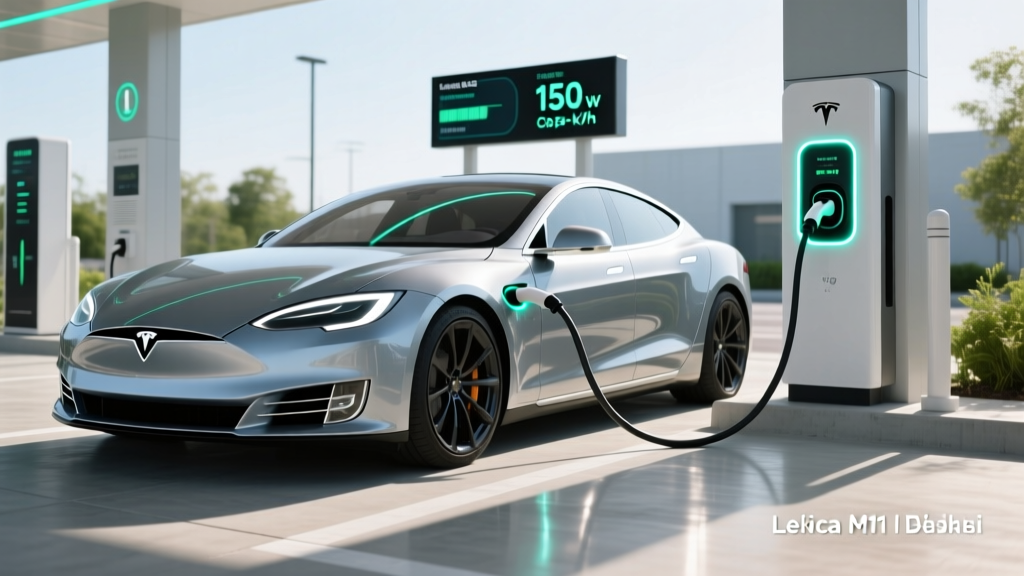
For a truck like the F-150 Lightning Extended Range (131 kWh usable, EPA 320 mi), expect a 10–80% DC fast charge in roughly 40–45 minutes on a 150 kW CCS station, tapering sharply above 80%. On a 19.2 kW home Level 2, a full 0–100% charge takes about 7–8 hours — ideal for overnight.
Home Charger Installation: What It Actually Costs in 2026
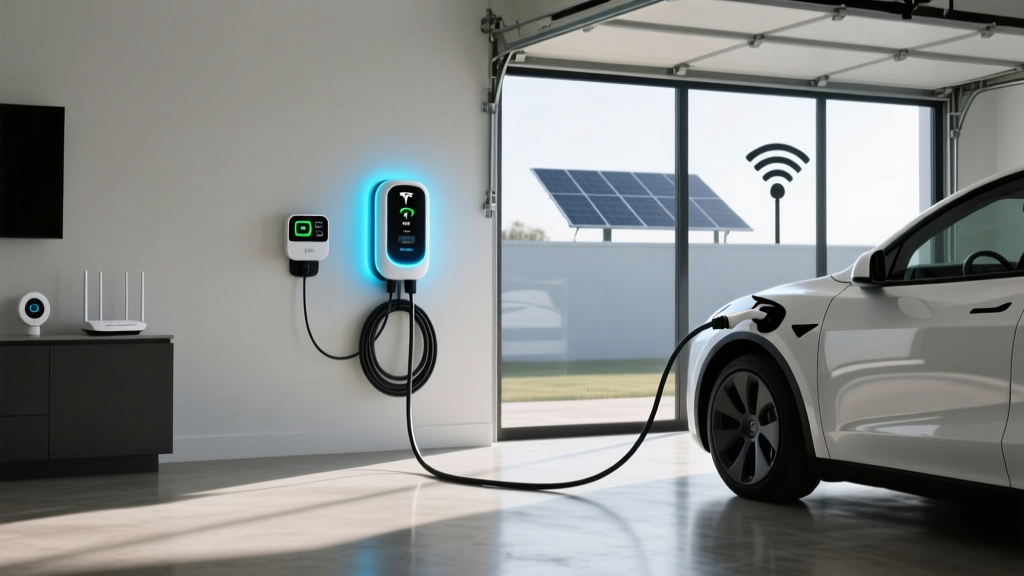
Most truck owners can run a Level 2 charger on an existing 240V circuit, but older homes (pre-2000) often need a panel upgrade to support a 40A–60A dedicated EV circuit alongside existing loads like dryers and HVAC. Here's the realistic cost breakdown:
| Item | Typical Range | Notes |
|---|---|---|
| Level 2 EVSE hardware | $400–$750 | 40A–48A smart charger (ChargePoint, Emporia, Wallbox) |
| Electrician labor (short run) | $500–$1,200 | Panel within 20 ft of garage, no drywall repair |
| Electrician labor (long run) | $1,200–$2,500 | Conduit runs over 50 ft, attic/crawlspace routing |
| Permit & inspection | $100–$350 | Varies by municipality |
| Panel upgrade (if needed) | $1,500–$3,500 | 100A → 200A service, common in 1970s–1990s homes |
| Total (no panel upgrade) | $1,000–$2,300 | Typical suburban garage install |
| Total (with panel upgrade) | $2,500–$5,800 | Older homes, larger EVSE |
The electrical spec you'll target: a dedicated 240V/50A NEMA 14-50 outlet (for plug-in chargers) or a hardwired 60A circuit (for 48A chargers). The National Electrical Code (NEC) requires EV circuits to be rated at 125% of continuous load, so a 40A charger needs a 50A breaker, and a 48A charger needs a 60A breaker. GFCI protection is required for outdoor receptacles in most jurisdictions as of the 2023 NEC cycle.
Connector Compatibility: NACS, CCS1, CHAdeMO, and Truck Adapters
As of 2026, the connector landscape has consolidated heavily toward NACS (Tesla's North American Charging Standard), but legacy trucks and older public stations still use CCS1 or CHAdeMO.
| Vehicle | Native Connector | DC Fast Network Access | Adapter Needed? |
|---|---|---|---|
| Ford F-150 Lightning (2025+) | NACS | Tesla Supercharger + CCS networks | CCS adapter for older EA stations |
| Rivian R1T (2025+) | NACS | Tesla Supercharger + CCS networks | None for Superchargers |
| Chevy Silverado EV | NACS | Tesla Supercharger + CCS networks | None for Superchargers |
| GMC Hummer EV | CCS1 (legacy) | Electrify America, EVgo | NACS adapter for Superchargers |
| 2022–2024 F-150 Lightning | CCS1 | EA, EVgo, Supercharger w/adapter | Ford-provided NACS adapter |
If you're cross-shopping a supercharged Frontier against a used 2022 Lightning, that older CCS1 truck will need Ford's official NACS adapter (~$230) to access Tesla's 17,000+ Supercharger stalls. Newer 2025+ Lightnings ship with NACS natively.
Cost Per Mile: Supercharged Frontier vs. Electric Trucks
A supercharged Frontier running 8–10 psi of boost on a Magnuson TVS1900 kit typically drops to 13–15 MPG combined on premium fuel. At $4.10/gallon (2026 national average for premium), that's roughly $0.29–$0.33 per mile just in fuel.
| Vehicle / Scenario | Efficiency | Energy Cost | $/Mile |
|---|---|---|---|
| Nissan Frontier SC (14 MPG, premium) | 14 MPG | $4.10/gal | $0.29 |
| F-150 Lightning (home, off-peak $0.14/kWh) | 2.0 kWh/mi | $0.14/kWh | $0.056 |
| F-150 Lightning (home, peak $0.28/kWh) | 2.0 kWh/mi | $0.28/kWh | $0.112 |
| F-150 Lightning (public DC, $0.48/kWh) | 2.0 kWh/mi | $0.48/kWh | $0.24 |
| Rivian R1T Dual (home, $0.14/kWh) | 2.2 kWh/mi | $0.14/kWh | $0.062 |
| Stock Frontier V6 (21 MPG, regular) | 21 MPG | $3.40/gal | $0.162 |
At 15,000 miles/year, the supercharged Frontier burns about $4,350 in fuel. The Lightning on home off-peak charging costs $840/year — a $3,500 annual gap that pays off the home charger installation in under a year. Even on expensive public DC fast charging, the EV truck costs less per mile than the supercharged gasser.
Charging Time Examples for Common Truck Batteries
Real-world charging times depend on the charge curve: trucks peak at their rated kW only between ~10–50% State of Charge (SoC), then taper. Here's what to expect for 10–80% charges:
- Ford F-150 Lightning Ext. Range (131 kWh, 150 kW peak CCS): 10–80% in ~42 minutes on a 150 kW station. Peaks near 150 kW to ~55%, tapers to 50 kW above 80%.
- Rivian R1T Max Pack (149 kWh, 220 kW peak NACS): 10–80% in ~35 minutes on a V4 Supercharger or equivalent CCS station.
- Chevy Silverado EV 4WT (200+ kWh, 350 kW peak): 10–80% in ~30 minutes on a 350 kW Electrify America stall — among the fastest in the segment.
- Level 2 home (11.5 kW, 48A): Full 0–100% on a 131 kWh Lightning takes ~11.5 hours. Most owners charge from 20–80%, which takes about 7 hours overnight.
Preconditioning matters. Trucks with active thermal management (all three above) will warm the battery to optimal temperature when you navigate to a DC fast charger via the nav system. Skipping preconditioning in cold weather can cut peak charge rate by 30–50%.
Recommended Level 2 Chargers for Truck Owners (2026)
Truck batteries are large — 100–200 kWh — so you want at least 48A (11.5 kW) to charge overnight. Here are three proven options:
Emporia Vue Level 2 EV Charger
- Power: 48A / 11.5 kW (hardwired) or 40A / 9.6 kW (NEMA 14-50 plug)
- Connector: J1772 (NACS adapter included in 2025+ kits)
- Cable: 24 ft
- Smart features: Wi-Fi, scheduling, energy monitoring, solar integration
- Price: $399 (plug-in) / $449 (hardwired)
- Best for: Budget-conscious truck owners with solar panels
ChargePoint Home Flex (2nd Gen)
- Power: Up to 50A / 12 kW (adjustable via DIP switch)
- Connector: NACS native (2025+ models) or J1772
- Cable: 23 ft
- Smart features: Alexa, scheduling, ChargePoint network integration
- Price: $599
- Best for: Reliability-focused buyers wanting native NACS
Wallbox Pulsar Plus (48A)
- Power: 48A / 11.5 kW (hardwired 60A circuit)
- Connector: J1772 (NACS version available)
- Cable: 25 ft
- Smart features: Wi-Fi + Bluetooth, Power Sharing (dual-charger on one circuit)
- Price: $549
- Best for: Two-EV households sharing a single 60A circuit
Safety, Electrical Code, and Panel-Upgrade Gotchas
Before hiring an electrician, check these items:
- Panel capacity: A 200A panel can typically support a 60A EV circuit. A 100A panel (common in 1970s–1990s homes) almost certainly needs an upgrade. Your electrician will perform a NEC Article 220 load calculation.
- Dedicated circuit: EV chargers must be on a dedicated breaker — no sharing with dryers, ovens, or HVAC.
- GFCI protection: Required for outdoor 240V receptacles in most jurisdictions post-2023 NEC. Hardwired chargers avoid this requirement and are generally more reliable.
- Outdoor rating: If your charger mounts outside, it must be NEMA 4 rated (rain/sleet). All three chargers above carry outdoor ratings.
- Permit: Most municipalities require an electrical permit ($100–$350) and a final inspection. Skipping this can void home insurance coverage for EV-related electrical faults.
The National Electrical Code is updated every three years; your local jurisdiction may be on the 2020, 2023, or 2026 cycle. Always confirm with your local building department.
Frequently Asked Questions
How much does it cost to install a home EV charger?
Typical range is $1,000–$2,300 for a 48A Level 2 charger with a short conduit run on an existing 200A panel. Homes needing a 100A→200A panel upgrade should budget $2,500–$5,800 total. Get three quotes from licensed electricians — prices vary 2x by region.
How fast will each charging level add range to an EV truck?
Level 1 (120V): 3–5 miles per hour. Level 2 (240V, 48A): 25–35 miles per hour for a truck. DC Fast (150 kW): 3–5 miles per minute at peak, tapering above 80% SoC.
Which connector is compatible with my EV truck?
2025+ Ford, Rivian, GM, and most new EV trucks use NACS natively. Older 2022–2024 models (Lightning, Hummer EV) use CCS1 and may need a NACS adapter (~$200–$250) for Tesla Supercharger access. Check your owner's manual or the EPA fueleconomy.gov listing for your specific model year.
How much does charging cost per mile vs. gas?
Home off-peak charging ($0.14/kWh) costs $0.05–$0.06/mile for most EV trucks. A supercharged Nissan Frontier at 14 MPG on premium costs ~$0.29/mile — roughly 5x more. Public DC fast charging ($0.48/kWh) narrows the gap to ~$0.24/mile, still below the supercharged truck.
What electrical upgrades might I need?
Homes built before 2000 with 100A service almost always need a panel upgrade ($1,500–$3,500). Homes with 200A service typically need only a new 50A–60A breaker and conduit run. Your electrician will calculate total household load per NEC Article 220 before recommending a circuit size.
Is there a tax credit for home charger installation?
The federal Alternative Fuel Vehicle Refueling Property Credit (IRC §30C) covers 30% of home charger hardware and installation costs, up to $1,000. The charger must be installed in an eligible census tract (low-income or non-urban). Confirm eligibility with a tax professional — rules are tract-specific and change annually.
Verdict: Supercharger Kit or Level 2 Charger?
A Magnuson-supercharged Frontier delivers 400+ hp and visceral V6 sound, but at 13–15 MPG and $4,350/year in fuel, it's an emotional purchase. An F-150 Lightning or Rivian R1T on home Level 2 charging delivers instant torque (Lightning: 580 lb-ft, 0–60 in 3.8 sec), $840/year in electricity, and a $1,000–$2,300 one-time charger install that pays for itself in months. The math favors the EV truck for daily drivers; the supercharged Frontier wins at the drag strip and on the forum. Choose based on which driveway you spend more time in.