The Polestar 3 is a premium electric SUV built on Volvo's SPA2 platform with a 111 kWh gross battery (approximately 107 kWh usable) and an EPA-estimated range of up to 315 miles on the Long Range Dual Motor variant. But beyond range and performance, buyers are increasingly asking about one specific capability: Polestar 3 bidirectional charging. Can this SUV send power back to your home during an outage? Can it run your campsite appliances? And what does a full home charging setup actually cost?
This guide covers exactly what bidirectional features the Polestar 3 supports as of the 2026 model year, how each charging level performs in the real world, and what you need — electrically and financially — to install a proper Level 2 home charger.
What Bidirectional Charging Does the Polestar 3 Actually Support?
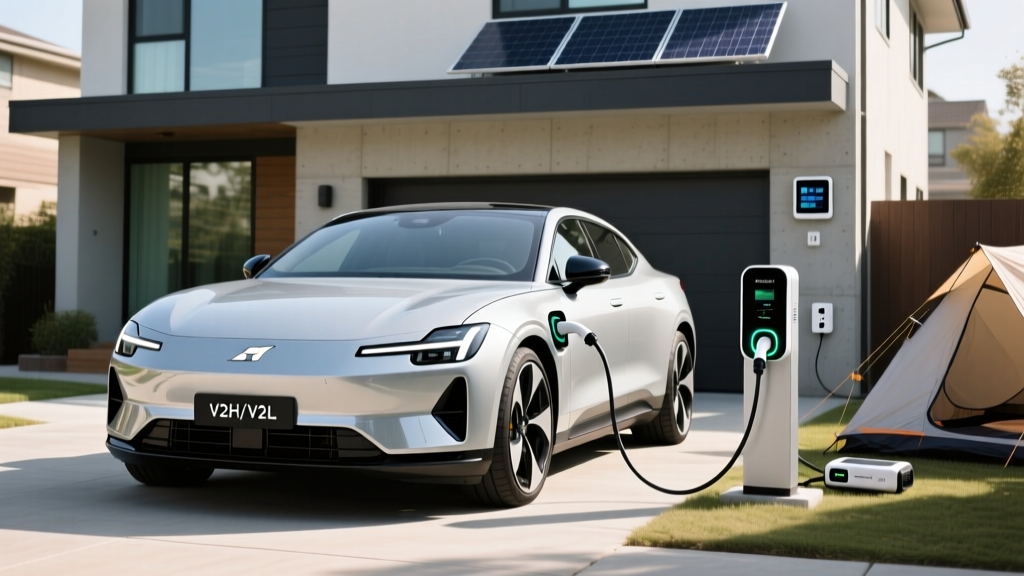
Bidirectional charging is a catch-all term that includes three distinct capabilities. Here is where the Polestar 3 stands on each:
| Feature | What It Does | Polestar 3 Status (2026) |
|---|---|---|
| V2L (Vehicle-to-Load) | Powers appliances/tools via an outlet or adapter from the car's battery | ✅ Supported via accessory adapter — up to ~3.6 kW output |
| V2H (Vehicle-to-Home) | Feeds power into your home's electrical panel during an outage | ⚠️ Hardware-capable; requires compatible bidirectional wallbox & home energy management system |
| V2G (Vehicle-to-Grid) | Sends power back to the utility grid for demand response or credits | ❌ Not yet commercially available in the US; utility programs limited |
The Polestar 3's SPA2 architecture was designed with bidirectional capability in mind. V2L is the most immediately useful feature: with a compatible adapter plugged into the charge port, you can run power tools, a mini-fridge, or a CPAP machine at roughly 3.6 kW — enough for most portable appliances. This is similar to the V2L functionality offered on the Hyundai Ioniq 5 and Ford F-150 Lightning.
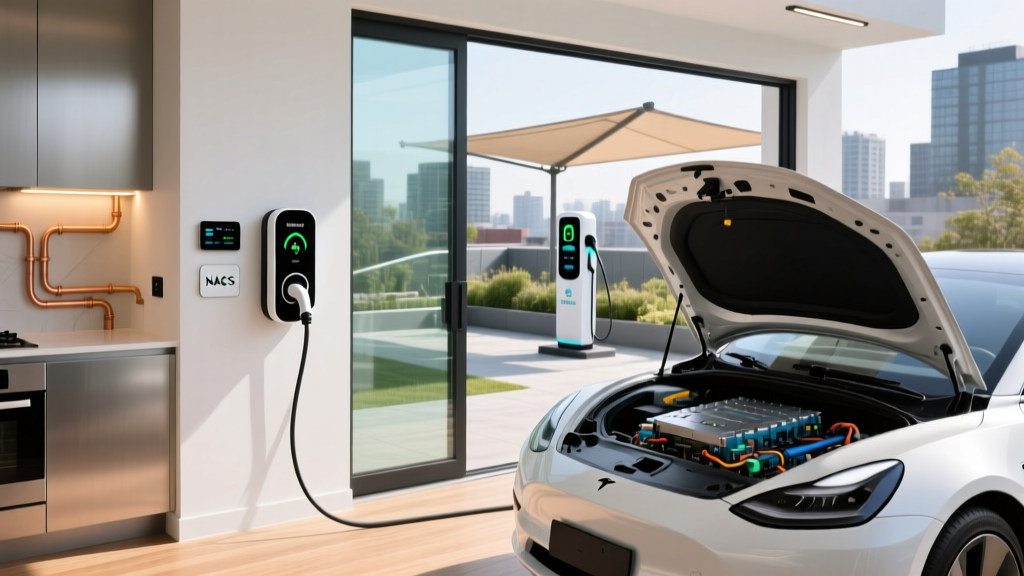
For V2H, the vehicle hardware supports it, but you need a bidirectional-capable wallbox charger (such as the Wallbox Quasar 2 or Fermata Energy FE-15) and a transfer switch or home energy management system like the Span smart panel. This is not a simple plug-and-play setup — budget for a significant electrical retrofit.
Charging Levels Explained: Speeds and Real-World Range Added
Understanding the difference between kW (power — the rate of charging) and kWh (energy — the battery's capacity) is critical. Think of kW as how fast water flows from a hose, and kWh as the size of the bucket you're filling. The Polestar 3's ~107 kWh usable battery is a large bucket, so charging speed matters enormously.
| Level | Voltage / Typical kW | Miles of Range Added per Hour | Full Charge Time (0-100%) |
|---|---|---|---|
| Level 1 (Standard 120V outlet) | 120V / ~1.4 kW | ~4–5 miles/hr | ~72+ hours |
| Level 2 (240V home/public) | 240V / 7.7–19.2 kW | ~25–65 miles/hr | ~6–14 hours |
| DC Fast Charging (public) | 400V+ / up to 250 kW peak | ~200–600+ miles/hr (burst) | 10–80% in ~30 min |
Real-world note: The Polestar 3's onboard AC charger is rated at 11 kW (three-phase in Europe, single-phase 48A in the US market). On a typical US 240V/48A Level 2 circuit, expect roughly 11 kW sustained, adding about 35–40 miles of range per hour. DC fast charging peaks at 250 kW on a capable CCS or NACS station, but the charge curve tapers significantly above 80% SoC to protect the battery. A 10–80% session takes approximately 30 minutes under optimal thermal conditions; add 5–10 minutes in cold weather without adequate preconditioning.
Home Charger Installation: Electrical Requirements and Costs
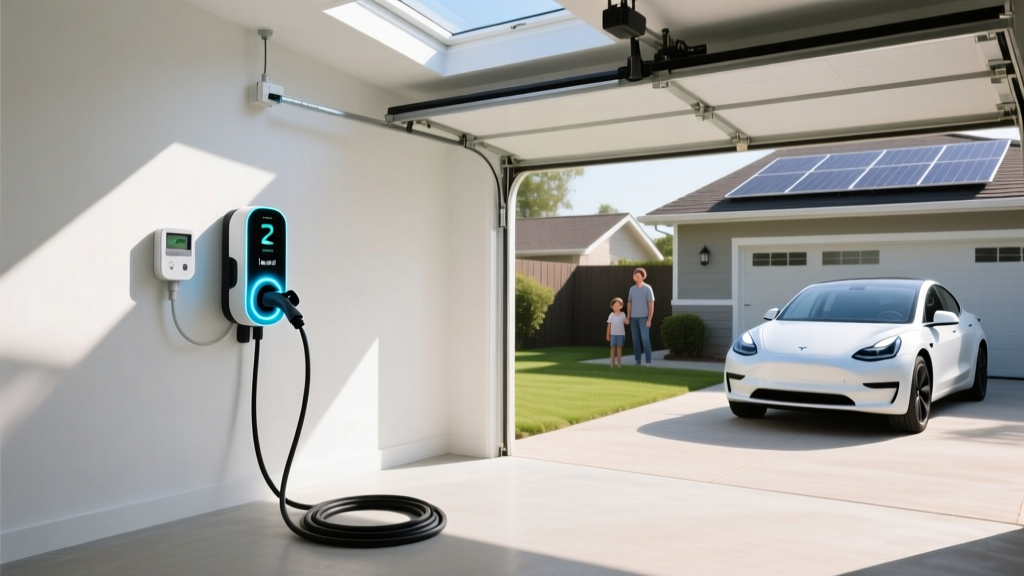
Installing a dedicated Level 2 home charger is the single most impactful upgrade for EV ownership. Here is what the Polestar 3 requires and what you should budget.
Electrical Requirements
- Circuit: Dedicated 60A breaker (for a 48A continuous charger) or 50A breaker (for 40A continuous)
- Voltage: 240V (NEMA 14-60 outlet or hardwired)
- Wire gauge: 6 AWG copper for 60A; 8 AWG for 50A
- Panel capacity: Most modern 200A panels can accommodate a 60A EV circuit. Older 100A panels will likely require an upgrade to 200A — a $1,500–$3,500 job.
Installation Cost Breakdown
| Item | Typical Cost Range | Notes |
|---|---|---|
| Level 2 Charger (hardware) | $400–$800 | Smart Wi-Fi chargers; bidirectional units cost $2,000+ |
| Electrician labor | $500–$2,000 | Depends on run length from panel to garage/carport |
| Permit & inspection | $50–$300 | Required in most jurisdictions; varies by municipality |
| Panel upgrade (if needed) | $1,500–$3,500 | 100A → 200A upgrade; not needed for most newer homes |
| Total (no panel upgrade) | $950–$3,100 | Average installs land around $1,500–$2,000 |
| Total (with panel upgrade) | $2,450–$6,600 | Older homes with 100A service |
Important: The federal Residential Clean Energy Credit (IRC §25D) does not cover EV chargers for most taxpayers after 2022. However, the Alternative Fuel Vehicle Refueling Property Credit (§30C) may provide up to $1,000 for home charging equipment installed in eligible census tracts. Check the IRS site and consult a tax professional for your specific eligibility.
Connector Compatibility: NACS, CCS, and Adapters
The North American charging connector landscape has shifted dramatically. Here is what Polestar 3 owners need to know:
| Connector | Standard | Polestar 3 Compatibility |
|---|---|---|
| CCS1 | Original US DC fast-charge standard | ✅ Native on 2024–2025 models |
| NACS (Tesla) | Tesla's connector, now adopted industry-wide | ✅ Adapter included or available; future model years may ship NACS-native |
| CHAdeMO | Legacy Japanese DC standard | ❌ Not compatible; no adapter available |
| J1772 | Level 2 AC charging standard | ✅ Native for AC charging |
As of 2026, Polestar has committed to NACS access for its vehicles, meaning Polestar 3 owners can use Tesla Supercharger stations with the appropriate adapter. This dramatically expands the available DC fast-charging network, particularly in rural corridors where Electrify America and other CCS networks have sparser coverage.
Cost to Charge: Per-Mile Economics vs. Gas
The Polestar 3 Long Range Dual Motor achieves an EPA-rated 86 MPGe combined (approximately 39 kWh/100 miles). Here is what that translates to in real dollars:
| Charging Scenario | $/kWh | Cost per 100 Miles | Cost per Mile |
|---|---|---|---|
| Home (off-peak / utility rate) | $0.13 | $5.07 | $0.051 |
| Home (peak / high-cost utility) | $0.28 | $10.92 | $0.109 |
| Public Level 2 (ChargePoint, etc.) | $0.35 | $13.65 | $0.137 |
| DC Fast (Electrify America / Tesla) | $0.48 | $18.72 | $0.187 |
| Gas SUV baseline (25 MPG, $3.50/gal) | — | $14.00 | $0.140 |
Charging at home on an off-peak rate is the clear winner — roughly a third of the per-mile cost of a comparable gas SUV. Even public DC fast charging is competitive with gas on a per-mile basis, though it erodes the cost advantage. For Polestar 3 owners with access to time-of-use utility rates, scheduling overnight charging between 11 PM and 6 AM maximizes savings.
Recommended Level 2 Chargers for the Polestar 3
Based on power output, build quality, smart features, and real-world reliability, here are our top picks for pairing with a Polestar 3:
ChargePoint Home Flex
- Power: Up to 12 kW (50A) on a 60A circuit
- Connector: J1772 (NACS adapter compatible)
- Cable length: 23 feet
- Smart features: Wi-Fi, scheduling, Alexa integration, energy tracking
- Price: ~$599
- Best for: Most Polestar 3 owners — flexible amperage settings let you match your panel's capacity
Emporia Level 2 EV Charger
- Power: Up to 11.5 kW (48A) on a 60A circuit
- Connector: J1772
- Cable length: 24 feet
- Smart features: Wi-Fi, solar integration, energy monitoring via Emporia Vue panel
- Price: ~$399
- Best for: Budget-conscious buyers who want energy monitoring and solar pairing
Wallbox Pulsar Plus
- Power: Up to 11.5 kW (48A)
- Connector: J1772
- Cable length: 25 feet
- Smart features: Wi-Fi/Bluetooth, Power Sharing (for multi-charger setups), compact form factor
- Price: ~$549
- Best for: Tight garage spaces; one of the smallest chargers at this power level
Wallbox Quasar 2 (Bidirectional)
- Power: Up to 11.5 kW AC charge / 7.4 kW DC bidirectional
- Connector: CCS1 or NACS (bidirectional DC)
- Cable length: Integrated
- Smart features: V2H/V2G capable, solar integration, outage backup mode
- Price: ~$2,500–$4,000 (plus home energy management system)
- Best for: Polestar 3 owners pursuing full V2H home backup — requires professional energy management install
Safety, Code, and Installation Best Practices
A Level 2 charger installation is not a DIY project. Here are the non-negotiable safety and code requirements:
- Dedicated circuit: The charger must have its own breaker — never share a circuit with other high-draw appliances (dryer, oven, HVAC).
- GFCI protection: NEC 2020+ requires GFCI protection for outdoor receptacles used for EV charging. Hardwired installations may not require a GFCI breaker depending on local code — your electrician will confirm.
- Outdoor rating: If mounted outside, the charger must carry a NEMA 4 (weatherproof) rating. All picks above meet this standard.
- Permit required: Most jurisdictions require an electrical permit for a new 240V circuit. Skipping the permit risks insurance denial if an electrical fire occurs.
- Cable management: A 23–25 foot cable is ideal for reaching the Polestar 3's rear-quarter charge port from most garage configurations. Avoid extension cords entirely.
Frequently Asked Questions
How much does it cost to install a home EV charger for the Polestar 3?
Expect $950–$3,100 for a standard installation (charger, electrician labor, and permit) if your electrical panel has sufficient capacity. If you need a panel upgrade from 100A to 200A, add $1,500–$3,500. Bidirectional V2H setups with a Wallbox Quasar 2 and energy management system can exceed $6,000 total.
How fast will each charging level add range to the Polestar 3?
Level 1 (120V) adds about 4–5 miles per hour — adequate only for overnight trickle charging or PHEVs. Level 2 (240V/48A) adds roughly 35–40 miles per hour, fully recharging the 107 kWh battery in about 10–12 hours. DC fast charging at 250 kW can take the battery from 10–80% in approximately 30 minutes under ideal conditions.
Which connector and charger is compatible with the Polestar 3?
The Polestar 3 uses J1772 for Level 2 AC charging and CCS1 for DC fast charging natively. With a NACS adapter, it can also access Tesla Supercharger stations. Any J1772 Level 2 charger will work for home charging. For V2H bidirectional charging, you need a CCS-compatible bidirectional wallbox.
How much does charging the Polestar 3 cost per mile vs. gas?
At a national average home electricity rate of $0.16/kWh and the Polestar 3's efficiency of ~39 kWh/100 miles, home charging costs about $0.063 per mile. A comparable gas SUV at 25 MPG with $3.50/gallon fuel costs $0.14 per mile — more than double. Public DC fast charging at $0.48/kWh raises the cost to ~$0.19/mile, slightly above gas.
What electrical upgrades might I need for a home charger?
Most homes built after 2000 with a 200A electrical panel can accommodate a 60A EV circuit without upgrades. Homes with 100A service, older wiring, or panels at near-capacity (common with electric heat, pool equipment, or large workshops) may need a panel upgrade. A licensed electrician can perform a load calculation to determine this before installation.
Can I use the Polestar 3 to power my home during an outage?
The Polestar 3 hardware supports V2H (Vehicle-to-Home), but you need a compatible bidirectional charger like the Wallbox Quasar 2, a home energy management system or transfer switch, and professional installation. The 107 kWh battery can theoretically power an average US home (~30 kWh/day) for 3+ days. However, this setup is complex and expensive — budget $5,000–$8,000 for a complete V2H installation.