Electric Vehicle Charging Station Incentives: What's Available in 2026?
Setting up home EV charging isn't just about buying a wallbox — it's about navigating a patchwork of federal, state, and utility incentives that can slash your installation costs by hundreds or even thousands of dollars. For 2026, the federal Alternative Fuel Vehicle Refueling Property Credit (IRC §30C) offers up to $1,000 off the cost of home charging equipment and installation, while dozens of utilities and state programs stack additional rebates on top.
This guide breaks down the full incentive landscape, real installation costs, electrical requirements, and the exact equipment you need to charge efficiently at home.
Federal Tax Credit for Home EV Chargers (IRC §30C)
The federal Alternative Fuel Vehicle Refueling Property Credit covers 30% of the cost of qualified home charging equipment and installation, capped at $1,000 per tax year. Key rules for 2026:
- Eligible costs: Level 2 charging equipment (the wallbox or pedestal) plus labor for electrical work directly related to the installation
- Cap: 30% of total cost, maximum $1,000 credit
- Location requirement: Equipment must be installed at your primary residence in a census tract that is non-urban or meets low-income community criteria (check the IRS lookup tool)
- Nonrefundable: The credit can reduce your tax liability to zero but won't generate a refund beyond that
- Form: File IRS Form 8911 with your annual tax return
Real example: A $600 Level 2 charger plus $1,200 in electrical labor = $1,800 total. At 30%, you'd claim $540. If your total project runs $3,333 or more, you hit the $1,000 cap.
State, Utility & Local Incentives to Stack
Federal credits are just the starting point. Many states and utilities offer additional rebates that can be combined with §30C:
- Utility rebates: Many investor-owned utilities offer $200-$500 rebates for Level 2 charger purchases, sometimes more if you enroll in a time-of-use (TOU) rate plan. Check your local utility's EV program page.
- State programs: States like California (CC4A), Colorado, New York, and others maintain active EV infrastructure incentive programs with varying eligibility and caps
- Municipal programs: Some cities and air quality management districts offer point-of-purchase rebates or permit fee waivers for EV charger installations
- Make-ready programs: Certain utilities cover the cost of running a dedicated 240V circuit to your garage, leaving you to pay only for the charger itself
Pro tip: Search the Alternative Fuels Data Center incentive database by your ZIP code to find every applicable program. Incentive availability changes frequently — confirm active status before purchasing.
Charging Levels Explained: Speed, Power & Real-World Range Added
Understanding charging levels is essential before selecting equipment. Power is measured in kilowatts (kW) — the rate of energy delivery. Energy is measured in kilowatt-hours (kWh) — the total amount stored in your battery. A 10 kW charger delivers 10 kWh of energy in one hour (minus efficiency losses).
| Level | Voltage | Power (kW) | Miles of Range Per Hour | Typical Use |
|---|---|---|---|---|
| Level 1 | 120V AC | 1.0–1.4 kW | 3–5 mi/hr | Overnight top-up, PHEVs, low-mileage drivers |
| Level 2 | 240V AC | 3.3–19.2 kW | 12–75 mi/hr | Home daily charging, workplace, public destinations |
| DC Fast Charge | 200–900V DC | 50–350 kW | 150–1,200 mi/hr (peak) | Road trips, highway corridors, rapid top-ups |
Charging time examples for common battery sizes (10% to 80% SoC):
- 60 kWh battery (e.g., base Tesla Model 3, Hyundai Kona Electric): ~7 hours on a 7.7 kW Level 2 circuit; ~22 minutes on a 150 kW DC fast charger (accounting for taper above 80%)
- 82 kWh battery (e.g., Ford Mustang Mach-E Extended Range): ~9.5 hours on 7.7 kW; ~28 minutes on a 150 kW DC fast charger
- 100 kWh battery (e.g., GMC Hummer EV, Rivian R1T Max Pack): ~12 hours on 7.7 kW; ~35 minutes on a 350 kW DC fast charger (if vehicle supports peak rate)
Why charging slows above 80%: Lithium-ion batteries accept charge fastest at low states of charge. As the battery fills, the battery management system (BMS) reduces current to protect cell health — this is called the charge curve taper. A charger rated at 250 kW may sustain that rate only between 10-40% SoC before stepping down progressively. Always plan road-trip stops around 10-80% windows for the fastest total time.
Home Installation: Electrical Requirements, Panel Upgrades & Costs
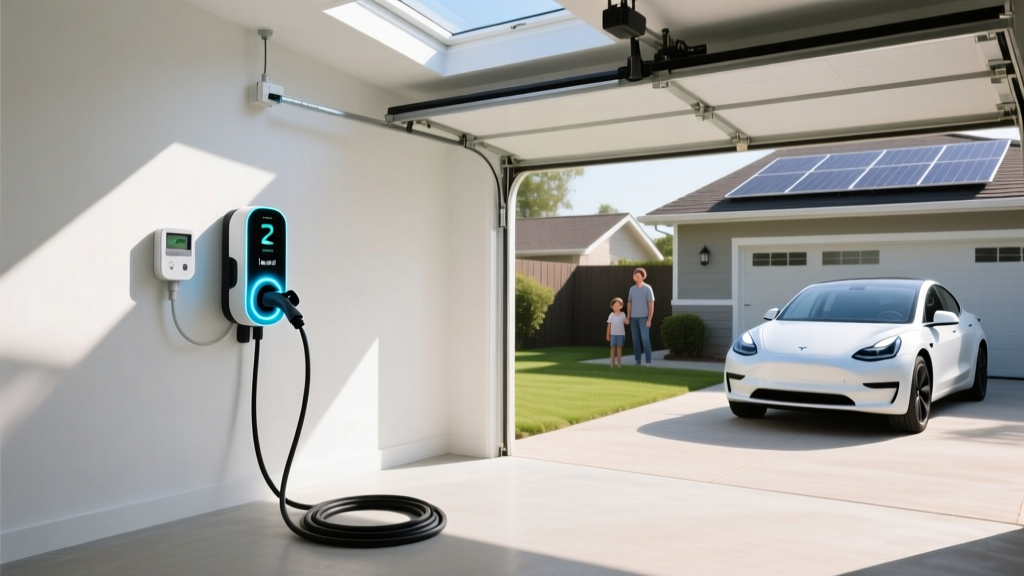
Most home Level 2 installations require a dedicated 240V circuit — the same voltage your electric dryer or oven uses. Here's what's involved:
Electrical Specifications
- Standard Level 2 circuit: 240V, 40-amp breaker (delivers up to 32A continuous / 7.7 kW to the vehicle)
- High-power Level 2: 240V, 60-amp breaker (delivers up to 48A continuous / 11.5 kW) — requires thicker wire (6 AWG copper) and a hardwired connection in most jurisdictions
- Maximum residential: 80-amp breaker (64A continuous / 15.4 kW) — supported by few vehicles (Tesla with High Amperage charger option, Lucid Air) and requires significant electrical infrastructure
Panel Upgrade Considerations
This is the cost variable that catches many homeowners off guard. If your home has a 100-amp electrical service panel (common in homes built before 1990), adding a 40A EV circuit may exceed your panel's capacity — especially if you're also running electric heat, a dryer, and an oven simultaneously.
- 100A panel: Likely needs an upgrade to 200A service to accommodate a 40A EV circuit. Cost: $1,500–$3,500 for the panel upgrade alone.
- 200A panel: Usually sufficient for a 40A EV circuit, assuming existing loads don't already consume most of the panel's capacity. An electrician will perform a load calculation per NEC Article 220.
- Workaround — smart load management: Devices like the Emporia Load Management Controller or Tesla Wall Connector with Power Sharing can dynamically reduce EV charging when other circuits draw heavy loads, potentially avoiding a panel upgrade entirely.
Installation Cost Breakdown
| Component | Cost Range | Notes |
|---|---|---|
| Level 2 charger (equipment) | $300–$700 | Varies by power output, cable length, smart features |
| Electrician labor (simple install) | $400–$800 | Short wire run, panel adjacent to garage, no upgrade needed |
| Electrician labor (complex install) | $800–$2,000 | Long wire run, conduit, subpanel, attic/crawlspace routing |
| Electrical panel upgrade (if needed) | $1,500–$3,500 | 100A to 200A service upgrade by licensed electrician |
| Permit & inspection | $50–$200 | Required by most jurisdictions; varies by municipality |
| Total (no panel upgrade) | $750–$1,700 | Most common scenario for 200A-panel homes |
| Total (with panel upgrade) | $2,250–$5,400 | Older homes needing service upgrade |
After incentives: Apply the $1,000 federal §30C credit plus any utility rebate ($200-$500 typical), and a $1,400 installation could drop to $400 or less out-of-pocket. Always confirm incentive eligibility before purchasing — some programs require pre-approval.
Connector Compatibility: NACS, CCS1, CHAdeMO & Adapter Needs
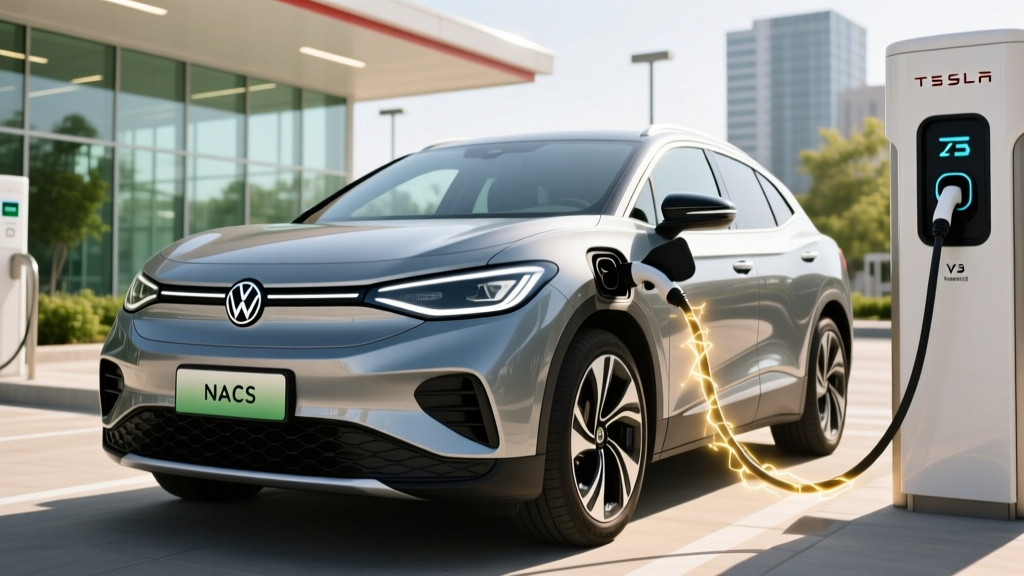
The North American charging connector landscape has consolidated significantly. Tesla's North American Charging Standard (NACS) is now the dominant connector for new vehicles, with most major automakers adopting it for 2025+ model years.
| Connector | Brands Using It (New Vehicles) | Home Charger Availability |
|---|---|---|
| NACS (Tesla) | Tesla, Ford, GM, Rivian, Volvo, Polestar, Mercedes-Benz, Nissan, Honda, Fisker, BMW (2025+), Hyundai/Kia (2025+) | Tesla Wall Connector, Emporia, ChargePoint, Grizzl-E (NACS models) |
| CCS1 | Legacy VW ID.4 (pre-2025), some remaining Hyundai/Kia (pre-adoption), BMW i4/iX (pre-2025) | ChargePoint Home Flex, Emporia, JuiceBox, Grizzl-E (CCS models) |
| CHAdeMO | Nissan Leaf (legacy — still sold but phasing out) | Limited home charger options; mostly public DC stations |
Adapter reality for 2026:
- If you drive a CCS1-equipped EV (purchased before your brand switched to NACS), you'll need a CCS-to-NACS adapter (~$150-$250) to access Tesla Superchargers. Tesla sells an official adapter; third-party options from Lectron and A2Z are also available.
- If you drive a NACS-equipped EV and need to use older CCS public chargers, a NACS-to-CCS adapter is available from Tesla and third parties.
- For home Level 2 charging, NACS and CCS1 connectors are physically different, so match your home charger's connector to your vehicle's inlet — or buy a charger with a J1772 connector and use the J1772-to-NACS adapter that ships with most new NACS vehicles.
Cost to Charge: Home vs. Public vs. Gas — Per-Mile Comparison
Charging at home on off-peak electricity is dramatically cheaper than gasoline per mile. Here's how the numbers compare across scenarios:
| Scenario | Rate | Cost Per Mile* |
|---|---|---|
| Home Level 2 (off-peak TOU rate) | $0.08–$0.12/kWh | $0.024–$0.036 |
| Home Level 2 (standard residential rate) | $0.14–$0.18/kWh | $0.042–$0.054 |
| Public Level 2 (network pricing) | $0.20–$0.35/kWh | $0.060–$0.105 |
| DC Fast Charge (public, peak) | $0.30–$0.55/kWh | $0.090–$0.165 |
| Gasoline (30 MPG combined, $3.40/gal) | $3.40/gallon | $0.113 |
| Gasoline (22 MPG combined, $3.40/gal) | $3.40/gallon | $0.155 |
*Assumes EV efficiency of 3.0–3.3 miles per kWh (typical for a midsize sedan/crossover like the Tesla Model 3 or Hyundai Ioniq 5). Cold weather and highway driving reduce efficiency by 10-30%.
Annual savings example: A driver covering 12,000 miles/year at 3.2 mi/kWh efficiency:
- Home off-peak charging ($0.10/kWh): $375/year
- Gas vehicle at 28 MPG ($3.40/gal): $1,457/year
- Annual fuel savings: ~$1,082
Those savings compound over a typical 8-10 year ownership period, often covering the entire cost of the vehicle's price premium and home charger installation multiple times over.
Equipment Recommendations: Top Home Level 2 Chargers for 2026
Here are proven Level 2 home chargers across price and feature tiers. All are UL-listed for safety compliance.
Tesla Wall Connector (Gen 4) — Best for NACS Vehicles
- Power output: Up to 11.5 kW (48A on a 60A circuit)
- Connector: NACS (native Tesla plug)
- Cable length: 24 feet
- Smart features: Wi-Fi connectivity, over-the-air firmware updates, Power Sharing (link multiple units on one circuit), load management with compatible panels
- Price: ~$475
- Best for: Tesla owners and any NACS-equipped vehicle (Ford, GM, Rivian, etc.)
Emporia Vue Level 2 Charger — Best Value with Smart Features
- Power output: Up to 11.5 kW (48A on a 60A circuit); configurable down to match your circuit
- Connector: J1772 (works with all EVs; NACS vehicles use included adapter)
- Cable length: 24 feet
- Smart features: Full energy monitoring via Emporia app, solar integration (charge only on excess solar), TOU scheduling, load management with Emporia service panel sensors
- Price: ~$399
- Best for: Solar owners, budget-conscious buyers, homes needing load management to avoid panel upgrades
ChargePoint Home Flex (2nd Gen) — Most Versatile
- Power output: Configurable from 16A to 50A (up to 12 kW on a 60A circuit)
- Connector: J1772 (universal); NACS adapter available
- Cable length: 23 feet
- Smart features: ChargePoint app scheduling, Alexa/Google Home integration, flexible amperage dial to match any circuit size
- Price: ~$599
- Best for: Multi-EV households, renters who may move (configurable to fit any home's electrical capacity)
Grizzl-E Smart — Most Durable for Outdoor Install
- Power output: Up to 10 kW (40A on a 50A circuit)
- Connector: J1772 or NACS (select at purchase)
- Cable length: 24 feet
- Smart features: Basic app scheduling, OCPP protocol support for utility demand-response programs
- Price: ~$449
- Best for: Outdoor installations (rated to -40°F), harsh climates, no-frills reliability
Safety, Electrical Code & Installation Best Practices
EV charging equipment draws sustained high current for hours at a time — far longer than most household appliances. This makes proper installation non-negotiable:
- Dedicated circuit: NEC Article 625 requires EV charging equipment to be on a dedicated branch circuit with no other outlets or loads. Do not share the circuit with a garage outlet or lighting.
- GFCI protection: 2026 NEC (and many jurisdictions on 2020/2023 NEC) requires GFCI protection for outdoor EV receptacles. Hardwired chargers may be exempt in some jurisdictions — confirm with your local inspector.
- Outdoor rating: If installing outdoors, ensure the charger carries a NEMA 4 (weatherproof) rating. Most quality units are rated for outdoor use, but the electrical junction box and conduit must also be weather-rated.
- Wire gauge: A 40A circuit requires minimum 8 AWG copper wire; a 60A circuit requires 6 AWG. Undersized wire is a fire hazard — never cut corners here.
- Permit and inspection: Most municipalities require a permit for EV charger installations. The inspection ensures code compliance and protects your homeowner's insurance coverage. Skipping the permit risks denied insurance claims in the event of an electrical fire.
- Hire a licensed electrician: While some jurisdictions allow homeowner electrical work, a 240V/40A+ circuit is not a DIY project for the untrained. Improper installation can cause fires, void equipment warranties, and violate insurance terms.
Frequently Asked Questions
How much does it cost to install a home EV charger?
A typical Level 2 home charger installation costs $750–$1,700 when no panel upgrade is needed (equipment + electrician + permit). If your home requires a 200A service panel upgrade, total costs range from $2,250–$5,400. After applying the federal §30C credit (up to $1,000) and any utility rebate, net costs often fall below $500 for homes with adequate panel capacity.
How fast will each charging level add range?
Level 1 (120V standard outlet) adds 3–5 miles of range per hour — adequate for PHEVs with small batteries or drivers covering fewer than 30 miles daily. Level 2 (240V, 40A circuit) adds 25–35 miles per hour for most EVs, fully recharging overnight. DC fast charging (50–350 kW) can add 150–300+ miles in 15–25 minutes, but is intended for road trips, not daily use.
Which connector/charger is compatible with my EV?
For 2026 model-year vehicles, most new EVs use the NACS connector (Tesla, Ford, GM, Rivian, Volvo, Hyundai/Kia, and others). Older CCS1-equipped vehicles (pre-2025) still charge on CCS infrastructure and can use adapters for NACS/Supercharger access. CHAdeMO is limited to the Nissan Leaf and legacy vehicles. Match your home charger's connector to your vehicle's inlet, or use the J1772 adapter that ships with most new NACS vehicles.
How much does charging cost per mile vs. gas?
Home off-peak charging typically costs $0.024–$0.036 per mile (at $0.08–$0.12/kWh and ~3.2 mi/kWh efficiency). A comparable gas vehicle at 28 MPG with $3.40/gallon fuel costs about $0.121 per mile. That's a 70% fuel cost reduction for home-charged EVs. Public DC fast charging ($0.30–$0.55/kWh) narrows the gap to $0.09–$0.17 per mile — still competitive with or cheaper than gasoline.
What electrical upgrades might I need?
The most common upgrade is a 200A service panel replacement if your home currently has 100A service — costing $1,500–$3,500. You may also need a new 240V circuit run from the panel to your garage (conduit, wire, and breaker), which adds $400–$2,000 depending on wire run length and routing complexity. Smart load management devices ($150–$400) can sometimes avoid a panel upgrade by dynamically sharing capacity between the EV charger and other household loads.