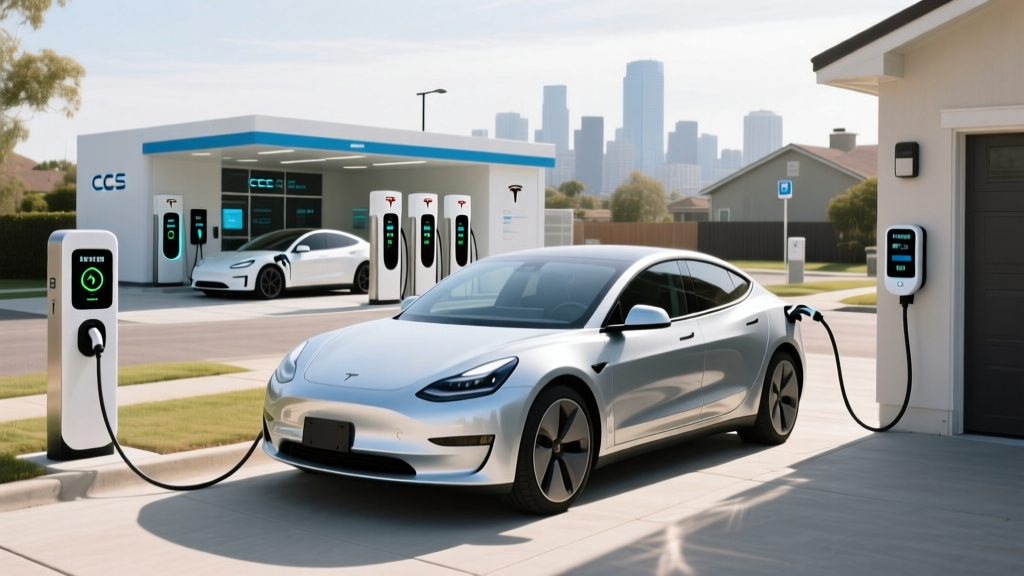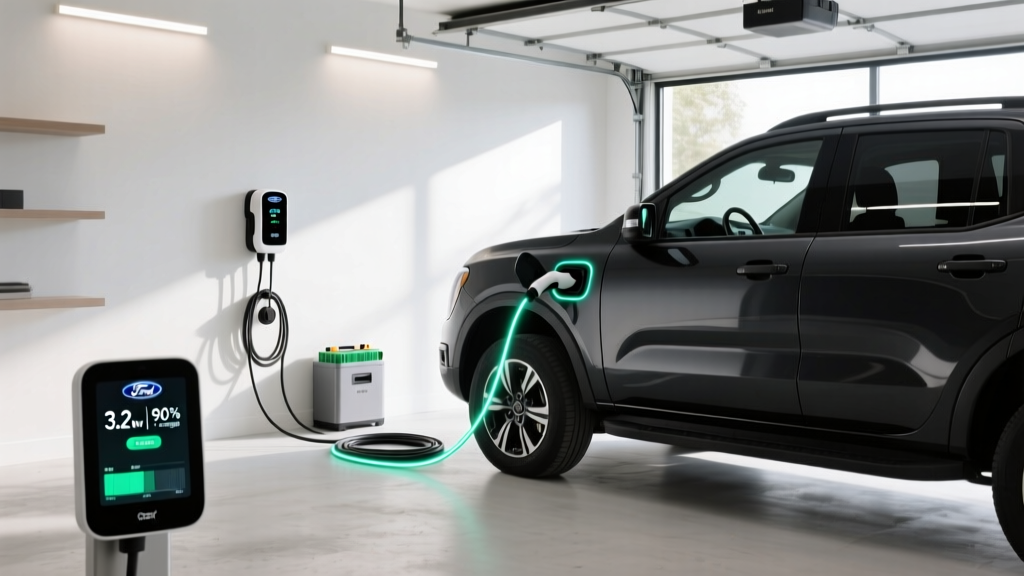
The North American Charging Standard (NACS) — originally Tesla's proprietary connector, now the dominant EV charging plug across the continent — has reshaped how Americans charge at home and on the road. By 2026, nearly every major automaker has adopted NACS as the native port on new vehicles, and the public charging ecosystem has pivoted hard to match. If you're shopping for NACS chargers for your garage or trying to understand what the standard means for your next road trip, this guide covers the electrical requirements, real costs, equipment picks, and compatibility details you actually need.
Understanding Charging Levels: Level 1, Level 2, and DC Fast
Before choosing hardware, you need to understand the three charging tiers and what each delivers in practical terms. The single most important distinction in EV charging: kW (kilowatts) measures power — the rate of charging, while kWh (kilowatt-hours) measures energy — the total capacity of your battery. Think of kW as the flow rate of a hose and kWh as the size of the bucket. Confusing them is the most common EV literacy mistake, and it leads to bad purchase decisions.
| Level | Voltage | Power (kW) | Miles of Range Per Hour | Typical Use Case |
|---|---|---|---|---|
| Level 1 | 120V AC | 1.2–1.9 kW | 3–5 mi/hr | Overnight trickle, PHEVs, low-mileage commuters |
| Level 2 | 240V AC | 3.3–19.2 kW | 12–75 mi/hr | Home daily charging, workplace, destination |
| DC Fast Charge | 400–900V DC | 50–350+ kW | 150–800+ mi/hr (peak) | Road trips, highway corridors, quick top-ups |
A few real-world anchors: a 75 kWh battery (like the Tesla Model Y Long Range) charging on a 48-amp Level 2 NACS charger at 11.5 kW will go from 10% to 80% in roughly 5.5 hours. That same battery on a 250 kW DC fast charger can hit 10–80% in about 20–25 minutes, though charging speed tapers significantly above 80% State of Charge (SoC) to protect the battery. Peak kW ratings are never sustained for the full session — the charge curve drops as the battery fills.
Home NACS Charger Installation: Electrical Requirements and Costs
Installing a Level 2 NACS charger at home is the single best upgrade most EV owners can make. You'll need a dedicated 240-volt circuit, and the amperage determines your charging speed. The most common residential setups are:
- 40-amp circuit (32A continuous output, ~7.7 kW) — sufficient for most daily driving, charges ~25 miles of range per hour
- 50-amp circuit (40A continuous, ~9.6 kW) — the sweet spot for most homes, ~30 mi/hr
- 60-amp circuit (48A continuous, ~11.5 kW) — ideal for larger batteries (80–100+ kWh), ~37 mi/hr
- 80-amp circuit (64A continuous, ~15.4 kW) — maximum residential, requires robust panel, ~50 mi/hr
Panel upgrade reality: Many older homes built before 2000 have 100-amp or even 60-amp main service panels. Adding a 50-amp or 60-amp dedicated EV circuit to a 100A panel that's already near capacity often triggers a panel upgrade to 200 amps — a significant added expense. Always have a licensed electrician perform a load calculation before committing to a circuit size. Some newer panels support smart load-management devices (like the Span panel or Emporia smart breakers) that can share capacity without a full upgrade.
| Component | Low Estimate | High Estimate | Notes |
|---|---|---|---|
| Level 2 NACS Charger (hardware) | $350 | $750 | 40A–48A smart chargers; premium models up to $1,200 |
| Electrical permit | $50 | $250 | Varies by municipality; some jurisdictions bundle with inspection |
| Electrician labor (standard install) | $400 | $1,200 | Short run from panel to garage; longer runs or conduit work add cost |
| Electrical panel upgrade (if needed) | $1,500 | $4,000 | 100A → 200A upgrade; not always required |
| Total (no panel upgrade) | $800 | $2,200 | Typical suburban home with adequate panel |
| Total (with panel upgrade) | $2,300 | $5,500+ | Older homes or high-demand panels |
Federal tax credit for home charging: The IRS §30D alternative fuel vehicle refueling property credit covers up to 30% of home charger equipment and installation costs, capped at $1,000. However, this credit is subject to census-tract eligibility requirements — it applies primarily in non-urban or lower-income census tracts. Check the IRS alternative fuel refueling property credit page for current eligibility rules, and consult a tax professional for your specific situation.
NACS Connector Compatibility: Which EVs Use What
As of 2026, NACS is the native charging port on all Tesla vehicles and on new models from Ford, GM, Rivian, Volvo, Polestar, Mercedes-Benz, BMW, Hyundai, Kia, and several others. However, millions of non-Tesla EVs built between 2012 and 2024 still carry the CCS1 (Combined Charging System) port, and some older Nissan Leafs and Mitsubishi Outlander PHEVs use CHAdeMO. Here's the compatibility landscape:
| Connector | Native Vehicles (2026) | Adapter Available? | Adapter Cost |
|---|---|---|---|
| NACS (Tesla-style) | Tesla (all), Ford F-150 Lightning, GM Ultium vehicles, Rivian, Hyundai Ioniq 5 (2025+), Kia EV6 (2025+), Volvo EX30/EX90, BMW iX (2026+) | N/A — native standard | — |
| CCS1 | VW ID.4 (pre-2025), older Hyundai/Kia EVs, Ford Mustang Mach-E (pre-2025), most 2018–2024 non-Tesla EVs | CCS-to-NACS adapter for Tesla Superchargers; NACS-to-CCS adapter for CCS chargers | $150–$300 |
| CHAdeMO | Nissan Leaf (all years), Mitsubishi Outlander PHEV (older) | Limited; CHAdeMO-to-NACS adapters exist but are niche | $200–$400 |
Adapter reality for CCS-ported EVs: If you drive a CCS-equipped vehicle like a 2023 VW ID.4, you can access Tesla Superchargers using a NACS-to-CCS adapter (Tesla sells one for approximately $200, and third-party options from Lectron and A2Z exist). However, not all Supercharger stalls physically accommodate non-Tesla vehicles due to cable length and parking geometry — the Tesla app will indicate which stalls are enabled for non-Tesla use. Conversely, if you drive a NACS-equipped vehicle and encounter a CCS-only public charger, you'll need a CCS-to-NACS adapter, which several manufacturers now include with the vehicle.
Cost to Charge: Home vs. Public vs. Gas
The economic case for EVs hinges on charging cost, and it varies enormously depending on where and when you plug in. Here are realistic $/kWh scenarios and the resulting cost-per-mile calculations, benchmarked against a comparable gasoline vehicle at 28 MPG combined with gas at $3.40/gallon:
| Scenario | $/kWh | Cost Per Mile (at 3.5 mi/kWh) | Annual Cost (12,000 mi) |
|---|---|---|---|
| Home, off-peak utility rate | $0.08–$0.14 | $0.023–$0.040 | $275–$480 |
| Home, standard residential rate | $0.14–$0.20 | $0.040–$0.057 | $480–$685 |
| Public Level 2 (workplace, retail) | $0.20–$0.40 | $0.057–$0.114 | $685–$1,370 |
| DC Fast Charge (Electrify America, EVgo, Tesla Supercharger) | $0.30–$0.55 | $0.086–$0.157 | $1,030–$1,885 |
| Gasoline vehicle (28 MPG, $3.40/gal) | — | $0.121 | $1,457 |
The takeaway: Home charging at off-peak rates is roughly 70–80% cheaper per mile than gasoline. Even at standard residential rates, you're saving 50–65%. However, if you rely exclusively on DC fast charging at $0.45–$0.55/kWh, your fuel cost can actually exceed gasoline. This is why home Level 2 charging is so critical to the EV ownership equation — it's where the economics are strongest.
Efficiency note: the 3.5 miles per kWh figure used above is a reasonable average for midsize EVs (roughly equivalent to 285 Wh/mile). A highly efficient vehicle like the Hyundai Ioniq 6 achieves closer to 4.0 mi/kWh, while a heavy truck like the Ford F-150 Lightning manages around 2.5 mi/kWh. Check your vehicle's EPA efficiency rating on fueleconomy.gov for exact figures.
Charging Time Examples: 10–80% for Common Battery Sizes
Battery capacity and charger power determine your session length. Here are realistic 10–80% charge times for popular EV battery sizes at various charger outputs. Note that these times assume preconditioned batteries (warmed to optimal temperature) and account for the charge-curve taper that occurs as SoC climbs:
- 60 kWh battery (e.g., base Tesla Model 3, Chevrolet Equinox EV):
- 7.7 kW (40A Level 2): ~4.5 hours
- 11.5 kW (48A Level 2): ~3.1 hours
- 150 kW DC fast: ~22 minutes
- 75 kWh battery (e.g., Tesla Model Y Long Range):
- 7.7 kW: ~5.7 hours
- 11.5 kW: ~3.8 hours
- 250 kW DC fast: ~20 minutes
- 100 kWh battery (e.g., GMC Sierra EV, Lucid Air):
- 11.5 kW: ~5.1 hours
- 19.2 kW (80A Level 2): ~3.1 hours
- 350 kW DC fast (with 800V architecture): ~18 minutes
Cold-weather caveat: In temperatures below 32°F, battery chemistry slows ion movement, and charging speeds can drop 30–50% unless the vehicle has active battery preconditioning. Always precondition before a DC fast charge session — most EVs do this automatically when you navigate to a charger in the vehicle's system.
Best NACS Level 2 Chargers for Home: 2026 Equipment Picks
The home NACS charger market has matured significantly. Here are the top-performing units based on build quality, smart features, reliability, and value. All units below feature the native NACS connector and are UL-listed for safety:
Emporia Vue Level 2 Smart Charger
- Power: 48A / 11.5 kW (on 60A circuit)
- Connector: Native NACS
- Cable length: 24 ft
- Smart features: Wi-Fi, app scheduling, solar integration, energy monitoring, load management with Emporia panel
- Price: ~$399
- Best for: Budget-conscious buyers who want smart scheduling and energy tracking
ChargePoint Home Flex (NACS version)
- Power: Up to 50A / 12 kW (on 60A circuit); adjustable down to 16A for smaller circuits
- Connector: Native NACS (2025+ models)
- Cable length: 23 ft
- Smart features: Wi-Fi, ChargePoint app, Alexa integration, flexible amperage via dip-switch, detailed session history
- Price: ~$549
- Best for: Flexibility across different circuit sizes; strong app ecosystem
Tesla Wall Connector (Gen 3)
- Power: 48A / 11.5 kW (on 60A circuit)
- Connector: Native NACS
- Cable length: 24 ft
- Smart features: Wi-Fi, over-the-air updates, Tesla app integration, power sharing between two units on one circuit
- Price: ~$450
- Best for: Tesla owners who want seamless integration; also works with non-Tesla NACS vehicles
Grizzl-E Smart (NACS)
- Power: 40A / 9.6 kW (on 50A circuit)
- Connector: Native NACS
- Cable length: 24 ft
- Smart features: Wi-Fi, OCPP protocol support, adjustable amperage, rugged outdoor-rated enclosure
- Price: ~$499
- Best for: Outdoor installs in harsh climates; built in Canada for extreme cold
Safety, Electrical Code, and Best Practices
Home EV charging is extremely safe when installed correctly, but the electrical demands are substantial — a 48A continuous load running for hours is unlike anything else in a typical home. Key safety and code considerations:
- Dedicated circuit: Your Level 2 charger must be on its own dedicated breaker — never shared with other appliances. The National Electrical Code (NEC) requires that continuous loads (defined as running 3+ hours) not exceed 80% of the circuit rating. A 48A charger requires a 60A breaker.
- GFCI protection: The 2020 NEC and later require GFCI (Ground Fault Circuit Interrupter) protection for EV charging outlets in garages and outdoor locations. Hardwired chargers may be exempt in some jurisdictions — your electrician will know local code. Many modern chargers have built-in ground-fault detection as well.
- Outdoor rating: If your charger is mounted outside, it must be rated for outdoor use (NEMA 4 or IP65 minimum). All units listed above are outdoor-rated, but verify the specific model's rating before purchasing.
- Wire gauge: A 60A circuit typically requires 4 AWG copper wire (or 3 AWG aluminum). Longer runs from the panel may require thicker wire to prevent voltage drop. Your electrician will calculate this.
- Hardwired vs. plug: Hardwired installations (no plug, direct wire connection) are preferred for circuits above 40A and eliminate the need for a 240V receptacle. If you use a NEMA 14-50 outlet, ensure it's an industrial-grade receptacle (Hubbell, Bryant) — consumer-grade 14-50 outlets have been linked to overheating under continuous EV loads.
- Permit and inspection: Always pull an electrical permit. The inspection verifies safe installation and protects your home insurance coverage. Unpermitted work can void claims in the event of an electrical fire.
Frequently Asked Questions
How much does it cost to install a home NACS charger?
A typical home Level 2 NACS charger installation costs $800–$2,200 including equipment, electrician labor, and permits — assuming your electrical panel has sufficient capacity. If a panel upgrade from 100A to 200A is needed, add $1,500–$4,000. The federal alternative fuel refueling property credit may cover up to 30% (capped at $1,000) if you're in an eligible census tract.
How fast will each charging level add range to my EV?
Level 1 (120V) adds roughly 3–5 miles per hour. Level 2 (240V, 48A) adds approximately 30–37 miles per hour depending on vehicle efficiency. DC fast charging at 150–250 kW can add 150–400+ miles in 20–25 minutes, though the rate tapers significantly above 80% SoC.
Which NACS charger is compatible with my EV?
If your EV has a NACS port (all Teslas, plus 2025+ models from Ford, GM, Hyundai, Kia, Rivian, Volvo, BMW, and others), any NACS Level 2 charger will work natively. If your EV has a CCS1 port, you'll need a CCS-to-NACS adapter to use NACS chargers, or use a CCS-equipped charger. CHAdeMO vehicles (Nissan Leaf) have limited adapter options.
How much does charging cost per mile vs. gasoline?
Home charging at off-peak rates costs approximately $0.02–$0.04 per mile — roughly 70–80% less than gasoline at $3.40/gal and 28 MPG ($0.12/mi). Public DC fast charging at $0.40–$0.55/kWh costs $0.09–$0.16 per mile, which can approach or exceed gasoline costs. Home charging is where the savings materialize.
What electrical upgrades might I need for a home charger?
The most common upgrade is a panel capacity increase from 100A to 200A service, needed when your existing panel is near capacity. Your electrician will perform a load calculation per NEC Article 220. Other possible upgrades include replacing a consumer-grade NEMA 14-50 outlet with an industrial-grade unit, adding a smart load-management system to avoid panel upgrades, or running new conduit for longer wire runs from the panel to the charger location.