The Elements vs. Your EVSE: Why Weatherproofing Matters
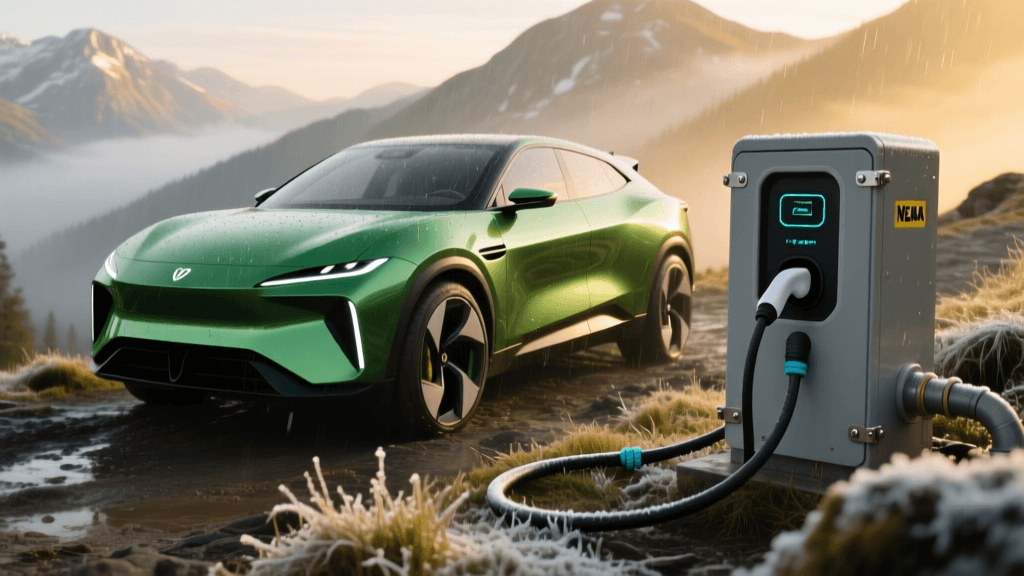
Installing an Electric Vehicle Supply Equipment (EVSE) unit outdoors introduces a unique set of environmental challenges. Unlike indoor setups, outdoor chargers must endure torrential rain, freezing temperatures, blistering UV radiation, and corrosive coastal air. A poorly weatherproofed installation can lead to premature equipment failure, tripped breakers, or severe electrical hazards. As EV adoption accelerates, mastering outdoor EV charger weatherproofing requirements is essential for both safety and long-term reliability.
In this guide, we break down expert best practices for outdoor EVSE installations, covering enclosure ratings, conduit sealing techniques, cold-weather cable management, and physical mounting strategies to ensure your charging station survives the elements.
Decoding NEMA and IP Ratings for Outdoor Enclosures
The first line of defense for any outdoor electrical device is its enclosure rating. In North America, the National Electrical Manufacturers Association (NEMA) rating system is the standard, while international products often use the Ingress Protection (IP) code. Understanding the distinction is critical for selecting a charger that can handle your specific local climate.
| Rating Standard | Classification | Protection Level | Best Use Case |
|---|---|---|---|
| NEMA 3R | Rain and Sleet Protected | Protects against falling rain and ice accumulation, but not windblown dust or hose-directed water. | Covered carports or heavily sheltered outdoor alcoves. |
| NEMA 4 | Watertight | Protects against windblown rain, splashing water, and hose-directed water. | Standard outdoor exposed residential driveways. |
| NEMA 4X | Watertight & Corrosion-Resistant | Same as NEMA 4, but constructed from materials like stainless steel or fiberglass to resist corrosion. | Coastal areas, regions with heavy road salt, or high-humidity zones. |
| IP55 | Dust and Low-Pressure Water | Protected against dust ingress and low-pressure water jets from any direction. | Standard outdoor exposed installations (equivalent to NEMA 4). |
| IP65 | Dust-Tight and Water Jets | Completely dust-tight and protected against low-pressure water jets. | Harsh outdoor environments with heavy blowing dust and rain. |
Expert Tip: Always verify the rating of the EVSE unit itself, but also the rating of the outdoor disconnect switch and junction boxes. Many homeowners buy a NEMA 4 rated charger but install it in a NEMA 3R junction box, creating a critical weak point in the system.
Conduit Sealing and Water Ingress Prevention
Water does not just attack the outside of the charger; it can travel inside the electrical conduits. Capillary action and temperature-induced condensation can draw moisture through underground PVC conduits directly into your EVSE unit or back into your main electrical panel. According to the National Fire Protection Association (NFPA) guidelines for the National Electrical Code (NEC), proper sealing of raceways is required to prevent moisture from entering buildings or equipment.
Actionable Sealing Best Practices:
- Use Duct Seal Putty: Pack electrical duct seal (such as Gardner Bender Duct Seal) tightly into the conduit ends where wires enter the EVSE enclosure and the main breaker panel. This creates a watertight, airtight barrier that remains pliable in extreme temperatures.
- Install Conduit Weep Holes: If you are running conduit horizontally or through a wall, drill a small 1/8-inch weep hole at the lowest point of the conduit run. This allows any trapped condensation to drain out rather than pooling inside the pipe.
- Drip Loops are Mandatory: Never pull a cable taut from the conduit to the EVSE terminal. Always leave a U-shaped drip loop below the entry point so that rainwater drips off the bottom of the loop rather than running down the wire into the connection.
- Hub and Fitting Sealant: Use silicone-based electrical sealant on all threaded conduit fittings exposed to the elements. Standard PVC cement is for water pipes; electrical conduits require threaded, sealed fittings for outdoor wet locations.
Cold Weather Flexibility and UV Degradation
Outdoor EV chargers face extreme thermal cycling. In winter, standard charging cables can become as stiff as a garden hose left in the snow, making them difficult to handle and prone to internal wire fracturing. In summer, relentless UV exposure can degrade plastic enclosures and cable jackets.
Managing Cold Weather Stiffness
When selecting an outdoor EVSE, pay close attention to the cable jacket material. Silicone-based cables remain highly flexible even in sub-zero temperatures, whereas standard thermoplastic elastomer (TPE) cables can stiffen and crack. For example, the Tesla Wall Connector and the ChargePoint Home Flex both utilize advanced cold-weather cable compounds designed to stay pliable down to -22°F (-30°C). If your current cable is stiffening in the cold, consider utilizing a heavy-duty retractable cable management system or a wall-mounted holster that shields the bulk of the cord from direct snow and ice accumulation.
Combating UV Degradation
Standard gray electrical PVC conduit will become brittle and crack after a few years of direct sun exposure. For outdoor runs, experts recommend using:
- EMT (Electrical Metallic Tubing): Galvanized steel or aluminum EMT is completely UV-proof and offers superior physical protection against impacts.
- Schedule 80 PVC: If non-metallic conduit is required, Schedule 80 PVC features thicker walls and is often manufactured with UV inhibitors, making it far more resilient than standard Schedule 40 PVC.
- UV-Resistant Cable Sleeving: Wrap exposed sections of the charging cable in split loom tubing rated for UV resistance to prevent the outer jacket from dry-rotting.
The U.S. Department of Energy Alternative Fuels Data Center emphasizes that evaluating local climate conditions is a fundamental step in residential charging infrastructure planning, ensuring the hardware selected can withstand regional extremes.
Mounting Clearances and Physical Protection
Weatherproofing is not just about water and sun; it is also about snow, ice, and physical impacts. Proper mounting height and physical barriers are essential components of a robust outdoor installation.
Snow and Ice Clearance
Mount your EVSE enclosure at least 18 to 24 inches above the ground. This clearance prevents the unit from being buried during heavy snowfalls and keeps it out of the splash zone from snowplows and melting ice. Furthermore, ensure the charging holster is mounted facing downward or at an angle that prevents snow and rain from pooling inside the connector receptacle.
Impact Protection
Outdoor chargers are vulnerable to being backed into by vehicles. Install steel bollards or heavy-duty concrete wheel stops in front of the charging station. A standard 4-inch steel bollard filled with concrete, placed 3 feet in front of the EVSE, provides an excellent physical barrier against accidental impacts without obstructing your walking path.
Routine Maintenance for Longevity
Even the best weatherproofing requires periodic maintenance. The U.S. Department of Energy Home EV Charging guide recommends regular visual inspections to ensure the integrity of your outdoor setup. Incorporate these tasks into your bi-annual home maintenance routine:
- Inspect Enclosure Gaskets: Open the EVSE enclosure (with the power turned off at the breaker) and inspect the rubber door gaskets. Look for cracking, compression set, or brittleness. Replace gaskets immediately if they fail to form a tight seal.
- Check Conduit Seals: Verify that the duct seal putty at the conduit entries has not shrunk, cracked, or pulled away from the pipe walls. Re-pack the sealant as necessary.
- Clean the Connector Pins: Use compressed air and a specialized electrical contact cleaner to remove dust, pollen, and moisture from the EV plug pins. Never use water or standard household cleaners, as they can leave conductive residues.
- Tighten Terminal Connections: Thermal cycling can cause wire terminal screws to loosen over time. Use a calibrated torque screwdriver to ensure all internal connections meet the manufacturer specifications, preventing arcing and heat buildup.
Conclusion
Outdoor EV charger weatherproofing is a multifaceted discipline that goes far beyond simply buying a unit labeled for outdoor use. By strictly adhering to NEMA 4 or 4X enclosure standards, meticulously sealing conduit pathways against capillary moisture, selecting cold-weather and UV-resistant materials, and implementing proper mounting clearances, you can guarantee a safe, reliable, and long-lasting charging experience. Always consult with a licensed electrician familiar with NEC Article 625 requirements to ensure your outdoor installation is both weather-tight and fully code-compliant.