The Rise of Solar-Powered EV Charging
Pairing a rooftop solar panel system with a home electric vehicle (EV) charger is the ultimate strategy for achieving energy independence and slashing your carbon footprint. Instead of pulling electricity from a fossil-fuel-heavy grid, you can route excess solar production directly into your vehicle's battery. However, not all Level 2 EV chargers handle solar diversion equally. To achieve true 'free' driving, your charger must communicate seamlessly with your solar inverter to dynamically adjust charging speeds based on real-time sunlight.
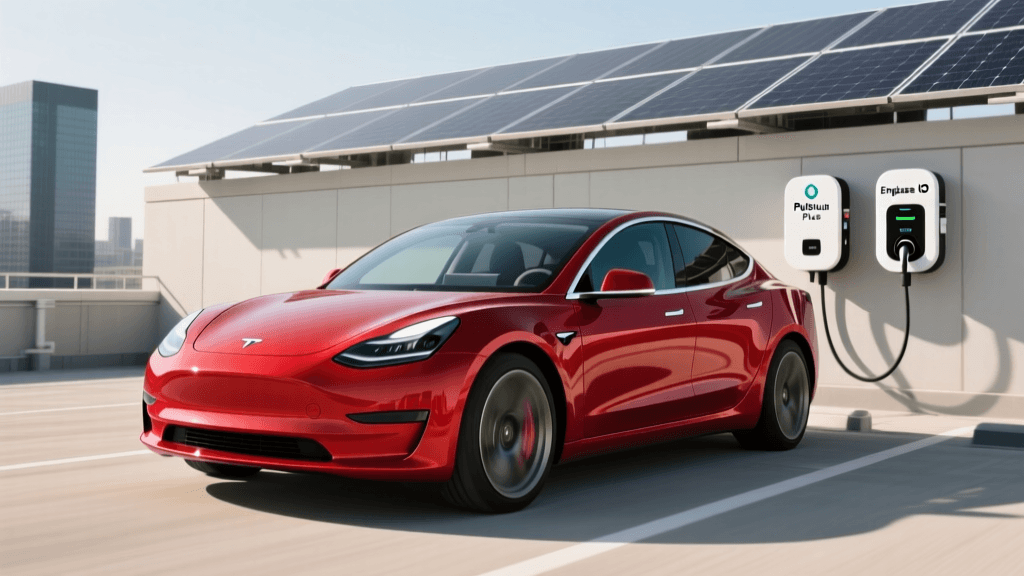
In this head-to-head product showdown, we are pitting two industry heavyweights against each other: the Wallbox Pulsar Plus (equipped with the Power Meter) and the Enphase IQ EV Charger. Both promise excellent solar integration, but their underlying technologies, installation requirements, and ecosystem compatibilities are vastly different. According to the U.S. Department of Energy, optimizing home charging infrastructure is critical for maximizing EV efficiency, and integrating renewable generation takes that optimization to the next level.
Contender 1: Wallbox Pulsar Plus with Power Meter
The Wallbox Pulsar Plus is a compact, universally compatible Level 2 charger renowned for its sleek design and robust app. Out of the box, it is a standard smart charger. However, to unlock its solar capabilities, you must add the Wallbox Power Meter, an auxiliary hardware device that enables the 'Eco-Smart' charging mode.
How the Solar Integration Works
The Power Meter utilizes Current Transformer (CT) clamps that your electrician installs directly onto the main service lines inside your electrical panel. These clamps monitor your home's real-time energy import and export. When your solar panels generate more power than your home is consuming, the Power Meter detects the excess and signals the Pulsar Plus to divert that specific surplus to your EV. If a cloud passes over and solar production drops, the charger instantly throttles down or pauses to prevent pulling from the grid.
- Compatibility: Works with virtually any solar inverter brand (String, Microinverter, or Optimizer).
- Installation Requirement: Requires space in the main electrical panel for the CT clamps and a dedicated data cable run from the panel to the charger.
- Charging Modes: 'Full Green' (100% solar only) or 'Eco-Smart' (minimum solar threshold, supplemented by grid to maintain a steady charge).
Contender 2: Enphase IQ EV Charger
The Enphase IQ EV Charger is a powerhouse designed specifically to live within the Enphase Energy ecosystem. If your home is equipped with Enphase IQ microinverters and an IQ Envoy gateway, this charger offers the most native, deeply integrated solar charging experience on the market.
How the Solar Integration Works
Unlike the Wallbox, which requires aftermarket CT clamps to guess your solar production via net metering, the Enphase IQ Charger communicates directly with the IQ Envoy. The Envoy already knows exactly how much DC power each individual microinverter is producing on your roof. The charger uses this precise, localized data to route excess solar to the vehicle with zero latency and no need for additional metering hardware.
- Compatibility: Strictly limited to homes with Enphase solar systems and an active IQ Envoy.
- Installation Requirement: Requires an active Enphase Envoy. No extra CT clamps or metering hardware are needed for solar diversion.
- Charging Modes: 'Green Charging' (Solar only) and customizable scheduling via the Enphase App, which also provides granular data on solar vs. grid energy used per charging session.
Head-to-Head Specifications and Solar Features
| Feature | Wallbox Pulsar Plus + Power Meter | Enphase IQ EV Charger |
|---|---|---|
| Max Output | 48 Amps (11.5 kW) | 40 Amps (9.6 kW) |
| Solar Hardware Needed | Wallbox Power Meter + CT Clamps | Existing Enphase Envoy Gateway |
| Inverter Compatibility | Universal (Any brand) | Enphase Microinverters Only |
| Installation Complexity | High (Requires panel access & data wire) | Low (If Enphase system is pre-existing) |
| Estimated Hardware Cost | $650 (Charger) + $150 (Meter) | $799 (Charger only) |
| Connection Type | NEMA 14-50 or Hardwired | NEMA 14-50 or Hardwired |
Installation Showdown: Wiring, Permits, and Timing
When dealing with solar integration, the physical installation dictates the reliability of the system. The Alternative Fuels Data Center emphasizes that proper electrical sizing and code compliance are paramount for continuous-load EV charging.
Wallbox Installation Steps & Costs
Installing the Pulsar Plus with the Power Meter is a two-part job. First, the electrician mounts the charger and runs a 60-amp circuit (for the 48-amp charger) using 6 AWG copper wire. Second, they must open the main electrical panel to snap the CT clamps around the main service conductors. A low-voltage data cable (usually RS-485) must then be routed from the Power Meter inside the panel to the Wallbox unit outside. Timing: 3 to 5 hours. Installation Cost: $600 to $1,000 depending on wire run distance and panel accessibility.
Enphase Installation Steps & Costs
If you already have an Enphase solar system, the Envoy is already mounted and connected to your home network. The electrician only needs to mount the IQ Charger and wire it to a dedicated 50-amp breaker. The solar integration is handled entirely via software configuration in the Enphase Installer App. Timing: 1.5 to 3 hours. Installation Cost: $400 to $700. Note: If your panel is maxed out, you may need a panel upgrade, which can add $1,500 to $3,000 to either installation.
Electrical Panel Constraints and the 120% NEC Rule
A critical factor in solar EV charger installation is the National Electrical Code (NEC) 120% rule. This rule dictates that the sum of your solar backfeed breaker and your main breaker cannot exceed 120% of your panel's busbar rating. Adding a 50-amp or 60-amp EV charger alongside a 40-amp solar backfeed breaker frequently overloads a standard 200-amp panel.
Both Wallbox and Enphase support Dynamic Load Balancing. By utilizing their respective metering systems, the chargers can monitor the total home load and throttle the EV charging speed down if the home's electrical demand spikes, ensuring you never trip the main breaker. This feature is a lifesaver for older homes with 100-amp or 150-amp services that want to avoid costly panel upgrades.
Hardwired vs. NEMA 14-50 for Solar Diversion
While both chargers offer a plug-in NEMA 14-50 option, hardwiring is highly recommended for solar integration. Solar diversion often results in the charger starting, stopping, and ramping up and down multiple times a day as clouds pass or household appliances cycle on and off. This continuous fluctuation generates heat at the plug receptacle. A hardwired connection eliminates the plug point of failure, reduces thermal throttling, and satisfies strict local building codes in jurisdictions that prohibit 14-50 receptacles in outdoor damp locations.
The Final Verdict: Which Solar EV Charger Wins?
The winner of this showdown depends entirely on your existing or planned solar infrastructure.
Choose the Enphase IQ EV Charger if: You have an Enphase microinverter system. The native, wireless integration is unmatched in its simplicity. You avoid the extra hardware cost of a power meter, the installation is faster, and the Enphase App provides beautifully unified data showing exactly how many pounds of CO2 you saved by charging on your roof's sunshine.
Choose the Wallbox Pulsar Plus if: You have a string inverter system (like SolarEdge, SMA, or Fronius), you are planning to add solar in the future but don't know which brand, or you need 48-amp charging speeds for a large battery pack like the Ford F-150 Lightning or Rivian. The Wallbox Power Meter makes it the ultimate universal adapter for solar diversion, offering unparalleled flexibility across any renewable energy setup.