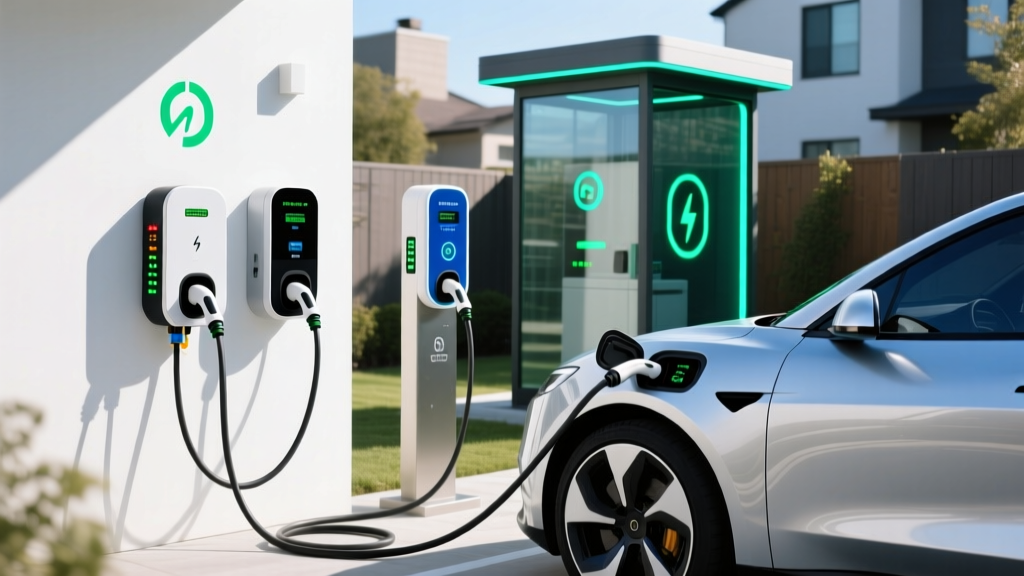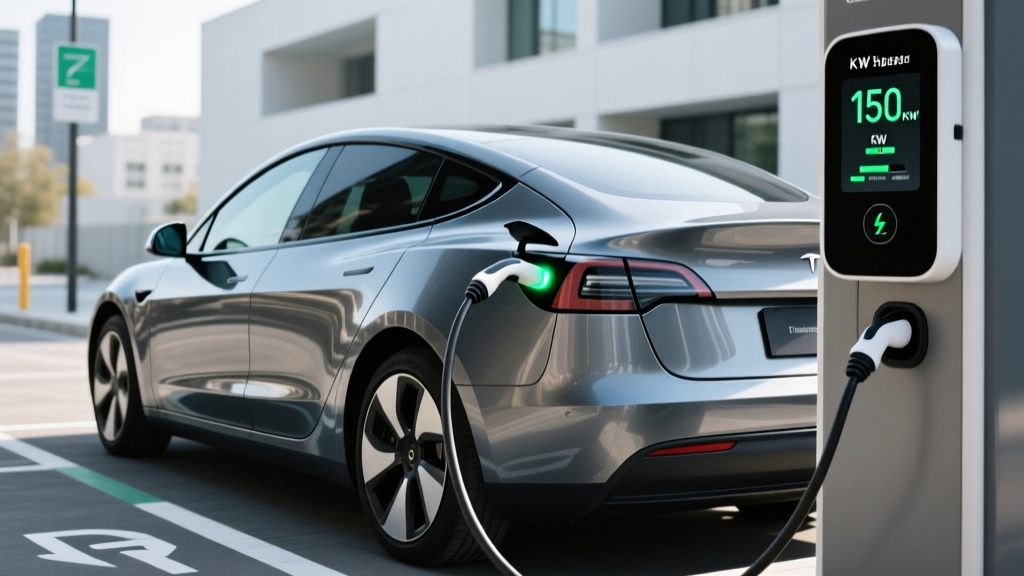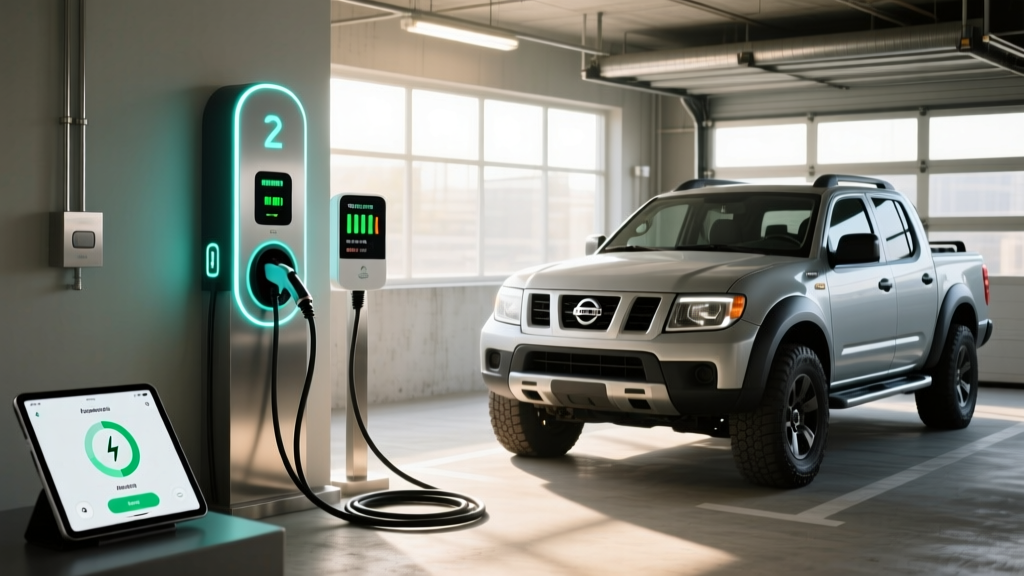
If you've spent years behind the wheel of a supercharged V6 workhorse like the 2001 Nissan Frontier, switching to an electric vehicle is less about giving up capability and more about rewiring your refueling habits. The Frontier's 3.3L VG33ER made 210 hp and 246 lb-ft of torque — solid figures for its era — but it also consumed 15–17 mpg combined. A modern EV like the Ford F-150 Lightning, Rivian R1T, or Chevrolet Silverado EV delivers far more torque, lower per-mile energy costs, and zero tailpipe emissions. The catch? You need a proper home charging setup before the truck arrives in your driveway.
This guide covers every electrical, financial, and equipment decision you'll face when transitioning from a legacy gas truck to a modern EV. We'll break down charging speeds, installation costs, connector types, and real per-mile economics so there are no surprises after delivery day.
Charging Levels Explained: Level 1, Level 2, and DC Fast
EV charging is categorized into three levels, each defined by its power delivery in kilowatts (kW). Remember: kW measures power — the rate at which energy flows — while kWh (kilowatt-hours) measures energy capacity, the size of your battery. Confusing the two is the single most common mistake new EV owners make.
| Level | Voltage | Power (kW) | Miles of Range Added Per Hour | Best For |
|---|---|---|---|---|
| Level 1 (120V) | 120V AC | 1.0–1.4 kW | 3–5 mi/hr | Overnight top-ups, PHEVs, low daily mileage |
| Level 2 (240V) | 240V AC | 7.2–19.2 kW | 25–65 mi/hr | Daily home charging, overnight full replenishment |
| DC Fast Charging | 200–800V DC | 50–350 kW | 150–1,000+ mi/hr (peak) | Road trips, rapid top-ups away from home |
For a truck-class EV with a 100–130 kWh battery, Level 1 charging is essentially impractical — a full charge from near-empty would take over 90 hours. Level 2 at home is the standard for daily ownership, recovering a full battery overnight. DC fast charging handles road trips, with modern trucks like the F-150 Lightning (peak 150 kW) or Silverado EV (peak 350 kW on Ultium) recovering 10–80% in 19 to 41 minutes depending on the model and charger.
How Much Does It Cost to Install a Home EV Charger?
A Level 2 home charger requires a dedicated 240V circuit — the same type of outlet your electric dryer or oven uses. Total costs depend on your home's electrical panel capacity, the distance from the panel to your garage or parking spot, and local permit fees.
| Component | Typical Cost Range | Notes |
|---|---|---|
| Level 2 Charger (Equipment) | $350–$700 | 32A–48A smart Wi-Fi chargers; hardwired or NEMA 14-50 plug |
| Electrical Panel Upgrade (if needed) | $1,500–$3,500 | Required if your panel is 100A or less and near capacity; 200A is standard for EV-ready homes |
| Electrician Labor (Circuit + Wiring) | $500–$2,000 | Varies by run length; short runs in open garages are cheapest; long underground runs cost more |
| Permit & Inspection | $50–$300 | Required in most jurisdictions; ensures code compliance |
| Optional: Load Management Device | $150–$400 | Allows charging without a panel upgrade by throttling charger draw when home load is high |
Typical total without panel upgrade: $900–$2,500. With a 200A panel upgrade: $2,500–$5,500. Always get a licensed electrician to assess your panel's available amperage before purchasing equipment. The National Electrical Code (NEC) requires that continuous loads like EV chargers use no more than 80% of a circuit's rated capacity — so a 48A charger needs a 60A circuit.
Electrical Requirements: Voltage, Amperage, and Code Compliance
Most Level 2 chargers operate on 240V AC and draw between 32A and 48A. Here are the most common circuit configurations:
- 32A charger: Requires a 40A breaker (32A ÷ 0.80 = 40A minimum circuit). Uses 8 AWG copper wire. Delivers ~7.7 kW.
- 40A charger: Requires a 50A breaker. Uses 6 AWG copper wire. Delivers ~9.6 kW. Compatible with a NEMA 14-50 outlet.
- 48A charger: Requires a 60A breaker. Uses 6 AWG copper wire (or 4 AWG for long runs). Delivers ~11.5 kW. Must be hardwired — no plug configuration is rated for continuous 48A in residential use.
Safety requirements you cannot skip:
- Dedicated circuit: Your EV charger must have its own breaker — no sharing with other appliances.
- GFCI protection: NEC 2020 and later require ground-fault circuit interrupter protection on all 240V EV charging circuits, whether hardwired or outlet-based.
- Outdoor-rated equipment: If your charger is installed outside (carport, driveway pedestal), it must carry a NEMA 4 or NEMA 4X weather-resistance rating. Indoor-only units are not safe for exterior mounting.
- UL or ETL listing: Only purchase chargers with UL (Underwriters Laboratories) or ETL certification. Uncertified chargers from overseas marketplaces may not meet fire-safety standards and can void homeowner insurance coverage.
Which Connector Is Compatible With My EV?
The connector landscape shifted dramatically between 2023 and 2026. Here's where things stand for 2026 model-year vehicles:
| Connector | Brands Using It (2026) | Adapter Needed? |
|---|---|---|
| NACS (North American Charging Standard / Tesla connector) | Tesla, Ford, GM, Rivian, Volvo, Polestar, Mercedes-Benz, Nissan (new models), Hyundai/Kia (select 2026 models) | CCS-to-NACS adapter for legacy CCS public chargers (~$200–$250) |
| CCS1 (Combined Charging System) | Hyundai, Kia (remaining models), BMW, Volkswagen, Stellantis brands, older Nissan Leaf (CHAdeMO) | NACS-to-CCS adapter for Tesla Supercharger access |
| CHAdeMO | Discontinued for new vehicles after 2024 (Nissan Leaf ended production) | Limited public infrastructure; adapters rare |
If you're buying a new EV in 2026, there's a strong probability it uses the NACS connector. Ford, GM, and Rivian owners gained Tesla Supercharger network access in 2024–2025 using adapters, and by 2026 most new models ship with native NACS ports. Confirm your vehicle's connector before ordering a home charger, and purchase a charger with a matching plug or a universal unit with interchangeable connectors.
For home Level 2 charging, all vehicles accept the standard J1772 connector (or its NACS equivalent, which integrates AC and DC pins into one port). You won't need an adapter for home charging regardless of your vehicle brand.
Level 2 Charger Recommendations: What to Buy in 2026
After testing dozens of units across multiple EV households, these are the chargers that balance reliability, features, and value:
Emporia Level 2 Smart Charger
Power: 48A (11.5 kW) hardwired / 40A (9.6 kW) plug-in
Cable: 24 ft
Smart features: Wi-Fi, energy monitoring, solar integration, scheduling, load management
Price: $399–$449
Best for: Budget-conscious buyers who want full smart features and load management without a panel upgrade.
ChargePoint Home Flex
Power: Up to 50A (12 kW) hardwired / up to 40A plug-in (NEMA 14-50)
Cable: 23 ft
Smart features: Wi-Fi, Alexa integration, scheduling, charge history
Price: $549–$649
Best for: Brand reliability and broad vehicle compatibility. Switchable between NACS and J1772 connectors.
Tesla Wall Connector
Power: 48A (11.5 kW) hardwired
Cable: 24 ft
Smart features: Wi-Fi, OTA updates, power sharing (multiple units on one circuit), access control
Price: $475
Best for: Tesla, Ford, GM, Rivian, and other NACS-equipped vehicles. Excellent build quality and power sharing for multi-EV garages.
Grizzl-E Smart
Power: 40A (9.6 kW) plug-in or hardwired
Cable: 24 ft
Smart features: Wi-Fi, OCPP support, adjustable amperage (16A–40A)
Price: $499
Best for: Extreme durability. IP67-rated for outdoor Canadian winters. Built in North America.
Cost Per Mile: EV Charging vs. Gasoline for Truck Owners
The 2001 Nissan Frontier Supercharged averaged roughly 15 mpg combined. At $3.40/gallon (2026 national average), that's approximately $0.227 per mile in fuel alone. Here's how EV truck charging compares:
| Scenario | Cost per kWh | Truck Efficiency | Cost Per Mile |
|---|---|---|---|
| Home charging (off-peak utility rate) | $0.12/kWh | 2.0 mi/kWh (typical EV truck) | $0.060 |
| Home charging (standard rate) | $0.17/kWh | 2.0 mi/kWh | $0.085 |
| Public Level 2 (ChargePoint, etc.) | $0.25–$0.39/kWh | 2.0 mi/kWh | $0.125–$0.195 |
| DC Fast Charging (Electrify America, Tesla) | $0.35–$0.55/kWh | 2.0 mi/kWh | $0.175–$0.275 |
| 2001 Nissan Frontier Supercharged (gas) | $3.40/gallon | 15 mpg | $0.227 |
Even using exclusively DC fast chargers — the most expensive option — an EV truck costs roughly the same per mile as the old Frontier on gasoline. Charge at home on off-peak rates and you'll cut fuel costs by roughly 73%. Over 15,000 miles per year, that's a savings of approximately $2,500 annually compared to the Frontier's fuel bill.
For context, a 2026 Ford F-150 Lightning with a 131 kWh extended-range battery (EPA range: 320 miles) costs about $15.72 to fully charge at home on a $0.12/kWh rate. A comparable fill-up on the Frontier at 15 mpg with a 19.4-gallon tank would cost $65.96.
Charging Time Examples: How Long Does It Actually Take?
Charge times depend on battery size and charger power. Here are realistic 10–80% estimates for common EV trucks and SUVs at various charging levels, factoring in real-world charge-curve taper:
- Ford F-150 Lightning (131 kWh battery): ~10.5 hours on a 48A Level 2 charger (11.5 kW); ~41 minutes on a 150 kW DC fast charger (10–80%).
- Chevrolet Silverado EV (200 kWh Ultium battery): ~17 hours on 48A Level 2; ~20 minutes on a 350 kW DC fast charger (10–80%, per GM estimates).
- Rivian R1T Dual-Motor (149 kWh Max Pack): ~13 hours on 48A Level 2; ~27 minutes on a 200+ kW DC fast charger.
- Tesla Model Y Long Range (75 kWh battery): ~6.5 hours on 48A Level 2; ~18 minutes on a V3 Supercharger (250 kW, 10–80%).
- Hyundai Ioniq 5 (77.4 kWh battery): ~6.7 hours on 48A Level 2; ~18 minutes on a 350 kW charger (10–80%), thanks to its 800V architecture.
For daily use, most EV owners charge between 20–80% state of charge to minimize battery degradation. A 48A Level 2 charger recovers 25–35 miles of range per hour for a truck-class EV, which is more than adequate to replenish a day's driving during an overnight session.
Frequently Asked Questions
Do I need a permit to install a home EV charger?
Yes, in most US jurisdictions. A licensed electrician will pull an electrical permit, and an inspector will verify the installation meets NEC code after completion. Permit costs range from $50 to $300 depending on your municipality. Skipping a permit risks voiding homeowner insurance coverage in the event of an electrical fire and can cause issues during a home sale inspection.
Can I just plug into a regular 120V outlet instead of installing a 240V charger?
You can, but Level 1 (120V) charging adds only 3–5 miles of range per hour. For a truck with a 100+ kWh battery, a full charge would take 4–5 days of continuous charging. Level 1 is viable only for plug-in hybrids with small batteries (15–40 kWh) or for BEV owners who drive fewer than 30 miles per day and can leave the vehicle plugged in for 10+ hours nightly.
Will my home's electrical panel handle an EV charger?
Most homes built after 2000 with a 200A service panel can accommodate a 40A–60A EV charging circuit without an upgrade. Homes with 100A or 150A panels, or homes already running high-draw appliances (electric heat, hot tub, double oven), may require a panel upgrade to 200A or the installation of a load management device. A licensed electrician will perform a NEC Article 220 load calculation to determine your available capacity. According to NFPA NEC guidelines, the calculation accounts for all existing loads before adding the EV circuit.
Is there a tax credit for installing a home EV charger?
Yes. The federal Alternative Fuel Vehicle Refueling Property Credit (IRS Form 8911) covers 30% of the cost of home charging equipment and installation, up to $1,000. However, this credit is subject to census-tract eligibility requirements — your home must be located in a qualifying non-urban or low-income census tract. Check the IRS eligibility tool or consult a tax professional to confirm whether your address qualifies for the 2026 tax year.
Should I get a hardwired charger or one with a NEMA 14-50 plug?
Hardwired chargers are required for 48A units (the NEC does not permit a plug rated for 48A continuous residential use) and offer slightly better safety since there's no plug connection to loosen or corrode over time. A NEMA 14-50 plug-in charger (up to 40A) offers portability — you can unplug it and take it when you move, or swap it for a different model without calling an electrician. If you choose a plug-in unit, have the electrician install a high-quality industrial-grade outlet (Hubbell or Bryant brand) rather than a budget residential-grade receptacle, which can overheat under continuous EV charging loads.
Transitioning from a 2001 Nissan Frontier Supercharged to a modern EV truck is a significant upgrade in performance, efficiency, and daily convenience — but only if your charging infrastructure is ready on day one. Get an electrician assessment before you take delivery, choose a charger matched to your vehicle's connector and your home's electrical capacity, and you'll wonder why you waited this long to make the switch.