What Does "Fastest Charger Car" Actually Mean?
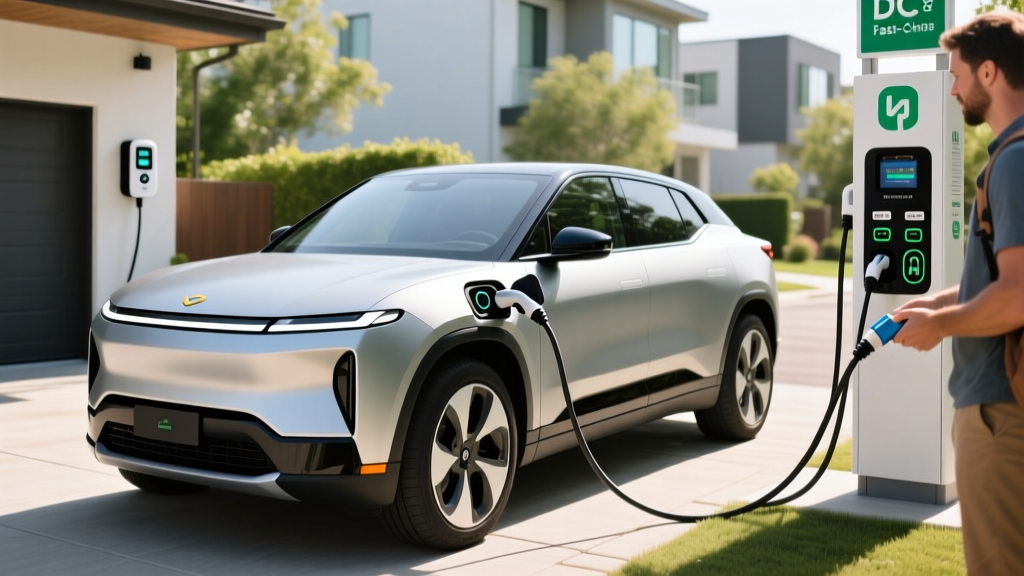
When buyers search for the fastest charger car, they're usually asking two different questions: which EV accepts the highest charging power, and which home or public setup will get them back on the road quickest. The answer depends on three variables working together — the vehicle's peak charge rate (measured in kilowatts, or kW), the battery's usable capacity (measured in kilowatt-hours, or kWh), and the charger's maximum output.
A common mistake is confusing kW with kWh. Think of kW as the flow rate of water through a hose (power), and kWh as the total volume of the tank (energy). A car with a 100 kWh battery charging at 350 kW peak will fill faster than one at 150 kW — but only if the charger can actually deliver that power and the battery's charge curve sustains it.
Below, we break down every charging tier, rank the fastest-charging EVs available in 2026, and show you exactly what it costs to replicate those speeds at home.
Charging Levels Explained: Speeds in kW and Miles Per Hour
Every EV owner needs to understand the three charging tiers. Here's how they stack up in real-world throughput:
| Level | Voltage | Power (kW) | Miles of Range Added Per Hour | Typical Use Case |
|---|---|---|---|---|
| Level 1 | 120V AC | 1.0–1.9 kW | 3–5 mi/hr | Overnight trickle; PHEVs or low-mileage commuters |
| Level 2 | 240V AC | 3.3–19.2 kW | 12–75 mi/hr | Home daily charging; workplace; hotels |
| DC Fast Charge | 400–900V DC | 50–350+ kW | 150–1,200+ mi/hr (peak) | Road trips; highway corridors; fleet depots |
Level 2 is where 90% of EV charging happens for homeowners. A 48-amp (11.5 kW) home charger adds roughly 40–45 miles of range per hour for a midsize SUV like the Tesla Model Y — enough to fully replenish a daily commute overnight. DC fast charging is reserved for road trips, and as we'll see, not all vehicles can take full advantage of the fastest public stations.
Fastest-Charging EVs of 2026: Peak kW and 10–80% Times
The title of "fastest charger car" in 2026 belongs to vehicles built on 800-volt architectures, which allow higher power intake without excessive current (and therefore heat). Here's how the leaders rank by peak DC charge rate and real-world 10–80% time:
| Vehicle | Battery (kWh usable) | Peak DC Rate (kW) | 10–80% Time | Architecture |
|---|---|---|---|---|
| Lotus Eletre R | 112 kWh (NMC) | 350 kW | ~20 min | 800V |
| Hyundai Ioniq 5 N | 84 kWh (NMC) | 350 kW | ~18 min | 800V E-GMP |
| Kia EV6 GT-Line AWD | 84 kWh (NMC) | 350 kW | ~18 min | 800V E-GMP |
| Porsche Taycan Turbo GT | 105 kWh (NMC) | 320 kW | ~19 min | 800V |
| Audi e-tron GT (2025+) | 97 kWh (NMC) | 320 kW | ~20 min | 800V J1 |
| Tesla Model 3 Long Range | 75 kWh (NMC) | 250 kW | ~25 min | 400V |
| Ford F-150 Lightning Ext. Range | 131 kWh (NMC) | 150 kW | ~41 min | 400V |
The Hyundai-Kia E-GMP platform remains the value champion here: the Ioniq 5 and EV6 deliver 350 kW capability starting around $47,000 MSRP, while Porsche and Lotus demand $100,000+ for comparable or slightly slower speeds. For buyers who prioritize road-trip charging above all else, the Ioniq 5 and EV6 are the practical fastest charger car choices in 2026.
Home Charger Installation: Electrical Requirements and Real Costs
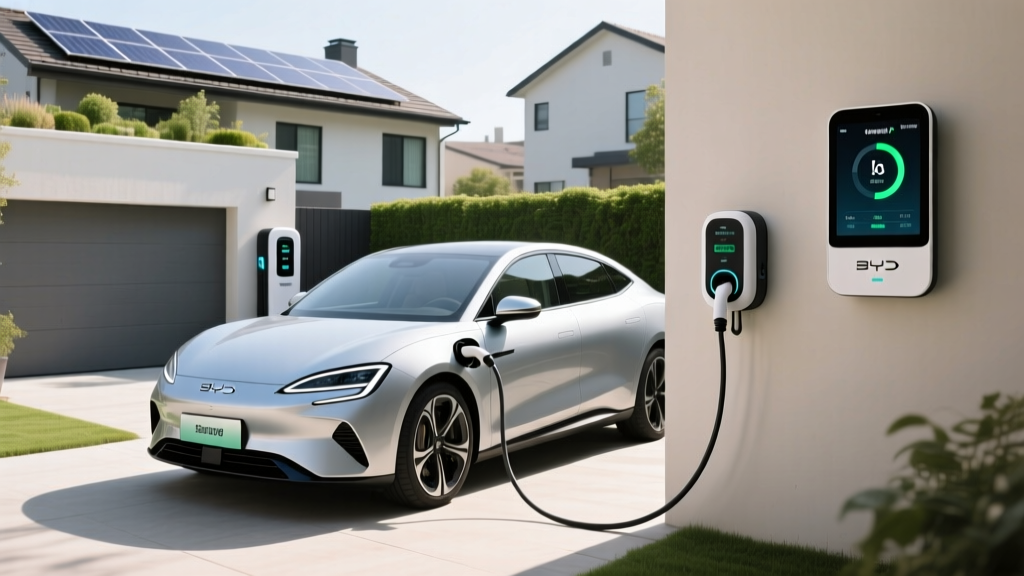
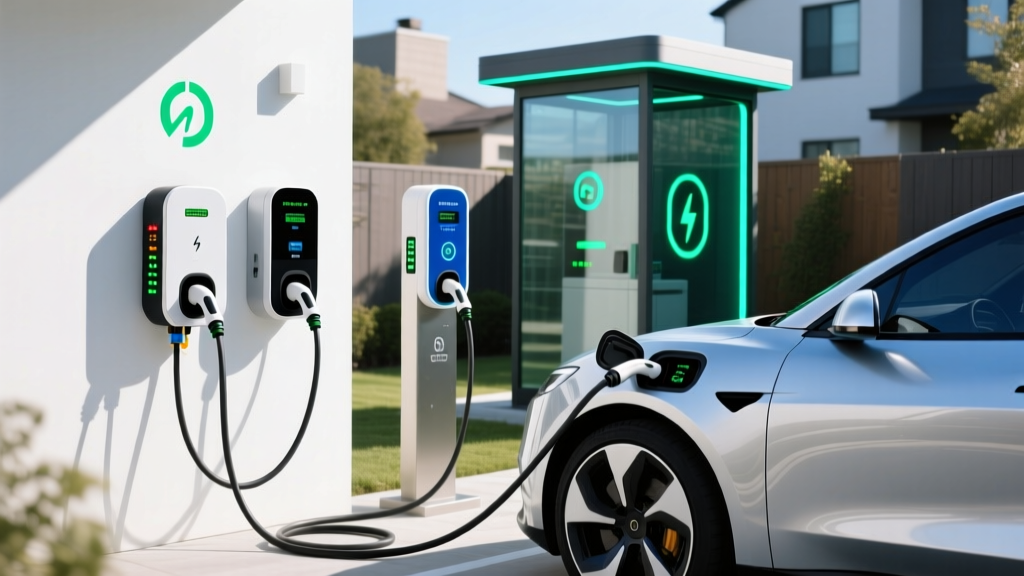
Replicating public fast-charging speeds at home isn't possible — DC fast chargers require commercial-grade power delivery — but a properly installed Level 2 station covers daily needs completely. Here's what a home install actually requires and costs.
Electrical Requirements
A typical Level 2 home charger runs on a dedicated 240V circuit. The most common configurations:
- 40-amp circuit / 32-amp continuous (7.7 kW): Sufficient for most EVs; adds ~28–32 miles of range per hour.
- 50-amp circuit / 40-amp continuous (9.6 kW): The sweet spot for larger batteries (80–100+ kWh); adds ~35–40 mi/hr.
- 60-amp circuit / 48-amp continuous (11.5 kW): Maximum for most residential chargers; adds ~42–48 mi/hr.
- 80-amp circuit / 64-amp continuous (15.3–19.2 kW): Requires a hardwired installation and a 200-amp (or larger) electrical panel; supported by chargers like the Tesla Wall Connector or FLO Home X80.
The National Electrical Code (NEC) requires that continuous loads (like EV charging) not exceed 80% of the circuit's rated capacity. A 50-amp breaker therefore delivers 40 amps (9.6 kW) continuously.
Panel Upgrade Reality
Homes built before 2000 often have 100-amp or 150-amp main panels. If your panel is already near capacity (running central AC, electric oven, electric dryer, and a water heater), adding a 50-amp EV circuit may require a panel upgrade to 200 amps. This is the single biggest variable in installation cost and can add $1,500–$4,000 to the project. A licensed electrician will perform a load calculation to determine if an upgrade is needed.
Installation Cost Breakdown
| Component | Simple Install (panel nearby, no upgrade) | Complex Install (long run, panel upgrade) |
|---|---|---|
| Level 2 Charger (hardware) | $350–$700 | $350–$700 |
| Electrician labor (2–6 hours) | $300–$900 | $800–$2,500 |
| Electrical permit | $50–$200 | $50–$200 |
| Panel upgrade (if needed) | $0 | $1,500–$4,000 |
| Conduit/wiring (long runs 50+ ft) | $100–$300 | $300–$800 |
| Total estimated cost | $800–$2,100 | $3,000–$8,200 |
Always hire a licensed electrician and pull a permit. Unpermitted EV charger installations can void homeowner's insurance and create fire risk, particularly if the circuit isn't properly sized or the connection isn't torqued to spec. The National Electrical Code (NEC Article 625) governs EV charging equipment installation.
Connector Compatibility: NACS, CCS1, and CHAdeMO in 2026
The connector landscape has consolidated significantly since 2024, when Ford, GM, Rivian, Volvo, and most other automakers adopted Tesla's North American Charging Standard (NACS). Here's where things stand for 2026 model-year vehicles:
| Connector | Brands Using It (Native) | DC Fast Charge Networks Supported |
|---|---|---|
| NACS (J3400) | Tesla, Ford, GM, Rivian, Volvo, Polestar, Mercedes, Fisker, Lucid (2025+), Honda (2025+), BMW (2025+) | Tesla Supercharger, Electrify America (NACS stalls), EVgo, ChargePoint |
| CCS1 | Hyundai, Kia, Volkswagen, Stellantis, legacy models from Ford/GM (2024 and earlier) | Electrify America, EVgo, ChargePoint, Ionity (EU) |
| CHAdeMO | Nissan Leaf (discontinued), Mitsubishi Outlander PHEV (legacy) | Limited — being phased out |
If you own a CCS1-equipped EV and want access to Tesla's Supercharger network, you'll need a CCS-to-NACS adapter (approximately $150–$250 from Tesla, Lectron, or A2Z). Most 2025+ models from Ford, GM, and Rivian ship with NACS ports natively. For home Level 2 charging, all connectors use the same J1772 protocol, and NACS vehicles accept J1772 via a small adapter typically included with the car.
Charging Cost Per Mile: Home vs. Public vs. Gas
The economics of EV charging depend entirely on where you plug in. Here's a realistic cost breakdown using a 2026 Hyundai Ioniq 5 (3.5 mi/kWh efficiency) and a comparable gas-powered Tucson (28 MPG combined) as benchmarks:
| Charging Scenario | Avg. Cost ($/kWh) | Cost Per Mile (Ioniq 5) | Equivalent Gas Cost (per gallon) |
|---|---|---|---|
| Home Level 2 (off-peak utility rate) | $0.08–$0.12 | $0.023–$0.034 | $0.80–$1.19 |
| Home Level 2 (standard rate) | $0.14–$0.18 | $0.040–$0.051 | $1.40–$1.79 |
| Public Level 2 (ChargePoint, etc.) | $0.20–$0.35 | $0.057–$0.100 | $2.00–$3.50 |
| DC Fast Charge (Electrify America) | $0.35–$0.55 | $0.100–$0.157 | $3.50–$5.50 |
| Tesla Supercharger (non-member) | $0.28–$0.40 | $0.080–$0.114 | $2.80–$4.00 |
| Gasoline (Tucson 28 MPG) | $3.40/gal avg | $0.121 | $3.40 |
Home off-peak charging is the clear economic winner — roughly one-quarter the per-mile cost of gasoline. Even DC fast charging on road trips is competitive with gas, though the gap narrows on networks charging $0.50+/kWh. The EPA's fuel cost calculator at fueleconomy.gov lets you compare specific models using your local electricity rate.
Many utilities now offer time-of-use (TOU) plans that drop rates to $0.06–$0.10/kWh between 11 PM and 6 AM. Pairing a TOU plan with scheduled charging on your Level 2 unit maximizes savings. According to the U.S. Department of Energy, EV drivers who charge at home save an average of $800–$1,200 per year compared to gasoline.
Recommended Home Level 2 Chargers (2026 Picks)
Based on power output, build quality, smart features, and cable management, here are the top home chargers for 2026:
Tesla Wall Connector (Gen 4)
- Power: Up to 19.2 kW (80A / 48A continuous on NACS)
- Connector: NACS native; J1772 adapter included
- Cable length: 24 ft
- Smart features: Wi-Fi, OTA updates, load sharing (pair multiple units on one circuit), Power Share with home
- Price: ~$475
- Best for: NACS-equipped EVs, Tesla Powerwall owners, multi-EV households
ChargePoint Home Flex
- Power: Up to 12 kW (50A circuit, adjustable 16–50A)
- Connector: J1772 (NACS adapter available)
- Cable length: 23 ft
- Smart features: Wi-Fi, app scheduling, Alexa integration, flexible amperage dip-switch
- Price: ~$550
- Best for: CCS1/J1772 EVs, renters who may move (adjustable amperage fits different panels)
Emporia Level 2 EV Charger
- Power: Up to 11.5 kW (48A on 60A circuit)
- Connector: J1772 (NACS version available)
- Cable length: 24 ft
- Smart features: Wi-Fi, energy monitoring via Emporia Vue panel integration, solar-aware scheduling
- Price: ~$400
- Best for: Budget-conscious buyers, solar panel owners, energy-usage tracking
FLO Home X80
- Power: Up to 19.2 kW (80A circuit)
- Connector: J1772 (NACS adapter available)
- Cable length: 25 ft
- Smart features: Wi-Fi, load management, commercial-grade build, outdoor-rated (NEMA 4)
- Price: ~$750
- Best for: High-power needs (Hummer EV, large batteries), outdoor installations, cold climates
Safety, Code, and Installation Best Practices
EV charging is a high-draw, long-duration electrical load — essentially running your electric oven for 8 hours straight. Safety and code compliance aren't optional:
- Dedicated circuit required: NEC Article 625 mandates a dedicated circuit for EVSE. Never share the circuit with other appliances.
- GFCI protection: Outdoor installations and garages require Ground Fault Circuit Interrupter protection per NEC 2023+ codes. Many hardwired chargers have built-in GFCI; plug-in units require a GFCI breaker.
- Outdoor rating: If installing outside, choose a charger rated NEMA 4 (weather-resistant). All recommended units above meet this standard.
- Cable management: Use a holster or cable retractor to prevent tripping hazards and protect the connector from ground moisture and road salt.
- Permit and inspection: Most jurisdictions require an electrical permit and post-installation inspection. This protects you legally and ensures the work meets code. Typical permit cost: $50–$200.
- Hardwired vs. plug-in: Hardwired chargers (no plug) are required for circuits above 60 amps and are generally more reliable. Plug-in units (NEMA 14-50 outlet) offer portability if you move homes.
Charging Time Examples: From Daily Top-Off to Road-Trip Recharge
How long does charging actually take? Here are real-world scenarios for common battery sizes and charger types:
| Scenario | Battery Size | Charger | Estimated Time |
|---|---|---|---|
| Daily commute replenish (30 mi used) | 75 kWh pack | Home Level 2 (11.5 kW) | ~2.5 hours |
| Overnight full charge 10–100% | 84 kWh (Ioniq 5) | Home Level 2 (9.6 kW) | ~8.5 hours |
| Overnight full charge 10–100% | 131 kWh (F-150 Lightning) | Home Level 2 (11.5 kW) | ~11.5 hours |
| Road-trip 10–80% DC fast charge | 84 kWh (Ioniq 5) | 350 kW DCFC | ~18 minutes |
| Road-trip 10–80% DC fast charge | 131 kWh (F-150 Lightning) | 150 kW DCFC | ~41 minutes |
| Road-trip 10–80% DC fast charge | 75 kWh (Model 3 LR) | 250 kW Supercharger | ~25 minutes |
| Emergency top-up at Level 1 | 75 kWh pack | 120V / 12A (1.4 kW) | ~50 hours for full charge |
For context, a typical overnight charge on Level 2 covers 200–300 miles of range — more than most drivers use in a week. The fastest charger car advantage really shows on road trips, where the Ioniq 5's 18-minute 10–80% time means a quick rest stop and you're back to 200+ miles of range.
Frequently Asked Questions
How much does it cost to install a home EV charger?
A straightforward Level 2 installation (panel nearby, no upgrade needed) costs $800–$2,100 including equipment, electrician labor, and permit. Complex installations requiring a panel upgrade, long conduit runs, or trenching can reach $3,000–$8,200. Always get three quotes from licensed electricians and verify they pull a permit.
How fast will each charging level add range?
Level 1 (120V) adds 3–5 miles per hour. Level 2 (240V) adds 12–75 miles per hour depending on amperage. DC fast charging adds the equivalent of 150–1,200+ miles per hour at peak rate, though sustained rates taper as the battery fills. For practical purposes, Level 2 at 9.6–11.5 kW is the optimal home standard.
Which connector and charger is compatible with my EV?
For 2026 models: Tesla, Ford, GM, Rivian, Volvo, BMW, Honda, and Mercedes use NACS. Hyundai, Kia, and Volkswagen still use CCS1. CHAdeMO is effectively discontinued. For home Level 2, all vehicles accept J1772 (or use an included J1772-to-NACS adapter). Check your vehicle's charge port or owner's manual to confirm.
How much does charging cost per mile vs. gas?
Home off-peak charging costs $0.02–$0.05 per mile — roughly 75% less than gasoline at $3.40/gallon and 28 MPG. Public DC fast charging costs $0.08–$0.16 per mile, roughly comparable to gas. The savings advantage is greatest when you charge at home on a time-of-use utility plan.
What electrical upgrades might I need?
If your home has a 100-amp or 150-amp main panel and already runs multiple high-draw appliances (electric oven, dryer, central AC, water heater), you may need a panel upgrade to 200 amps — costing $1,500–$4,000. An electrician will perform a NEC Article 220 load calculation to determine this. Some utilities offer rebates of $200–$500 for panel upgrades that include EV charger circuits. In some cases, a smart load-management device (like the Emporia Smart Load Manager) can avoid a panel upgrade by dynamically reducing charger power when other appliances cycle on.