If you've pulled up to a Blink charging station or browsed their home wall-box lineup, you've likely asked the same question thousands of EV owners search every month: what is the actual Blink charging speed, and does it match what you need? Blink is one of the most visible Level 2 and DC fast-charging networks in North America, with over 60,000 ports deployed across workplaces, apartments, retail lots, and highway corridors. But "Blink" covers everything from a 7.2 kW residential wall charger to a 360 kW public DC fast cabinet — and the difference between those endpoints is the difference between an overnight top-up and a 15-minute road-trip pit stop.
This guide breaks down every Blink charging speed tier, the electrical requirements behind them, what they'll cost to install at home, and how the per-mile economics stack up against gasoline. All figures reflect 2026 hardware, network pricing, and electrical code.
Charging Levels Explained: What kW Actually Means for Your EV
The single most important distinction in EV charging is between kW (kilowatts) — the rate at which energy flows, like water pressure from a hose — and kWh (kilowatt-hours) — the total energy stored in your battery, like the size of the bucket. A 80 kWh battery charged at 10 kW takes roughly 8 hours from empty; the same battery at 150 kW DC fast charging can hit 80% in under 30 minutes. Blink operates hardware across all three major charging levels:
| Level | Voltage | Power (kW) | Miles of Range Added / Hour | Typical Blink Hardware | Best Use Case |
|---|---|---|---|---|---|
| Level 1 | 120V AC | 1.2 – 1.4 kW | 3 – 5 mi/hr | Mobile cord (included with most EVs) | Emergency / PHEV overnight |
| Level 2 | 240V AC | 7.2 – 19.2 kW | 20 – 65 mi/hr | Blink HQ 200 (7.2–11.5 kW), Blink Series 9 (up to 19.2 kW) | Home overnight, workplace, apartments |
| DC Fast (Level 3) | 400–900V DC | 50 – 360 kW | 150 – 1,200+ mi/hr (peak) | Blink IQ 200 (DC), Blink 360 kW cabinet | Highway travel, quick top-ups |
Real-world caveat: "Miles per hour" figures assume a vehicle efficiency around 3.0 mi/kWh (typical for a mid-size crossover like the Tesla Model Y or Hyundai IONIQ 5). A heavier truck like the Ford F-150 Lightning (~2.0 mi/kWh) will add fewer miles per hour at the same kW rate.
Blink Home Charger Speeds: What You'll Actually Get
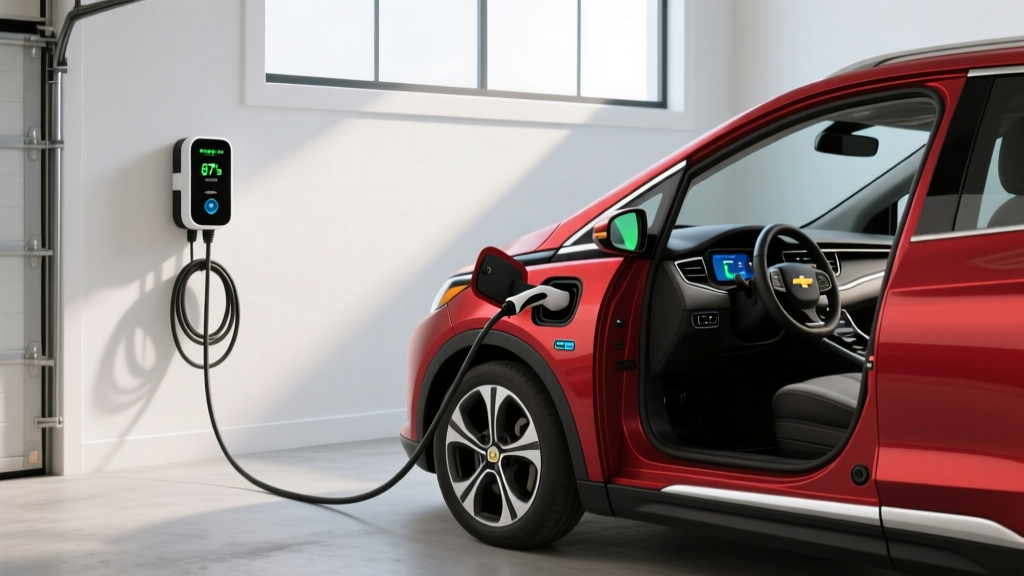
Blink's residential lineup centers on the Blink HQ 200, a hardwired or plug-in Level 2 wall box available in 32A (7.7 kW) and 48A (11.5 kW) configurations. For 2026, Blink also offers the networked Series 9 for multi-family and smart-home integrations at up to 80A / 19.2 kW — though very few EVs can accept that full rate onboard.
Here's what Blink home charging speed means for common 2026 EV battery sizes, measured from 10% to 80% state of charge:
| Vehicle (2026) | Battery (kWh usable) | 7.7 kW (32A) | 11.5 kW (48A) | Onboard Charger Limit |
|---|---|---|---|---|
| Tesla Model Y Long Range | 75 kWh | ~6 hr 50 min | ~4 hr 35 min | 11.5 kW (48A) |
| Hyundai IONIQ 5 (Long Range) | 77.4 kWh | ~7 hr 05 min | ~5 hr 25 min | 10.9 kW |
| Ford F-150 Lightning (Extended) | 131 kWh | ~12 hr 00 min | ~8 hr 00 min | 19.2 kW (dual charger) |
| Chevrolet Equinox EV 3RS | 85 kWh | ~7 hr 45 min | ~5 hr 55 min | 11.5 kW |
| Toyota RAV4 Prime (PHEV) | 18.1 kWh | ~1 hr 40 min | ~1 hr 15 min | 6.6 kW |
For most EV owners driving 30–40 miles per day, even the 7.7 kW Blink HQ 200 replaces a full day's driving in roughly 3–4 hours of overnight charging. The 48A model makes sense primarily for larger batteries (100+ kWh trucks and SUVs) or households with two EVs rotating through one charger.
How Much Does It Cost to Install a Blink Home Charger?
The Blink HQ 200 hardware itself runs between $499 and $699 depending on amperage and whether you choose hardwired or NEMA 14-50 plug-in. But installation is where costs diverge wildly based on your home's electrical infrastructure. A modern home with a 200A panel and garage-adjacent parking may need only a new 50A or 60A breaker and 25 feet of 6 AWG copper wire. A 1970s home with a 100A panel, knob-and-tube remnants, and a detached garage could require a full service upgrade.
| Component | Simple Install (panel nearby, 200A service) | Complex Install (long run, older panel) | Full Service Upgrade |
|---|---|---|---|
| Blink HQ 200 (48A unit) | $649 | $649 | $649 |
| Permit & inspection | $75 – $150 | $150 – $350 | $250 – $500 |
| Electrician labor (2–4 hrs vs. 6–10 hrs) | $300 – $600 | $800 – $1,800 | $1,500 – $3,000 |
| Wire, conduit, breaker | $100 – $250 | $400 – $900 | $500 – $1,200 |
| Panel upgrade (100A → 200A) | — | — | $2,000 – $4,500 |
| Total | $1,124 – $1,649 | $2,000 – $3,699 | $4,899 – $9,849 |
Panel-upgrade gotcha: Many older homes with 100A service physically cannot add a 60A EV circuit without exceeding the National Electrical Code's 80% continuous-load rule. A licensed electrician will perform a load calculation per NEC Article 220 before signing off on a permit. Budget $2,000–$4,500 and 1–3 weeks if an upgrade is needed. Some utilities offer rebates of $500–$1,500 for panel upgrades tied to EV adoption — check with your local provider.
Safety & code requirements for Blink home installs:
- Dedicated circuit: the HQ 200 requires its own breaker (50A for 40A continuous / 60A for 48A continuous) — never share with a dryer or HVAC.
- GFCI protection: NEC 2023/2026 (Article 625.54) requires GFCI on all EV receptacles; the Blink HQ 200 hardwired model includes integrated ground-fault protection.
- Outdoor rating: the HQ 200 carries a NEMA 4 rating for outdoor installation, but the plug-in NEMA 14-50 variant requires an in-use weatherproof cover (bubble cover) if mounted outside.
- Wi-Fi / networking: the HQ 200 uses the Blink app for scheduling, off-peak optimization, and energy tracking — a 2.4 GHz Wi-Fi signal at the install point is required.
Blink Public Charging: DC Fast Speeds on the Road
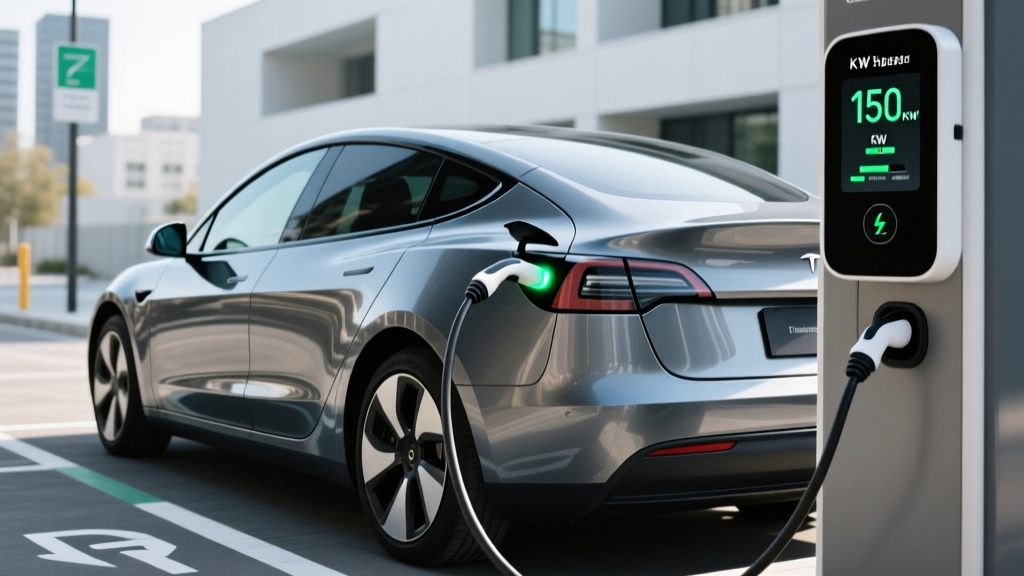
Blink's public DC fast-charging network has expanded significantly through 2025–2026, adding IQ 200-series cabinets capable of 180 kW (CCS1) and dual-port 360 kW units with native NACS connectors. On a compatible 800V-architecture vehicle, a Blink 360 kW cabinet can add 10%–80% in roughly 18–22 minutes. On a 400V vehicle (most pre-2024 models), expect the same session to take 30–45 minutes at the same cabinet because the vehicle's inverter limits throughput.
| Vehicle | Architecture | Peak Accept Rate | Blink 180 kW Cabinet | Blink 360 kW Cabinet |
|---|---|---|---|---|
| Hyundai IONIQ 5 / Kia EV6 | 800V | ~240 kW | ~25 min | ~18 min |
| Tesla Model 3 / Y (2026) | 400V-class | ~250 kW | ~27 min (NACS adapter) | ~20 min (native NACS) |
| Ford Mustang Mach-E (2026) | 400V | ~150 kW | ~38 min | ~38 min (vehicle-limited) |
| Chevrolet Silverado EV | 800V (Ultium) | ~350 kW | ~28 min | ~20 min |
| Nissan Ariya | 400V | ~130 kW | ~42 min | ~42 min (vehicle-limited) |
Connector compatibility matters: By 2026, nearly every major automaker has either adopted NACS natively or provides a CCS1-to-NACS adapter. Blink stations increasingly offer both connector types, but older Blink sites may still be CCS1-only. Tesla owners using non-Tesla networks need the official CCS adapter (for legacy CCS1 stalls) or can use native-NACS Blink sites directly.
| Connector | Native Vehicles (2026) | Adapter Required For | Blink Availability |
|---|---|---|---|
| NACS (Tesla standard) | Tesla, Ford, GM, Rivian, Volvo, Polestar, others | CCS1 vehicles need NACS→CCS adapter | New Blink DC sites; expanding retrofit |
| CCS1 | Hyundai, Kia, VW ID.4, BMW iX (legacy) | NACS vehicles need CCS1→NACS adapter | Majority of existing Blink DC fleet |
| CHAdeMO | Nissan Leaf (discontinued 2025), Mitsubishi Outlander PHEV | No practical adapter | Legacy Blink ports only; being retired |
Cost to Charge: Blink Pricing vs. Home Electricity vs. Gasoline
Per-mile cost is where EV ownership either shines or stings, depending on where you charge. Blink's public pricing varies by site owner (Blink sets a base rate, but hosts set markups), but 2026 averages look like this:
| Charging Scenario | Typical $/kWh | Cost to Add 200 Miles (3.0 mi/kWh) | Cost Per Mile |
|---|---|---|---|
| Home, off-peak utility rate | $0.09 – $0.14 | $6.00 – $9.33 | $0.030 – $0.047 |
| Home, standard residential rate | $0.15 – $0.22 | $10.00 – $14.67 | $0.050 – $0.073 |
| Blink Level 2 public | $0.35 – $0.55 | $23.33 – $36.67 | $0.117 – $0.183 |
| Blink DC Fast public | $0.39 – $0.69 | $26.00 – $46.00 | $0.130 – $0.230 |
| Gasoline baseline (25 MPG, $3.40/gal) | — | $27.20 | $0.136 |
The economics are clear: home charging on a Blink HQ 200 at off-peak utility rates delivers per-mile costs roughly one-quarter to one-third of gasoline. Public Blink DC fast charging, by contrast, often equals or slightly exceeds gasoline per-mile cost — which is exactly why DC fast charging is meant for road trips, not daily fueling. Most Blink home users report 85–95% of their charging happens at home.
Tax credit note: The federal Alternative Fuel Vehicle Refueling Property Credit (§30C) can cover up to 30% of home charger hardware + installation costs (capped at $1,000 for residential), but only if you live in an eligible census tract and meet prevailing-wage requirements for installation. Confirm eligibility with a tax professional and the IRS §30C guidance.
Recommended Blink Chargers and Alternatives
Blink HQ 200 (48A) — Best for Blink Ecosystem Users
- Power: 11.5 kW max (48A continuous on 60A circuit)
- Connector: J1772 (universal for non-Tesla; Tesla uses included adapter)
- Cable length: 25 ft
- Smart features: Blink app scheduling, off-peak automation, energy reporting, OTA updates
- Price: ~$649 (hardwired or NEMA 14-50)
- Warranty: 3 years
Blink HQ 200 (32A) — Budget & Apartment-Friendly
- Power: 7.7 kW max (32A on 40A circuit)
- Connector: J1772
- Cable length: 25 ft
- Smart features: Same Blink app suite
- Price: ~$499
- Ideal for: Homes with 100A panels, PHEVs, smaller batteries
Competitor Benchmark: ChargePoint Home Flex (48A)
- Power: 11.5 kW (adjustable 16A–50A)
- Connector: J1772 or NACS (2026 NACS-native model available)
- Cable length: 23 ft
- Smart features: ChargePoint app, Alexa/Google, flexible amperage dial
- Price: ~$599
- Advantage: Adjustable amperage fits any panel without swapping hardware
Competitor Benchmark: Emporia Vue + Level 2 Charger (48A)
- Power: 11.5 kW
- Connector: J1772 / NACS adapter
- Cable length: 24 ft
- Smart features: Whole-home energy monitoring, solar integration, EV/solar diversion
- Price: ~$549 (charger) + $199 (Vue panel monitor)
- Advantage: Best for solar homeowners wanting EV charging on excess production
For pure Blink charging speed at home, the HQ 200 at 48A is competitive with ChargePoint and Emporia. Where Blink differentiates is network integration — if your workplace or apartment building already uses Blink, a single app handles all your charging. If you prioritize flexibility or have solar, ChargePoint's adjustable amperage or Emporia's solar-diversion feature may be a better fit.
What Electrical Upgrades Might I Need?
Before buying any Level 2 charger — Blink or otherwise — have a licensed electrician perform these checks:
- Service capacity: A 200A panel can typically support a 60A EV circuit (48A continuous). A 100A panel often cannot without a load-management device or service upgrade.
- Wire run distance: Runs over 50 feet require upsized wire (4 AWG or 3 AWG instead of 6 AWG) to prevent voltage drop, adding $3–$8/foot in copper costs.
- Breaker panel space: You need two adjacent slots for a 240V double-pole breaker. Full panels may require a sub-panel ($400–$900) or tandem breakers where code allows.
- Load-management alternatives: Devices like the Emporia Smart Load Center or Sense Energy Monitor can let you run a 48A charger on a marginal panel by dynamically reducing charge rate when other loads spike — potentially avoiding a $3,000+ panel upgrade.
- Permit jurisdiction: Most US municipalities require a permit and final inspection for any new 240V circuit. Skipping this can void home insurance and create resale-title issues.
The National Electrical Code (NEC) Article 625 governs all EV charging installations, and your local authority having jurisdiction (AHJ) may have amendments. Always pull the permit.
Frequently Asked Questions
How fast will a Blink HQ 200 charge my Tesla Model Y?
The Model Y's onboard charger accepts up to 11.5 kW (48A). On a Blink HQ 200 at 48A, expect a 10%–80% charge in approximately 4 hours 35 minutes for the 75 kWh Long Range battery — more than sufficient for overnight replenishment.
Is Blink DC fast charging reliable compared to Tesla Superchargers?
Independent studies (including J.D. Power EV Experience Index) consistently rank Tesla Superchargers highest for uptime. Blink's public network uptime improved significantly through 2025, but site-by-site reliability still varies. Use the Blink app to check real-time port status before driving to a station.
Can I use a Blink charger with my NACS-equipped Ford or GM vehicle?
Yes. Blink's newer DC fast chargers include native NACS connectors. For older CCS1-only Blink sites, Ford and GM include (or sell) CCS1-to-NACS adapters with 2025+ vehicles. Level 2 Blink HQ 200 units use J1772, which works with all EVs via the Tesla-provided J1772 adapter.
Does Blink offer free charging?
Some Blink sites — particularly at workplaces, apartments, and promotional retail locations — offer free Level 2 charging subsidized by the property owner. DC fast charging is almost always paid. Check the Blink app for site-specific pricing before you plug in.
How much does Blink charging cost per mile versus my gas car?
At home on off-peak electricity ($0.12/kWh), Blink HQ 200 charging costs roughly $0.04/mile — about 70% less than a 25 MPG gas car at $3.40/gallon ($0.136/mile). Public Blink DC fast charging at $0.55/kWh runs ~$0.18/mile, which is more expensive than gas — so home charging is where the savings live.
What's the difference between kW and kWh again?
kW (kilowatts) is the rate of energy flow — how fast your battery is filling. kWh (kilowatt-hours) is the total amount of energy stored. Think of kW as the speed of water from a hose and kWh as the size of the bucket. A 77 kWh battery charged at 11.5 kW takes roughly 6.7 hours from empty.
Sources: EPA Fuel Economy for vehicle efficiency data; IRS §30C Refueling Property Credit; Blink Charging product specifications (2026).