Introduction to EV Charger Ground Fault Protection
As electric vehicle (EV) adoption accelerates, home charging installations have become a standard upgrade for many homeowners. However, upgrading your electrical panel to support a Level 2 EV charger involves more than just running thicker wires and installing a high-amperage breaker. One of the most critical, yet frequently misunderstood, aspects of a safe EV charging setup is ground fault protection. For beginners navigating the complexities of electrical codes, understanding ground fault protection requirements is essential to ensure safety, pass local inspections, and avoid the infamous "nuisance tripping" that can leave your vehicle uncharged in the morning.
This comprehensive beginner's guide breaks down the National Electrical Code (NEC) requirements for ground fault protection, explores the differences between GFCI and GFPE, and provides actionable advice for your residential EV charger installation.
What is Ground Fault Protection?
A ground fault occurs when electrical current strays from its intended path and travels to the ground, often through a person's body or a conductive surface like water or metal. In the context of EV charging, where high currents (typically 32 to 48 amps) are transferred daily, often in damp environments like garages or outdoor driveways, the risk of electrical shock or fire is a serious concern.
Ground fault protection devices monitor the balance of electrical current moving through the circuit's hot and neutral wires. If an imbalance is detected—indicating that current is leaking to the ground—the device instantly cuts off the power. According to the Electrical Safety Foundation International (ESFI), Ground Fault Circuit Interrupters (GFCIs) are designed to protect people from severe electrical shocks by tripping at a very low threshold, typically between 4 and 6 milliamps (mA).
GFCI vs. GFPE: Understanding the Difference
- GFCI (Ground Fault Circuit Interrupter): Designed for personnel protection. Trips at 4mA to 6mA. Required for standard 120V and 240V receptacles where humans might interact with the plug.
- GFPE (Ground Fault Protection of Equipment): Designed to protect electrical equipment and prevent fires. Trips at a higher threshold, typically 30mA. Often utilized in hardwired commercial or heavy-duty residential applications.
National Electrical Code (NEC) Requirements for EV Chargers
The NEC, published by the National Fire Protection Association (NFPA) as NFPA 70, is the benchmark for safe electrical design, installation, and inspection. Article 625 of the NEC specifically governs Electric Vehicle Charging System Equipment, while Articles 210.8 and 406 dictate GFCI requirements for receptacles.
The code has evolved significantly over recent cycles (2017, 2020, and 2023) to address the unique electrical characteristics of EV chargers, also known as Electric Vehicle Supply Equipment (EVSE).
The 2020 and 2023 NEC Mandates for Receptacles
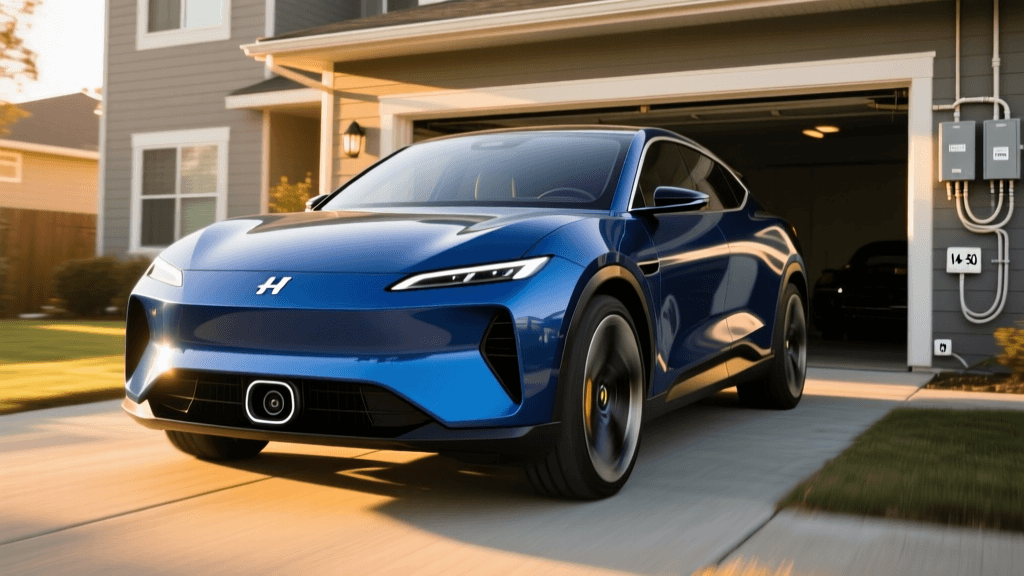
Prior to the 2020 NEC cycle, GFCI protection was not explicitly mandated for 240V EV charging receptacles in garages. However, the 2020 NEC updated Article 210.8 to require GFCI protection for all 125-amp to 250-volt receptacles rated 50 amps or less, which directly includes the standard NEMA 14-50 outlets commonly used for plug-in EV chargers like the ChargePoint Home Flex or Tesla Mobile Connector.
If you are installing a NEMA 14-50 receptacle for your EV charger, your electrical panel must be equipped with a 50-amp, 240V GFCI breaker. Standard thermal-magnetic breakers are no longer code-compliant for this specific plug-in application in most jurisdictions adopting the 2020 or 2023 NEC.
Hardwired EV Charger Installations
Alternatively, if you choose to hardwire your EV charger directly into the electrical panel (bypassing a receptacle entirely), the NEC generally does not require a GFCI breaker at the panel, provided the EVSE itself contains internal ground fault protection. Almost all modern, UL-listed Level 2 EV chargers (including the Tesla Wall Connector, Emporia Vue, and EnelX JuiceBox) have built-in GFCI and GFPE sensors that exceed safety requirements. Hardwiring is often preferred by electricians because it eliminates the need for expensive 50-amp GFCI breakers and reduces the points of failure in the circuit.
The "Nuisance Tripping" Phenomenon
One of the most common complaints from early EV adopters who installed plug-in NEMA 14-50 outlets with GFCI breakers is "nuisance tripping." This occurs when the breaker randomly cuts power to the charger without an actual dangerous ground fault occurring.
Why does this happen? EVs and their charging cables contain capacitors and complex power electronics that naturally produce a tiny amount of capacitive leakage current to the ground. Furthermore, modern EVSE units already have internal GFCI protection. When you stack an internal EVSE GFCI on top of a panel-mounted GFCI breaker, the two sensors can conflict. A harmless, momentary micro-surge during the charging handshake can cause the highly sensitive panel breaker to trip before the EVSE's internal computer even registers a fault.
To prevent nuisance tripping, manufacturers like Square D and Eaton have developed specialized EV-specific GFCI breakers with advanced algorithms designed to distinguish between dangerous ground faults and normal EV capacitive leakage. However, the most foolproof method to avoid this issue entirely is to hardwire the unit.
Comparison Chart: Plug-In vs. Hardwired EV Installations
| Feature | Plug-In (NEMA 14-50) | Hardwired Connection |
|---|---|---|
| NEC GFCI Breaker Required? | Yes (50A 240V GFCI Breaker) | No (Relies on EVSE internal protection) |
| Breaker Cost (Approx.) | $100 - $150+ | $10 - $20 (Standard Breaker) |
| Nuisance Tripping Risk | Moderate to High (Stacked protection) | Very Low |
| Portability | High (Can unplug and take with you) | Low (Permanently mounted) |
| Max Continuous Amperage | 40 Amps (80% of 50A circuit) | 48 Amps (80% of 60A circuit) |
Actionable Steps for Your Installation
Navigating electrical permits and code compliance can be daunting for beginners. The U.S. Department of Energy strongly recommends using a licensed, certified electrician for all home charging installations to ensure compliance with local and national codes. Here is your step-by-step checklist:
- Assess Your Electrical Panel: Determine if you have 100-amp or 200-amp service. A 50-amp or 60-amp EV circuit requires significant headroom. If your panel is maxed out, you may need a panel upgrade or a smart load management device.
- Choose Hardwired Over Plug-In: Unless you rent your home or plan to move your charger frequently, choose a hardwired EVSE. It is cheaper (no expensive GFCI breaker required), safer, allows for faster charging speeds (up to 48 amps), and eliminates nuisance tripping.
- Verify Local Code Adoptions: Not all municipalities have adopted the 2020 or 2023 NEC. Some are still on the 2017 version, while others have local amendments. Your electrician will pull the necessary permits and ensure the installation matches your specific local jurisdiction's ground fault requirements.
- Buy the Right Breaker: If you must use a NEMA 14-50 receptacle, ensure your electrician installs a GFCI breaker specifically rated for EV loads, and ensure the receptacle itself is of high quality (such as Hubbell or Bryant industrial grade) to prevent melting due to poor plug tension.
Conclusion
Ground fault protection is a non-negotiable safety feature in modern electrical systems, and EV chargers are no exception. While the NEC mandates strict GFCI requirements for plug-in receptacles to protect human life, the practical realities of capacitive leakage and nuisance tripping make hardwired installations the superior choice for most homeowners. By understanding the difference between GFCI and GFPE, and by working closely with a licensed electrician to navigate local code adoptions, you can ensure your home charging setup is safe, reliable, and ready to power your electric vehicle for years to come.