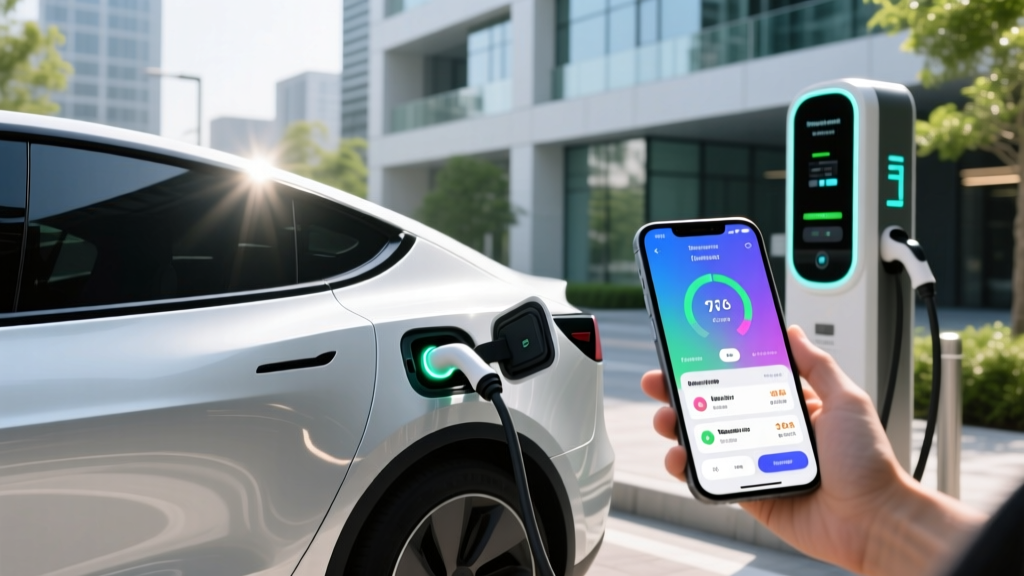
The North American Charging Standard (NACS) has rapidly consolidated what was once a fragmented EV charging landscape. Originally developed by Tesla and opened to the industry in late 2022, the NACS standard is now the factory connector on nearly every new electric vehicle sold in the United States for the 2025 and 2026 model years. Ford, GM, Rivian, Volvo, Polestar, Hyundai, Kia, BMW, and others have adopted it — replacing or supplementing the CCS1 connector that previously dominated non-Tesla EVs.
If you're shopping for an EV, planning a home charger installation, or trying to figure out which adapter you need for road trips, this guide covers exactly what the NACS standard means for your charging setup — with real numbers, real costs, and real-world expectations.
What Is the NACS Standard and Why Does It Matter?
NACS (North American Charging Standard) is a charging connector and communication protocol originally proprietary to Tesla. It handles both AC charging (Level 1 and Level 2) and DC fast charging through a single, compact plug — unlike CCS1, which uses separate pins for AC and DC, or CHAdeMO, which is DC-only.
Key physical and technical differences:
- Size: The NACS connector is roughly half the size of a CCS1 plug, making it lighter and easier to handle.
- Unified AC/DC: One port on the vehicle handles everything from a 120V household outlet to a 350 kW DC fast charger.
- Network access: NACS-equipped EVs gain native access to Tesla's Supercharger network — over 30,000 stalls across North America — without an adapter.
- Communication: NACS uses a power-line communication (PLC) protocol over the same pins used for power delivery, rather than the separate CAN bus or PLC-over-pilot approach in CCS1.
SAE International formally standardized NACS as SAE J3400 in 2023, giving it the same industry-legitimacy status as CCS1 (SAE J1772/J3068). By 2026, the transition is largely complete for new vehicles, though millions of CCS1-equipped EVs remain on the road and will need adapters for Supercharger access.
Charging Levels Explained: Speed, Power, and Range Added
Understanding EV charging requires distinguishing between kW (kilowatts) — the rate of power delivery — and kWh (kilowatt-hours) — the amount of energy stored in your battery. Think of kW as the flow rate of a hose and kWh as the size of the bucket you're filling. A 10 kW charger delivers energy at a specific rate; an 80 kWh battery stores a specific amount of energy. These are never interchangeable.
| Level | Voltage | Max Power (kW) | Miles of Range per Hour | Typical Use Case |
|---|---|---|---|---|
| Level 1 | 120V AC | 1.4–1.9 kW | 3–5 mi/hr | Overnight top-up, low-mileage drivers, PHEVs |
| Level 2 | 240V AC | 3.3–19.2 kW | 12–75 mi/hr | Home daily charging, workplace, public AC stations |
| DC Fast Charging | 400–900V DC | 50–350 kW | 150–1,000+ mi/hr (peak) | Road trips, rapid top-ups, commercial fleets |
Real-world charging time examples (10% to 80% State of Charge):
- Tesla Model Y Long Range (75 kWh usable, NACS native): ~250 kW peak DCFC → 10–80% in approximately 18–22 minutes at a V4 Supercharger. Tapers significantly above 80%.
- Ford F-150 Lightning Extended Range (131 kWh usable, NACS on 2025+ models): ~170 kW peak → 10–80% in approximately 38–42 minutes.
- Hyundai Ioniq 5 (77.4 kWh usable, NACS on 2025+ models): ~240 kW peak on 800V architecture → 10–80% in approximately 18 minutes under ideal conditions.
- Level 2 home charging at 11.5 kW (48A): A 75 kWh battery from 10–80% takes roughly 4.5–5 hours — perfectly suited for overnight charging.
DC fast charging speeds are not sustained. A charger rated for 250 kW peak may only deliver that rate between roughly 10–40% SoC, tapering to 100 kW or lower as the battery fills past 60%. This charge-curve taper is a function of battery chemistry and thermal management, not a charger defect. Always plan road-trip stops around 10–80% sessions, not 0–100%.
Connector Compatibility: NACS, CCS1, CHAdeMO, and Adapters
The connector on your EV determines which public chargers you can use natively and which require an adapter. Here's the current compatibility landscape:
| Connector | Brands Using It (New Vehicles) | DC Fast Network Access | Adapter Needed For |
|---|---|---|---|
| NACS (SAE J3400) | Tesla, Ford, GM, Rivian, Hyundai, Kia, BMW, Volvo, Polestar, Mercedes-Benz, Lucid (2025+), Toyota (2025+) | Tesla Superchargers natively; CCS stations via adapter | CCS1 adapter for Electrify America, EVgo CCS stalls |
| CCS1 | Legacy models (pre-2025 VW ID.4, older Chevy Bolt, etc.); Stellantis models in transition | Electrify America, EVgo, ChargePoint DCFC natively | NACS adapter for Tesla Supercharger access |
| CHAdeMO | Nissan Leaf (discontinued after 2025 MY), Mitsubishi Outlander PHEV (legacy) | Limited and declining network | No viable NACS or CCS adapter widely available |
Adapter realities for 2026:
- Tesla CCS adapter (for CCS1-equipped Teslas): ~$175–$250, enables use of Electrify America and other CCS networks. Rated for up to 250 kW.
- Non-Tesla NACS adapter (for CCS1 EVs accessing Superchargers): Ford, GM, and Rivian initially included these with vehicle purchase. Aftermarket options from Lectron, A2Z, and Tesla's official adapter run $150–$300. Verify the adapter's kW rating — some are limited to 150 kW.
- J1772 to NACS adapter: For Level 2 AC charging on NACS-equipped vehicles at older public stations still using the J1772 connector. Typically $40–$80. Most NACS vehicles ship with this adapter in the trunk.
If you're buying a 2025 or 2026 model-year EV, it almost certainly has a NACS port natively. If you own a 2022–2024 CCS1 vehicle, you'll rely on adapters for Supercharger access — and should confirm your specific vehicle is on Tesla's approved adapter compatibility list before purchasing one.
Home Charger Installation: Electrical Requirements and Costs
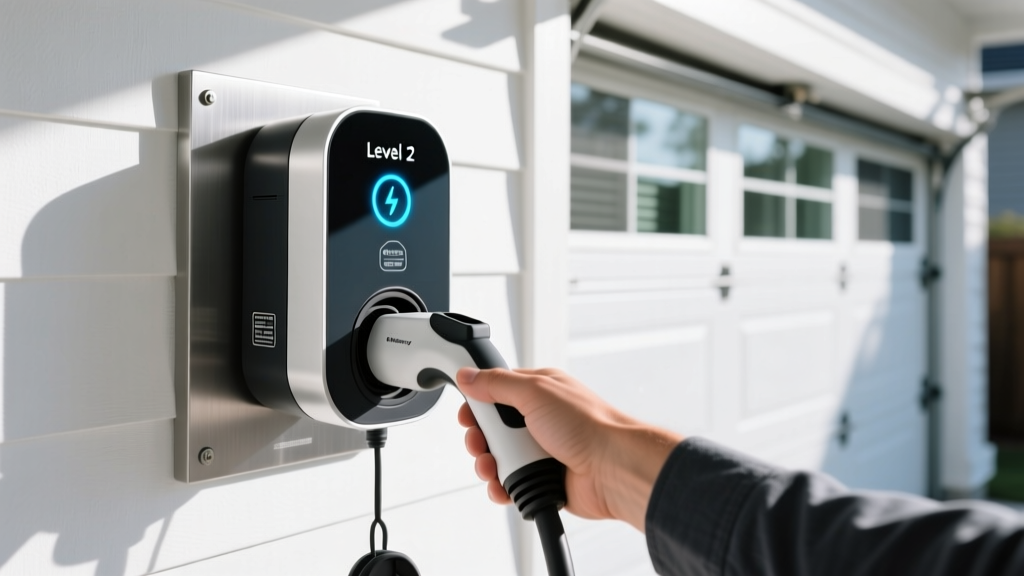
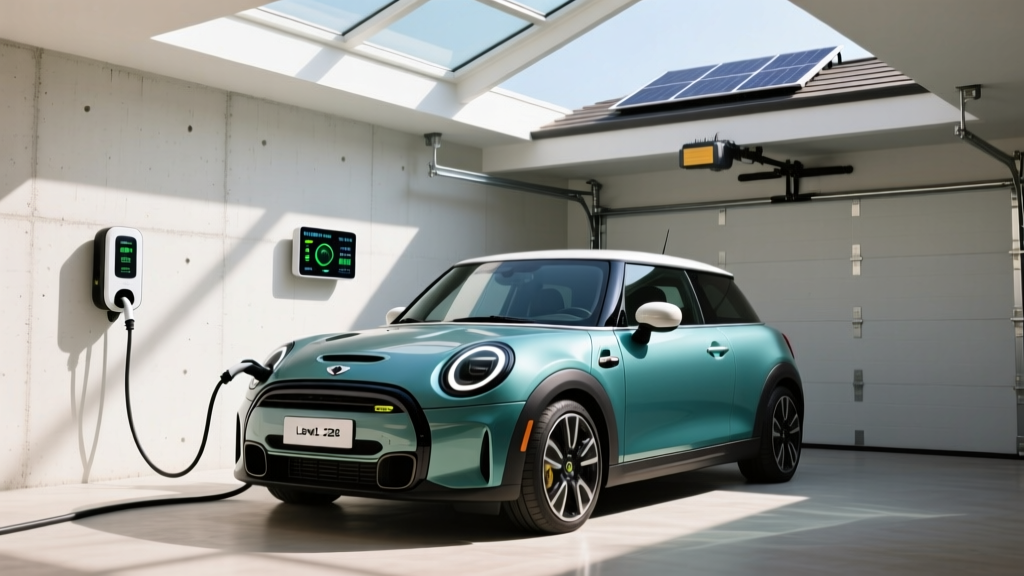
Installing a Level 2 home charger is the single highest-impact upgrade for EV ownership. It transforms charging from a public-infrastructure dependency into a nightly routine as simple as plugging in your phone. But the installation cost varies dramatically based on your home's electrical panel, the distance from panel to charger location, and local permit requirements.
Electrical Requirements
A typical Level 2 home charger runs on a 240V dedicated circuit, similar to an electric dryer or oven. The most common configurations:
- 40-amp circuit / 32A continuous → 7.7 kW output. Adequate for most EVs with smaller batteries (under 80 kWh).
- 50-amp circuit / 40A continuous → 9.6 kW output. The sweet spot for most homes — charges a 75–100 kWh battery overnight.
- 60-amp circuit / 48A continuous → 11.5 kW output. Ideal for larger batteries (F-150 Lightning, Rivian R1T) or faster turnaround needs.
- 80-amp circuit / 64A continuous → 15.2–19.2 kW output. Requires a 200A+ electrical panel and heavy-gauge wiring. Premium setups for high-capacity EVs.
National Electrical Code (NEC) requires that continuous loads (like EV charging, which runs for 3+ hours) not exceed 80% of the circuit's rated amperage. So a 50A breaker supports 40A of continuous charging current.
Panel Upgrade Considerations
This is the cost variable most online guides understate. If your home has a 100-amp electrical panel — common in homes built before 1990 — you may not have sufficient capacity to add a 50A or 60A EV circuit alongside existing loads (HVAC, electric range, dryer, water heater). A panel upgrade to 200A typically costs $1,500–$3,500 and may require utility coordination.
Some homes can accommodate an EV charger on an existing 100A panel using a load management device (like the Emporia Load Center or Span panel integration) that dynamically throttles charger amperage when other major appliances are running. This avoids a full panel upgrade but adds $200–$600 in equipment cost.
Installation Cost Breakdown
| Cost Component | Simple Install (panel nearby, no upgrade) | Complex Install (long wire run, panel upgrade) |
|---|---|---|
| Level 2 charger equipment | $350–$700 | $350–$700 |
| Electrician labor (2–4 hrs simple; 6–10+ hrs complex) | $500–$1,200 | $1,500–$3,500 |
| Electrical panel upgrade (if needed) | $0 | $1,500–$3,500 |
| Permit and inspection | $50–$200 | $50–$300 |
| Conduit, wiring, and materials | $100–$300 | $400–$1,200 |
| Total estimated cost | $1,000–$2,400 | $3,800–$9,200 |
Always get 2–3 quotes from licensed electricians. Some utilities offer rebates of $250–$1,000 for Level 2 charger installations — check your local utility's EV program before scheduling work. The federal Alternative Fuel Vehicle Refueling Property Credit (IRS Form 8911) may cover up to 30% of installation costs (max $1,000), subject to income limits and census-tract eligibility. Consult a tax professional for your specific situation.
Level 2 Home Charger Recommendations for NACS-Equipped EVs
With NACS now the standard connector, your home charger should have a NACS plug built in — no adapter needed. Here are well-regarded options across price points, all UL-listed or ETL-listed for safety compliance:
Tesla Wall Connector (Gen 4)
- Power output: Up to 11.5 kW (48A on a 60A circuit)
- Connector: NACS native
- Cable length: 24 ft
- Smart features: Wi-Fi, OTA updates, power sharing between two units, access control, energy tracking via Tesla app
- Price: ~$450–$500
- Best for: Tesla owners and anyone wanting the most seamless NACS-native experience
ChargePoint Home Flex (NACS version)
- Power output: Up to 12 kW (50A on a 60A circuit); adjustable down to 16A for lower-capacity panels
- Connector: NACS (2025+ models); older versions ship with J1772
- Cable length: 23 ft
- Smart features: Wi-Fi, Alexa integration, scheduling, charging cost tracking, ChargePoint app
- Price: ~$550–$700
- Best for: Multi-EV households with both NACS and legacy vehicles (adapter-compatible)
Emporia Level 2 EV Charger
- Power output: Up to 11.5 kW (48A); configurable in 1A increments
- Connector: NACS (2025+ SKU) or J1772
- Cable length: 24 ft
- Smart features: Wi-Fi, solar integration with Emporia Vue energy monitor, time-of-use scheduling, load balancing
- Price: ~$350–$450 (best value in the category)
- Best for: Budget-conscious buyers and homes with solar panels or Emporia energy monitoring
Grizzl-E Smart (NACS)
- Power output: Up to 10 kW (40A on a 50A circuit)
- Connector: NACS
- Cable length: 24 ft
- Smart features: OCPP-compatible, works with multiple apps, adjustable amperage via DIP switches
- Price: ~$450–$550
- Best for: Cold-climate owners (rated to -40°F) and outdoor installations
Cost to Charge: Home vs. Public vs. Gas
The economics of EV charging depend heavily on where and when you charge. Home charging on an off-peak electricity rate is almost always cheaper than gasoline per mile. Public DC fast charging narrows that advantage — and in some cases, approaches gas-car fuel costs.
| Scenario | Typical $/kWh | Cost per Mile (EV at 3 mi/kWh) | Equivalent Gas Car (30 MPG at $3.40/gal) |
|---|---|---|---|
| Home Level 2, off-peak utility rate | $0.08–$0.14 | $0.03–$0.05 | $0.11/mile |
| Home Level 2, standard residential rate | $0.13–$0.20 | $0.04–$0.07 | $0.11/mile |
| Public Level 2 (ChargePoint, etc.) | $0.20–$0.35 | $0.07–$0.12 | $0.11/mile |
| DC Fast Charging (Electrify America, EVgo) | $0.35–$0.55 | $0.12–$0.18 | $0.11/mile |
| Tesla Supercharger (varies by location/time) | $0.25–$0.45 | $0.08–$0.15 | $0.11/mile |
The math for a typical driver (12,000 miles/year):
- Charging primarily at home (off-peak): ~$360–$600/year in electricity
- Gas car at 30 MPG, $3.40/gal: ~$1,360/year in fuel
- Annual savings from home charging: $760–$1,000
These savings erode if you rely exclusively on public DC fast charging. A driver who fast-charges every session at $0.48/kWh would spend roughly $1,920/year — more than the gas car. The economic case for EVs depends heavily on reliable home or workplace charging access.
Safety, Code Compliance, and Installation Best Practices
EV charging draws sustained, high-current loads for hours at a time. Cutting corners on installation is a fire risk and may void your homeowner's insurance coverage. Key requirements:
- Dedicated circuit: Your EV charger must have its own dedicated breaker — not shared with other outlets or appliances. This is non-negotiable per NEC Article 625.
- GFCI protection: NEC 2020 and later require GFCI (Ground Fault Circuit Interrupter) protection for all EV charging outlets. Many hardwired chargers have built-in GFCI; if you're using a NEMA 14-50 receptacle, your breaker must be GFCI-type. Note: some jurisdictions have experienced nuisance tripping with GFCI breakers and certain chargers — consult your electrician on the best approach for your area.
- Outdoor rating: If your charger is mounted outside, it must be rated for outdoor use (NEMA 4 or IP55+ minimum). All chargers recommended above carry outdoor ratings.
- Wire gauge: For a 60A circuit (48A continuous), 6 AWG copper wire is typically required for runs up to 50 feet; longer runs may need 4 AWG to minimize voltage drop. Your electrician will calculate this based on your specific layout.
- Permit and inspection: Virtually all jurisdictions require a permit for EV charger installation. The inspection ensures proper grounding, wire sizing, breaker rating, and GFCI compliance. Unpermitted work can cause insurance claim denials and complicate home sales.
- NEMA 14-50 receptacle vs. hardwired: A 14-50 outlet gives you portability (take the charger when you move) but requires a GFCI breaker. Hardwired installations avoid the GFCI breaker requirement (the charger's internal GFCI suffices) and support higher amperage. Most high-power chargers (60A+) are hardwired only.
Frequently Asked Questions
How much does it cost to install a home EV charger?
A straightforward Level 2 installation on an existing 200A panel with a short wire run typically costs $1,000–$2,400 including equipment, electrician labor, and permit. Complex installations requiring a panel upgrade, long conduit runs through finished walls, or trenching to a detached garage can reach $3,800–$9,200. Always get itemized quotes that separate equipment, labor, and permit costs.
How fast will each charging level add range?
Level 1 (120V) adds 3–5 miles per hour — enough for PHEVs or very low-mileage drivers. Level 2 (240V) at 48A adds roughly 35–45 miles per hour for a typical EV, fully replenishing a 75 kWh battery overnight. DC fast charging at 150–250 kW can add 150–300 miles in 15–25 minutes, though speeds taper above 60–80% SoC.
Which connector/charger is compatible with my EV?
If your EV is a 2025 or 2026 model year from Tesla, Ford, GM, Rivian, Hyundai, Kia, BMW, Volvo, Polestar, or most other major brands, it has a NACS connector natively. Older CCS1 vehicles (2022–2024 model years from VW, Chevy, and others) require a NACS-to-CCS adapter for Tesla Supercharger access. Check your vehicle's charge port or owner's manual for the specific connector type.
How much does charging cost per mile vs. gas?
Home charging at off-peak rates costs roughly $0.03–$0.05 per mile for a typical EV, compared to $0.11 per mile for a 30 MPG gas car at $3.40/gallon. Public DC fast charging at $0.40–$0.55/kWh narrows the gap to $0.12–$0.18 per mile — sometimes exceeding gas costs. The financial advantage of an EV is maximized with reliable home charging.
What electrical upgrades might I need?
Homes with 100-amp panels (common in pre-1990 construction) often require a panel upgrade to 200A to safely support a 50A or 60A EV charging circuit — adding $1,500–$3,500 to the project. Homes with 200A panels usually have sufficient headroom, but an electrician should perform a load calculation (NEC Article 220) to confirm. Load-management devices offer a lower-cost alternative in some cases.
Can I charge a NACS car at a CCS charging station?
Yes, with an adapter. Most NACS-equipped EVs from non-Tesla automakers can use CCS1 DC fast chargers (Electrify America, EVgo) with a NACS-to-CCS adapter. Tesla provides a CCS adapter for its vehicles as well. Verify your specific vehicle and adapter support the full kW rating of the station — some adapters cap at 150 kW even if the station offers 350 kW.
Sources: EPA Fuel Economy for vehicle efficiency data; IRS.gov for refueling property credit rules; SAE International J3400 for NACS standard specifications.