If you live in northern Illinois and drive an electric vehicle, the ComEd EV charger rebate program is one of the most generous utility incentives in the country. For 2025 and continuing into 2026, ComEd offers rebates that can cover a significant portion of your Level 2 home charger purchase and installation — in some cases offsetting $1,000 to $1,500 or more of your total cost. But the rebate has specific eligibility requirements, approved equipment lists, and application deadlines that trip up many applicants.
This guide breaks down exactly how the ComEd EV charger rebate works, what it covers, what your real out-of-pocket installation cost will be, and which Level 2 chargers make the most sense for your EV. We'll also cover the electrical fundamentals — kW vs. kWh, panel capacity, connector compatibility — so you can plan your home charging setup with confidence.
- Residential Level 2 charger rebate: Up to $1,500 (smart charger + installation)
- Eligibility: ComEd residential electric customers in Illinois
- Requirement: Wi-Fi-enabled smart charger on ComEd's approved list
- Time-of-Use rate: EV-specific TOU rate available for additional savings
- Source: ComEd EV Programs
How the ComEd EV Charger Rebate Works
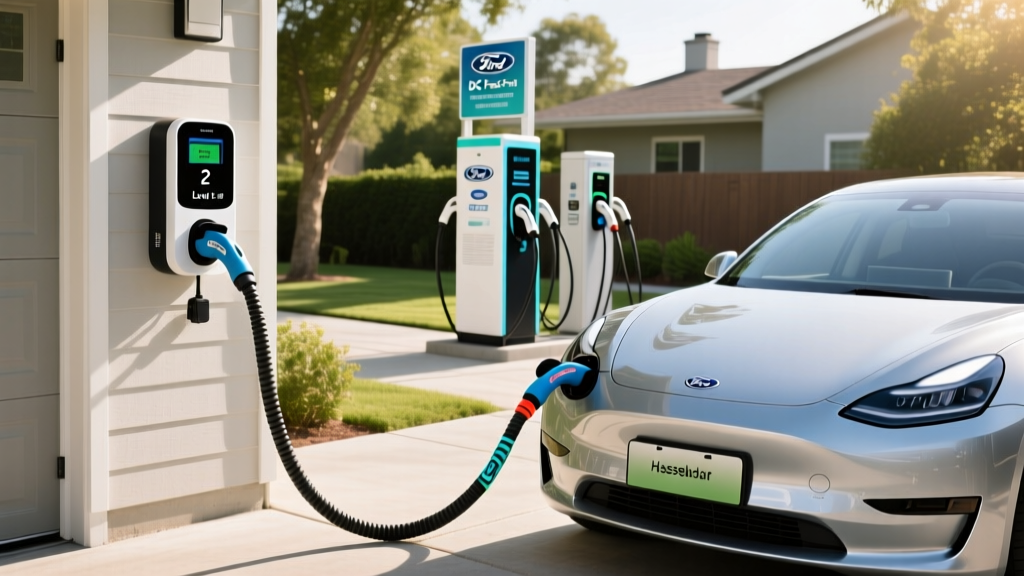
ComEd's residential EV rebate program is designed to accelerate Level 2 home charging adoption across its service territory, which covers Chicago and most of northern Illinois. The utility recognizes that home charging is the backbone of practical EV ownership — roughly 80% of all EV charging happens at home, according to the U.S. Department of Energy.
The rebate structure typically covers two components:
- Equipment rebate: A portion applied toward the purchase of a ComEd-approved smart Level 2 charger (Wi-Fi-connected, capable of scheduled/delayed charging)
- Installation rebate: A portion applied toward the licensed electrician's labor, materials, permits, and any necessary electrical panel work
Combined, these can total up to $1,500 depending on the specific program year and your installation complexity. Some ComEd programs also offer an additional incentive if you enroll in their EV Time-of-Use (TOU) rate plan, which rewards charging during off-peak hours (typically overnight).
Application Steps
- Purchase a ComEd-approved smart Level 2 charger (check the current approved list on ComEd's website)
- Hire a licensed electrician to install the charger on a dedicated 240V circuit
- Obtain all permits and pass local electrical inspection
- Submit the rebate application with receipts, equipment model info, and electrician invoice within the program's filing window (typically 90 days post-installation)
- Receive rebate via check or bill credit
Charging Levels Explained: How Fast Will Each Add Range?
Before choosing equipment, you need to understand the three EV charging levels. This is where the critical distinction between kW (kilowatts) and kWh (kilowatt-hours) matters: kW measures power — how fast energy flows into your battery at any given moment. kWh measures energy — the total capacity of your battery, like gallons in a fuel tank. A 10 kW charger delivers 10 kWh of energy in one hour.
| Level | Voltage | Power (kW) | Miles of Range Added Per Hour | Best For |
|---|---|---|---|---|
| Level 1 | 120V (standard outlet) | 1.2–1.9 kW | 3–5 miles/hour | Overnight top-ups, PHEVs, low-mileage drivers |
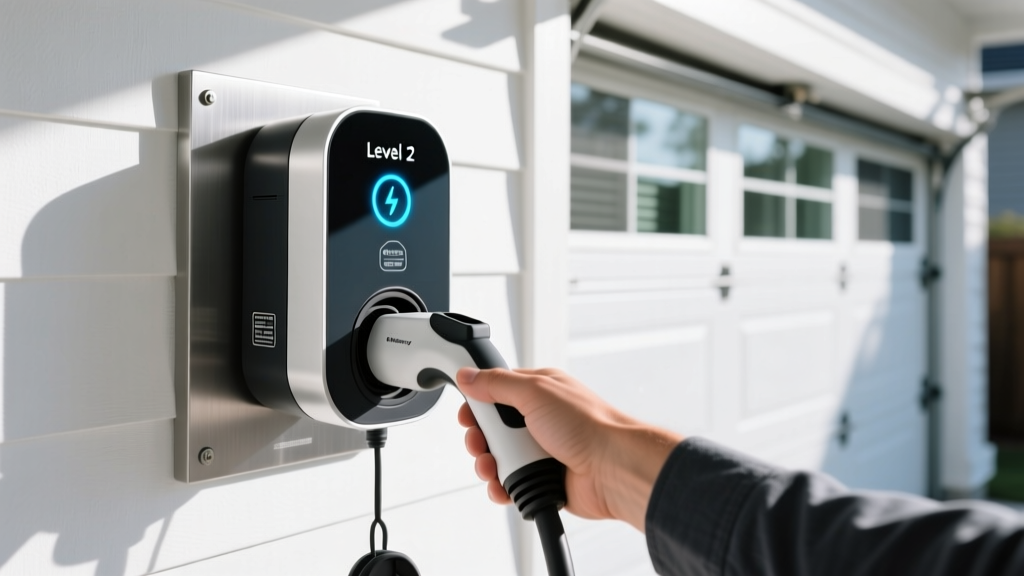
| Level 2 | 240V (dryer-style outlet or hardwired) | 3.3–19.2 kW | 12–75 miles/hour | Daily home charging, most EVs fully charged overnight |
| DC Fast Charging | 400–800V DC | 50–350 kW | 150–1,000+ miles/hour (peak) | Road trips, rapid top-ups in 15–30 minutes |
For home installations, Level 2 is the standard. A typical 48-amp Level 2 charger delivering 11.5 kW will add roughly 35–45 miles of range per hour of charging — enough to fully replenish a 75 kWh battery (like a Tesla Model Y Long Range or Ford Mustang Mach-E Extended Range) in 7–8 hours overnight.
Real-World Charging Time Examples
Here's how long common battery sizes take to charge from 10% to 80% State of Charge (SoC) on different Level 2 power outputs:
| Battery Size | Example EV | 7.7 kW (32A) | 11.5 kW (48A) | 19.2 kW (80A) |
|---|---|---|---|---|
| 62 kWh (usable) | Chevy Equinox EV | ~5.6 hours | ~3.8 hours | ~2.3 hours |
| 75 kWh (usable) | Tesla Model Y LR | ~6.8 hours | ~4.6 hours | ~2.7 hours |
| 84 kWh (usable) | Ford F-150 Lightning Ext. | ~7.6 hours | ~5.1 hours | ~3.1 hours |
| 94 kWh (usable) | Rivian R1S Max Pack | ~8.5 hours | ~5.7 hours | ~3.4 hours |
Note on charge taper: Charging slows significantly above 80% SoC to protect battery health. The 10–80% window is the practical daily charging zone. If you regularly need a full 100%, add 1–2 hours to these estimates.
Home Installation Costs: What You'll Actually Pay
The sticker price of a Level 2 charger ($350–$750 for quality smart units) is only part of the equation. Professional installation is where costs vary wildly depending on your home's electrical infrastructure.
| Component | Simple Install (panel nearby) | Moderate Install (50–80 ft run) | Complex Install (panel upgrade needed) |
|---|---|---|---|
| Level 2 charger (48A smart) | $400–$650 | $400–$650 | $400–$650 |
| Electrician labor | $300–$600 | $600–$1,200 | $1,000–$2,000 |
| Materials (conduit, wire, breaker) | $100–$300 | $300–$700 | $400–$900 |
| Permit fee | $50–$150 | $50–$150 | $50–$150 |
| Electrical panel upgrade (if needed) | $0 | $0 | $1,500–$3,500 |
| Total before rebate | $850–$1,700 | $1,350–$2,700 | $3,350–$7,200 |
| After ComEd rebate (~$1,500) | $0–$200 | $0–$1,200 | $1,850–$5,700 |
When You'll Need a Panel Upgrade
Most homes built before 1990 have 100-amp electrical service panels. A 48-amp Level 2 charger draws roughly 40 amps continuously (NEC code requires circuits to be rated at 125% of continuous load, so a 48A charger needs a 60-amp breaker). If your panel is already running near capacity with central A/C, electric range, dryer, and other major loads, adding a 60-amp circuit may exceed its capacity.
Signs you may need a panel upgrade:
- Your home has a 100-amp main panel (check the main breaker rating)
- You already have multiple high-draw 240V appliances
- Your electrician's load calculation shows insufficient headroom
- Your panel is a legacy brand (Federal Pacific, Zinsco) that should be replaced regardless
A panel upgrade from 100A to 200A typically costs $1,500–$3,500 including permit and utility coordination. This is the single biggest variable in your installation cost — and it's not typically covered by the ComEd rebate, though some Illinois state programs may offer supplemental assistance.
Electrical Requirements for a Standard Level 2 Install
- Voltage: 240V (split-phase, same as an electric dryer)
- Amperage: 40A–60A breaker (for 32A–48A continuous charging)
- Wire gauge: 6 AWG copper (for 48A/60A breaker) or 4 AWG for longer runs
- Circuit: Dedicated — cannot share with other appliances
- GFCI protection: Required by NEC 2020+ for receptacle-based (NEMA 14-50) installations; hardwired installations may not require a GFCI breaker depending on local code interpretation
- Outdoor rating: If installing outdoors, the charger must carry a NEMA 4 or NEMA 4X rating for weather resistance
Connector Compatibility: Which Plug Does Your EV Use?
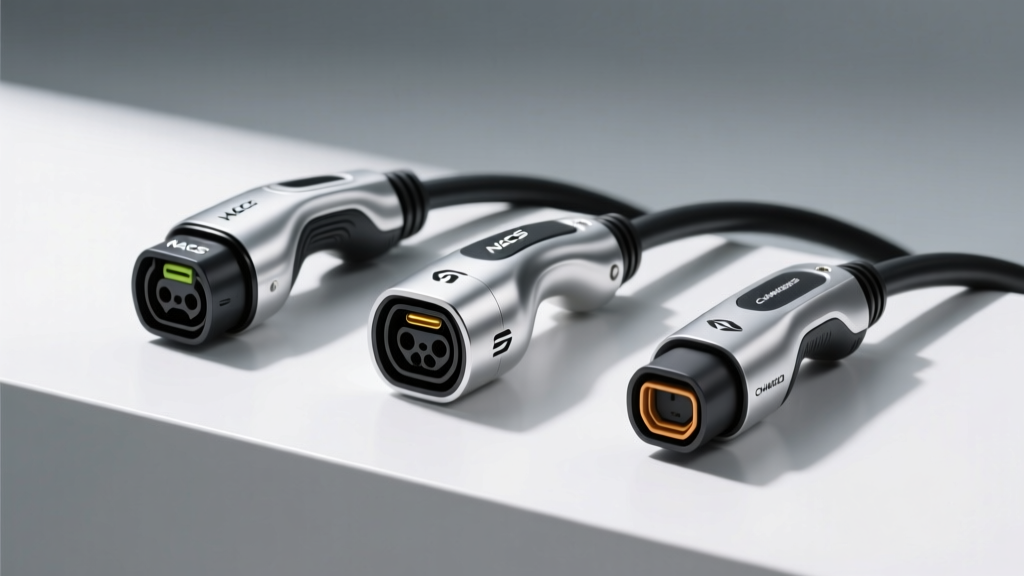
The EV connector landscape has shifted dramatically. As of 2025–2026, the North American Charging Standard (NACS) — originally Tesla's proprietary connector — has become the dominant standard, with most major automakers transitioning from CCS1. Here's what you need to know for your home charger purchase:
| Connector | Brands Using It (Native) | Adapter Needed? |
|---|---|---|
| NACS (Tesla-style) | Tesla (all), Ford (2025+), GM (2025+), Rivian (2025+), Hyundai/Kia (2026+), Volvo/Polestar | No — native NACS port |
| CCS1 | Older Ford, GM, VW, Hyundai/Kia (pre-2025), BMW, Mercedes | NACS-to-CCS adapter if using Tesla wall connector; otherwise buy CCS-native charger |
| CHAdeMO | Nissan Leaf (legacy) | CHAdeMO chargers increasingly rare; consider a CCS/NACS charger with adapter |
Practical recommendation: If you drive a 2025+ model from Ford, GM, Rivian, Tesla, or Hyundai/Kia, your vehicle almost certainly has a native NACS port. Buy a NACS-connector Level 2 charger. If you drive an older CCS1-equipped EV, you have two options: buy a CCS1-native charger (like the ChargePoint Home Flex with CCS cable) or buy a NACS charger and use a NACS-to-CCS adapter (typically $150–$250).
Level 2 Charger Recommendations for ComEd Rebate Eligibility
ComEd requires smart chargers — units with Wi-Fi connectivity and the ability to schedule or delay charging for off-peak TOU rate optimization. Here are top picks that meet ComEd's requirements, with exact specs:
Tesla Wall Connector (Gen 3)
- Power: 11.5 kW (48A) on 60A circuit
- Connector: NACS (native)
- Cable length: 24 ft
- Smart features: Wi-Fi, OTA updates, power sharing, access control
- Price: ~$475
- Outdoor rated: Yes (NEMA 4)
- Best for: Tesla owners and NACS-native EVs
ChargePoint Home Flex
- Power: Up to 12 kW (50A) — adjustable 16A–50A
- Connector: Available in NACS or CCS1 (J1772 with adapter)
- Cable length: 23 ft
- Smart features: Wi-Fi, app scheduling, Alexa, energy tracking
- Price: ~$550–$700 depending on connector
- Outdoor rated: Yes (NEMA 4)
- Best for: Flexible amperage, CCS1 or NACS households
Emporia Vue Level 2 Charger
- Power: 11.5 kW (48A) on 60A circuit
- Connector: NACS or J1772
- Cable length: 24 ft
- Smart features: Wi-Fi, solar integration, energy monitoring, TOU scheduling
- Price: ~$400–$500
- Outdoor rated: Yes (NEMA 4)
- Best for: Budget-conscious buyers, solar homes
Grizzl-E Smart
- Power: 10 kW (40A) on 50A circuit
- Connector: NACS or J1772
- Cable length: 24 ft
- Smart features: Wi-Fi, OCPP, load balancing, extreme cold rated (-40°F)
- Price: ~$500–$600
- Outdoor rated: Yes (NEMA 4X, IP67)
- Best for: Cold climates, Canadian-built durability
Cost to Charge: Home vs. Public vs. Gas
One of the strongest financial arguments for home Level 2 charging is the cost-per-mile advantage over both public charging and gasoline. ComEd's residential electricity rates and EV-specific TOU plan make home charging in northern Illinois particularly affordable.
| Scenario | Rate | Cost for 300 Miles (avg EV at 3 mi/kWh) | Cost Per Mile |
|---|---|---|---|
| Home — ComEd off-peak TOU (~$0.07/kWh) | $0.07/kWh | $7.00 | $0.023/mile |
| Home — ComEd standard rate (~$0.14/kWh) | $0.14/kWh | $14.00 | $0.047/mile |
| Public Level 2 (ChargePoint, EVgo) | $0.25–$0.40/kWh | $25–$40 | $0.08–$0.13/mile |
| DC Fast Charging (Electrify America, Tesla Supercharger) | $0.35–$0.55/kWh | $35–$55 | $0.12–$0.18/mile |
| Gasoline (30 MPG combined, $3.50/gal) | $3.50/gal | $35.00 | $0.117/mile |
At ComEd's off-peak TOU rate, charging at home costs roughly $0.02–$0.03 per mile — about 80% less than fueling a 30 MPG gas car at $3.50/gallon. Even on the standard rate, home charging is less than half the cost of gasoline per mile. The key is shifting your charging to off-peak hours (usually 10 PM – 6 AM), which every smart charger on the ComEd approved list can automate.
For a driver covering 12,000 miles per year, the annual fuel savings vs. gas at 30 MPG and $3.50/gallon:
- Gas car fuel cost: ~$1,400/year
- Home charging (off-peak TOU): ~$280/year
- Annual savings: ~$1,120/year
Combined with the ComEd rebate covering most or all of your installation cost, the payback period on a home Level 2 setup can be less than one year for high-mileage drivers.
Safety, Permits, and Code Compliance
EV charger installation is regulated electrical work. Skipping permits or using unlicensed installers risks fire, insurance claim denial, and rebate disqualification.
Key Safety Requirements
- Dedicated circuit: Your Level 2 charger must be on its own dedicated breaker — no sharing with outlets, lights, or other appliances
- GFCI protection: NEC 625 requires ground-fault protection for receptacle-based EV installations (NEMA 14-50 outlets). Hardwired installations may be exempt depending on your local AHJ (Authority Having Jurisdiction). Note: some EV charger manufacturers recommend hardwiring over NEMA 14-50 specifically to avoid nuisance GFCI trips with certain breaker brands
- Outdoor installations: Must use a charger rated NEMA 4 or higher. Conduit and junction boxes must be rated for wet locations
- Cable management: NEC requires the charging cable not create a trip hazard. Wall-mounted cord organizers are strongly recommended
- Permit and inspection: Required in virtually all Illinois municipalities. The permit ensures a third-party inspection verifies the work meets code. ComEd requires proof of passed inspection for rebate approval
Stacking Incentives: Federal, State, and Utility
The ComEd rebate can potentially be combined with other incentives to further reduce your out-of-pocket cost:
- Illinois state EV charging incentive: Illinois has periodically offered additional rebates through the Illinois EPA's DRIVE CLEAN program for residential charger installations. Check Illinois EPA for current availability
- Federal alternative fuel vehicle refueling property credit (§30C): Up to $1,000 (30% of equipment + installation, capped at $1,000 for residential). Subject to income and census-tract eligibility per current IRS guidelines. This credit is separate from the §30D new EV purchase credit
- ComEd TOU rate enrollment bonus: Some program years offer a one-time bill credit for enrolling in the EV-specific Time-of-Use rate plan
Stacking the ComEd rebate ($1,500), the federal §30C credit (up to $1,000), and any state incentive could theoretically bring your net cost to zero — or even result in a small net gain — for a straightforward installation.
Frequently Asked Questions
How much does it cost to install a home EV charger with the ComEd rebate?
For a straightforward installation where your electrical panel has sufficient capacity and the charger location is close to the panel, total costs typically range from $850–$1,700 before the rebate. With the ComEd rebate of up to $1,500, your net cost can be as low as $0–$200. Complex installations requiring panel upgrades will cost significantly more — the panel upgrade portion ($1,500–$3,500) is generally not covered by the ComEd rebate.
How fast will a Level 2 charger add range to my EV?
A typical 48-amp, 11.5 kW Level 2 charger adds roughly 35–45 miles of range per hour for most EVs. A full overnight charge (8 hours) delivers 280–360 miles of range — more than enough to fully recharge virtually any EV battery currently on the market. For comparison, Level 1 (120V) adds only 3–5 miles per hour.
Which connector is compatible with my EV?
If you own a 2025+ Tesla, Ford, GM, Rivian, or Hyundai/Kia EV, your vehicle likely has a native NACS port. Older EVs (pre-2025 non-Tesla) typically use CCS1. The Nissan Leaf uses CHAdeMO. Buy a charger with the matching connector, or use a NACS-to-CCS adapter ($150–$250) for flexibility.
How much does charging cost per mile compared to gas?
At ComEd's off-peak TOU rate (~$0.07/kWh), home charging costs roughly $0.02–$0.03 per mile for an average EV getting 3 miles per kWh. A comparable 30 MPG gas car at $3.50/gallon costs about $0.12 per mile — roughly 4–5x more expensive per mile.
What electrical upgrades might I need for a Level 2 charger?
You may need a panel upgrade (100A to 200A, costing $1,500–$3,500) if your existing electrical panel lacks capacity for a new 60-amp dedicated circuit. Your electrician will perform a load calculation to determine this. Homes with 200A service and few existing 240V loads typically need no panel upgrade.
Does the ComEd rebate cover the charger and installation?
Yes — the ComEd rebate covers both equipment and installation costs up to the program maximum (typically $1,500 combined). You must purchase a ComEd-approved smart charger and use a licensed electrician with proper permits.
Can I install a NEMA 14-50 outlet instead of hardwiring?
Yes, and this offers portability — you can take the charger when you move. However, NEC 2020+ requires a GFCI breaker for receptacle-based EV installations, which adds $50–$150 to material costs and has been known to cause nuisance trips with certain breaker brands. Many electricians now recommend hardwiring for reliability.
How do I apply for the ComEd EV charger rebate?
After installation and passing inspection, submit your application through ComEd's online portal with: itemized electrician invoice, charger model and serial number, proof of purchase receipt, and electrical inspection approval. Applications must typically be submitted within 90 days of installation. Check the ComEd EV programs page for the current application link and deadline.