If you've shopped for an electric vehicle or a home charger in the last year, you've likely encountered the term NACS SAE J3400. What started as Tesla's proprietary charging connector has been formally standardized by SAE International, and as of 2026, it has effectively become the dominant charging interface for light-duty EVs in North America. Understanding what J3400 means for your vehicle, your home charging setup, and your road-trip options is essential before you spend a dollar on equipment or electrical work.
This guide covers the technical specifics of the NACS SAE J3400 standard, how it compares to legacy CCS1 and CHAdeMO connectors, what electrical work your home may require, and exactly what you'll pay per mile to charge versus fueling a gas car.
What Is NACS SAE J3400 and Why It Matters
NACS stands for North American Charging Standard. When SAE International ratified it as SAE J3400 in late 2023, it formalized Tesla's connector design into an open industry standard. By the 2025–2026 model year, nearly every major automaker — Ford, GM, Hyundai, Kia, Rivian, BMW, Mercedes-Benz, Volvo, and others — has adopted the NACS port on new vehicles.
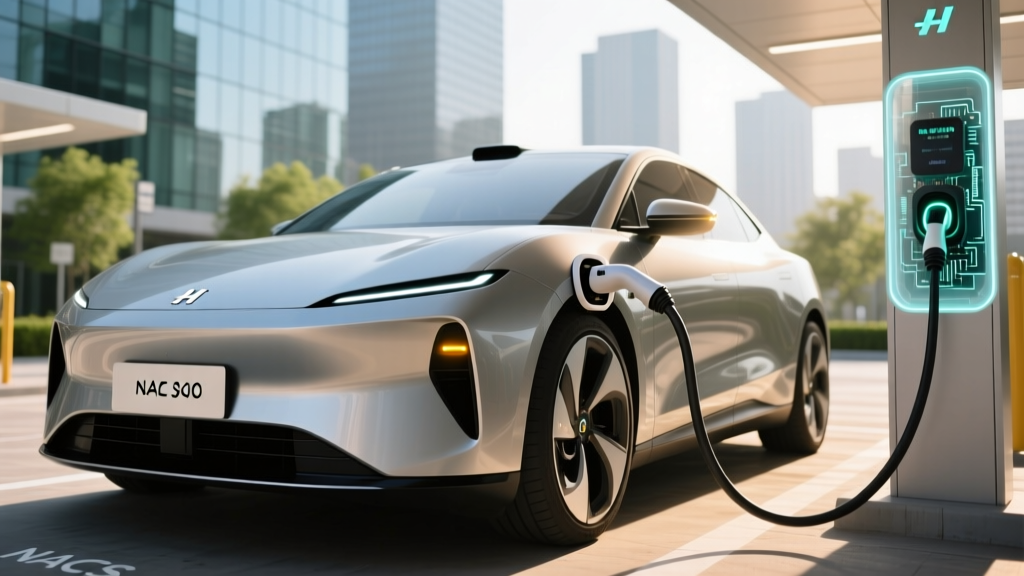
The physical connector is compact: roughly half the size of a CCS1 plug, with no separate DC pins. The same five-pin interface handles Level 2 AC charging and DC fast charging, which simplifies both vehicle design and charging-station hardware. The key practical result? A growing, unified charging network with fewer connector mismatches.
Charging Levels: Speeds, Power, and Range Added Per Hour
Every EV owner needs to understand the three charging tiers. Your real-world charging experience depends on which level you use and your vehicle's onboard charger or DC charge acceptance rate.
| Level | Voltage | Power (kW) | Miles of Range Added Per Hour | Typical Use Case |
|---|---|---|---|---|
| Level 1 | 120V AC | 1.4–1.9 kW | 3–5 mi/hr | Overnight trickle, emergency, PHEVs |
| Level 2 | 240V AC | 7.2–19.2 kW | 20–60 mi/hr | Home daily charging, workplace, public L2 |
| DC Fast | 400–800V DC | 50–350 kW | 150–1,200+ mi/hr (peak) | Road trips, highway corridors |
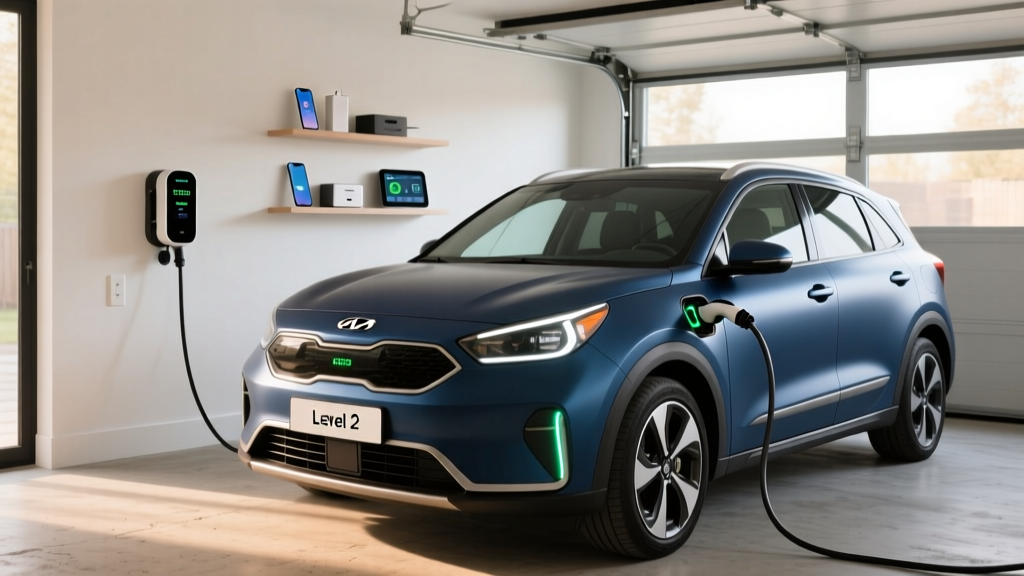
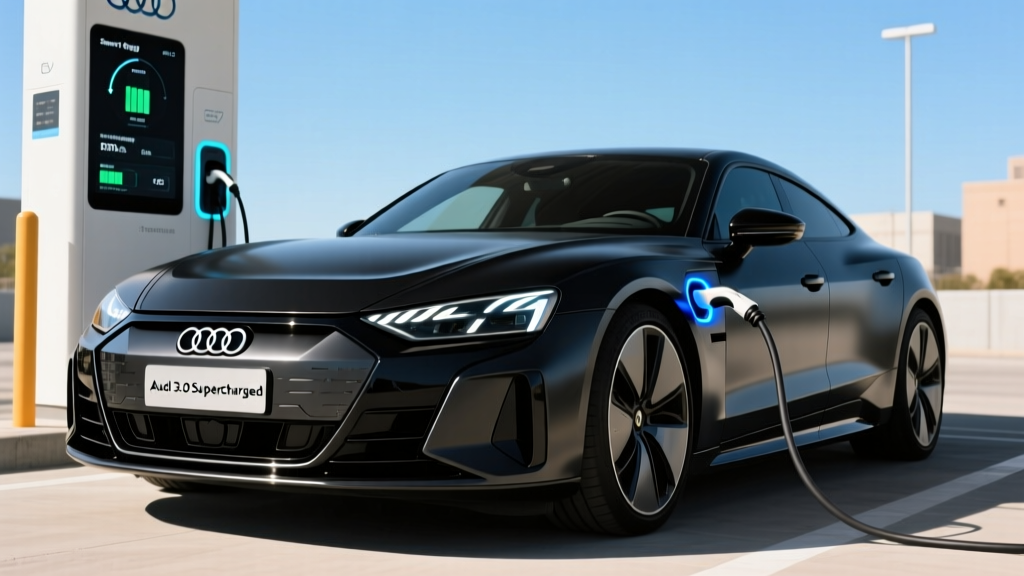
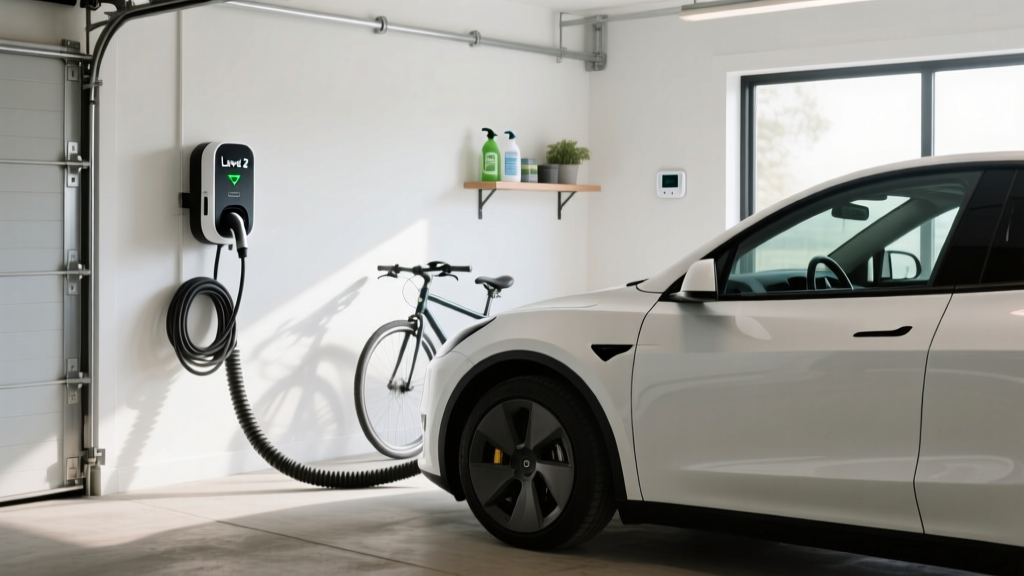
Level 2 at home is where most EV charging happens. A typical 48-amp Level 2 charger on a 240V circuit delivers 11.5 kW — enough to fully replenish a 75 kWh battery (like the Ford Mustang Mach-E Extended Range) overnight in roughly 7 hours, including charge-curve taper near full. DC fast charging is for road trips: a vehicle accepting 250 kW peak can add 10–80% in approximately 18–25 minutes, depending on battery size, chemistry (LFP vs NMC), and ambient temperature.
Connector Compatibility: NACS vs. CCS1 vs. CHAdeMO
Before buying a charger or adapter, confirm which connector your EV uses. Here's the 2026 landscape:
| Connector | Brands Using It | AC + DC in One Plug? | Adapter Available? |
|---|---|---|---|
| NACS (SAE J3400) | Tesla (all), Ford (2025+), GM (2025+), Hyundai/Kia (2025+), Rivian (2025+), BMW, Mercedes, Volvo, Nissan (2025+ Ariya) | Yes | N/A — becoming default |
| CCS1 | Legacy: pre-2025 Ford, GM, VW, Hyundai/Kia, BMW, Stellantis models | Yes (Combo) | CCS1-to-NACS adapters (~$200–$250) |
| CHAdeMO | Nissan Leaf (pre-2025), Mitsubishi Outlander PHEV (legacy) | No — separate AC port | Limited; CHAdeMO stations declining |
If you own a CCS1-equipped EV from the 2022–2024 model years, you can access Tesla Superchargers using a manufacturer-approved adapter. Ford and GM began shipping these adapters in 2024, and aftermarket options from companies like Lectron and A2Z are widely available. The reverse is also true: NACS-equipped vehicles can use legacy CCS1 stations with an adapter, which matters in areas where Electrify America or ChargePoint stations haven't yet been retrofitted with NACS cables.
CHAdeMO is effectively a legacy standard in North America. New CHAdeMO station installations have nearly stopped, and Nissan's 2025+ Ariya uses NACS. If you drive a Nissan Leaf, plan your public charging around existing CHAdeMO infrastructure and expect continued decline.
Home Charger Installation: Electrical Requirements and Costs
Installing a Level 2 home charger is the single most impactful upgrade an EV owner can make. Here's what the electrical work actually entails.
Electrical Requirements
A typical Level 2 home charger requires a 240V dedicated circuit — the same voltage your electric dryer or oven uses. The most common residential setup is a 60-amp breaker feeding a 48-amp continuous charger (the National Electrical Code requires circuits to be rated at 125% of continuous load). Smaller 32-amp chargers on a 40-amp breaker are also common in homes with limited panel capacity.
Do You Need a Panel Upgrade?
If your home has a 100-amp main electrical panel (common in homes built before the 1990s), adding a 60-amp EV circuit may exceed your panel's capacity — especially if you already run electric heat, an electric dryer, and an electric range. A licensed electrician will perform a load calculation per NEC Article 220 to determine if your panel can handle the additional draw. If not, a panel upgrade to 200 amps typically costs $1,500–$3,000 before any charger work begins.
Installation Cost Breakdown
| Component | Low End | High End | Notes |
|---|---|---|---|
| Level 2 Charger (Equipment) | $300 | $750 | 32A–48A, NACS connector, smart/Wi-Fi enabled |
| Electrical Permit | $50 | $250 | Varies by municipality; some jurisdictions waive for EV |
| Electrician Labor (simple install) | $400 | $800 | Panel adjacent, short conduit run, no drywall work |
| Electrician Labor (complex install) | $1,000 | $2,500+ | Long conduit run, trenching, sub-panel addition |
| Panel Upgrade (if needed) | $1,500 | $3,000 | 100A → 200A service upgrade |
| Total (no panel upgrade) | $750 | $4,300 | Most homeowners: $1,200–$2,000 |
| Total (with panel upgrade) | $2,250 | $7,300 | Older homes with 100A service |
Some utilities and states offer rebates of $200–$500 for home charger installation, and the federal Alternative Fuel Vehicle Refueling Property Credit (IRC §30C) covers up to 30% of equipment and installation costs, capped at $1,000 — though eligibility depends on census-tract requirements. Check with a tax professional for your specific situation.
Cost to Charge: Per-Mile Economics vs. Gasoline
The financial case for EV ownership hinges on fuel savings. Here's what charging actually costs in 2026, broken down by scenario:
| Scenario | Avg $/kWh | Cost to Charge 75 kWh Battery | Cost Per Mile (at 3 mi/kWh) |
|---|---|---|---|
| Home — Off-Peak Utility Rate | $0.08–$0.12 | $6.00–$9.00 | $0.027–$0.040 |
| Home — Standard Residential Rate | $0.14–$0.18 | $10.50–$13.50 | $0.047–$0.060 |
| Public Level 2 (ChargePoint, etc.) | $0.25–$0.40 | $18.75–$30.00 | $0.083–$0.133 |
| DC Fast Charging (EA, Tesla Supercharger) | $0.32–$0.55 | $24.00–$41.25 | $0.107–$0.183 |
For comparison, a gas car averaging 28 MPG at $3.40/gallon costs roughly $0.121 per mile. A home-charged EV on an off-peak rate is 3–4× cheaper per mile. Even DC fast charging on a road trip approaches cost parity with gas — and that's before factoring in EV maintenance savings (no oil changes, reduced brake wear from regenerative braking).
To maximize savings, enroll in your utility's time-of-use (TOU) rate plan and schedule charging for off-peak hours (typically 11 PM – 7 AM). Most smart Level 2 chargers support scheduled charging via their companion apps.
Equipment Picks: Recommended NACS Level 2 Chargers
Here are three well-regarded NACS Level 2 home chargers available in 2026, selected for reliability, features, and value:
Tesla Wall Connector
- Power: 11.5 kW (48A) max
- Connector: NACS (native)
- Cable Length: 24 ft
- Smart Features: Wi-Fi, OTA updates, power sharing between units, load management
- Price: ~$475
- Best For: Tesla and NACS-equipped EV owners wanting OEM integration
ChargePoint Home Flex
- Power: Up to 12 kW (50A) configurable
- Connector: NACS (2025+ model) or J1772 with adapter
- Cable Length: 23 ft
- Smart Features: Wi-Fi, Alexa integration, detailed energy reporting, scheduled charging
- Price: ~$550–$650
- Best For: Multi-EV households, smart-home integration
Emporia Level 2 EV Charger
- Power: 11.5 kW (48A)
- Connector: NACS (2025+ model) or J1772
- Cable Length: 24 ft
- Smart Features: Wi-Fi, energy dashboard, solar integration, TOU scheduling
- Price: ~$350–$400
- Best For: Budget-conscious buyers, solar-panel owners
All three are NEMA 4-rated for outdoor installation and UL-listed for safety. Hardwired installation (rather than a NEMA 14-50 plug) is recommended for 48A+ chargers — the NEC requires GFCI protection on receptacle outlets, and hardwiring avoids nuisance tripping while allowing full amperage.
Safety and Electrical Code Considerations
EV charging is a high-draw, continuous-load application. Cutting corners on electrical work creates fire risk. Key code and safety points:
- Dedicated circuit: Your EV charger must be on its own breaker — never shared with other appliances.
- Continuous load rule: Per NEC 210.20, the breaker must be rated at 125% of the charger's maximum draw. A 48A charger requires a 60A breaker.
- GFCI protection: Required for receptacle-based (plug-in) installations per NEC 625. Hardwired installations may be exempt depending on local code.
- Outdoor rating: Any charger installed outside must be NEMA 4 or NEMA 4X rated for weather resistance.
- Permit and inspection: Most jurisdictions require an electrical permit and a post-installation inspection. Do not skip this — it protects you and is required for insurance claims and the §30C tax credit.
- Wire gauge: 6 AWG copper for 48A circuits; 4 AWG for 60A circuits over longer runs. Your electrician will size wire per NEC Table 310.16, accounting for conduit fill and ambient temperature derating.
Always hire a licensed electrician familiar with NEC Article 625 (Electric Vehicle Charging System Equipment). Ask for their EV installation experience and request a load calculation before work begins.
DC Fast Charging Times: What to Expect (10–80%)
DC fast charging speed depends on three factors: the station's maximum output (kW), the vehicle's peak charge acceptance rate (kW), and the battery's charge curve. Here are representative times for common 2025–2026 EVs at appropriately rated stations:
| Vehicle | Battery (kWh usable) | Peak DC Acceptance (kW) | 10–80% Time (approx.) |
|---|---|---|---|
| Tesla Model Y Long Range | 75 kWh (NMC) | 250 kW | ~22 min |
| Hyundai Ioniq 5 (2025+) | 77.4 kWh (NMC) | 240 kW (800V) | ~18 min |
| Ford Mustang Mach-E ER | 88 kWh (NMC) | 150 kW | ~35 min |
| Chevrolet Equinox EV | 85 kWh (NMC) | 150 kW | ~32 min |
| Tesla Model 3 RWD | 57.5 kWh (LFP) | 170 kW | ~25 min |
| Rivian R1S Dual-Motor | 128 kWh (NMC, Max Pack) | 220 kW | ~38 min |
Note that LFP (lithium iron phosphate) batteries, like those in the base Tesla Model 3 and some Ford models, tolerate frequent 100% charging better than NMC chemistries — but they still taper charge speed above 80% SoC. Always precondition your battery by routing to a charger through the vehicle's navigation system; this activates thermal management and can cut cold-weather charge times by 30–50%.
Frequently Asked Questions
How much does it cost to install a home EV charger?
Most homeowners spend between $1,200 and $2,000 for a straightforward Level 2 installation (48A charger, 240V circuit, short conduit run, no panel upgrade). Complex installations with long wire runs, trenching, or sub-panel additions can reach $3,000–$4,500. If your home needs a 100A-to-200A panel upgrade, add $1,500–$3,000. The federal §30C tax credit may cover up to 30% of costs, capped at $1,000, subject to census-tract eligibility.
How fast will each charging level add range?
Level 1 (120V) adds 3–5 miles of range per hour — adequate for PHEVs with small batteries but impractical for full BEVs. Level 2 (240V, 48A) adds 25–40 miles per hour depending on vehicle efficiency, fully replenishing most EVs overnight. DC fast charging at 150–250 kW can add 150–300+ miles in 20–30 minutes, though speed tapers significantly above 80% SoC.
Which connector and charger is compatible with my EV?
If your EV is a 2025 or newer model from Tesla, Ford, GM, Hyundai, Kia, Rivian, BMW, Mercedes, Volvo, or Nissan (Ariya), it almost certainly has a native NACS (SAE J3400) port. Older CCS1-equipped EVs (2022–2024) can use NACS chargers with an adapter ($200–$250). CHAdeMO vehicles (Nissan Leaf) are increasingly unsupported at new stations. Check your vehicle's charge port or owner's manual to confirm.
How much does charging cost per mile vs. gas?
Home charging on off-peak utility rates costs $0.03–$0.04 per mile — roughly 3–4× cheaper than a 28 MPG gas car at $3.40/gallon ($0.12/mile). Standard residential rates push EV cost to $0.05–$0.06/mile. Public DC fast charging at $0.35–$0.55/kWh costs $0.12–$0.18/mile, approaching gas parity — which is why home charging is the economic cornerstone of EV ownership.
What electrical upgrades might I need?
If your home has a 200-amp electrical panel with available capacity, you likely need only a new 60-amp double-pole breaker and a conduit run to your garage or parking spot. Homes with 100-amp service, heavy existing electric loads (heat pump, electric range, dryer), or long distances from the panel to the charger location may require a panel upgrade ($1,500–$3,000) or a sub-panel addition. Always get a professional load calculation before committing to equipment.
For authoritative guidance on electrical safety standards, refer to the NFPA 70 National Electrical Code and consult your local building department for permit requirements specific to your jurisdiction.