If you've spent years behind the wheel of an Audi equipped with the legendary 3.0-liter supercharged V6 — the EA837 engine found in the S4, S5, A6, A7, Q5, and Q7 from roughly 2009 through 2018 — you know its virtues: linear torque, a subtle whine under load, and effortless highway passing. But with fuel prices climbing, supercharger maintenance adding up (belt tensioners, water pumps, carbon buildup cleanings), and Audi's own lineup pivoting hard toward electrification, many 3.0T owners are asking a practical question: what does it actually take to switch to a plug-in vehicle, and does the math work?
This guide is written for you — the Audi 3.0 supercharged owner or enthusiast evaluating a move to an EV or PHEV. We'll walk through every charging fundamental, home installation reality, connector standard, and per-mile cost comparison you need to make an informed decision in 2026.
From Supercharger to Charger: What Changes When You Go Electric
The Audi 3.0 TFSI supercharged V6 produced between 272 and 333 horsepower depending on the model year and tune, returning roughly 18–22 MPG combined in real-world driving per fueleconomy.gov data. At $3.50/gallon and 20 MPG, you're spending about $0.175 per mile on fuel alone.
An electric vehicle replaces that mechanical supercharger with electrons from the grid. Instead of belts and intercoolers, you manage kilowatts (kW — the rate of energy flow) and kilowatt-hours (kWh — the total energy stored). This distinction is critical and often confused:
- kW (kilowatt) = power, or how fast energy flows. Think of it like the diameter of a hose.
- kWh (kilowatt-hour) = energy, or how much is stored in the battery. Think of it as the size of the bucket.
A 100 kWh battery charged at 10 kW takes 10 hours. That same battery charged at 100 kW (at a DC fast station) can reach 80% in under an hour. Understanding this relationship is the foundation of EV ownership.
Charging Levels Explained: Speeds, Times, and Real-World Range Added
There are three charging levels available to EV owners. Here's how each performs in practice:
| Level | Voltage | Power (kW) | Miles of Range Added/Hour | Best For |
|---|---|---|---|---|
| Level 1 | 120V AC | 1.0–1.4 kW | 3–5 miles | Overnight top-offs, PHEVs, emergencies |
| Level 2 | 240V AC | 3.3–19.2 kW | 12–75 miles | Daily home charging, workplace |
| DC Fast Charge | 400–800V DC | 50–350 kW | 150–1,000+ miles (equivalent) | Road trips, rapid top-ups |
Real-world charging time examples (10% to 80% State of Charge):
- 82 kWh battery (e.g., Audi Q8 e-tron): ~9 hours on a 9.6 kW Level 2 home charger; ~23 minutes on a 150 kW DC fast charger (peak rate).
- 100 kWh battery (e.g., Audi e-tron GT): ~11 hours on a 9.6 kW Level 2; ~22 minutes on a 270 kW DC fast charger (the GT supports up to 270 kW peak on 800V architecture).
- 17.9 kWh PHEV battery (e.g., 2026 Audi Q5 TFSI e): ~2.5 hours on a 7.7 kW Level 2; DC fast charging is generally not available on most PHEVs.
Home Charger Installation: Electrical Requirements, Costs, and Gotchas
Installing a Level 2 home charger is the single biggest quality-of-life upgrade for EV ownership. But costs vary dramatically based on your home's electrical panel, the distance from panel to charger location, and local permit requirements.
Typical electrical requirements for a Level 2 home charger:
- Voltage: 240V (same as a dryer or oven circuit)
- Amperage: 40A circuit for a 32A charger (NEC requires circuits rated at 125% of continuous load); 50A circuit for a 40A charger; 60A circuit for a 48A charger
- Dedicated circuit: Required — you cannot share with other appliances
- GFCI protection: Required by NEC 2020+ for garage and outdoor receptacles
- Hardwired vs. plug: Hardwired installations (no NEMA 14-50 outlet) are often cheaper, safer, and avoid the GFCI breaker nuisance-trip issues common with some outlet installations
| Cost Component | Simple Install (panel nearby) | Complex Install (long run / panel upgrade) |
|---|---|---|
| Level 2 Charger (equipment) | $400–$700 | $400–$700 |
| Electrician labor | $500–$1,200 | $1,500–$3,500 |
| Electrical permit | $50–$200 | $50–$200 |
| Panel upgrade (if needed) | $0 | $2,000–$5,000 |
| Conduit/wiring materials | $100–$300 | $300–$800 |
| Total estimated range | $1,050–$2,400 | $4,250–$10,200 |
How Much Does It Cost to Install a Home EV Charger?
For most homes with a 200A panel and a garage within 30 feet of the panel, expect to spend $1,050 to $2,400 total (equipment + electrician + permit). If your panel needs upgrading or the charger location is far from the panel with complex conduit routing, costs can reach $4,250 to $10,200. Always get 2–3 quotes from licensed electricians and confirm they pull permits.
Connector Compatibility: NACS, CCS1, and the 2026 Landscape
The connector landscape has shifted significantly. As of 2025–2026, most automakers — including Audi — have adopted or are transitioning to the North American Charging Standard (NACS), originally developed by Tesla. Here's where things stand:
| Connector | Status in 2026 | Audi Compatibility |
|---|---|---|
| NACS (Tesla-style) | Industry standard for new EVs starting 2025+ | Newer Audis (2025+ e-tron GT, Q6 e-tron) ship with NACS; older CCS1 Audis require an adapter for Tesla Superchargers |
| CCS1 (Combo) | Legacy standard; still widely available at Electrify America, EVgo | 2019–2024 Audi e-tron models use CCS1 natively |
| CHAdeMO | Deprecated in North America | Not used by Audi |
| J1772 (Level 2 AC) | Standard for all non-Tesla Level 2 charging | All Audis with CCS1 or NACS-adapter accept J1772 for Level 2 |
Adapter needs for Audi owners:
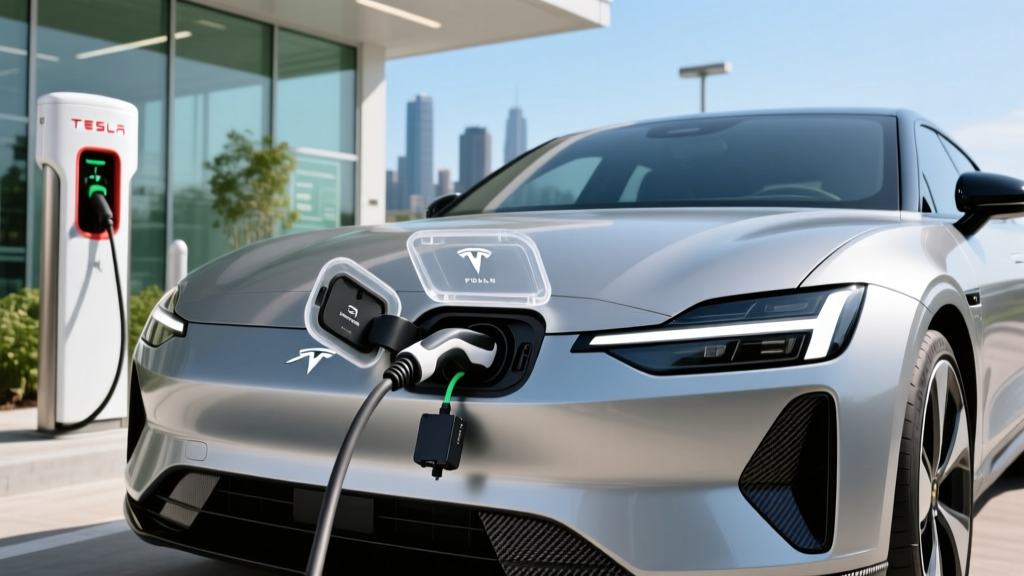
- CCS1 Audi (2019–2024 e-tron/e-tron GT): Purchase a CCS-to-NACS adapter (~$200–$250) from Audi or an authorized supplier to access Tesla Supercharger stalls. Verify your vehicle's firmware supports adapter-based Supercharging.
- NACS Audi (2025+): No adapter needed for Tesla Superchargers. For Electrify America and other CCS1 networks, a NACS-to-CCS adapter may be required until stations are retrofitted.
- Level 2 home charging: All home Level 2 chargers use J1772 or a NACS connector. Both plug directly into any Audi.
Charging Cost Per Mile: EV vs. Your Audi 3.0 Supercharged
This is where the ownership equation shifts decisively. Let's compare real fueling costs:
| Scenario | Cost per kWh / Gallon | Cost per Mile | Annual Cost (12,000 mi) |
|---|---|---|---|
| Audi 3.0T Supercharged (20 MPG, $3.50/gal) | $3.50/gallon | $0.175 | $2,100 |
| EV — Home off-peak (0.30 kWh/mi, $0.13/kWh) | $0.13/kWh | $0.039 | $468 |
| EV — Home standard rate ($0.18/kWh) | $0.18/kWh | $0.054 | $648 |
| EV — Public Level 2 ($0.35/kWh) | $0.35/kWh | $0.105 | $1,260 |
| EV — DC Fast Charging ($0.48/kWh) | $0.48/kWh | $0.144 | $1,728 |
Key takeaway: If you charge primarily at home on off-peak rates, an EV costs roughly 78% less per mile than your 3.0 supercharged Audi. Even exclusive DC fast charging comes in below gasoline costs in most markets. A PHEV like the 2026 Audi Q5 TFSI e (rated ~35 miles electric-only) lets you run short commutes on electricity while retaining gasoline range for longer trips.
For detailed electricity rates in your area, check the U.S. Energy Information Administration state-by-state data.
Recommended Home Level 2 Chargers for 2026
ChargePoint Home Flex
- Power output: Up to 12 kW (50A circuit) / up to 9.6 kW (40A circuit)
- Connector: J1772 (NACS version available)
- Cable length: 23 feet
- Smart features: Wi-Fi, scheduling, Alexa integration, energy tracking
- Price: ~$550–$650
- Best for: Most Audi owners; flexible amperage settings match your circuit
Tesla Wall Connector (Universal)
- Power output: Up to 11.5 kW (48A on 60A circuit)
- Connector: NACS with integrated J1772 adapter
- Cable length: 24 feet
- Smart features: Wi-Fi, OTA updates, load sharing (multiple units), Powerwall integration
- Price: ~$600
- Best for: NACS-equipped Audis; future-proof for Tesla Supercharger ecosystem
Grizzl-E Smart
- Power output: Up to 10 kW (40A on 50A circuit)
- Connector: J1772
- Cable length: 24 feet
- Smart features: OCPP-compatible, works with multiple energy management platforms
- Price: ~$450
- Best for: Budget-conscious installations; Canadian-built, robust cold-weather performance
Emporia Level 2 EV Charger
- Power output: Up to 11.5 kW (48A on 60A circuit)
- Connector: J1772
- Cable length: 24 feet
- Smart features: Energy monitoring, solar integration, time-of-use scheduling
- Price: ~$400
- Best for: Solar-panel owners wanting to charge on excess generation
Our recommendation for Audi 3.0T upgraders: The ChargePoint Home Flex offers the best balance of adjustable amperage (set it to match your electrician's circuit spec), broad app support, and proven reliability. If your Audi is NACS-equipped (2025+), the Tesla Universal Wall Connector is the most future-proof option.
Safety, Code, and Inspection Requirements
EV charger installation is electrical work that must comply with the National Electrical Code (NEC) and your local jurisdiction. Key requirements:
- Dedicated circuit: Your EV charger must be on its own breaker — no sharing with laundry, lighting, or other outlets.
- GFCI protection: NEC 2020 and later requires ground-fault protection for 240V receptacles in garages. Hardwired chargers may be exempt depending on local interpretation — ask your electrician.
- Outdoor rating: If installing outside, the charger must carry a NEMA 4 or IP65+ weather rating. All chargers recommended above meet this standard.
- Permit and inspection: Most jurisdictions require an electrical permit ($50–$200) and a post-installation inspection. Do not skip this — it protects your home insurance coverage and ensures code compliance.
- Wire gauge: Your electrician will select wire gauge based on circuit amperage and run length. Typical: 6 AWG copper for 50A circuits, 4 AWG for 60A circuits. Longer runs may require upsizing to prevent voltage drop.
Federal Tax Credits and Incentives for Home Charging
The IRS Residential Clean Energy Credit (IRC §25D) covers 30% of the cost of home EV charger equipment and installation, up to $1,000. This credit is available through 2032 for primary residences. It applies to both the charger hardware and the electrical work.
Additionally, if you purchase a new EV, the §30D New Clean Vehicle Credit offers up to $7,500 — but eligibility depends on:
- Vehicle MSRP caps ($80,000 for SUVs/pickups/vans; $55,000 for sedans)
- Buyer income limits ($300,000 joint / $150,000 single modified AGI)
- Battery critical-mineral and component sourcing requirements (tightening annually)
- Point-of-sale transfer option available at participating dealers
Consult a tax professional to confirm your specific eligibility. State and utility incentives may stack on top — check the Alternative Fuels Data Center for state-level programs.
Frequently Asked Questions
How fast will each charging level add range to an EV?
Level 1 (120V) adds 3–5 miles per hour — adequate for PHEVs with small batteries. Level 2 (240V, 40A) adds roughly 30–35 miles per hour, enough to fully recharge most EVs overnight. DC fast charging at 150 kW can add 150–200 miles in 15–20 minutes, though charge speed tapers significantly above 80% State of Charge to protect the battery.
Which connector and charger is compatible with my Audi EV?
Audi models from 2019–2024 (e-tron, e-tron GT, Q4 e-tron) use CCS1 connectors. Starting in 2025, Audi is transitioning to NACS. For Level 2 home charging, all Audis accept J1772 (or NACS on newer models). Check your vehicle's charge port or owner's manual to confirm before purchasing a charger or adapter.
How much does charging cost per mile compared to my Audi 3.0 supercharged?
At 20 MPG and $3.50/gallon, your 3.0T costs about $0.175/mile. An EV charged at home on off-peak electricity ($0.13/kWh, averaging 0.30 kWh/mile) costs roughly $0.039/mile — a 78% reduction. Even public DC fast charging at $0.48/kWh costs $0.144/mile, still below gasoline.
What electrical upgrades might I need for a home charger?
If your home has a 200A main panel with sufficient spare capacity, you likely only need a new 40–60A breaker and wiring run. Homes with 100A or 150A panels, or panels already near capacity, may require a service upgrade ($2,000–$5,000). A licensed electrician must perform a NEC Article 220 load calculation to determine this.
How much does it cost to install a home EV charger?
Simple installations (panel nearby, no upgrade needed) run $1,050–$2,400 including equipment, electrician labor, and permits. Complex installations requiring long wire runs, conduit through walls, or a panel upgrade can cost $4,250–$10,200. Always get multiple quotes and verify permits are pulled.
Is DC fast charging bad for my EV battery?
Occasional DC fast charging is fine, and modern battery management systems actively protect against degradation. However, daily DC fast charging — particularly in hot climates — can accelerate capacity loss over time. Audi's battery warranty covers degradation below 70% capacity for 8 years or 100,000 miles. For daily use, Level 2 home charging at 80% State of Charge is the longevity-friendly approach.
The Audi 3.0 supercharged V6 earned its reputation through a decade of reliable, thrilling performance. But the ownership economics of electrification — lower per-mile costs, reduced maintenance, and increasingly mature charging infrastructure — make a compelling case for your next vehicle to draw electrons instead of premium fuel. With a properly installed Level 2 home charger and a clear understanding of your connector needs, the transition is more seamless than most 3.0T owners expect.