The Rise of Solar-Powered EV Charging
Integrating a residential solar panel system with a home electric vehicle (EV) charger represents the pinnacle of energy independence and cost savings. Rather than pulling electricity from the grid to fuel your daily commute, you can harness the excess solar energy generated by your roof to charge your vehicle for free. However, simply plugging your EV into a standard Level 2 charger does not automatically prioritize solar power. Most standard chargers will pull a blended mix of solar and grid electricity, or worse, drain your battery storage system. To truly maximize your solar investment, you need a smart charger equipped with solar diversion technology.
According to the Alternative Fuels Data Center, home charging is the most convenient and cost-effective method for EV owners, accounting for more than 80% of all EV charging events. When you pair this home charging infrastructure with a rooftop solar array, the goal shifts from simple convenience to maximizing self-consumption. Solar diversion allows the charger to dynamically adjust its amperage output in real-time, ensuring that only surplus solar energy—power that would otherwise be exported to the grid for minimal credit—is sent to your vehicle's battery.
Meet the Contenders: Zappi V2.1 vs. Emporia Level 2
In the realm of solar-integrated EV charging, two heavyweights dominate the residential market: the Myenergi Zappi V2.1 and the Emporia Level 2 Smart EV Charger. Both offer robust solar diversion capabilities, but they approach the technology from fundamentally different engineering philosophies. The Zappi is a purpose-built solar charger relying on dedicated hardware, while the Emporia leverages a broader whole-home energy monitoring ecosystem via software. Let us break down how these two systems compare in a head-to-head showdown.
Myenergi Zappi V2.1: The Solar Purist
The Myenergi Zappi has long been considered the gold standard for solar EV charging, particularly in Europe, and is rapidly gaining traction globally. The Zappi operates using three distinct modes: FAST (standard grid charging), ECO (maintains a minimum 1.4kW charge rate by blending solar and grid), and ECO+ (pure solar diversion). In ECO+ mode, the Zappi will only charge your vehicle when excess solar generation exceeds 1.4kW. If a cloud passes over and solar production drops, the Zappi automatically pauses the charging session, waiting for the sun to return before resuming. This guarantees that you are never accidentally paying your utility provider for grid power when you intend to charge on the sun.
Emporia Level 2 EV Charger: The Smart Home Ecosystem Play
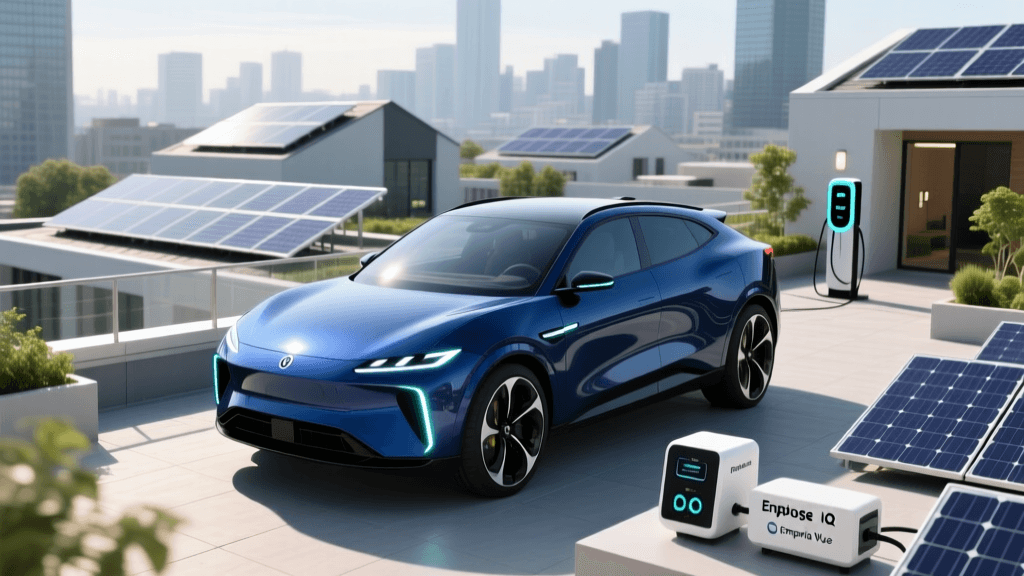
Emporia takes a different approach. The Emporia Level 2 EV Charger is not a standalone solar device; rather, it is a component of the broader Emporia Vue home energy monitoring system. To utilize Emporia's solar diversion features, you must have the Emporia Vue installed in your electrical panel. The Vue tracks your home's total energy consumption and solar production in real-time. Through the Emporia app, you can set up automations and enable the "Evaporate Excess Solar" feature, which commands the EV charger to ramp up its amperage when the Vue detects surplus solar energy flowing back to the grid.
Head-to-Head: Solar Diversion Technology
The core difference between these two systems lies in how they measure and react to solar excess. The Zappi utilizes a dedicated Current Transformer (CT) clamp that must be physically installed on your main service entrance conductors. This hardware-based approach provides near-instantaneous, localized data directly to the charger's internal logic board. The latency is virtually zero, meaning the Zappi can adjust its charging amperage in milliseconds as your home's load fluctuates (e.g., when an air conditioner compressor kicks on or an electric oven is turned off).
Conversely, the Emporia system relies on the CT clamps attached to the Emporia Vue. The Vue reads the data and transmits it over your local Wi-Fi network to the Emporia cloud, which then sends a command back down to the EV charger. While this software-based approach is highly effective and offers incredible whole-home visibility, it introduces a slight latency. In most real-world scenarios, a delay of a few seconds is negligible, but in homes with highly volatile electrical loads, the Zappi's hardwired hardware logic provides a smoother, more stable charging curve without the risk of network dropouts interrupting the solar diversion algorithm.
Installation Requirements and Electrical Upgrades
Both the Zappi V2.1 and the Emporia Level 2 charger are capable of delivering up to 48 amps of continuous current, which requires a 60-amp dedicated breaker on a 240-volt circuit. Because EV charging is classified as a continuous load by the National Electrical Code (NEC), the circuit must be derated to 80% of its total capacity. When selecting your hardware, looking for ENERGY STAR certified EV chargers ensures that the device meets strict efficiency and safety standards, minimizing phantom load and heat generation during continuous operation.
The installation complexity differs significantly between the two. The Zappi requires the installation of its specific CT clamp at the main grid tie-in point, which often requires the electrician to pull the main utility meter or work dangerously close to the unmetered service entrance wires. This can increase labor costs and, in some jurisdictions, require a utility disconnect appointment. Furthermore, the Zappi is typically hardwired, meaning no NEMA 14-50 receptacle is needed, which aligns with modern best practices for continuous high-draw loads.
The Emporia charger offers more flexibility. It can be hardwired or plugged into a NEMA 14-50 outlet. However, the prerequisite installation of the Emporia Vue energy monitor requires an electrician to open the main panel and install individual CT clamps on your major circuits, plus the main service lines. While this is a more invasive initial setup, it provides the massive secondary benefit of granular, circuit-level energy monitoring for your entire home, allowing you to see exactly how much power your HVAC, water heater, and EV are consuming via the Emporia app.
Cost Analysis and Return on Investment
When evaluating the total cost of ownership, you must look beyond the sticker price of the charger itself. The Myenergi Zappi V2.1 typically retails for around $900 to $1,100, depending on whether you choose the tethered or untethered model. Because it includes everything needed for solar diversion in the box, the primary additional cost is standard electrical labor.
The Emporia Level 2 EV Charger is significantly cheaper on its own, often retailing between $399 and $450. However, to unlock the solar diversion features, you must factor in the cost of the Emporia Vue energy monitor, which ranges from $150 to $250 depending on the number of circuit sensors included. Even with the Vue factored in, the Emporia ecosystem often comes in at a lower total hardware cost than the Zappi. As noted by NREL's EV infrastructure research, optimizing home energy management systems alongside EV adoption can drastically reduce peak demand charges and improve the overall ROI of residential solar arrays.
Feature Comparison Table
| Feature | Myenergi Zappi V2.1 | Emporia Level 2 + Vue |
|---|---|---|
| Max Amperage | 48A (11.5 kW) | 48A (11.5 kW) |
| Solar Diversion Method | Hardware (Direct CT Clamp) | Software (Vue Ecosystem) |
| Minimum Solar Threshold | 1.4 kW (Adjustable) | Customizable via App |
| Connection Type | Hardwired Only | Hardwired or NEMA 14-50 |
| Whole-Home Monitoring | No (EV & Solar Only) | Yes (Circuit-Level via Vue) |
| Network Requirement | Optional (Hub required for app) | Mandatory (Wi-Fi/Bluetooth) |
| Estimated Hardware Cost | ~$1,000 | ~$600 (Charger + Vue) |
Final Verdict: Which Solar Charger Wins?
The choice between the Myenergi Zappi V2.1 and the Emporia Level 2 EV Charger ultimately depends on your existing home infrastructure and your desire for whole-home data. If your primary goal is a bulletproof, zero-latency solar diversion system that operates independently of your home Wi-Fi network, the Zappi V2.1 is the undisputed champion. Its ECO+ mode is a masterclass in solar optimization, ensuring your vehicle only sips the purest excess sunshine without requiring a complex panel-level monitor.
However, if you are looking for a more budget-friendly entry point and want the added benefit of tracking your entire home's energy consumption, the Emporia ecosystem is the clear winner. By combining the Emporia Vue with their Level 2 charger, you gain unprecedented visibility into your home's electrical habits while still enjoying automated solar diversion. For the tech-savvy homeowner who already utilizes smart home automations, Emporia's software-driven approach offers a level of integration and data granularity that the Zappi simply cannot match.