The Reality Behind the Jeep Wagoneer S Range
When evaluating the Jeep Wagoneer S range, the EPA sticker is only half the story. This all-electric SUV packs a massive 100-kWh (usable) battery pack, but how you charge it at home dictates your daily usability, long-term battery health, and monthly electricity costs. The Wagoneer S is a heavy, high-performance machine, and feeding its battery requires a deliberate approach to home electrical infrastructure.
The 2026 Jeep Wagoneer S is estimated to deliver around 300 miles of EPA range. However, real-world testing of similar 100-kWh platforms suggests you should expect 240–260 miles on the highway at 70 mph, and significantly less (around 200–220 miles) in freezing temperatures. The sheer mass of the vehicle and its aerodynamic profile eat into efficiency at higher speeds.
To consistently achieve your best range, a proper Level 2 home charging setup is mandatory. Relying on a standard wall outlet will not suffice for a battery of this magnitude.
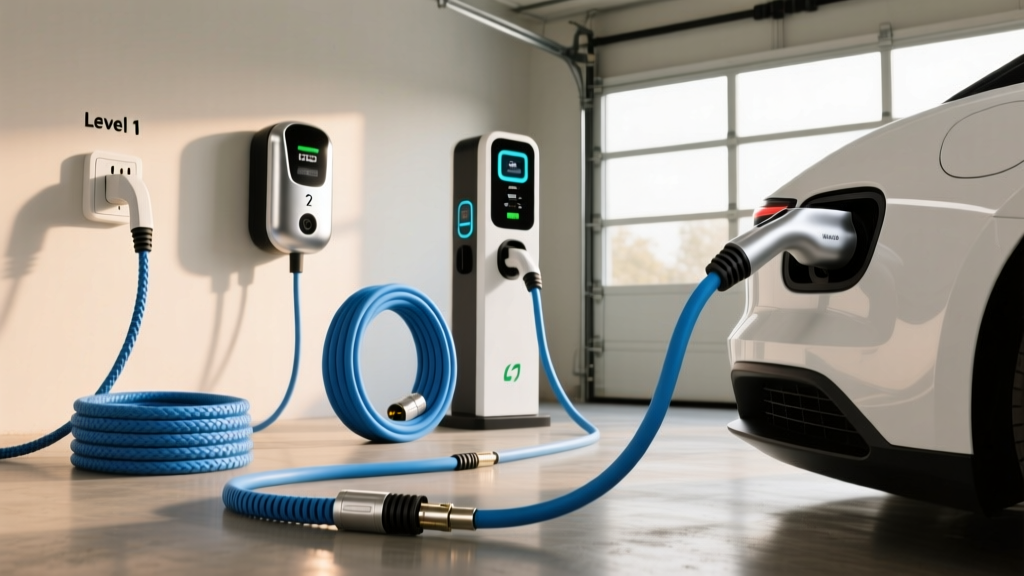
Charging Levels Explained: Speed and Power
Understanding the difference between power (kW) and energy (kWh) is critical. The Wagoneer S has a 100-kWh battery (energy capacity). The speed at which you fill that battery depends on the charger's power (kW).
| Level | Power Output | Miles Added Per Hour | Best Use Case |
|---|---|---|---|
| Level 1 (120V) | 1.4 kW | ~3–4 miles | Emergency/Trickle only |
| Level 2 (240V) | 7.7 kW – 11.5 kW | ~23–35 miles | Daily home charging |
| DC Fast Charge | Up to 175+ kW | N/A (10-80% in ~25 min) | Road trips |
For a 100-kWh battery, a Level 1 (120V) charge from empty to full would take over 70 hours. A 48-amp Level 2 home charger (providing ~11.5 kW) will replenish the Wagoneer S overnight in roughly 9–10 hours, which aligns perfectly with daily use.
Home Installation Costs and Electrical Requirements
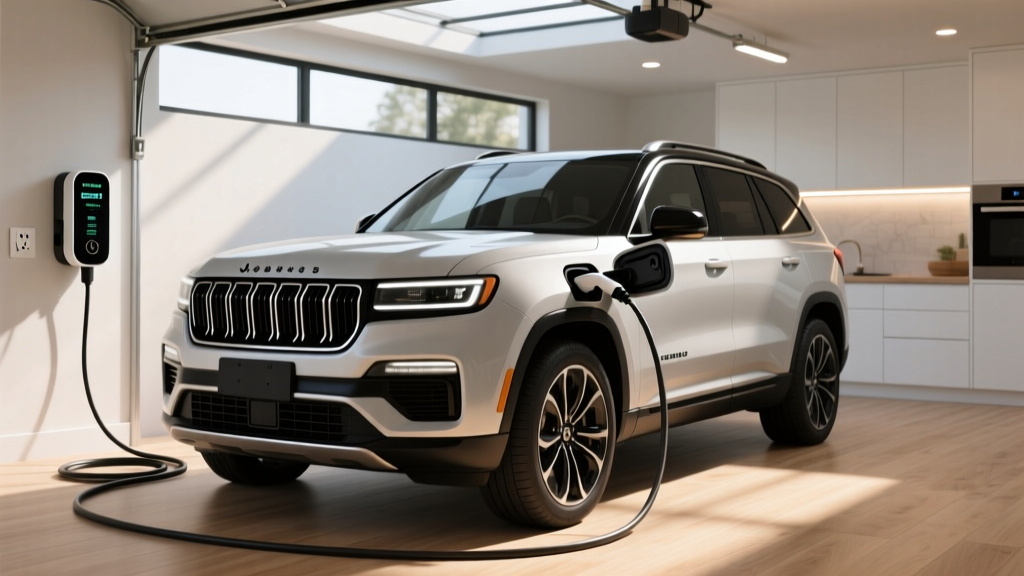
Installing a Level 2 charger for the Wagoneer S requires a dedicated 240-volt circuit. Because the battery is so large, we recommend a 60-amp circuit to support a 48-amp continuous charger, ensuring the fastest possible home charge.
Estimated Installation Costs (2026)
| Item | Description | Estimated Cost |
|---|---|---|
| Charger Unit | 48-Amp Smart Wi-Fi Charger (NACS/CCS) | $500 – $750 |
| Electrical Labor | Running 60-amp circuit, mounting, wiring | $600 – $1,500 |
| Permit & Inspection | Local electrical permit requirements | $100 – $300 |
| Panel Upgrade | Required if current panel is maxed out (200A+) | $1,500 – $3,500 |
Note: Total costs vary by region and existing infrastructure. Always consult a licensed electrician.
Many older homes have 100-amp or 150-amp service panels that may not have the capacity for a 60-amp EV circuit alongside central A/C and electric dryers. A panel upgrade is a significant but necessary investment to safely support the Wagoneer S.
Connector Compatibility: NACS vs. CCS
For 2026, the industry is rapidly shifting toward the North American Charging Standard (NACS). While early Jeep EVs used CCS1, Stellantis has confirmed that future models, including updated Wagoneer S trims, will transition to NACS to access the Tesla Supercharger network.
Connector Types and Adapter Needs
| Connector | Network Access | Wagoneer S Status |
|---|---|---|
| NACS (Tesla) | Superchargers, Tesla Destination | Native on 2026+ trims; Adapter required for older |
| CCS1 | Electrify America, EVgo, Ionity | Native on 2024–2025 models |
| CHAdeMO | Nissan Leaf legacy networks | Not compatible; no adapters recommended |
Top Equipment Recommendations for 100-kWh Batteries
To handle the Wagoneer S's large battery, you need a charger that can sustain high power without overheating.
- ChargePoint Home Flex (NACS/CCS): Up to 50 amps (12 kW), 23-foot cable, excellent app integration. Price: ~$699.
- Emporia Vue Level 2: 48 amps (11.5 kW), budget-friendly with energy monitoring. Price: ~$499.
- Tesla Universal Wall Connector: 48 amps (11.5 kW), includes J1772/NACS magic dock adapter. Price: ~$599.
Cost per Mile: Electricity vs. Gasoline
The Wagoneer S is a premium SUV. Comparing its charging costs to a gas-powered Wagoneer (16 MPG combined) reveals massive savings, even on public DC fast chargers.
| Scenario | Cost/kWh or Gallon | Cost per Mile |
|---|---|---|
| Home (Off-Peak) | $0.14 / kWh | $0.049 |
| Public Level 2 | $0.35 / kWh | $0.122 |
| DC Fast Charge | $0.55 / kWh | $0.192 |
| Gas (Wagoneer V8) | $3.60 / Gallon | $0.225 |
Charging FAQ for Jeep Wagoneer S Owners
Can I use a standard 120V outlet for my Wagoneer S?
Yes, but it will only add about 3–4 miles of range per hour. For a 100-kWh battery, a full charge would take over three days. It is only suitable for emergencies or very low-mileage days.
How long does a DC Fast Charge take?
The Wagoneer S supports peak charging rates around 175 kW. On a compatible station, a 10–80% charge takes approximately 25–30 minutes. Note that charging slows significantly above 80% to protect the battery cells.
Does the Federal Tax Credit cover home charger installation?
The §30D credit is primarily for the vehicle. However, the Alternative Fuel Infrastructure Tax Credit (30C) can cover up to 30% of home charger installation costs (up to $1,000) if you live in an eligible census tract. Consult a tax professional for current-year IRS rules.