If you drive an EV in Northern or Central California, Pacific Gas and Electric is almost certainly your electricity provider — and that means understanding PG&E electric vehicle charging stations is essential to owning an electric car without surprises. Whether you're installing a Level 2 home charger on a PG&E circuit, tapping into the utility's public fast-charging network, or simply trying to figure out what you'll pay per mile, this guide breaks down the exact numbers, equipment, and electrical requirements you need.
PG&E serves over 5 million electric customers across a 70,000-square-mile territory, and its EV rate plans, rebates, and infrastructure investments make it one of the most EV-active utilities in the country. But navigating charger selection, home electrical upgrades, connector compatibility, and the real cost of charging requires precision — not marketing copy. Let's get into the specs.
Charging Levels Explained: Speeds, Power, and Real-World Range Added
The single most important distinction in EV charging is the difference between kW (kilowatts — a measure of power, or how fast energy flows) and kWh (kilowatt-hours — a measure of energy, or how much your battery stores). Think of kW as the width of the pipe and kWh as the size of the tank. A wider pipe fills the tank faster. Confusing these two is the most common EV literacy mistake, and it leads to wildly wrong expectations about charging time.
Here's how each charging level translates to real range added per hour of charging:
| Level | Voltage | Power (kW) | Miles of Range/Hour | Best Use Case | Typical 10–80% Time (75 kWh Battery) |
|---|---|---|---|---|---|
| Level 1 | 120V AC | 1.0–1.4 kW | 3–5 mi/hr | Overnight top-up, PHEVs, emergencies | ~50–75 hours |
| Level 2 (Home/Public) | 240V AC | 3.3–19.2 kW | 12–75 mi/hr | Daily home charging, workplace, destinations | ~4–10 hours (depends on kW) |
| DC Fast Charging | 400–800V DC | 50–350 kW | 150–1,000+ mi/hr (peak) | Road trips, rapid top-ups | ~18–45 minutes (varies by vehicle) |
A few critical nuances: DC fast charging speeds are peak rates, not sustained rates. Most EVs hit their maximum charge rate between 10–50% State of Charge (SoC), then taper significantly above 80% to protect battery health. A vehicle rated for 250 kW peak charging may only average 120–150 kW across a full 10–80% session. This is why we cite 10–80% times rather than 0–100% — charging the final 20% can take as long as the first 70%.
Real-World Charging Note: Cold batteries charge slower. If you're DC fast charging in winter without preconditioning your battery (warming it to optimal temperature via the vehicle's thermal management system), expect 10–80% times to increase by 30–50%. Most modern EVs — Tesla, Hyundai/Kia E-GMP, Ford, BMW — precondition automatically when you navigate to a charger.
How Much Does It Cost to Install a Home EV Charger on PG&E Service?
Home Level 2 charging is where most EV owners do 80–90% of their charging. But the install cost varies enormously depending on your home's electrical panel, the distance from the panel to your garage or driveway, and whether you need a panel upgrade. Here's the breakdown based on typical PG&E territory installations in 2026:
| Component | Simple Install (Panel Adjacent) | Standard Install (50–100 ft Run) | Complex Install (Panel Upgrade + Long Run) |
|---|---|---|---|
| Level 2 Charger Equipment | $400–$700 | $400–$700 | $400–$700 |
| Electrician Labor (Licensed) | $500–$1,000 | $1,200–$2,500 | $2,500–$5,000 |
| Electrical Panel Upgrade (if needed) | $0 | $0–$500 | $2,000–$4,500 |
| Permit & Inspection | $100–$250 | $150–$350 | $200–$500 |
| Conduit, Wiring, Misc. Materials | $100–$300 | $300–$800 | $500–$1,500 |
| Total Estimated Range | $1,100–$2,250 | $2,050–$4,850 | $5,600–$12,200 |
Electrical Requirements for a Level 2 Home Charger
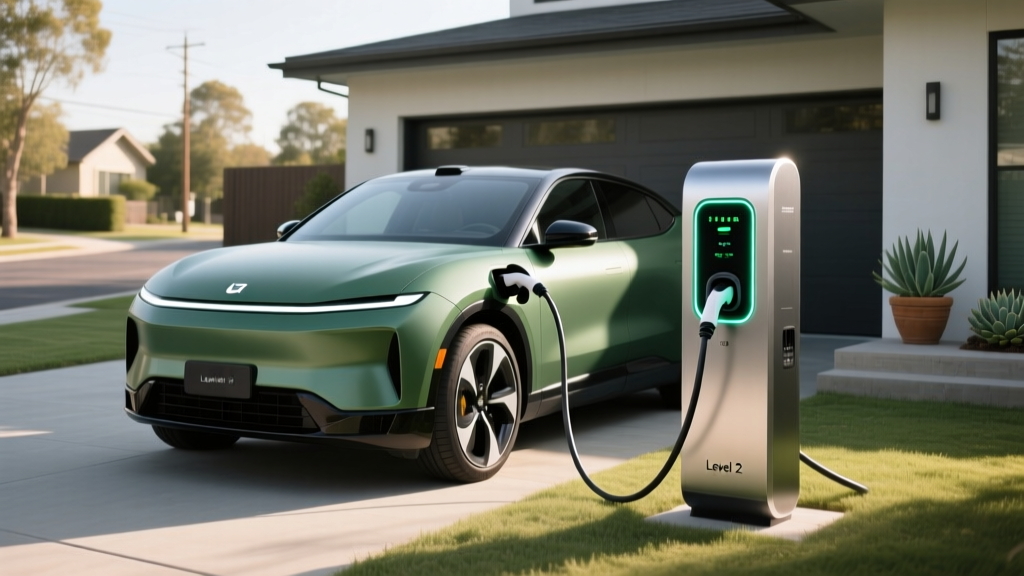
A standard Level 2 home charger requires a 240V dedicated circuit, similar to what an electric dryer or oven uses. The most common residential setup is a 40-amp or 48-amp circuit, which supports a charger delivering 32A or 40A continuous draw (the National Electrical Code requires circuits be rated at 125% of continuous load).
- 40A circuit / 32A charger: Delivers ~7.7 kW. Adds ~25–30 miles of range per hour. Sufficient for most EVs with 250–320 miles of range if you charge overnight (8–10 hours).
- 48A circuit / 40A charger: Delivers ~9.6 kW. Adds ~32–40 miles per hour. Recommended for larger-battery EVs (Ford F-150 Lightning, Rivian R1T, Chevrolet Silverado EV) or households with two EVs sharing charging time.
- 60A circuit / 48A charger: Delivers ~11.5 kW. Adds ~40–50 miles per hour. Ideal if your panel has capacity and you want maximum home charging speed. Requires 6 AWG copper wire.
Will You Need a Panel Upgrade?
This is the question that separates a $1,500 install from a $10,000 install. Most homes built before 1990 have 100-amp electrical panels; modern homes typically have 200-amp panels. Adding a 40A or 48A EV circuit to a 100-amp panel that's already near capacity (electric stove, dryer, HVAC, water heater) will likely require a panel upgrade to 200A, which costs $2,000–$4,500 in PG&E territory.
PG&E offers a residential panel upgrade rebate of up to $1,000 for customers upgrading their electrical panel to support EV charging, but availability and amounts change annually. Check PG&E's EV charging page for current incentive details. A licensed electrician should perform a load calculation before you commit to any equipment purchase.
PG&E EV Rate Plans: What You'll Actually Pay per kWh
PG&E offers time-of-use (TOU) rate plans specifically designed for EV owners, and choosing the right one can cut your charging cost dramatically. The key rates available in 2026:
- EV2-A (Time-of-Use): Off-peak rates (midnight–3 PM weekdays, all day weekends) run approximately $0.25–$0.30/kWh depending on your baseline territory. Peak rates (4–9 PM weekdays) can exceed $0.52/kWh. This is the most popular plan for home-charging EV owners.
- EV-B (Higher-Usage TOU): Designed for households with multiple EVs or high electricity demand (solar + EV + heat pump). Offers lower off-peak rates but higher peak rates — rewards aggressive load-shifting.
| Scenario | Rate ($/kWh) | Vehicle Efficiency (kWh/100 mi) | Cost Per Mile | Equivalent Gas Price (at 30 MPG) |
|---|---|---|---|---|
| Home Off-Peak (EV2-A) | $0.27 | 28 kWh/100 mi | $0.076 | $2.27/gallon |
| Home Peak (EV2-A) | $0.52 | 28 kWh/100 mi | $0.146 | $4.37/gallon |
| Public Level 2 (ChargePoint, etc.) | $0.35–$0.55 | 28 kWh/100 mi | $0.098–$0.154 | $2.94–$4.62/gallon |
| DC Fast Charging (EA, EVgo, Tesla) | $0.48–$0.68 | 28 kWh/100 mi | $0.134–$0.190 | $4.03–$5.71/gallon |
| Gasoline (CA avg., 30 MPG vehicle) | — | — | $0.153 | $4.60/gallon |
The takeaway: home off-peak charging on PG&E's EV2-A plan is roughly half the cost per mile of gasoline, even with California's relatively high electricity rates. But if you rely exclusively on DC fast charging at peak public rates, your per-mile cost can exceed gasoline — a critical point for apartment dwellers or those without home charging access.
PG&E Public Charging Network and DC Fast Charging Access
PG&E has invested in building out public charging infrastructure across its territory, including partnerships with charging networks and direct deployment of DC fast chargers at retail locations, transit centers, and highway corridors. As of 2026, PG&E-supported public charging locations include both Level 2 destination chargers and DC fast chargers ranging from 50 kW to 350 kW.
However, the broader public charging ecosystem in PG&E territory extends well beyond utility-owned stations. You'll also access:
- Tesla Superchargers (now open to non-Tesla EVs via the built-in Magic Dock NACS adapter at select stations) — 150–350 kW, typically $0.48–$0.58/kWh in Northern California.
- Electrify America — 150–350 kW CCS/NACS stations along major highways (I-5, US-101, I-80), $0.48–$0.64/kWh, with an $0.48/kWh Pass+ membership at $4/month.
- EVgo — 50–350 kW stations at retail locations, $0.44–$0.58/kWh depending on membership tier.
- ChargePoint — Predominantly Level 2 destination charging (6.2–19.2 kW), $0.25–$0.55/kWh or hourly rates.
For real-time PG&E-area charger availability, the utility recommends using the PG&E EV charging tools or third-party apps like PlugShare and A Better Routeplanner.
Connector Compatibility: Which Plug Does Your EV Need?
The North American charging connector landscape has shifted dramatically since Tesla opened its North American Charging Standard (NACS) to the industry. As of 2026, here's where things stand for PG&E territory EV owners:
| Connector | Brands Using It (Native) | DC Fast Charging | Level 2 Charging | Adapter Needed? |
|---|---|---|---|---|
| NACS (Tesla Standard) | Tesla, Ford, GM, Rivian, Volvo, Polestar, Nissan (2025+), Honda (2025+) | Tesla Superchargers, EA, EVgo (select) | Most public L2, home chargers | CCS-to-NACS adapter for older CCS stations (~$200) |
| CCS1 | Hyundai, Kia, BMW, VW, Porsche, Stellantis, legacy Ford/GM (pre-2025) | EA, EVgo, ChargePoint DC, most non-Tesla networks | All public L2, home chargers | NACS-to-CCS adapter for Tesla Superchargers (Magic Dock at select stations) |
| CHAdeMO | Nissan Leaf (pre-2025), Mitsubishi Outlander PHEV | Limited — mostly legacy stations | All public L2, home chargers | No L2 adapter needed; DC fast options shrinking |
Practical advice for PG&E customers: If you're buying a new EV in 2026, NACS is the dominant standard going forward. If you already own a CCS-equipped EV, a CCS-to-NACS adapter (approximately $180–$250) unlocks the Tesla Supercharger network — a significant range-extension advantage on road trips through Northern California.
Home Charger Equipment Recommendations for PG&E Customers
Here are proven Level 2 home chargers well-suited to PG&E territory installations, selected for reliability, smart features, and compatibility with PG&E's TOU rate scheduling:
ChargePoint Home Flex
- Power Output: Up to 12 kW (50A) on a 60A circuit; configurable down to 16A for lower-capacity panels
- Connector: NACS or J1772 (CCS vehicles use J1772 inlet for Level 2)
- Cable Length: 23 feet
- Smart Features: Wi-Fi, app scheduling (sync with PG&E off-peak hours), energy tracking, Alexa integration
- Price: ~$550–$650
- Best For: Most PG&E households — flexible amperage accommodates panel constraints; scheduling automates off-peak charging
Emporia Vue Level 2 EV Charger
- Power Output: Up to 11.5 kW (48A) on a 60A circuit
- Connector: J1772 (NACS adapter available)
- Cable Length: 24 feet
- Smart Features: Wi-Fi, real-time energy monitoring, solar integration, TOU scheduling, integrates with Emporia Vue whole-home energy monitor
- Price: ~$400–$500
- Best For: Budget-conscious buyers who want detailed energy data; excellent solar-aware scheduling for PG&E customers with rooftop solar
Tesla Wall Connector
- Power Output: Up to 11.5 kW (48A) on a 60A circuit
- Connector: NACS native (J1772 adapter included in box for non-Tesla EVs)
- Cable Length: 24 feet
- Smart Features: Wi-Fi, OTA firmware updates, power-sharing (two units on one circuit), load management, access control
- Price: ~$425–$475
- Best For: Tesla owners or NACS-equipped Ford/GM/Rivian owners; best-in-class power-sharing for two-EV garages
Grizzl-E Smart Level 2
- Power Output: Up to 10 kW (40A) on a 50A circuit
- Connector: J1772 or NACS
- Cable Length: 24 feet
- Smart Features: Wi-Fi, OCPP-compatible (open protocol), adjustable amperage via dip switches, extreme cold/dust rated
- Price: ~$450–$550
- Best For: Outdoor installations in PG&E's hotter Central Valley territories; rugged build and OCPP support for future utility integration
Safety, Electrical Code, and PG&E Permit Requirements
Every Level 2 charger installation in PG&E territory must comply with the California Electrical Code and your local jurisdiction's permitting requirements. Key safety and code points:
- Dedicated circuit required: Your EV charger must be on its own dedicated breaker — it cannot share a circuit with other appliances. This prevents overloads and ensures consistent charging.
- GFCI protection: The 2023 NEC (adopted by California) requires GFCI (Ground Fault Circuit Interrupter) protection for all EV charging outlets. Many modern hardwired chargers have built-in GFCI; plug-in units on a NEMA 14-50 outlet require a GFCI breaker (~$50–$80 additional cost).
- Outdoor rating: If your charger is installed outdoors (driveway, carport), it must carry a NEMA 4 or NEMA 4X weather-resistance rating. All chargers listed above meet this standard.
- Permit and inspection: Most jurisdictions in PG&E territory (San Francisco, Oakland, San Jose, Sacramento metro, etc.) require an electrical permit for EV charger installation, typically $100–$350. A post-install inspection verifies code compliance. Unpermitted work can void home insurance claims and create liability issues.
- Load management: If your panel is near capacity but you want to avoid a costly upgrade, some chargers (Tesla Wall Connector, Emporia) support automatic load management — they monitor your home's real-time electrical draw and reduce charging power when other appliances are running. This can sometimes eliminate the need for a panel upgrade.
Important: Always defer final electrical specifications to a licensed electrician familiar with your home's wiring. Panel capacity, wire gauge, conduit fill, and breaker sizing are not DIY decisions. PG&E recommends using a qualified, licensed contractor for all EV charger installations, and some PG&E rebate programs require it.
Frequently Asked Questions About PG&E EV Charging
How much does it cost to install a home EV charger with PG&E?
A straightforward Level 2 installation (panel nearby, no upgrade needed) typically costs $1,100–$2,250 including equipment, electrician labor, and permit. If you need a panel upgrade or a long wiring run, expect $5,600–$12,200. PG&E offers rebates that can offset $500–$1,000 of these costs — check current programs on PG&E's EV page.
How fast will each charging level add range to my EV?
Level 1 (120V) adds 3–5 miles per hour — suitable only for PHEVs or emergency top-ups. Level 2 (240V, 40A) adds roughly 25–30 miles per hour, enough to fully replenish most EVs overnight. DC fast charging (150–350 kW) can add 150–300+ miles in 20–30 minutes depending on your vehicle's charge acceptance rate. Always check your specific vehicle's peak kW rating and 10–80% charge time.
Which connector and charger are compatible with my EV?
If you drive a 2025+ Tesla, Ford, GM, Rivian, Volvo, or Polestar, your vehicle uses NACS natively and will plug directly into Tesla Wall Connectors and NACS-equipped public chargers. If you drive a Hyundai, Kia, BMW, VW, or Porsche, you use CCS1 and will need a CCS-to-NACS adapter (~$200) to access Tesla Superchargers. For Level 2 home charging, all EVs use either a J1772 inlet (CCS vehicles) or a NACS inlet (NACS vehicles), and most home chargers support both via included adapters.
How much does EV charging cost per mile compared to gas in PG&E territory?
On PG&E's EV2-A off-peak rate (~$0.27/kWh), a typical EV consuming 28 kWh per 100 miles costs about $0.076 per mile — equivalent to paying $2.27 per gallon of gas in a 30 MPG vehicle. Even at DC fast charging rates ($0.48–$0.68/kWh), your cost per mile ($0.13–$0.19) is competitive with or below California's average gas price of ~$4.60/gallon at 30 MPG ($0.153/mile).
What electrical upgrades might I need for a home charger?
The most common upgrade is a panel capacity increase from 100A to 200A ($2,000–$4,500) if your existing panel can't accommodate a new 40A–60A breaker. You may also need a new conduit run from the panel to the charger location ($300–$1,500 depending on distance and wall/foundation penetrations), or a smart load management system ($200–$500) if you want to avoid a panel upgrade entirely. A licensed electrician's load calculation will determine exactly what your home requires.
Does PG&E offer any EV charging rebates or incentives?
Yes. PG&E periodically offers rebates for home charger equipment, panel upgrades, and TOU rate enrollment. Additionally, the federal IRS §30D clean vehicle credit provides up to $7,500 for qualifying new EVs (subject to MSRP caps, buyer income limits, and battery sourcing requirements — consult a tax professional). Some PG&E customers may also qualify for the federal Alternative Fuel Vehicle Refueling Property Credit (30C), which covers up to 30% of home charger installation costs (maximum $1,000) if you live in an eligible census tract.
Whether you're charging at home on PG&E's off-peak rate, topping up at a public DC fast station along I-5, or planning your first EV purchase, the numbers tell a clear story: home Level 2 charging on a TOU plan delivers the lowest cost per mile, and the upfront installation investment typically pays for itself within 12–24 months of fuel savings compared to gasoline. Get a licensed electrician's assessment of your panel, choose a smart charger with scheduling, and let PG&E's off-peak rates do the heavy lifting.